In this article:
We visited Capital One Landing during a December 2025 day trip to Washington D.C., flying back to New York from Ronald Reagan Washington National Airport.
This was our first time visiting a Capital One Landing. At the time of our visit, this was the only location open, with LaGuardia expected to follow.
Capital One Landing is not a traditional airport lounge. It functions more like a small restaurant, built around tapas-style dining, developed in partnership with the José Andrés Group and operated by Plaza Premium Group.
Location and access
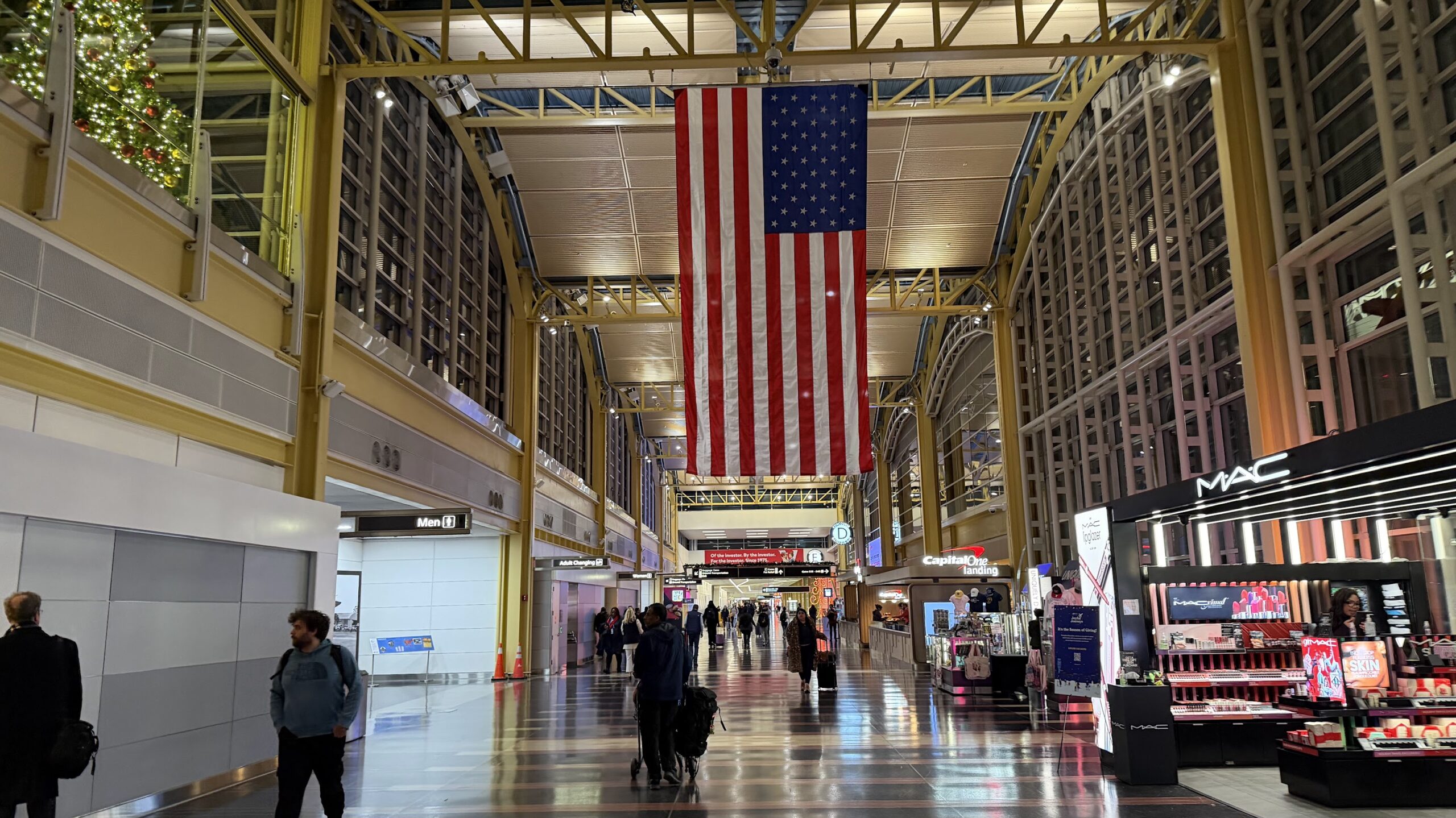
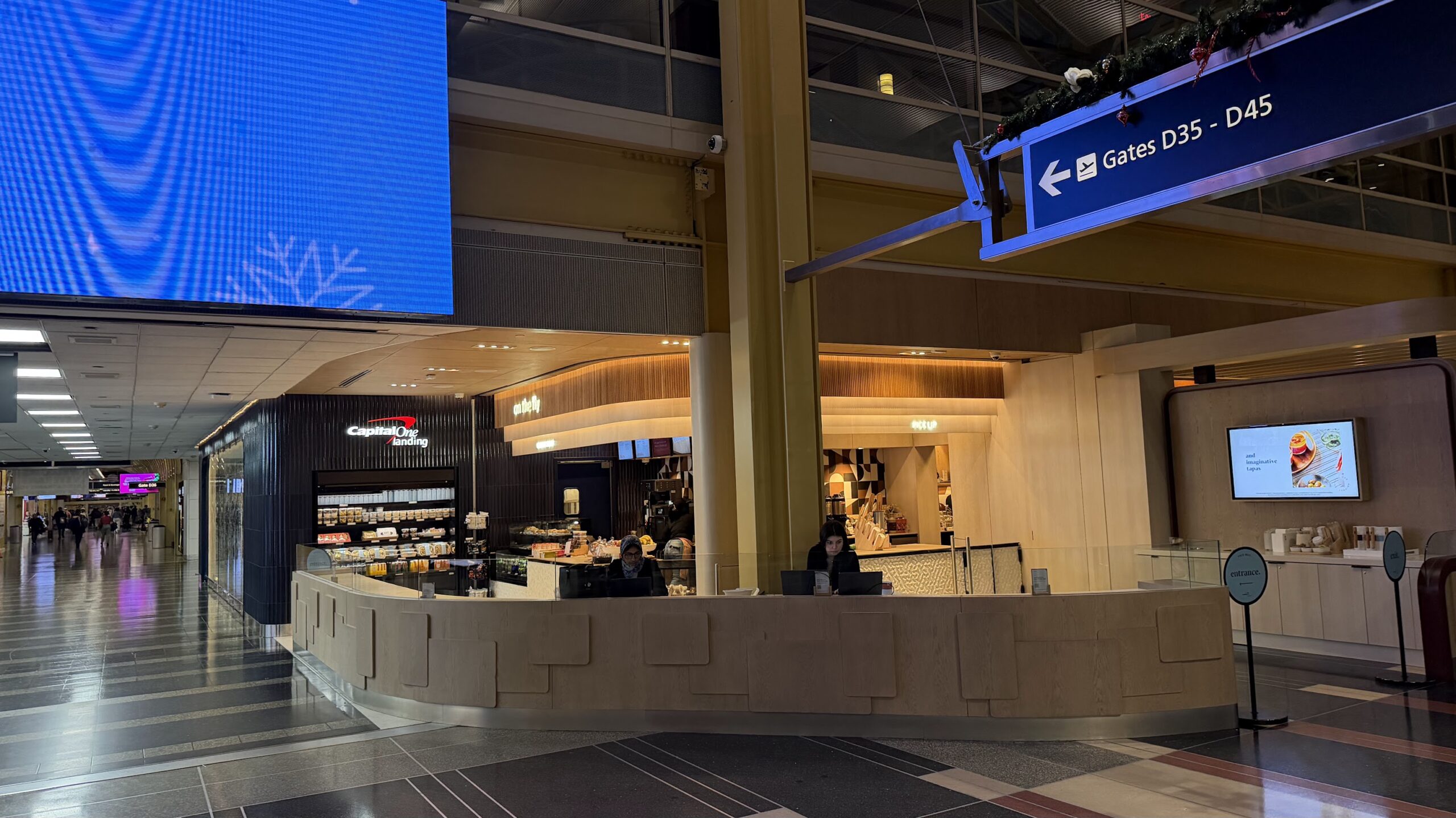
Capital One Landing is located airside near the D gates in Terminal 2 at Reagan National Airport (DCA).
DCA operates as two separate terminals that are not connected airside. If you are departing from Terminal 1, visiting Capital One Landing means exiting the secure area and clearing TSA again. In practice, that limits who this makes sense for.
Access is available to Capital One Venture X cardholders, with one guest currently allowed. This guest policy is scheduled to end later in January 2026.
Capacity is limited to around 90 guests, so Capital One allows cardholders to reserve a time slot through the app. We booked roughly two weeks in advance. Walk-ins are possible, but queues do form. When we left after dinner, there was already a line outside.
Layout
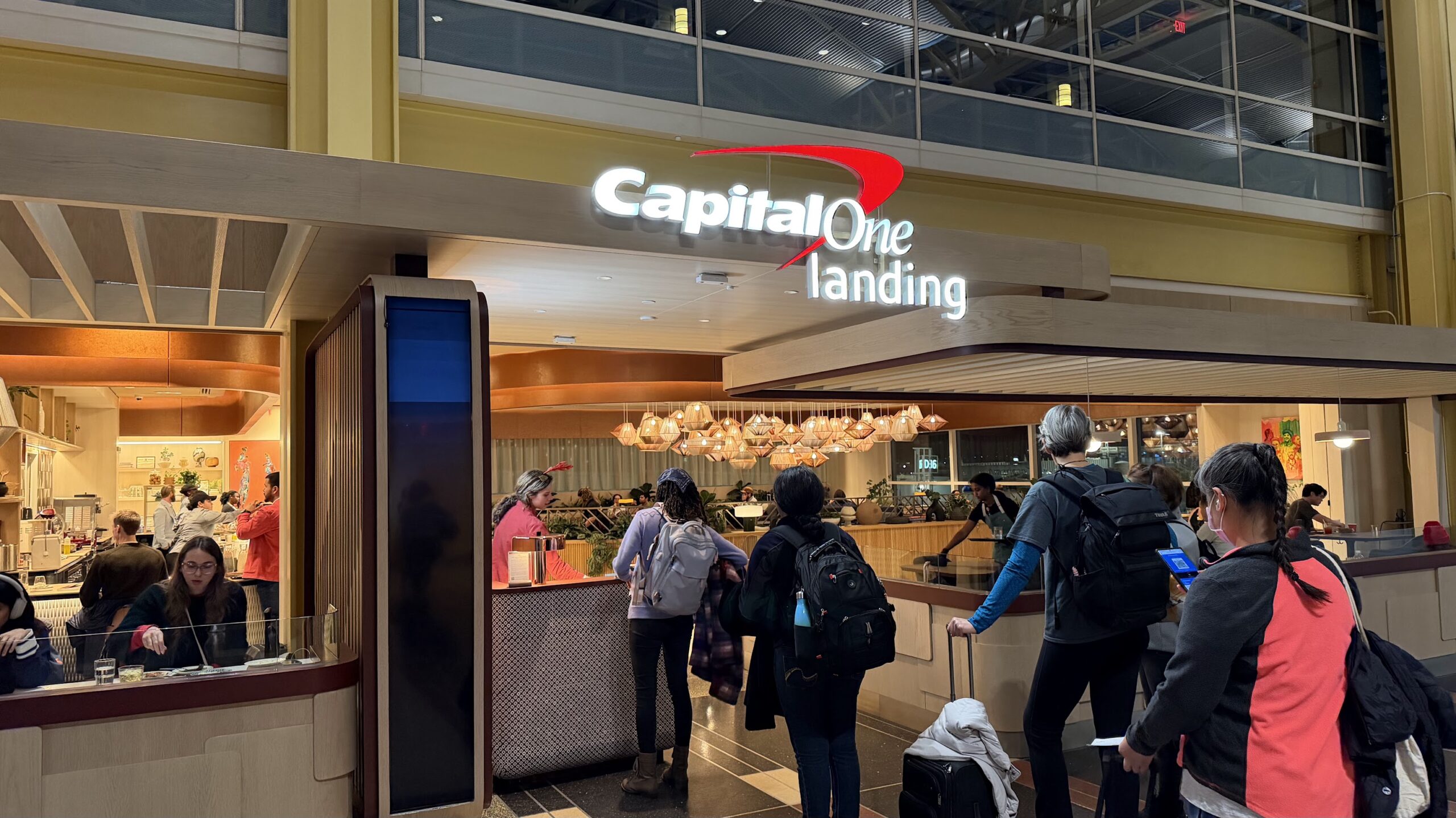
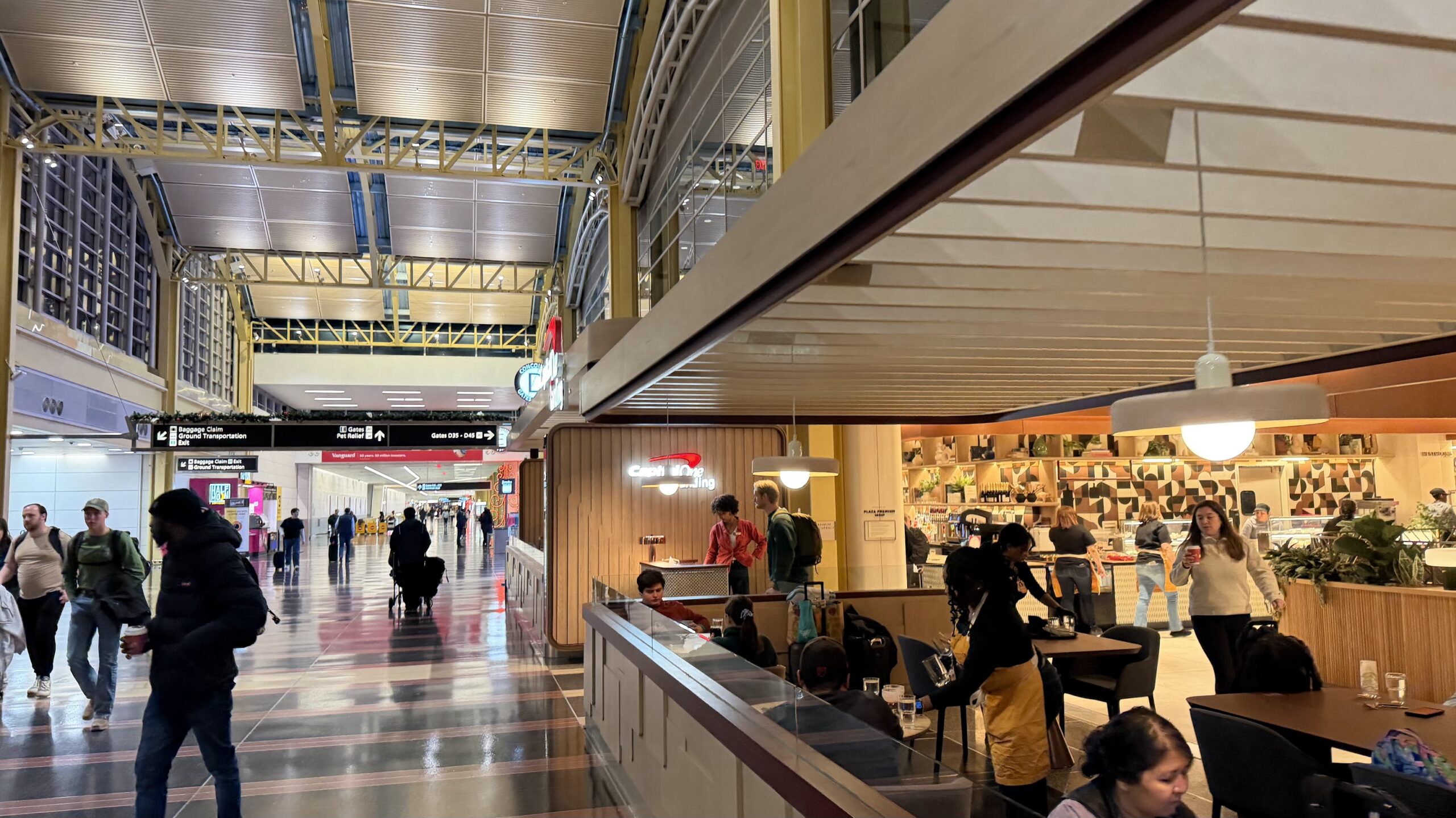
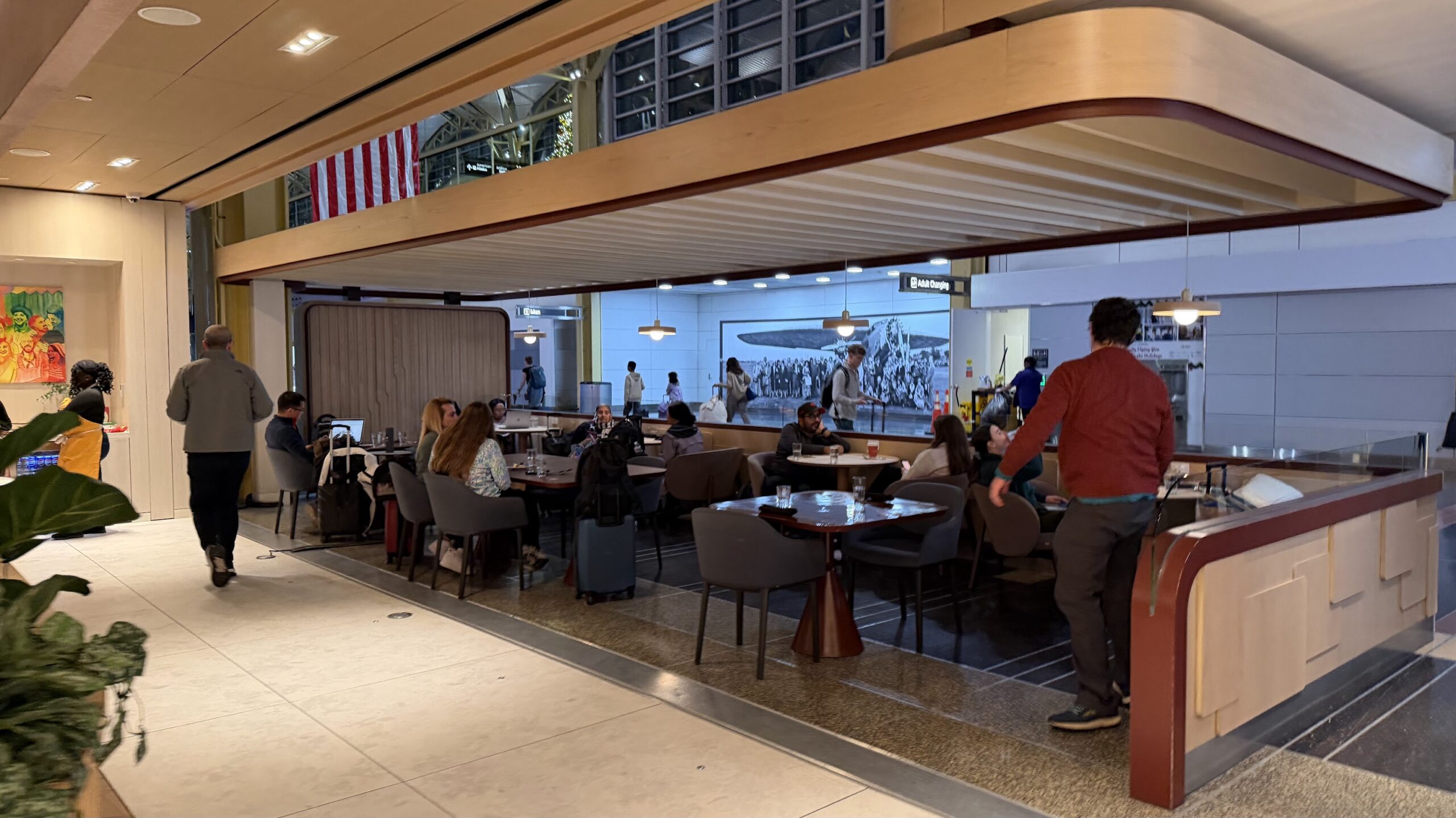
The space is laid out very much like a restaurant rather than a lounge. It is fully open to the concourse, with no partitions or frosted glass separating it from foot traffic outside.
Unlike most airport lounges, there is no attempt to separate the space visually. You can see diners, food being served, and drinks being delivered as you walk past, which makes it feel closer to an airport restaurant than a lounge tucked away in a corner.
Once inside, the layout is simple and compact. On the left as you enter are cafe-style tables and counter seating facing the concourse. This area works reasonably well if you want to check emails or do some light work.
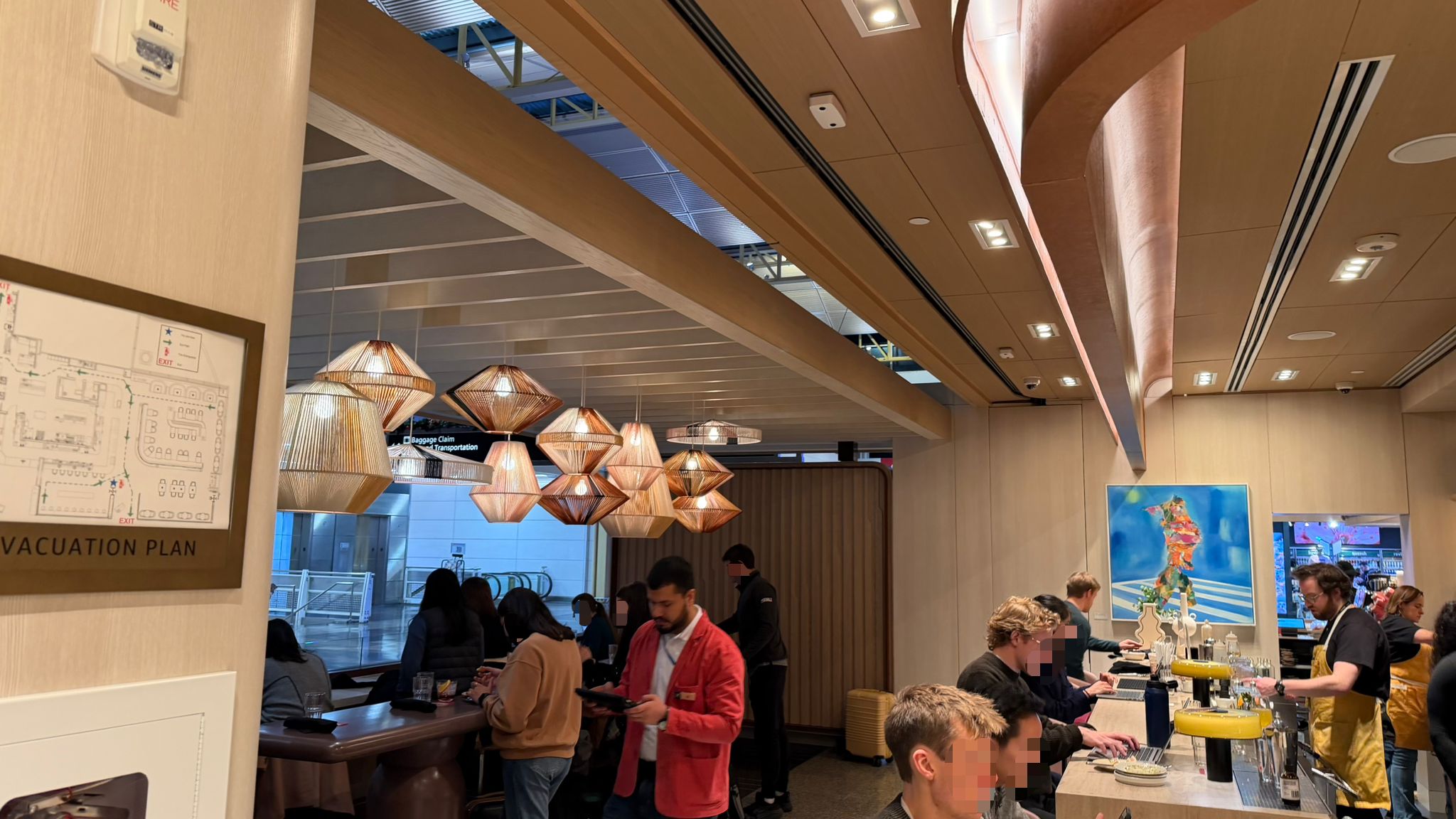
The right-hand side is more dining-focused, with a mix of standard tables and booth seating. This is the busier, more social half of the space, and it is clearly designed around eating rather than lingering for hours.
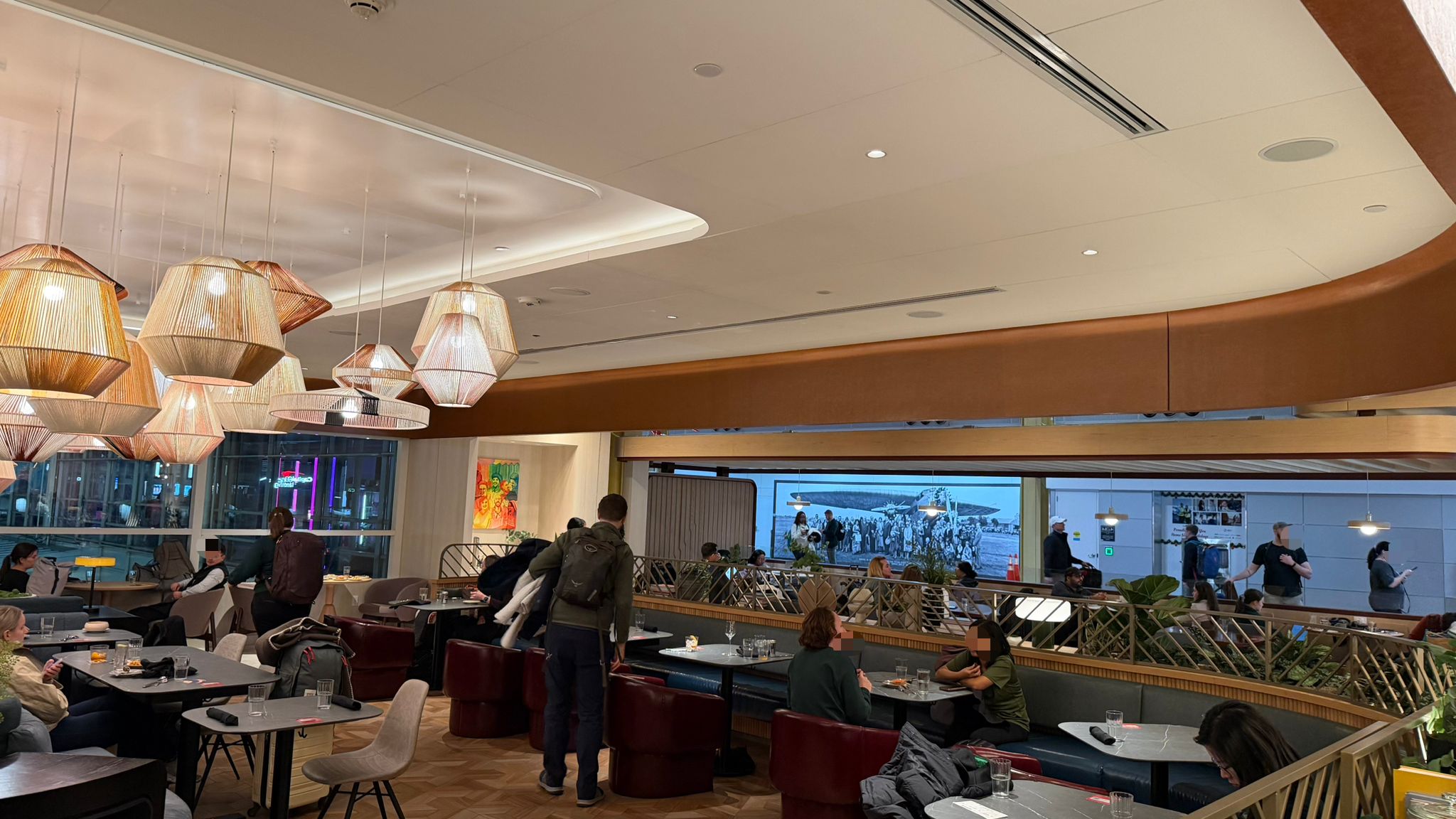
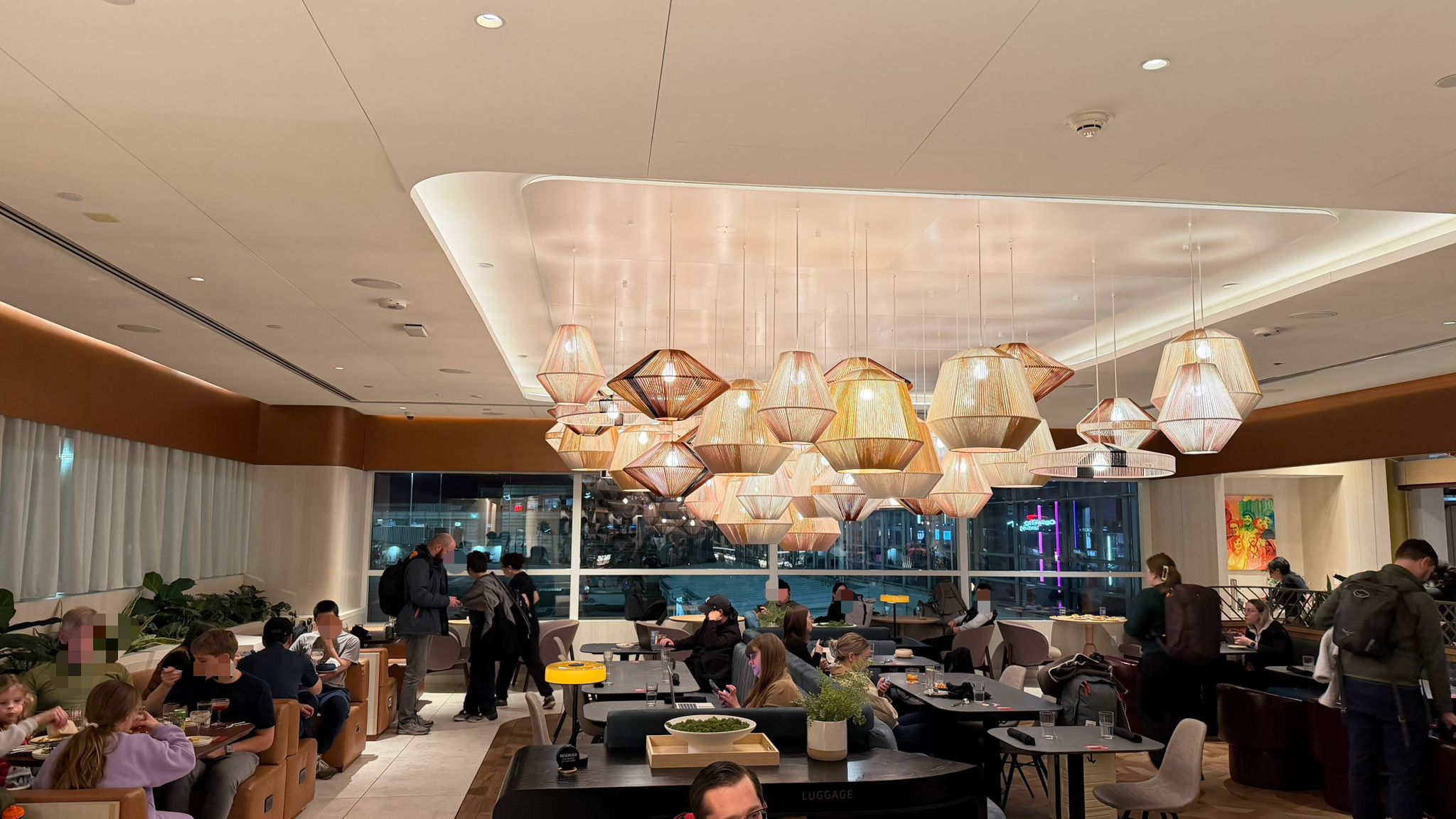
Several tables along the windows offer views of the tarmac, with aircraft taxiing past and taking off.
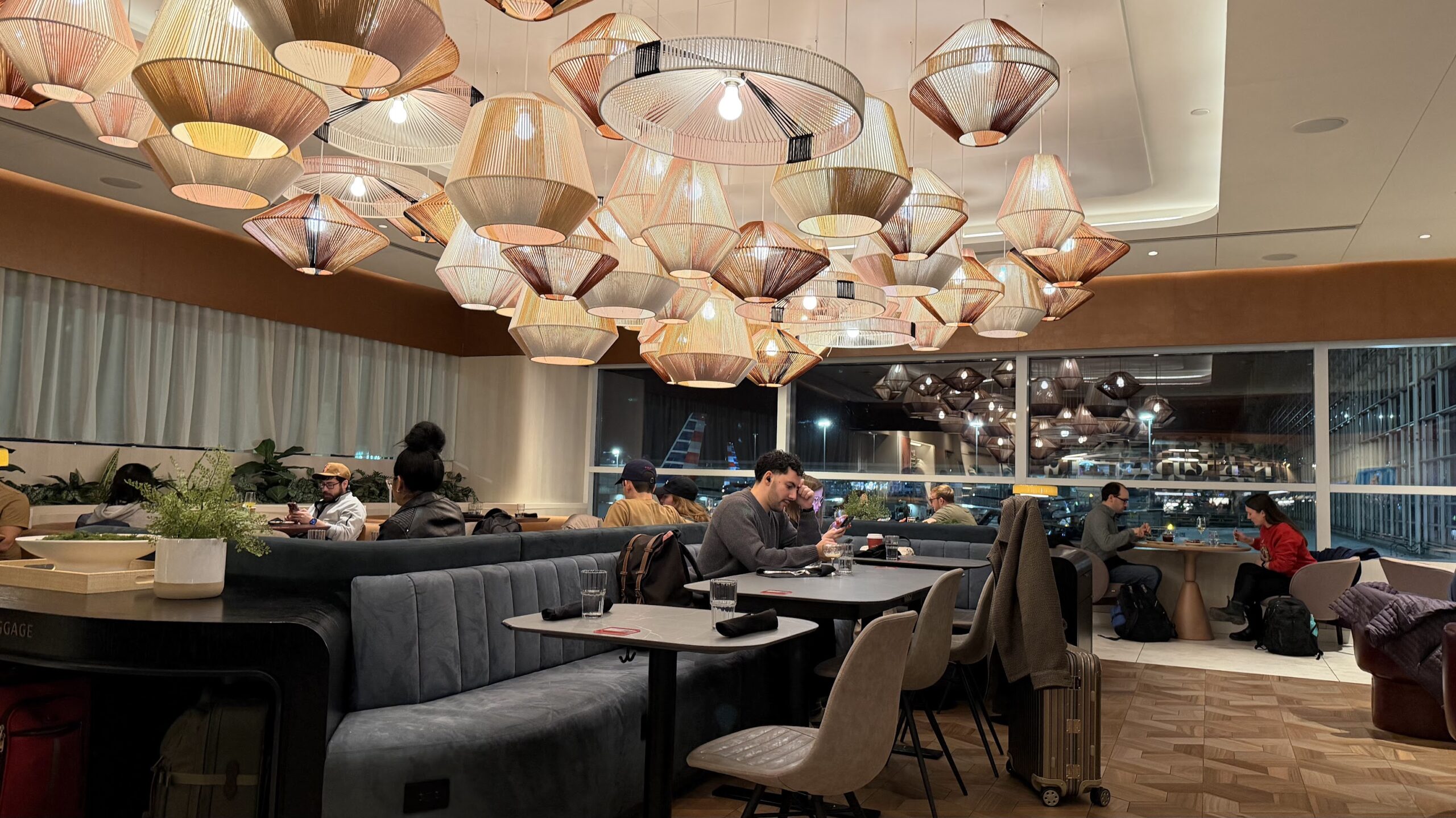
Power sockets are available at most seats, though the dining tables closest to the entrance are the main exception.
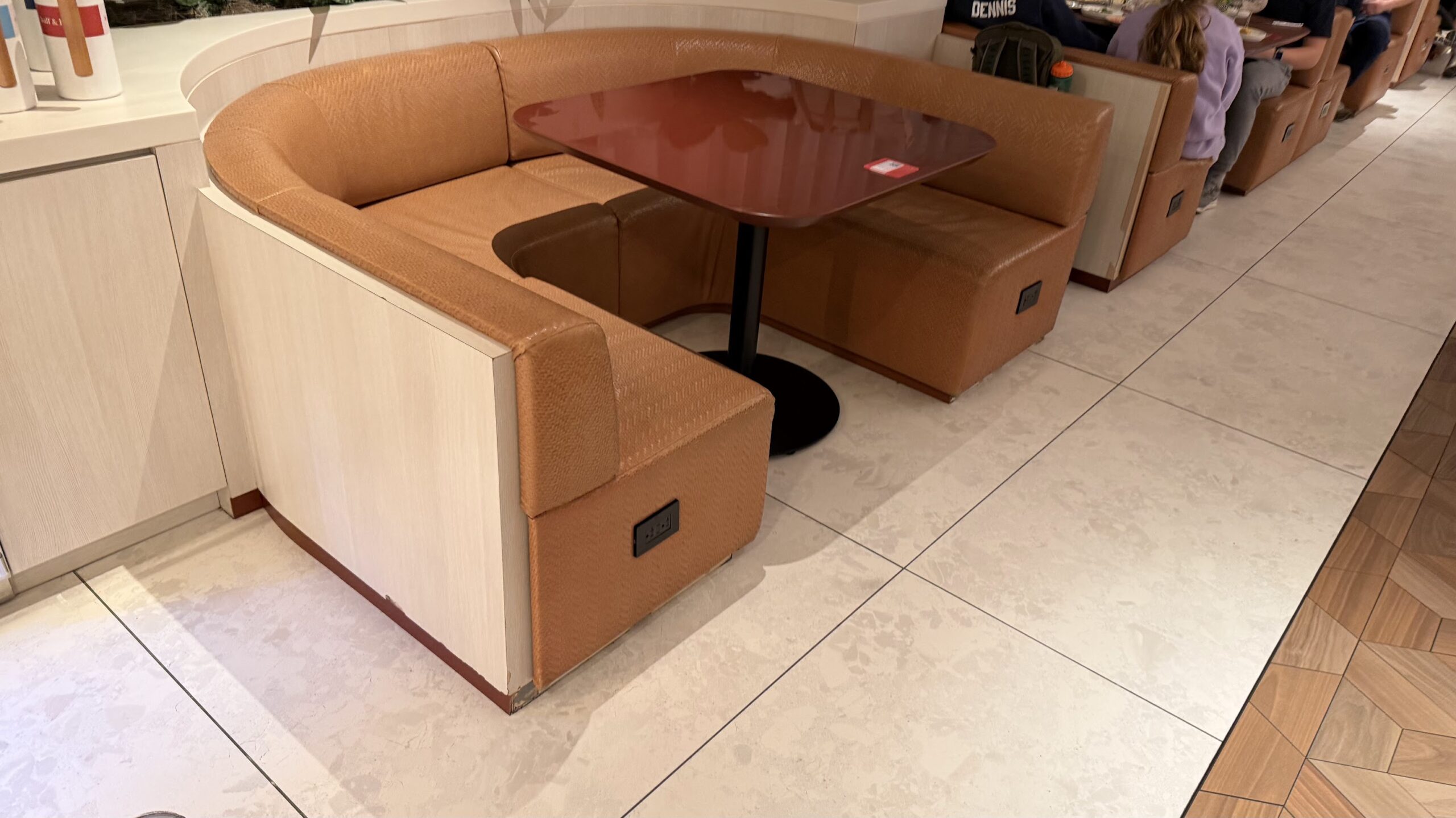
Overall, the layout reflects the concept well. Capital One Landing is not trying to be a quiet refuge from the airport. It is designed to be part of the terminal experience, prioritising food, visibility, and turnover over privacy and seclusion.
One interesting detail is the paid cafe located just outside the Landing area. Capital One seems to be leaning into visibility here, using the open layout as a way to draw in non-cardholders and potentially convert them.
As an aside, what I’ve read is that Capital One cardholders can also get discounted food and drinks here, if you don’t wish to pay for access, especially if you don’t have the Venture X card.
Food and drinks
Food is clearly the main draw at Capital One Landing, and it is where the concept makes the most sense. The menu leans heavily into Spanish-inspired small plates, built around the José Andrés partnership.
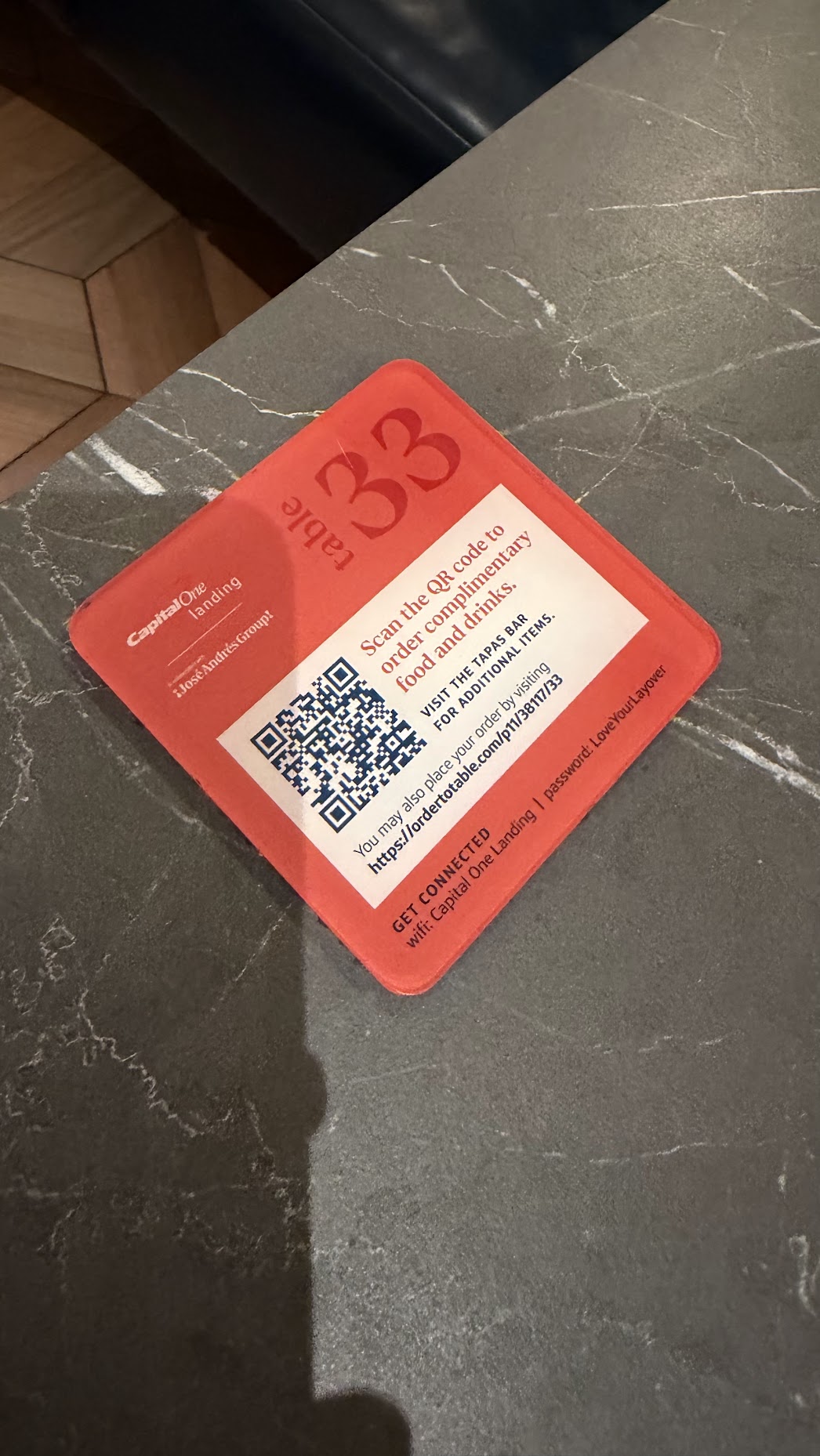
Everything is ordered via QR code and delivered directly to your table. You do need to be connected to the lounge Wi-Fi for the ordering system to work, which took a moment to figure out, but was smooth once set up. The menu can be found online through Capital One Travel or this link.
Hot items include gambas al ajillo, piquillos confitados, carne asada con mojo verde, soups, and grilled sandwiches. Portions are intentionally small, which makes it easy to order a few items and share. If something works, you can simply reorder it.
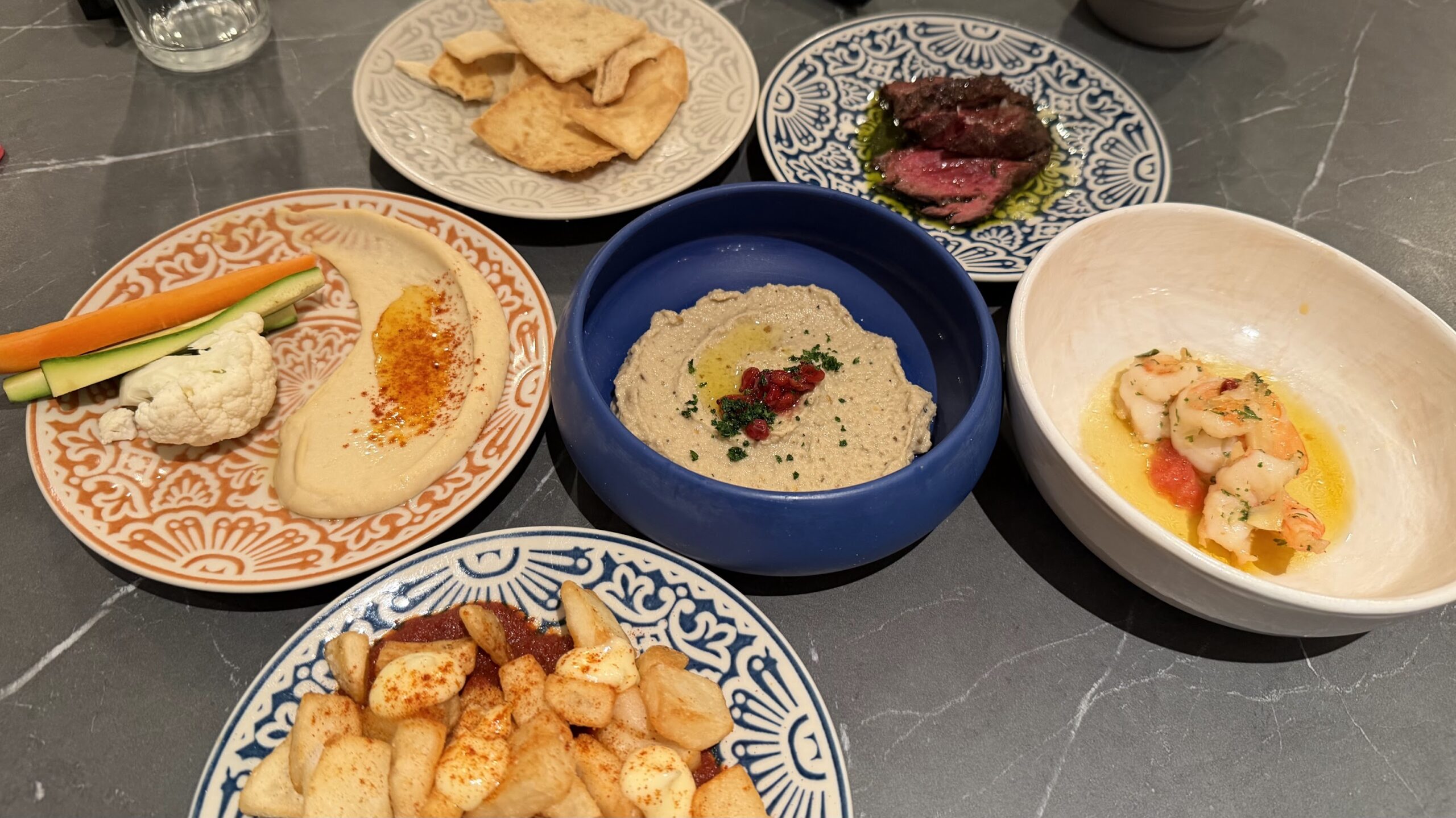
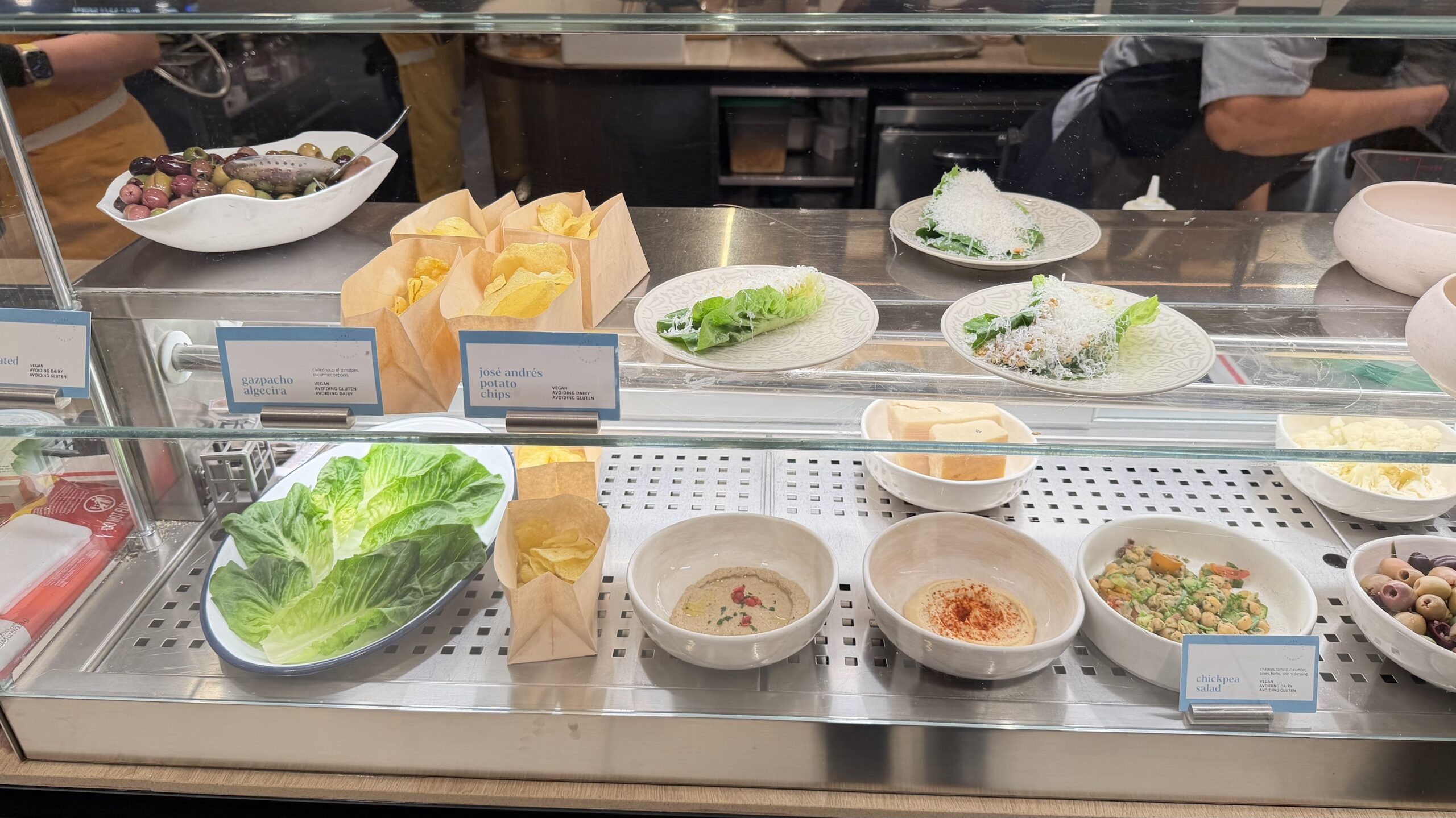
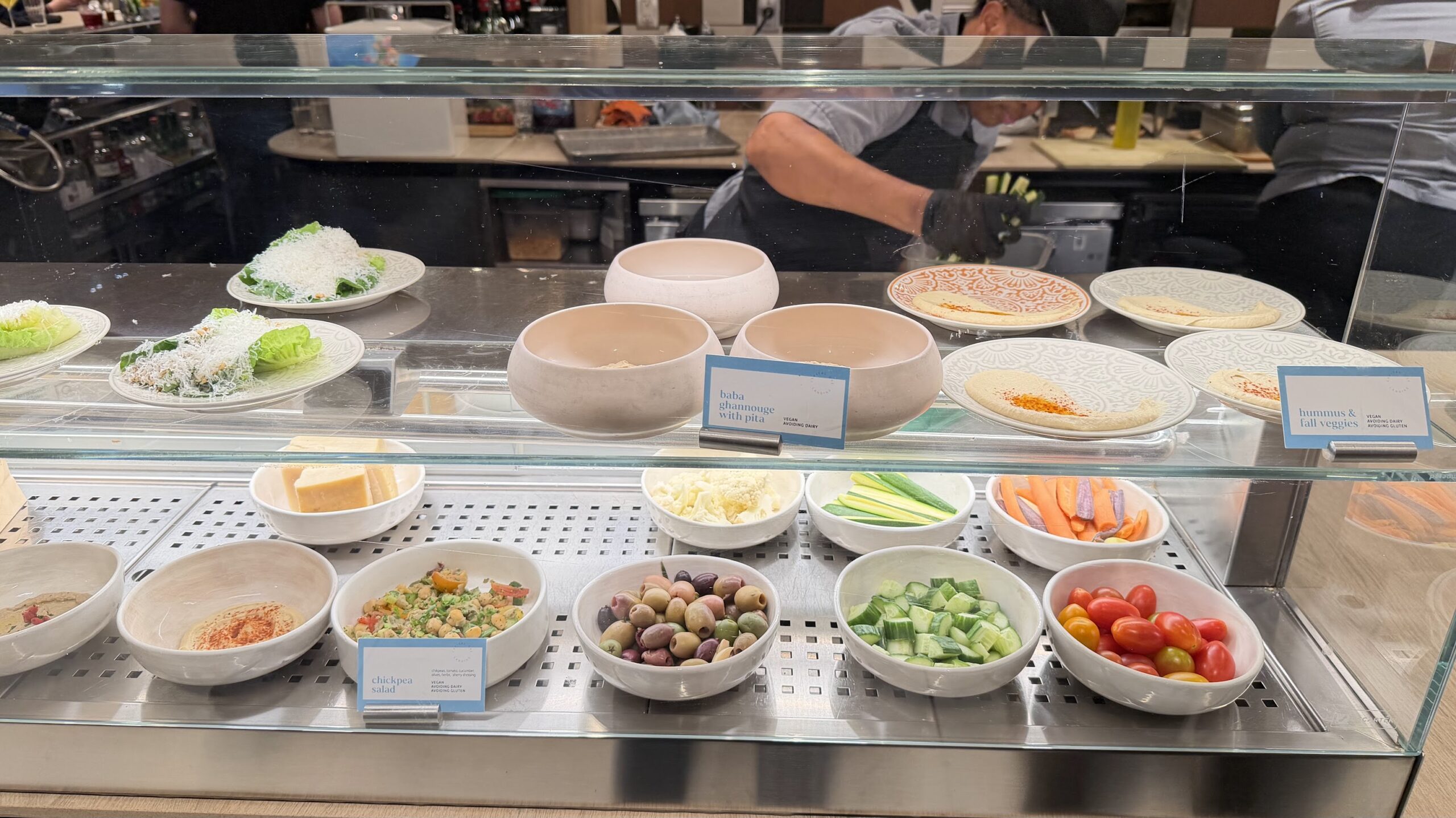
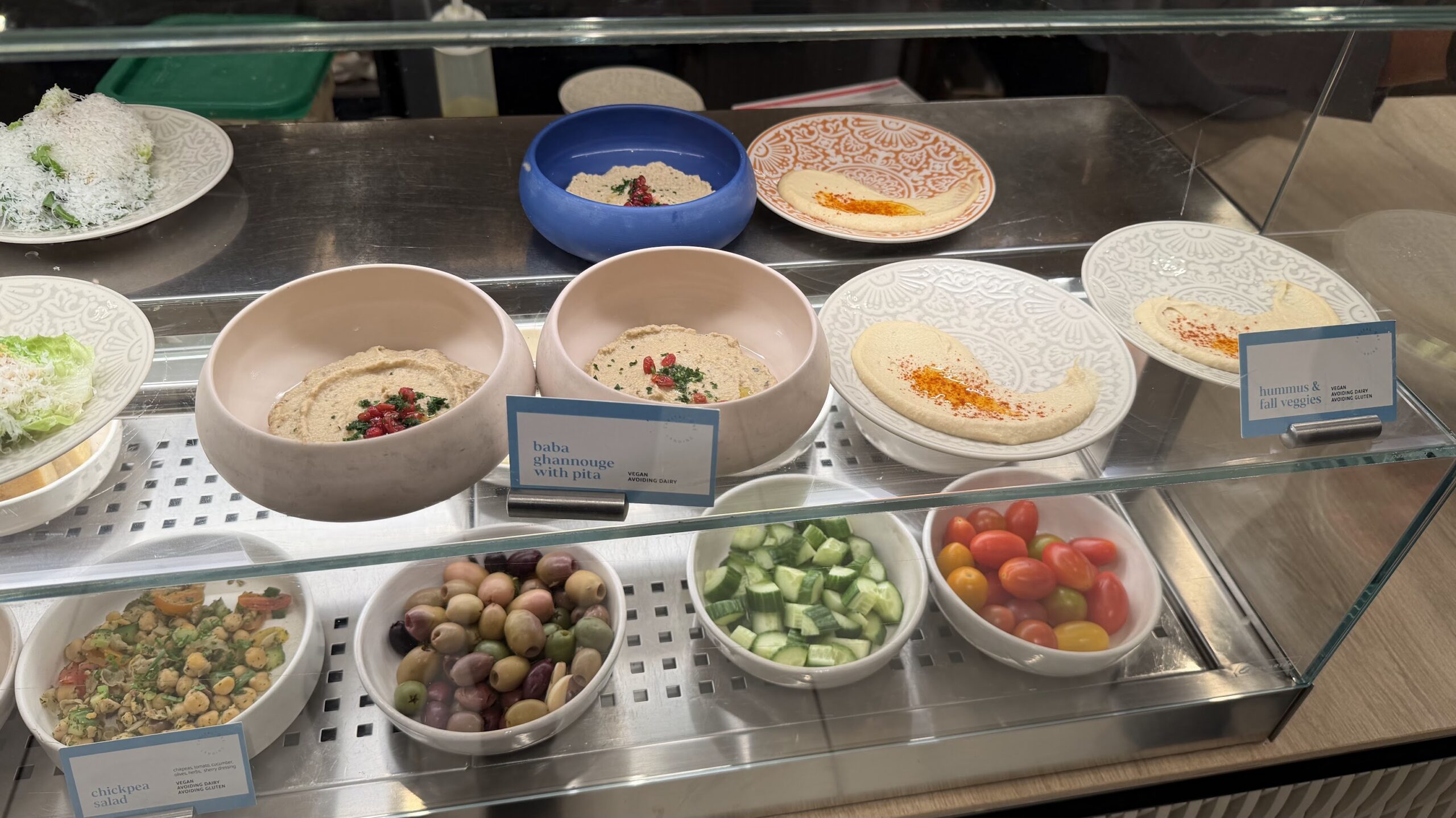
Cold items are available at the counter and act as easy fillers between hot dishes. Baba ghanoush with pita, hummus, and chickpea salad were all available during our visit, and these are the kind of items you can pick at while waiting for the small plates to arrive.
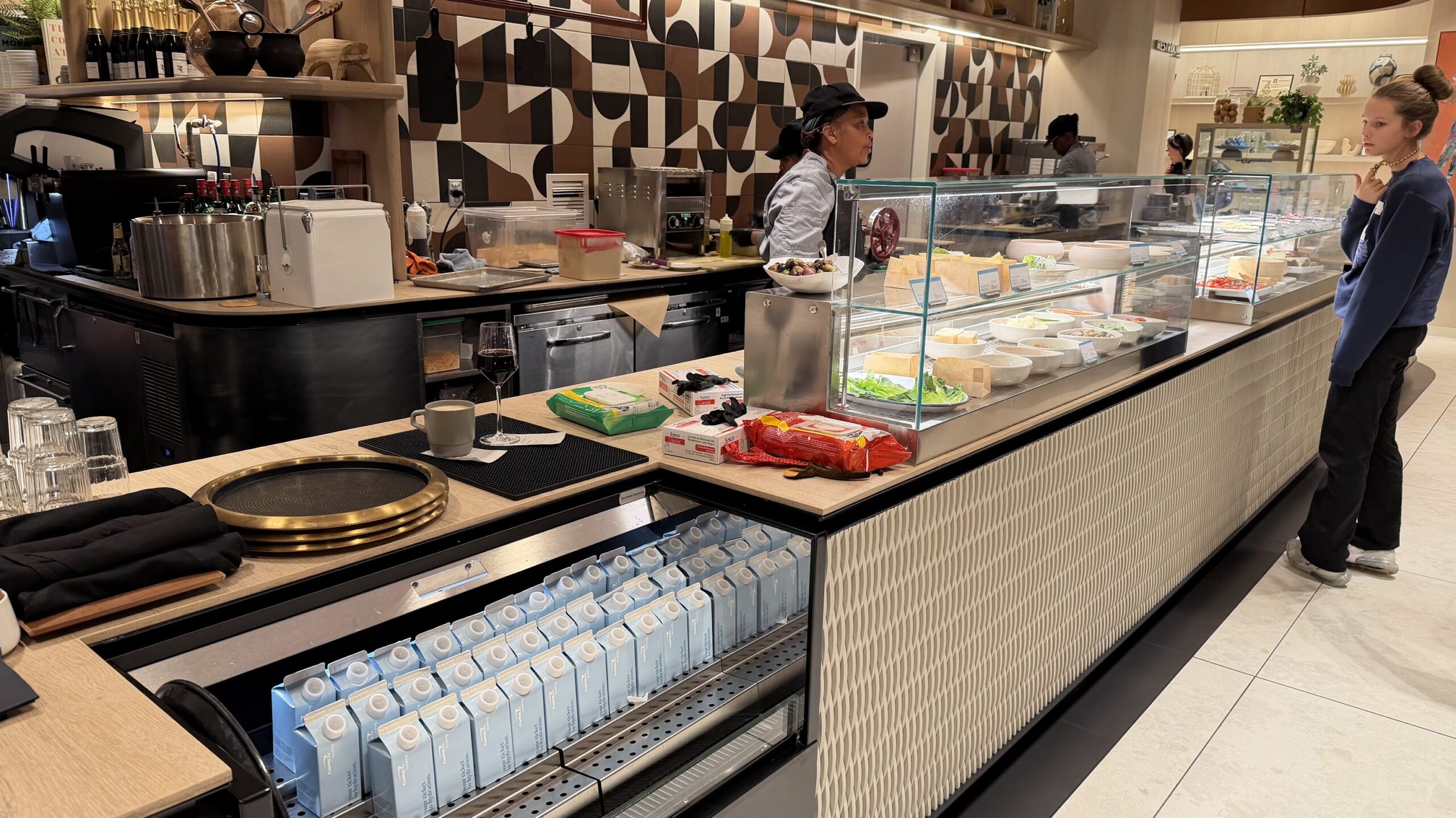
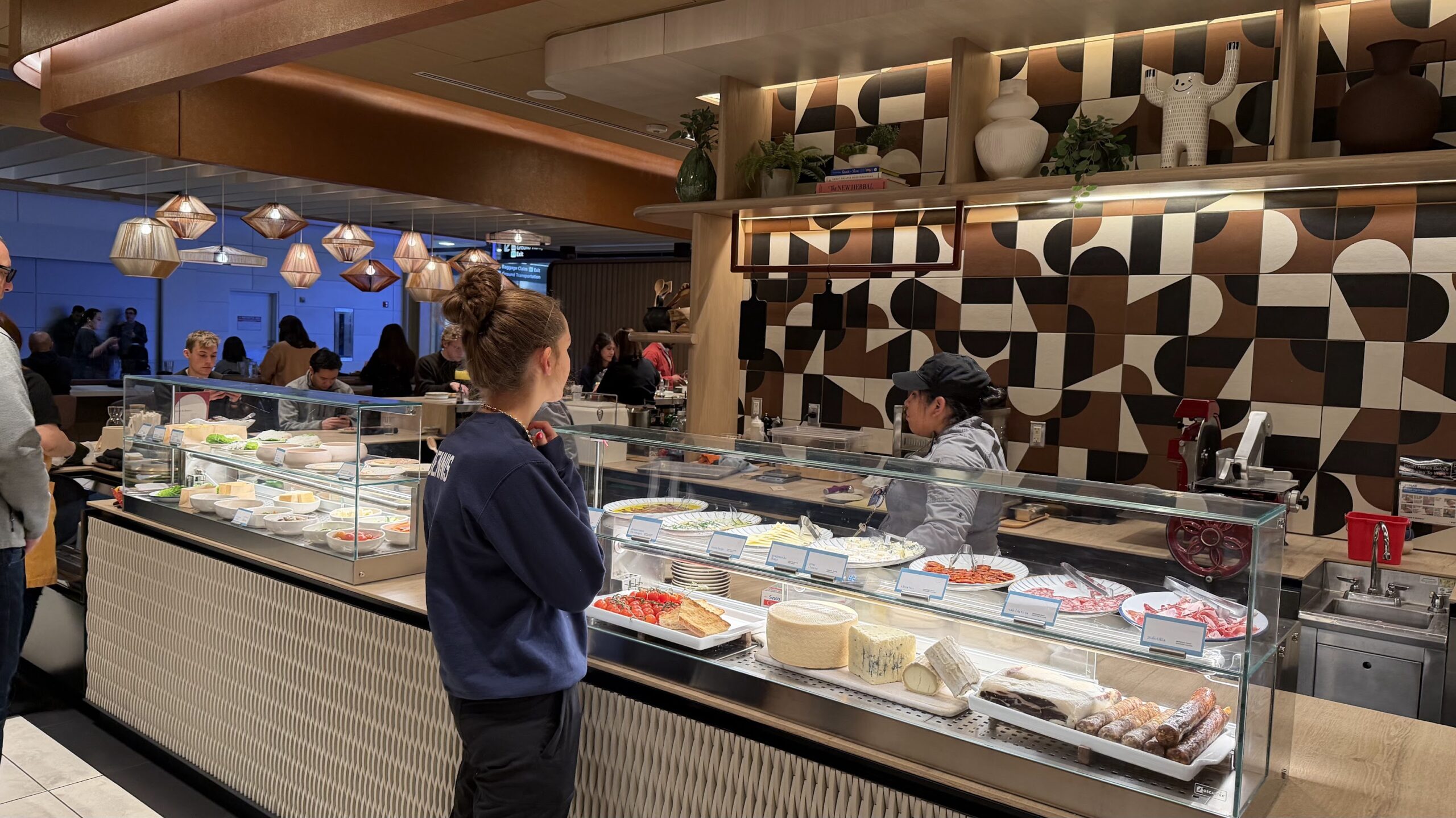
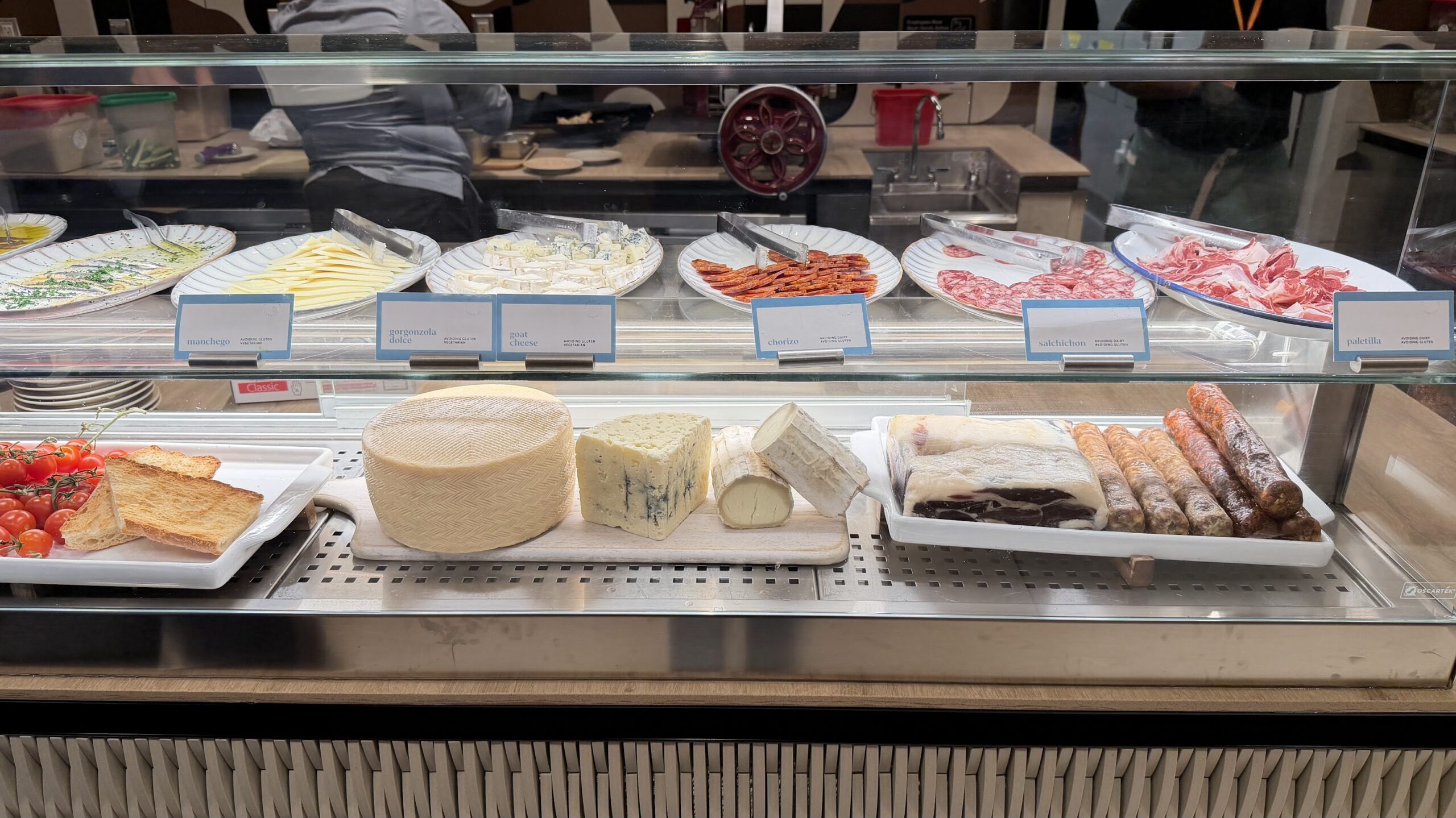
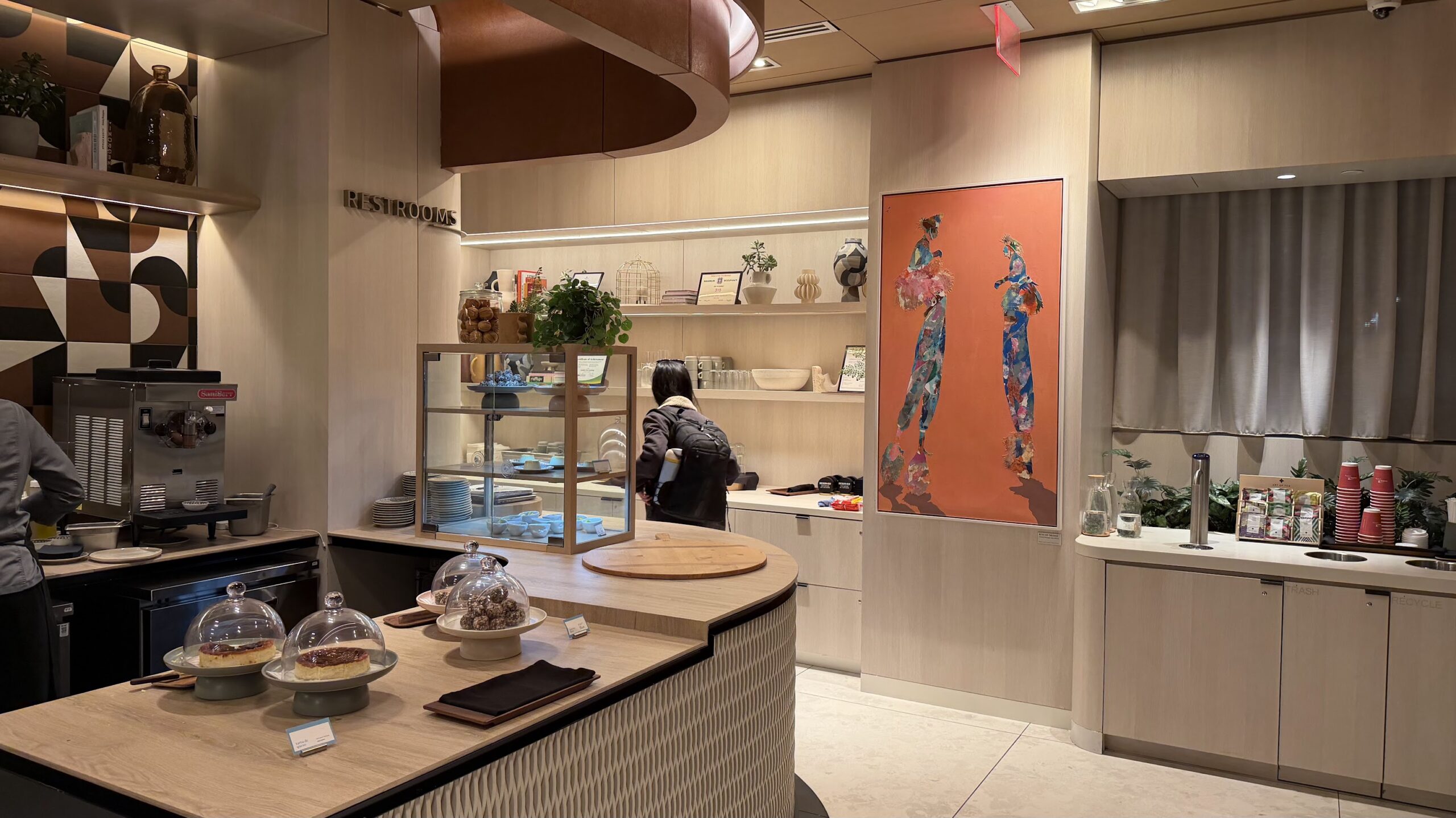
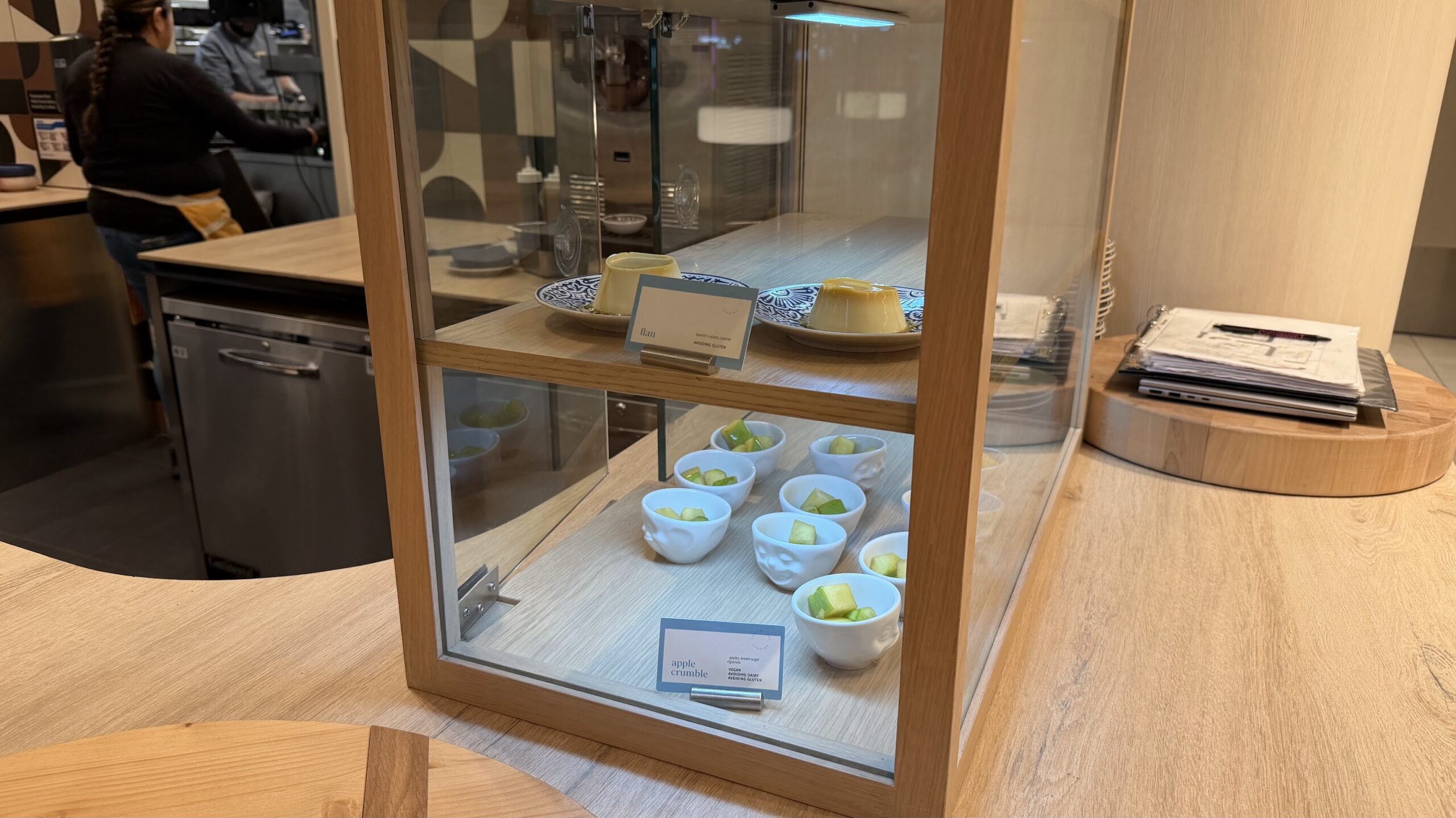
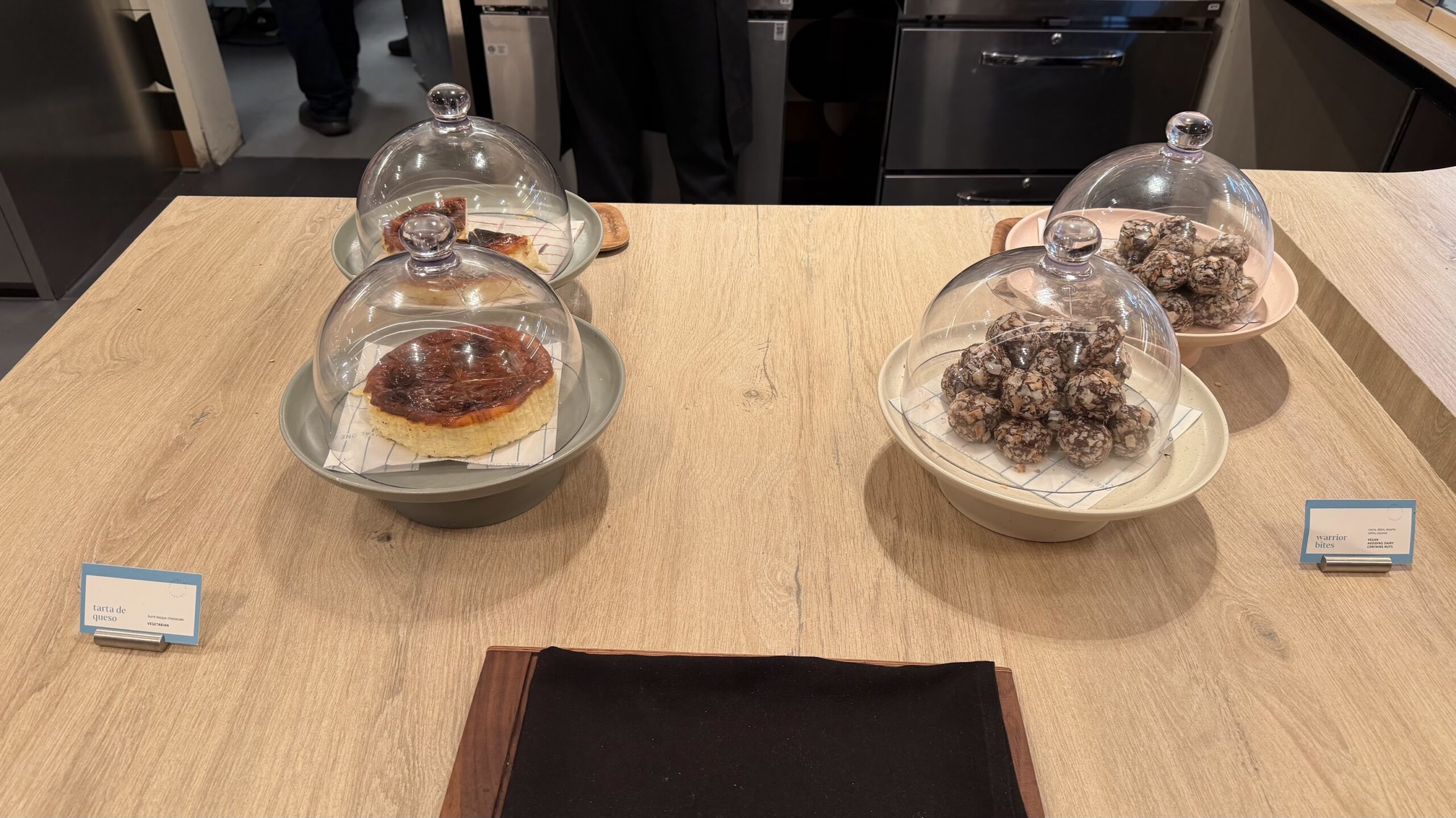
Desserts are mostly self-serve and include flan, apple crumble, tarta de queso, and small energy bites, with a few items served by staff.
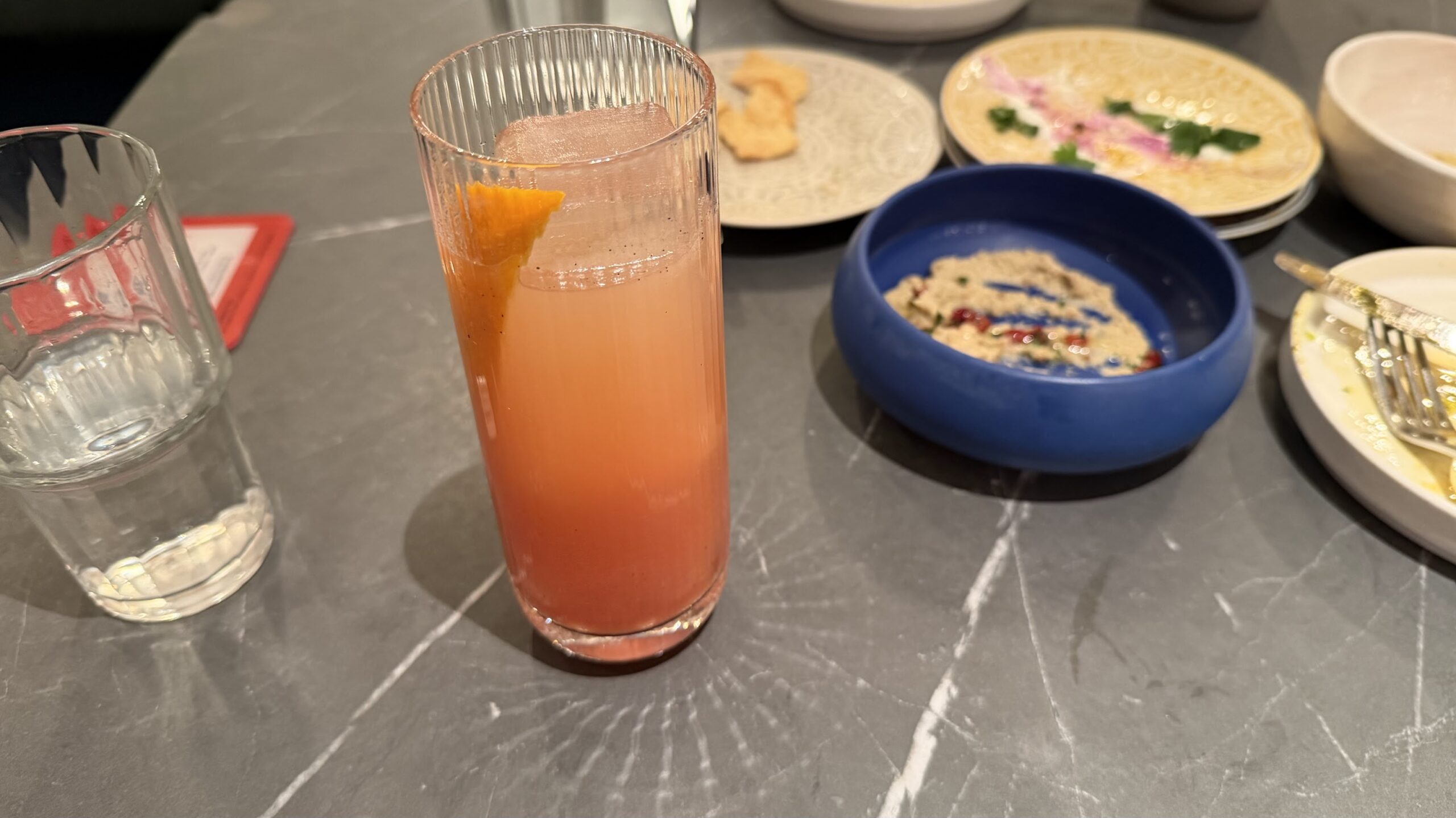
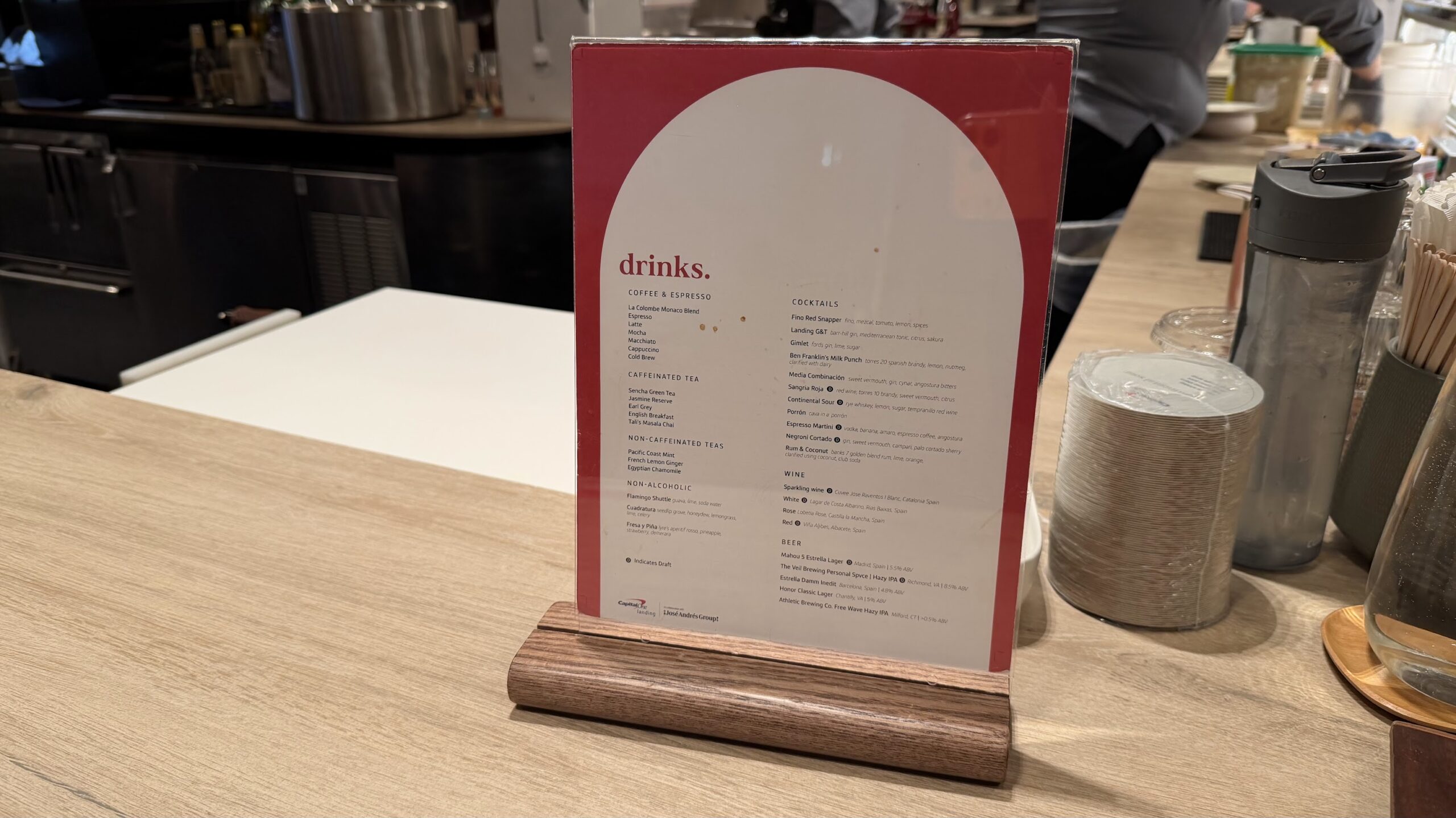
Drinks are ordered through the same QR system. This includes cocktails, mocktails, wine, beer, and barista-made coffee.
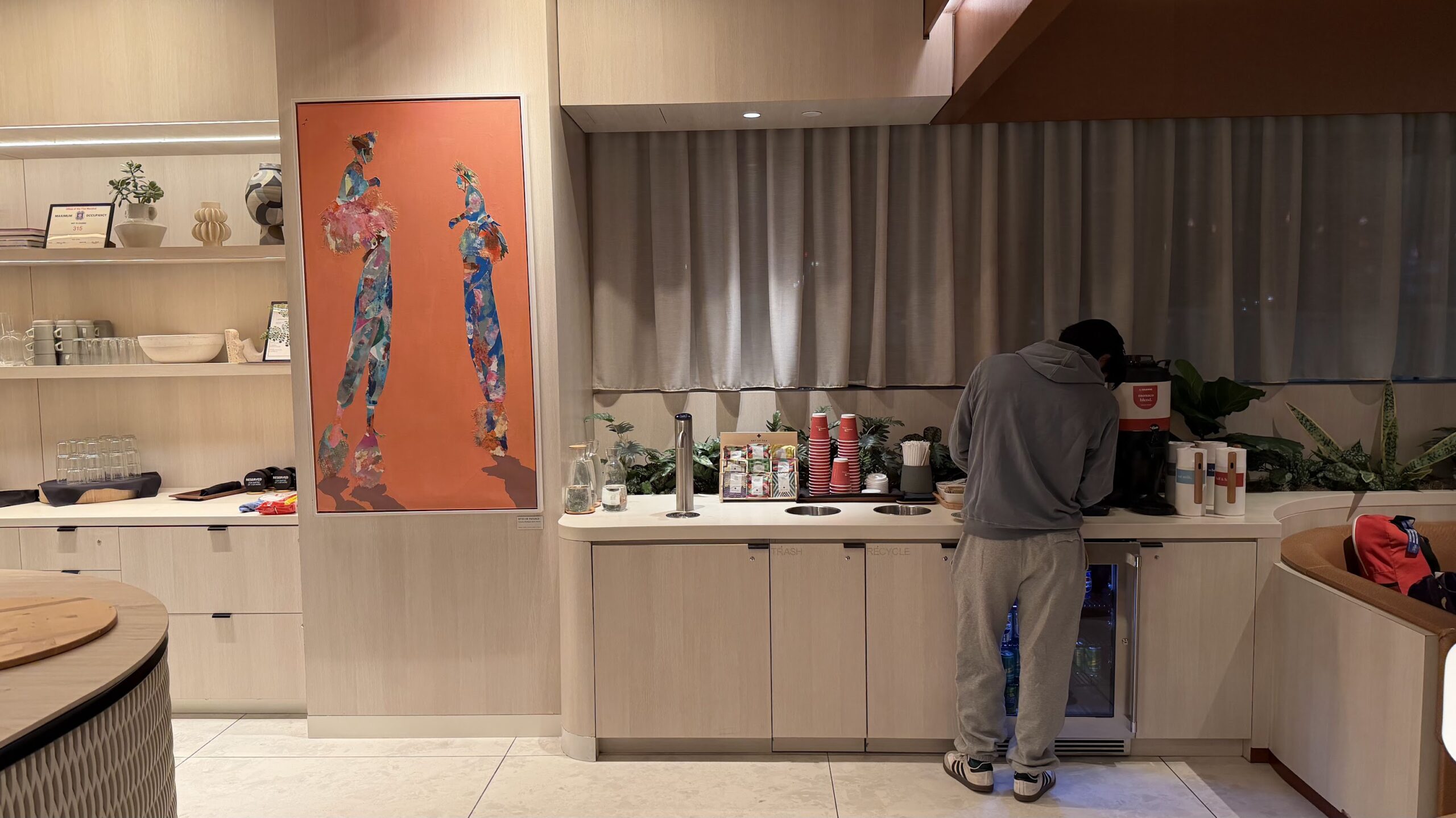
Tea is supplied by Art of Tea, while coffee comes from Colombe. Takeaway cups are available, which is useful if you want to bring a drink onboard.
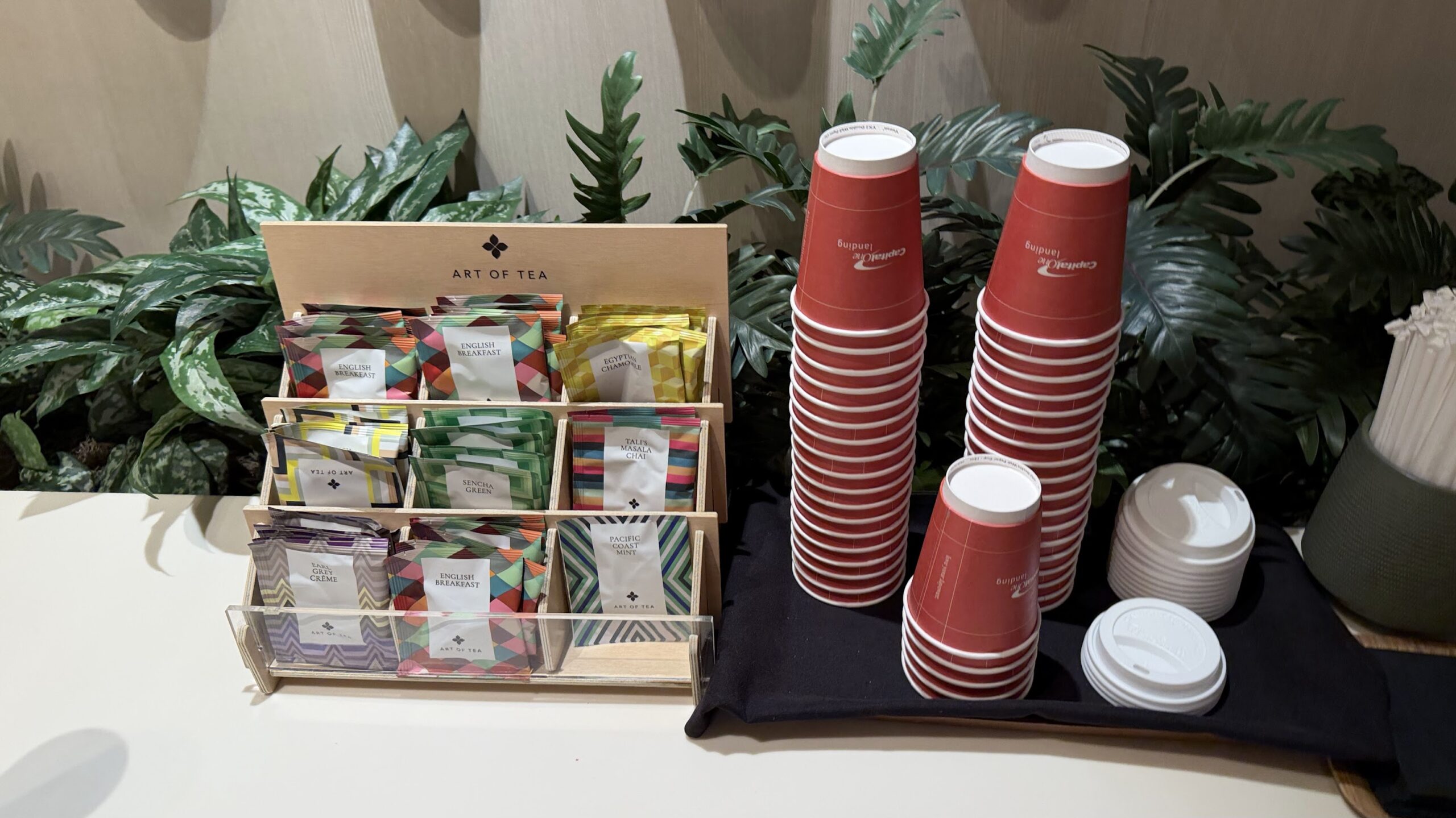
Overall, the food and drinks here are clearly stronger than what you would expect from a typical airport lounge. The focus is on dishes that are prepared and served to order, rather than a large self-serve spread.
Whether you are stopping by for a quick bite or settling in for a longer stay, Capital One Landing does a very good job if you are looking for a proper meal before your flight.
Amenities
Amenities are fairly basic. There are no showers, nap rooms, or dedicated quiet areas, and the space is geared much more towards dining than resting.
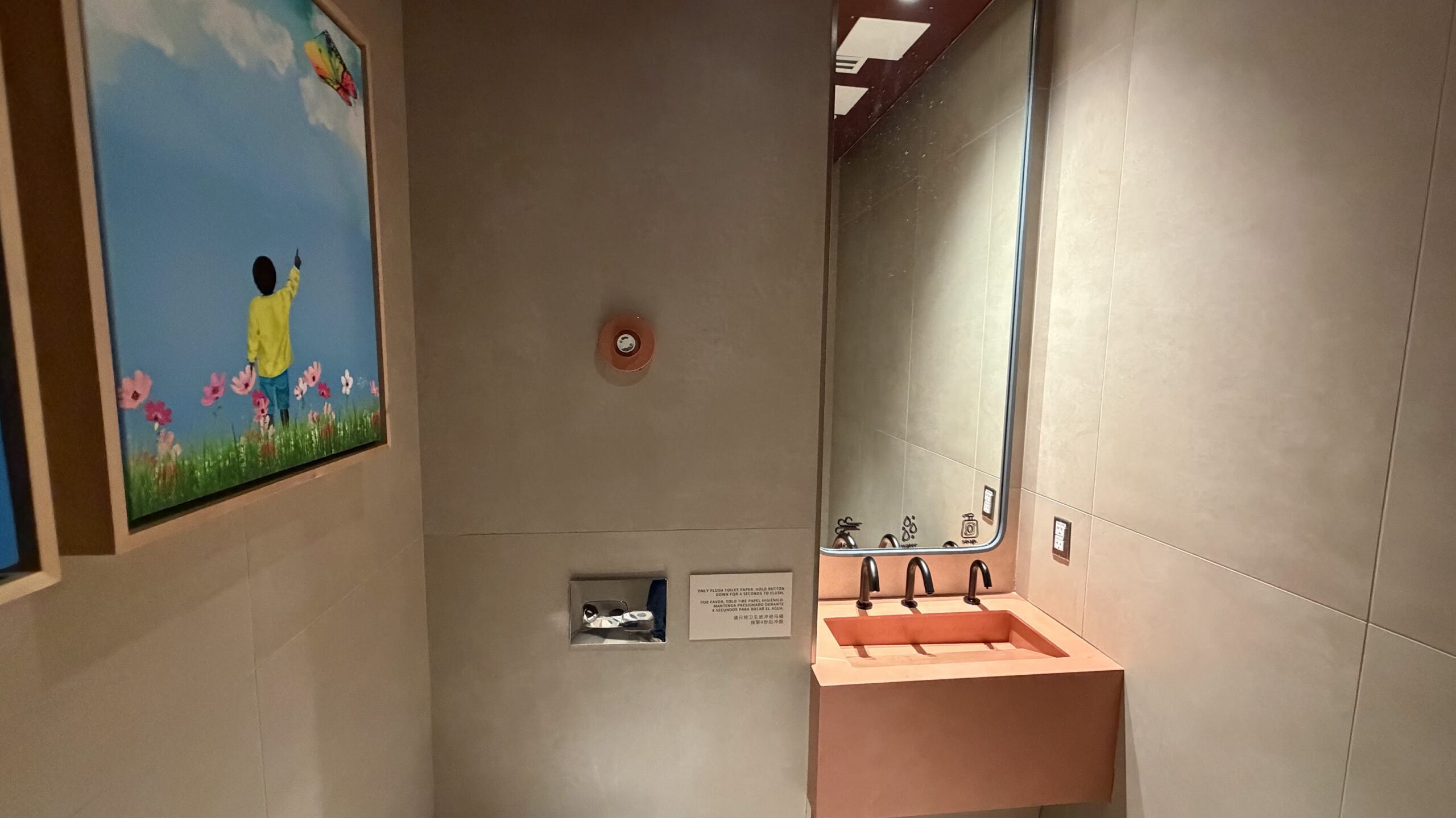
With only a single washroom inside Capital One Landing, a queue formed during our visit once the lounge started to fill up, which was hard to avoid around peak dining time. For a space of this size and capacity, it feels insufficient.
Concluding thoughts
Capital One Landing is an interesting addition to the airport food and lounge landscape.
Instead of building another conventional lounge, Capital One has leaned hard into dining. The focus on made-to-order food and table service sets it apart, and it feels like a deliberate response to what American Express and Chase have been doing with their own lounge networks.
Capacity limits and pared-back amenities mean this will not replace a traditional lounge for everyone. Still, if you have access and want a proper meal and a decent drink before a flight, Capital One Landing holds its own in an increasingly competitive space.