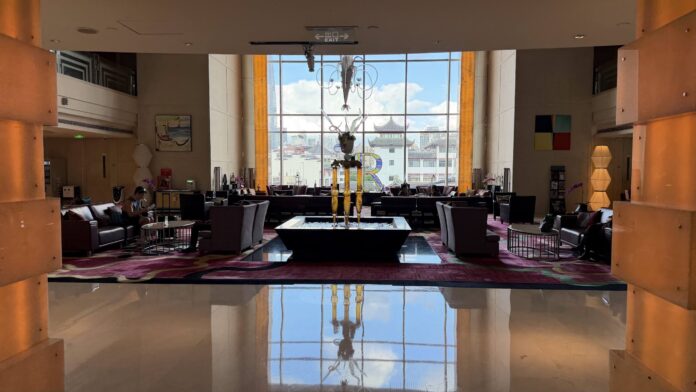
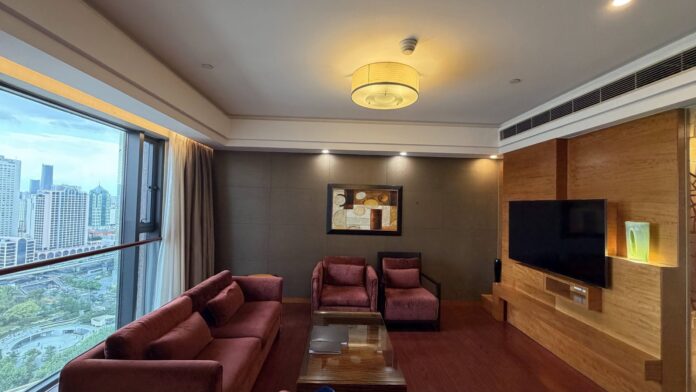
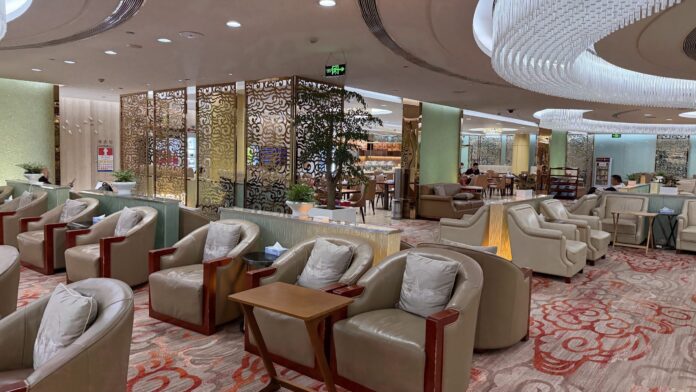
We visited this lounge twice, in March and April 2026, on transit flights through Incheon. Both visits covered different meal periods (breakfast and lunch), which gave us a reasonable sense of the food rotation and how the lounge operates across the day.
Korean Air completed a major renovation of its Prestige East (Right) Lounge in August 2025 as part of a broader overhaul of its Terminal 2 lounge network.
The redesign is tied to Korean Air’s 2025 rebrand, and the lounge reflects that new identity throughout. The interior is beautifully done, with glass finishes, warm lighting, and a level of polish that the old lounges never had. If you’ve been through Incheon before the revamp, this is a very different space from what it used to be.
Location and access
The lounge is located on the east side of Incheon International Airport Terminal 2, accessible via an escalator near the higher-numbered gates. The naming can be confusing. There are two physically separate lounges under the Korean Air Prestige Lounge East banner: a Left and a Right. They share a general entrance area but are distinct spaces with different amenities, though the food is largely similar. This review covers the Right lounge.
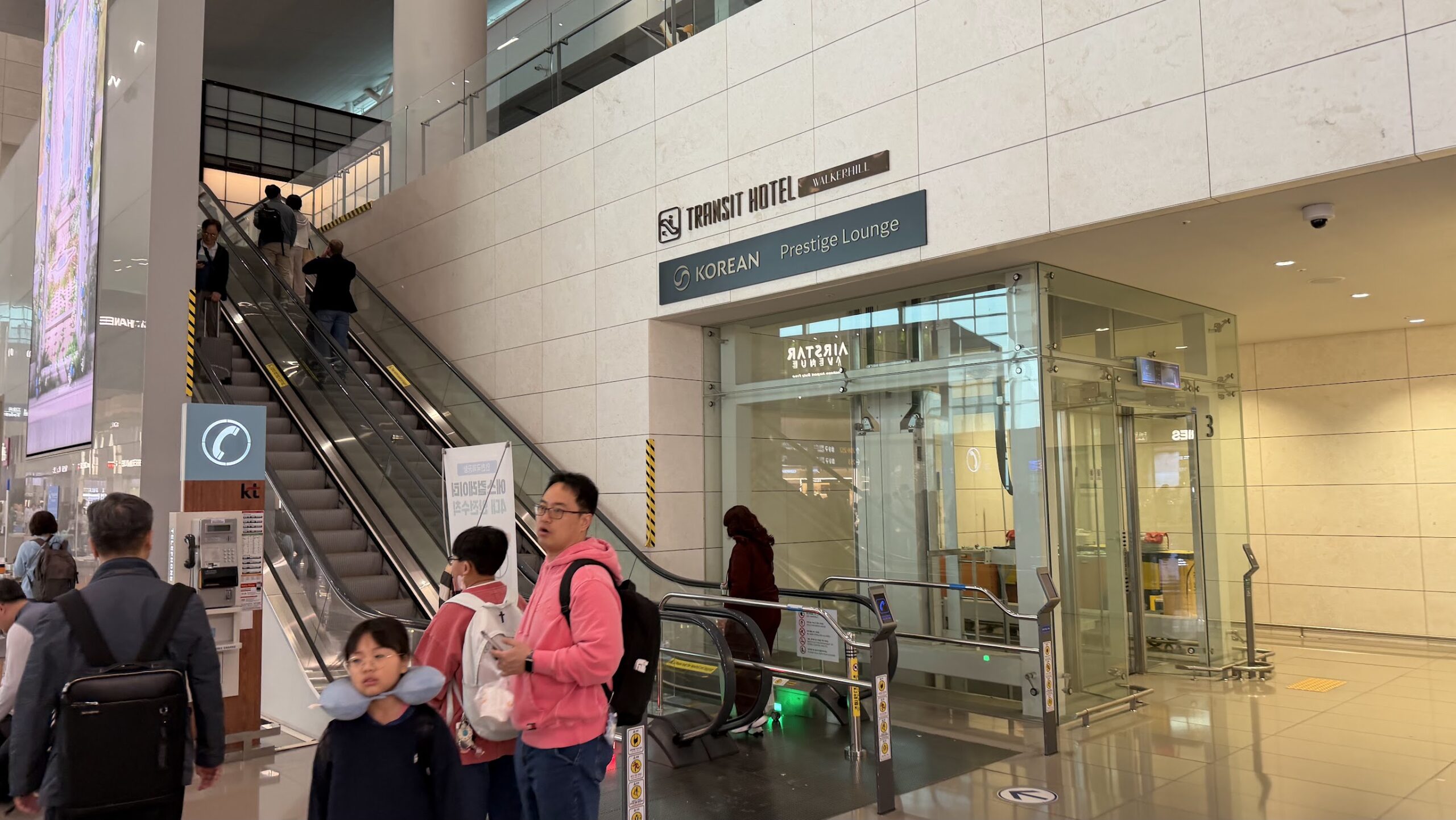
Access follows standard SkyTeam lounge policy. Prestige (Business) Class passengers on Korean Air and SkyTeam partner airlines can enter, along with SkyTeam Elite Plus members and Korean Air Morning Calm Premium Club and Million Miler Club members.
What’s worth noting is the transition phase from the Korean Air-Asiana merger. We visited as Star Alliance Gold members flying on Asiana Airlines, and were granted access without issue. As the two airlines continue to integrate, Star Alliance passengers on Asiana can currently use Korean Air’s lounges at Incheon. How long this arrangement lasts will depend on how the merger plays out, but for now, it works.
Layout
The lounge is a large rectangular space. Upon entering, you scan your boarding pass at automated gantries rather than checking in with a staff member.
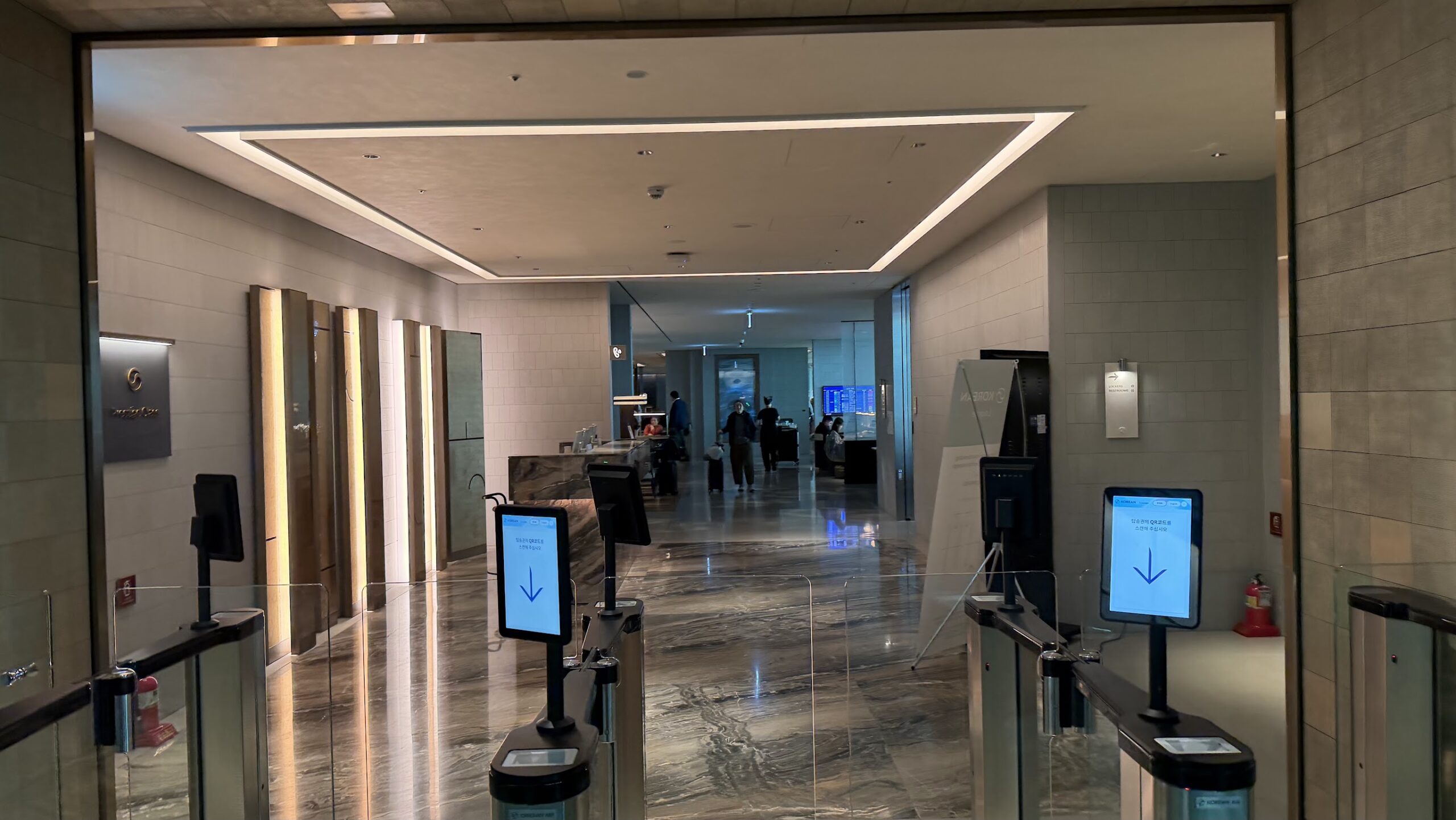
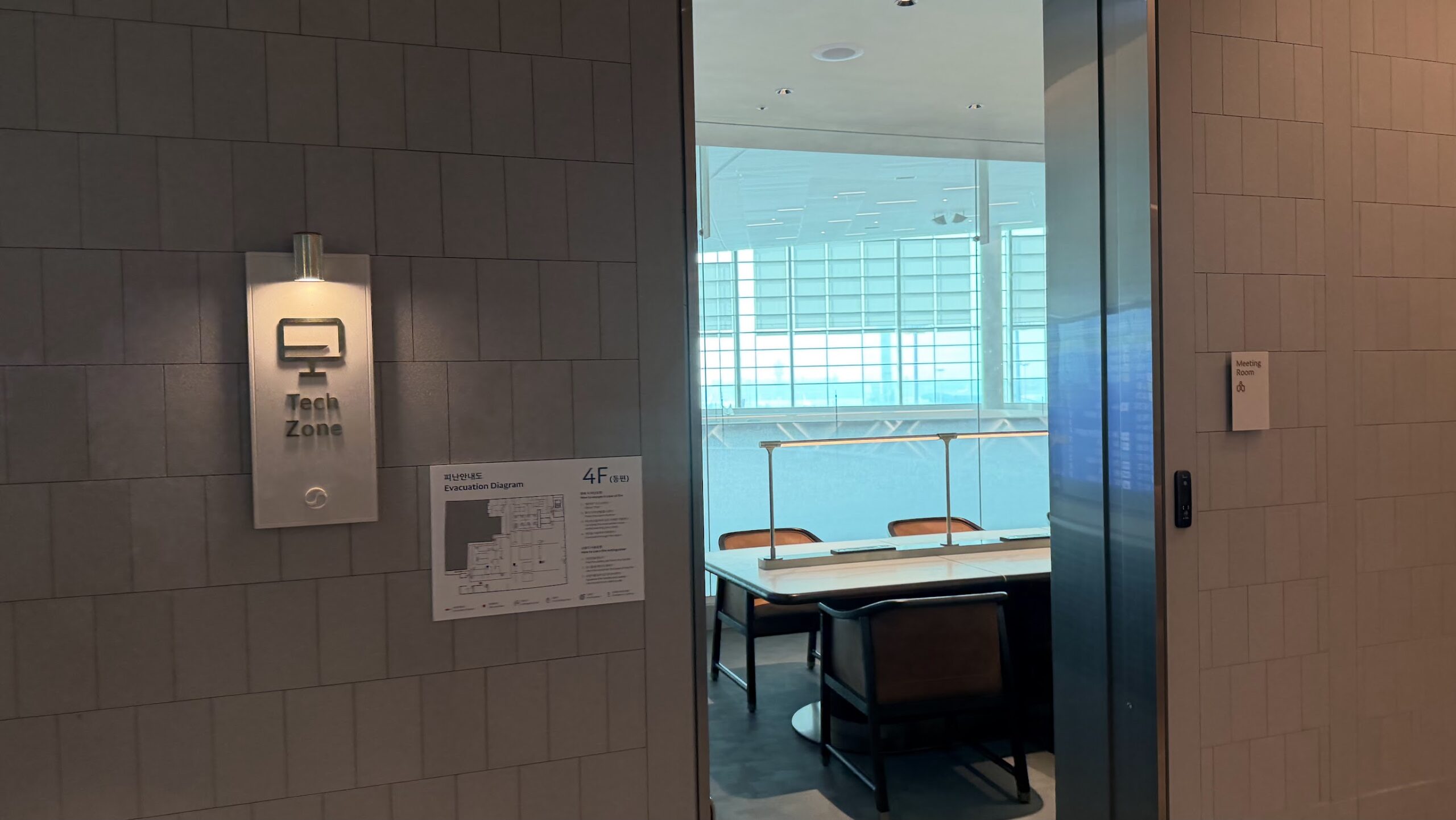
The reception desk sits just beyond the gates but was unused on both our visits, given the self-service entry setup. Korean Air staff are stationed outside the gantries instead, directing passengers to whichever side depending on capacity.
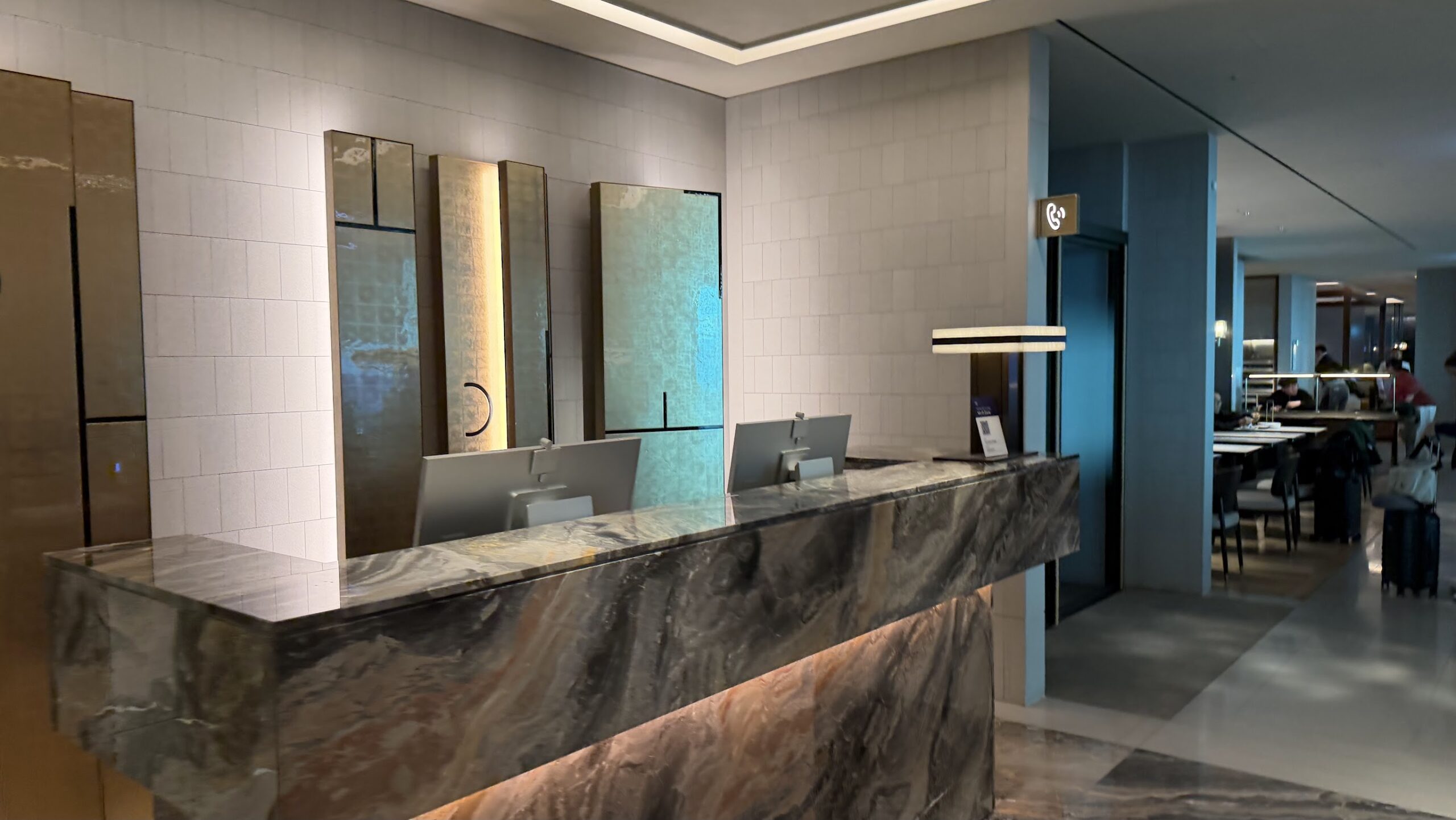
Walk further in and you’ll first come across the Tech Zone, and there is a large meeting room that can also function as a boardroom. It’s an enclosed space with a long table and screens, clearly designed for groups of travellers who need to get work done or take a call before a flight.
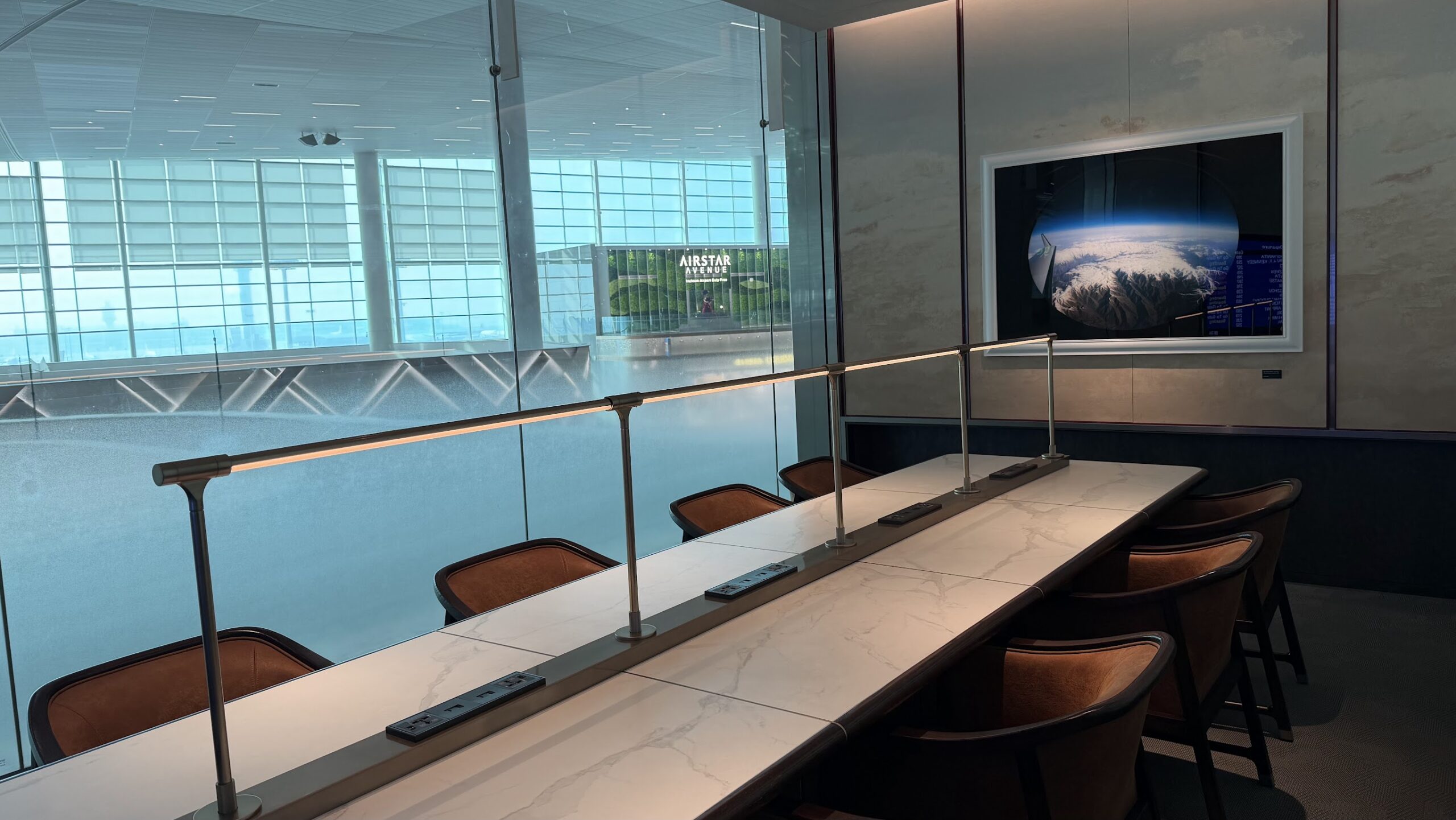
Keep going and the lounge opens up into several seating areas. The first section has island-style communal seating, arranged like a coworking space with long shared tables and individual power outlets.
Further along, there are sofa seats facing the main terminal atrium. These were popular on both visits and were mostly taken or full. All seating areas have charging ports, which makes it easy to eat, work, and charge simultaneously.
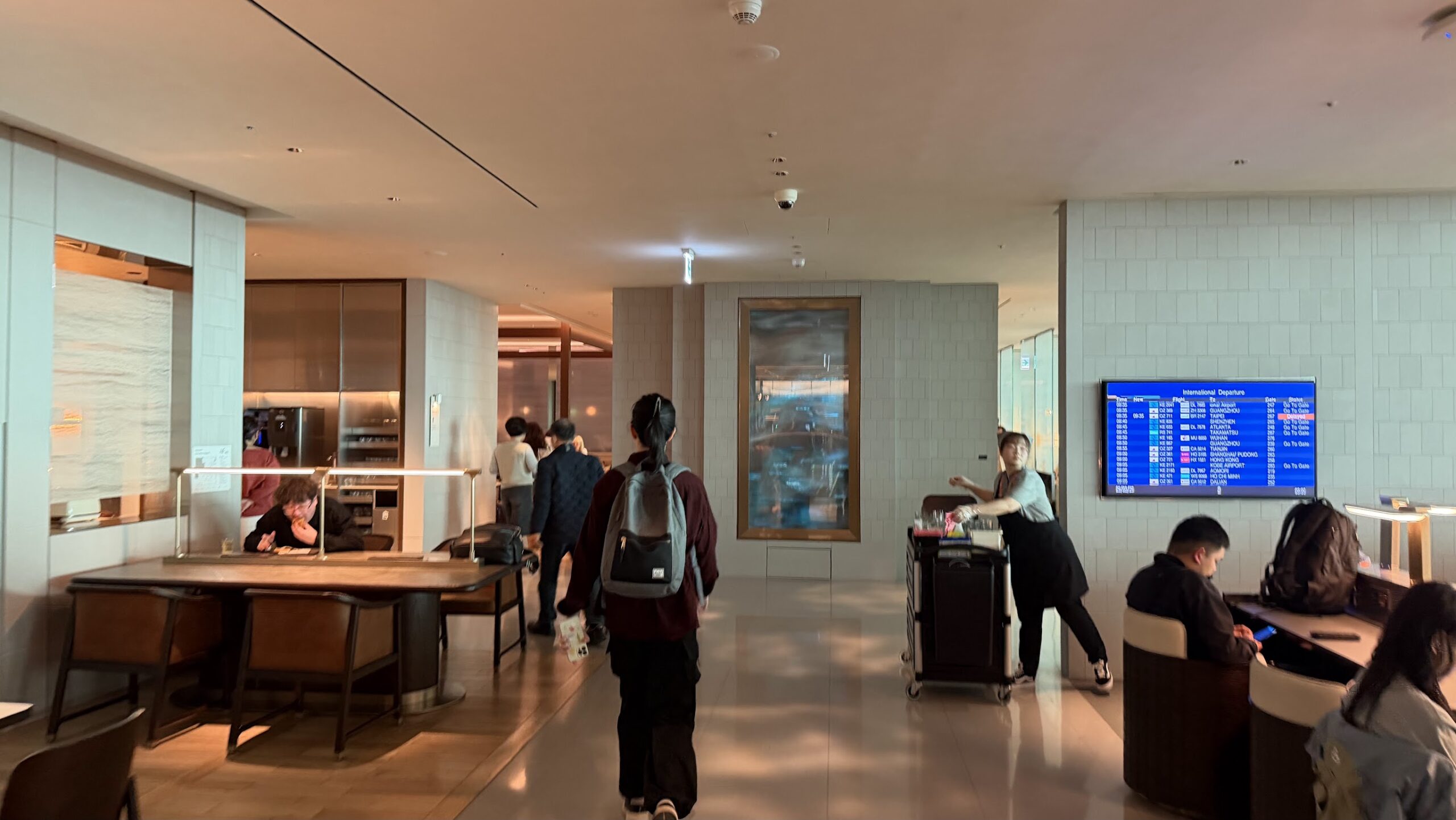
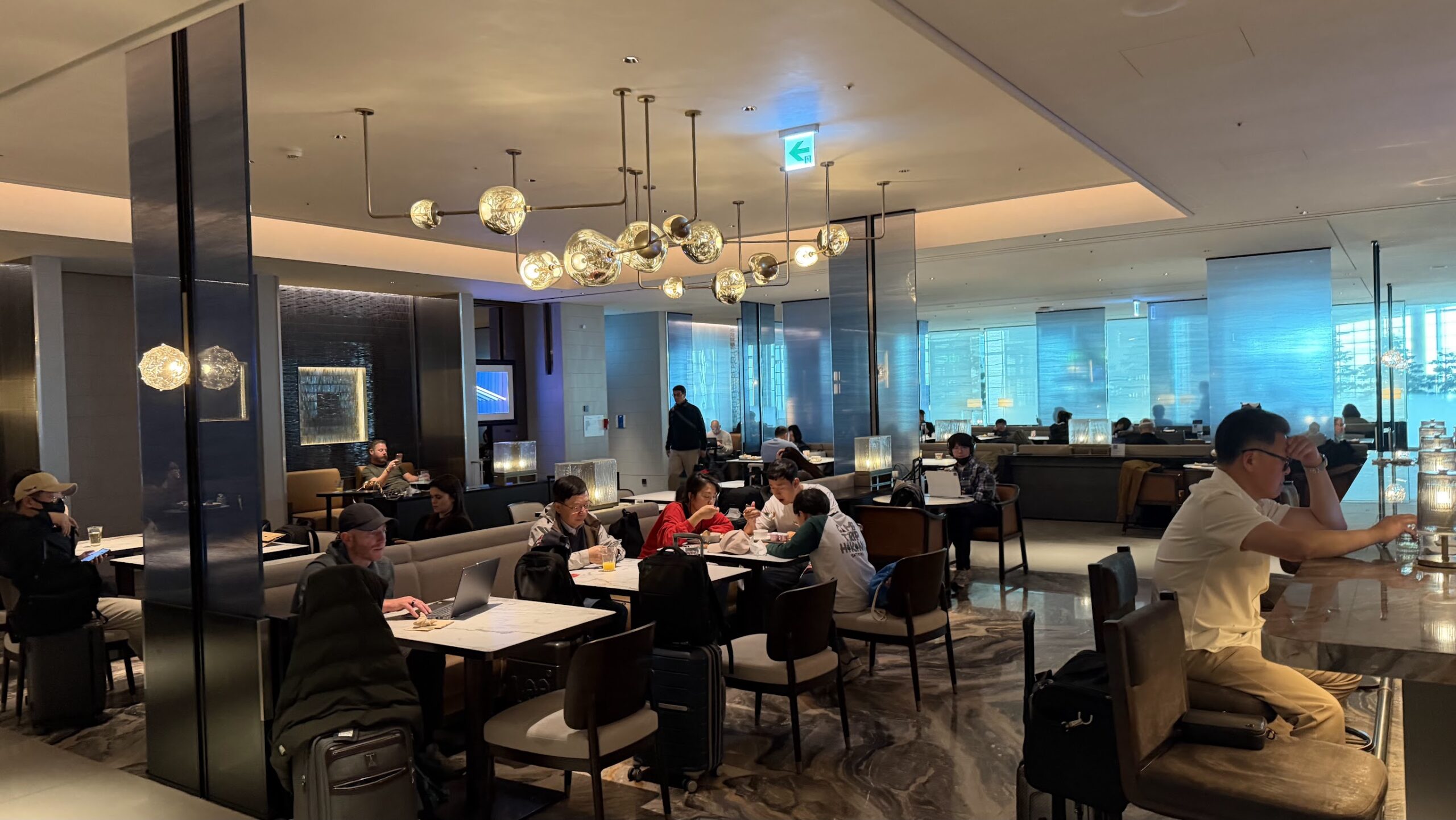
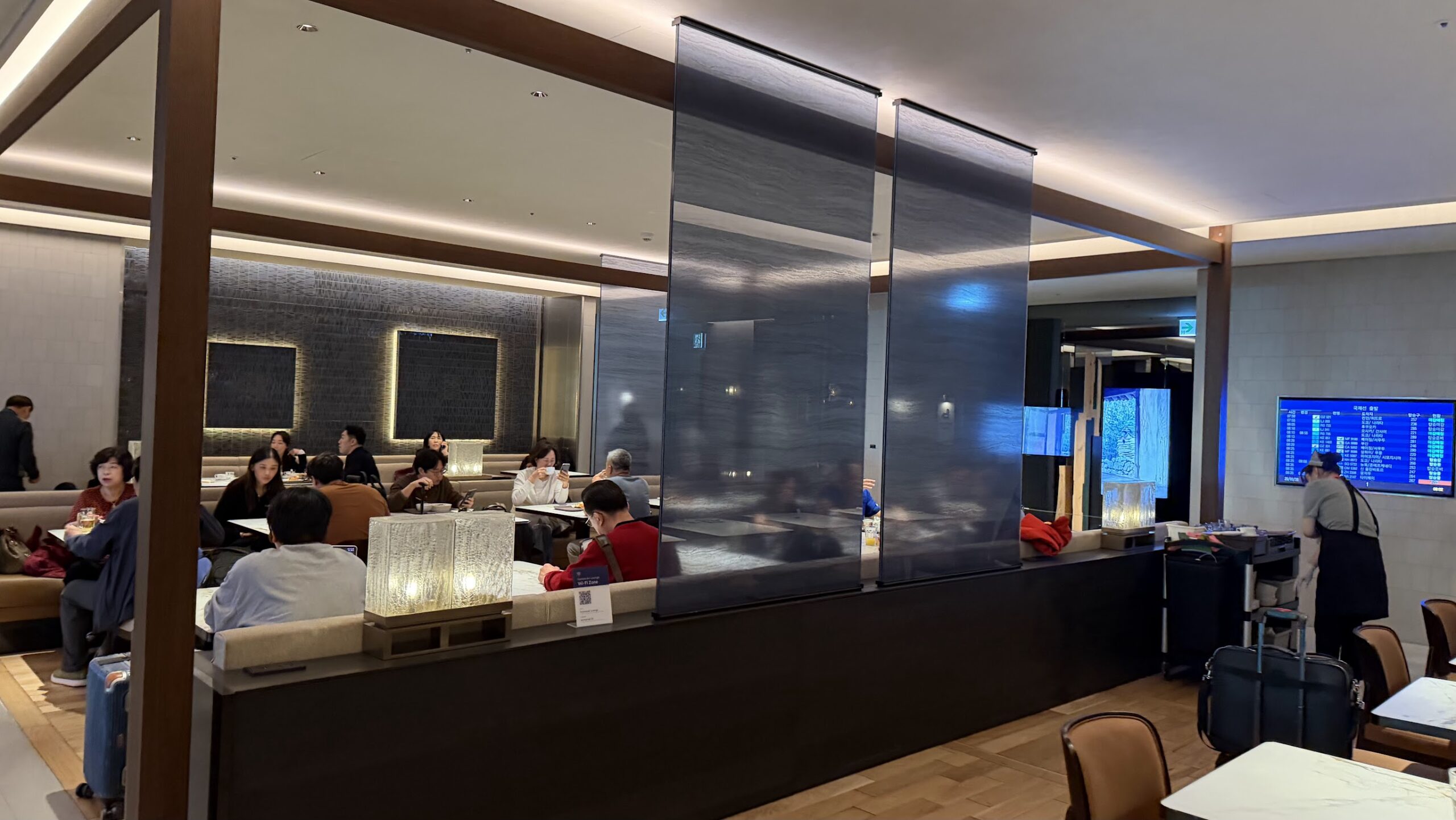
Beyond this, you reach the main dining area with restaurant-style tables and additional sofa seating. Charging ports are available behind the sofas here too, which is a detail that many lounges overlook. There’s also a bar in this inner section of the lounge, situated within the dining area.
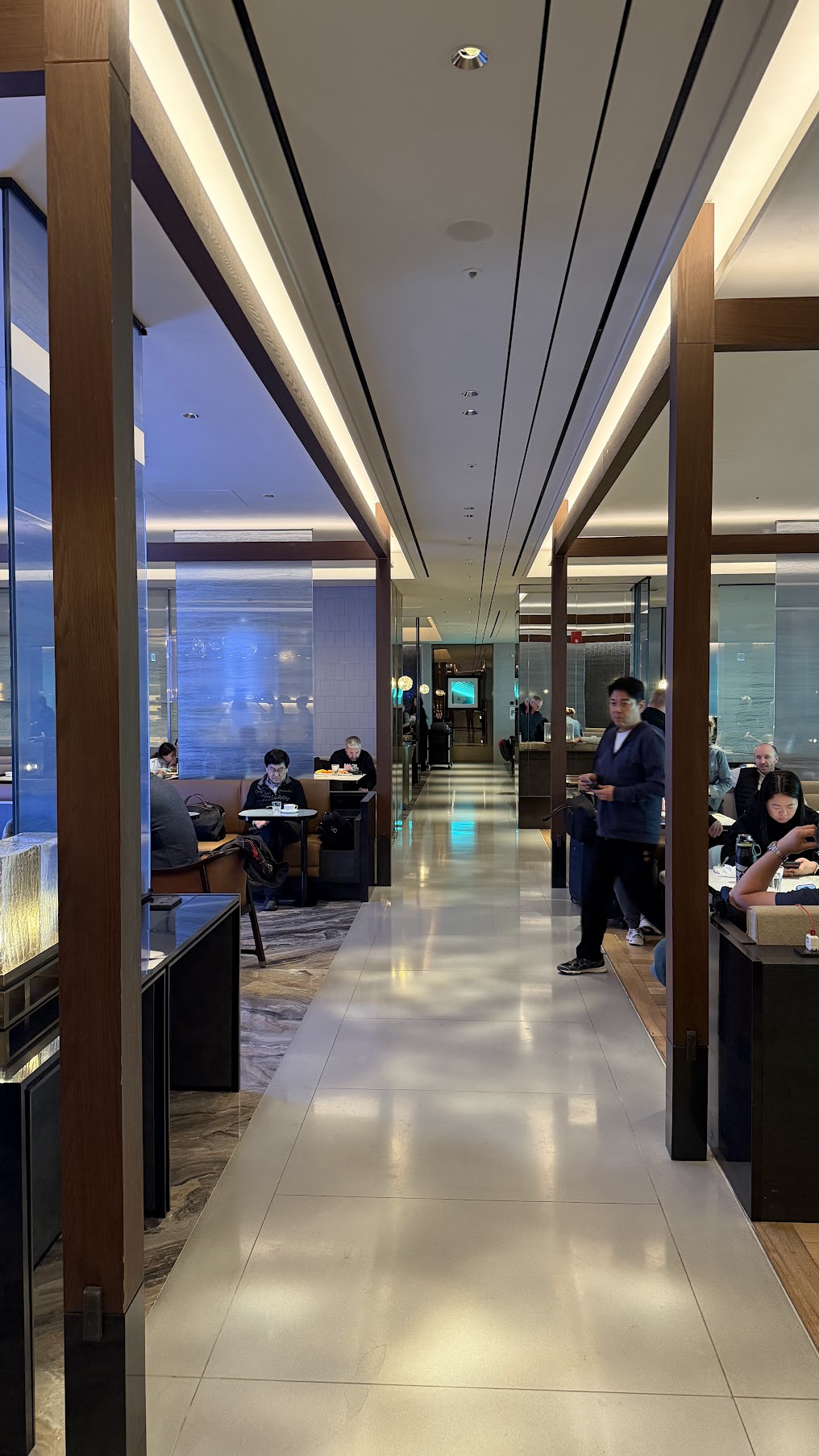
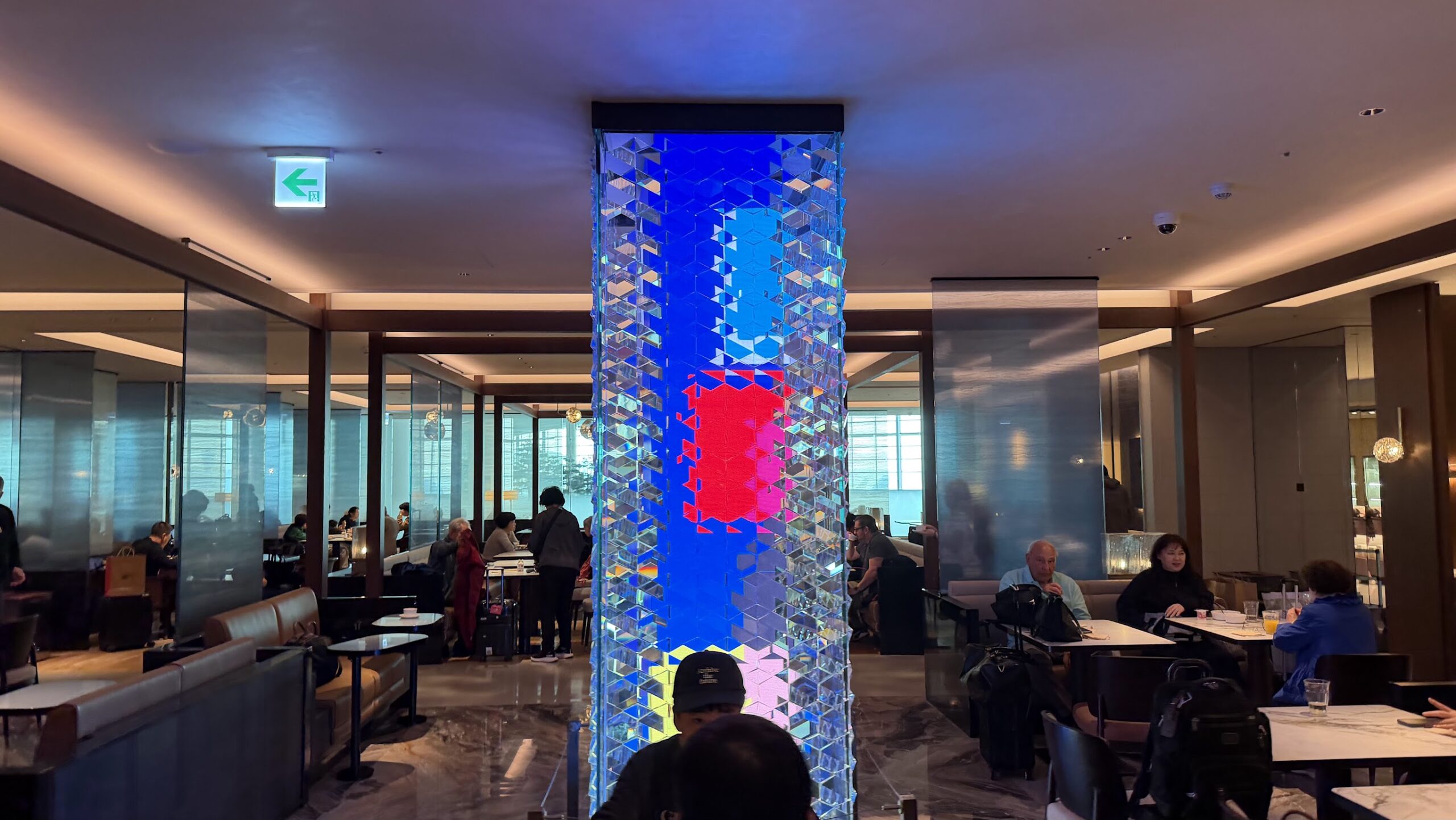
Food and drinks
The food offering across the Left and Right lounges is virtually identical, with only minor differences. Here’s what the Right lounge had.
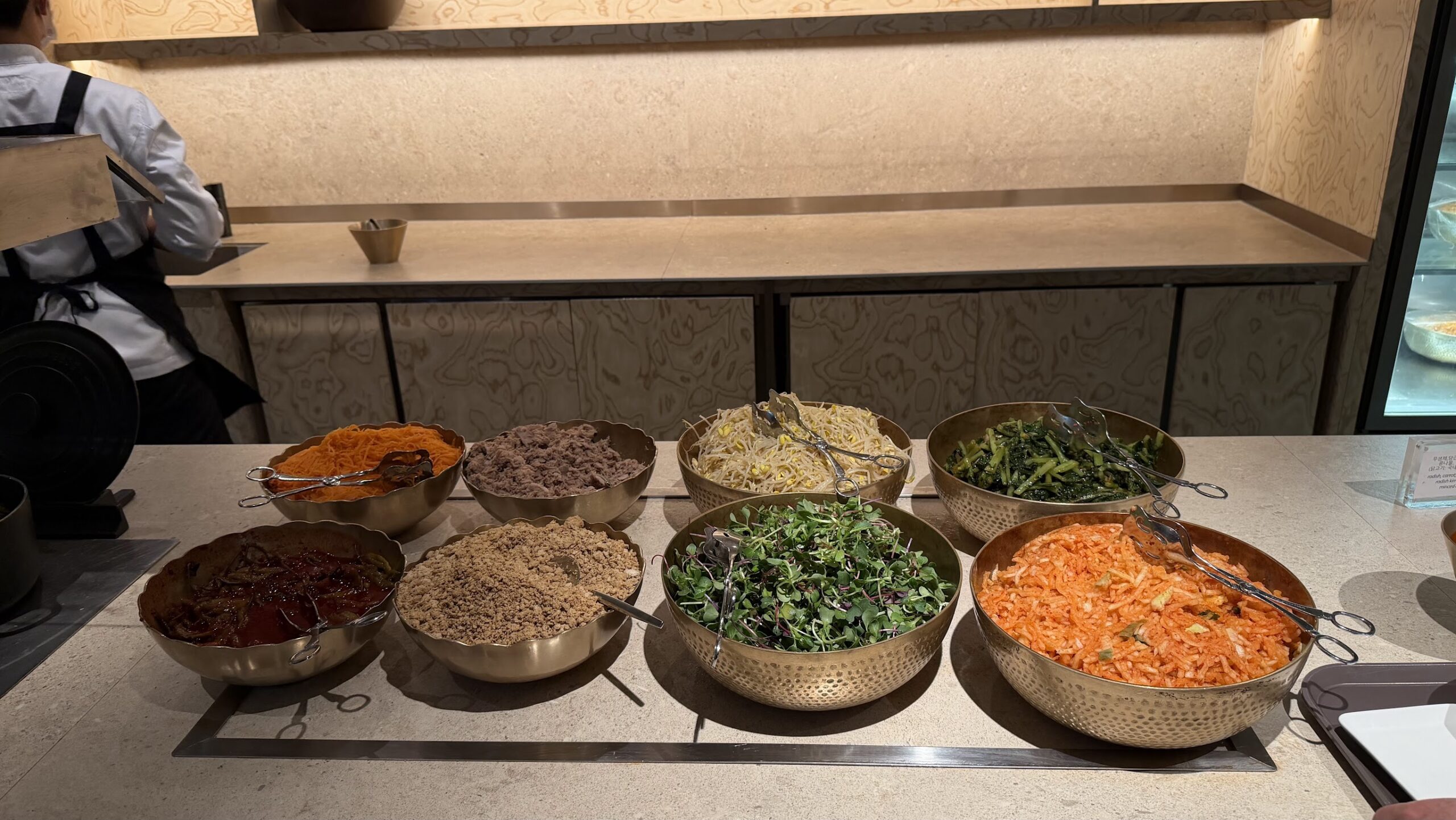
The standout is the DIY bibimbap station. Rice is provided along with gochujang sauce and sesame oil, and you assemble your own bowl from the available ingredients. It can be very fragrant when you mix everything together, and it’s genuinely good. Having tried Asiana’s pre-assembled version on a recent flight, the hands-on approach here felt more satisfying.
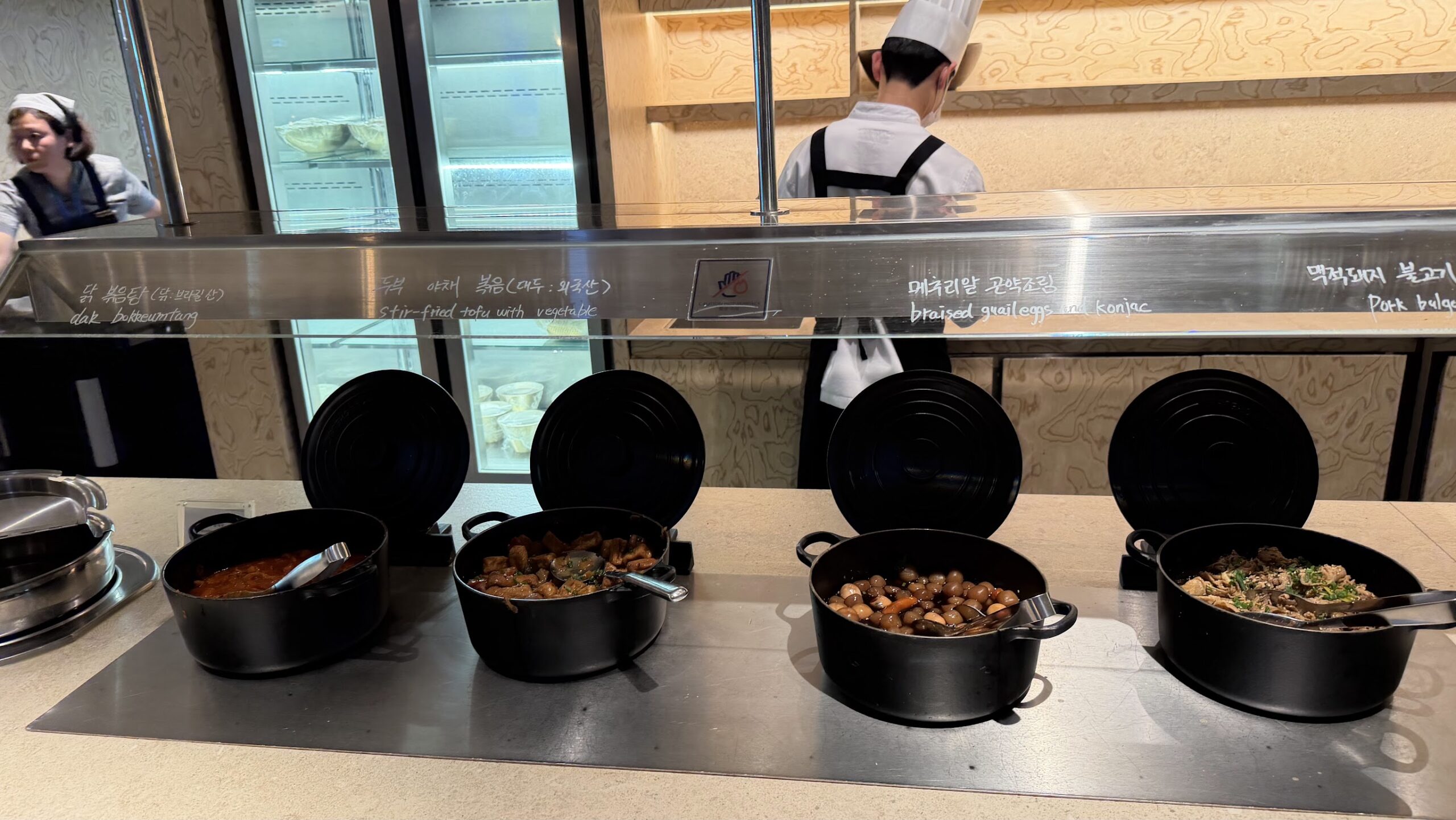
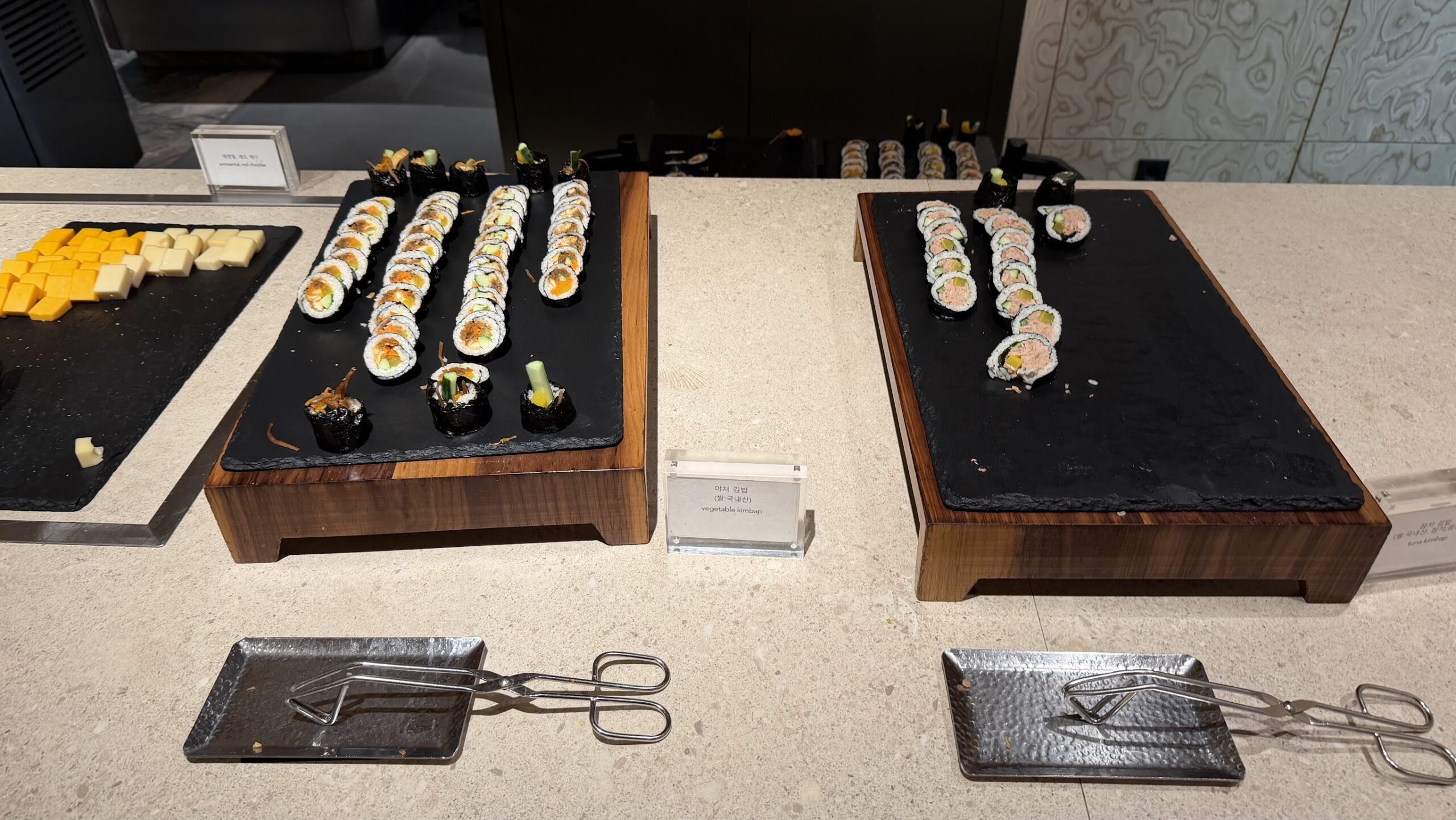
Korean options included pork bulgogi, braised quail eggs with konjac, stir-fried tofu with vegetables, and dak-bokkeumtang (braised spicy chicken). There were also bibimbap rolls available.
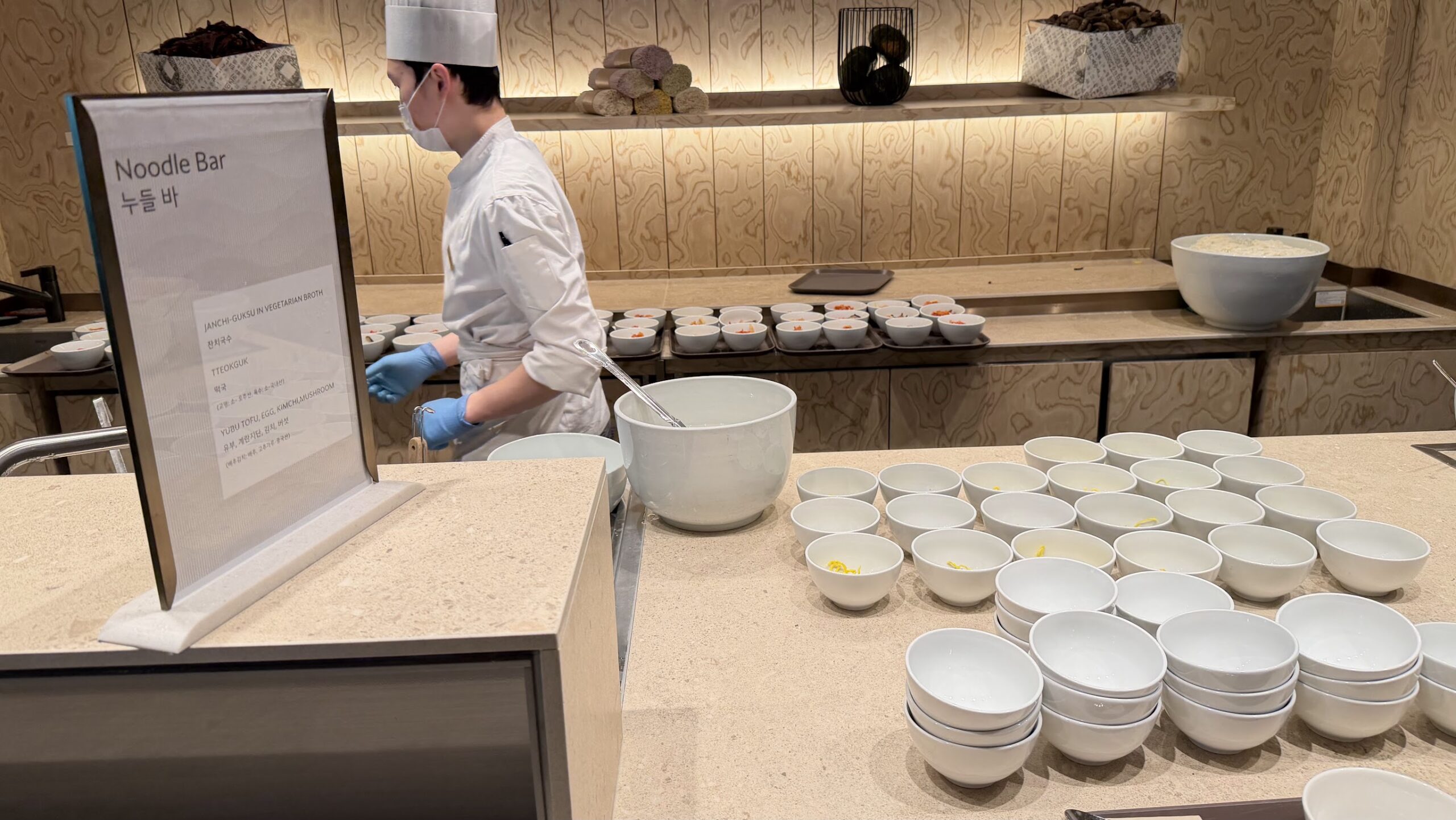
There’s also a dedicated noodle bar serving janchi-guksu (banquet noodles) in a vegetarian broth, along with tteokguk (rice cake soup). Toppings include yubu tofu, egg, kimchi, and mushroom.
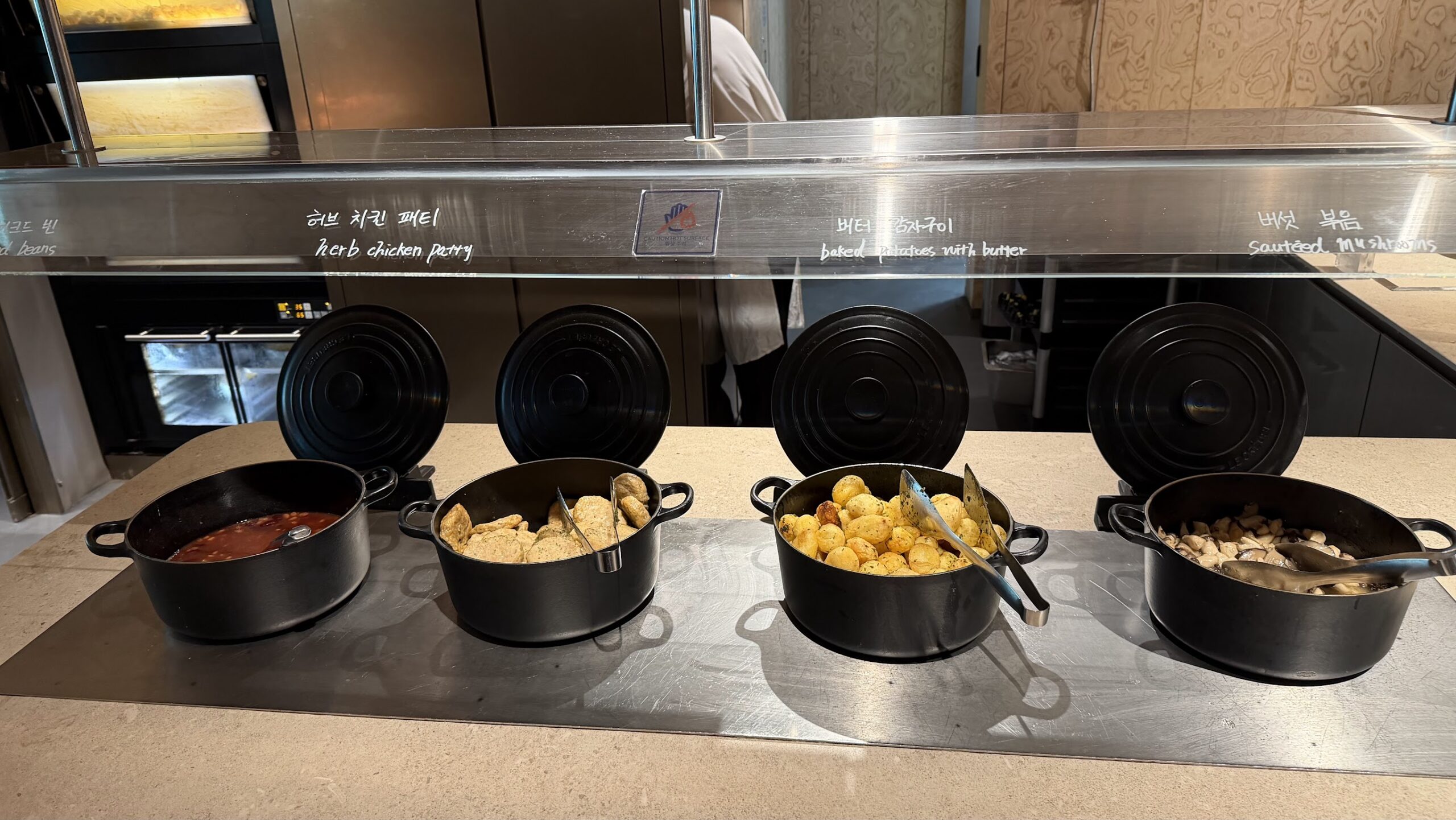
On the Western side: herb chicken patty, baked potatoes with butter, sauteed mushrooms, and baked beans.
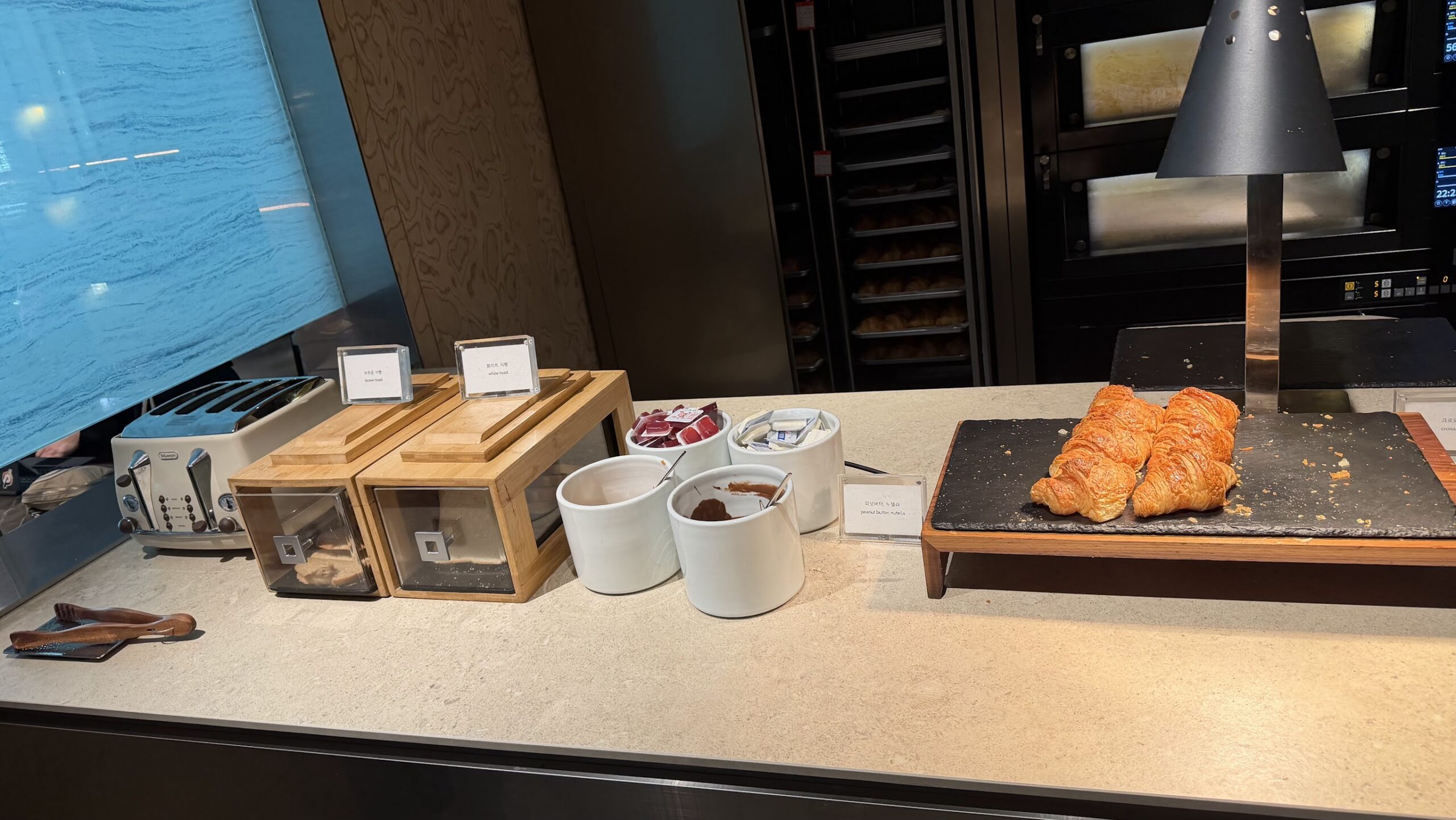
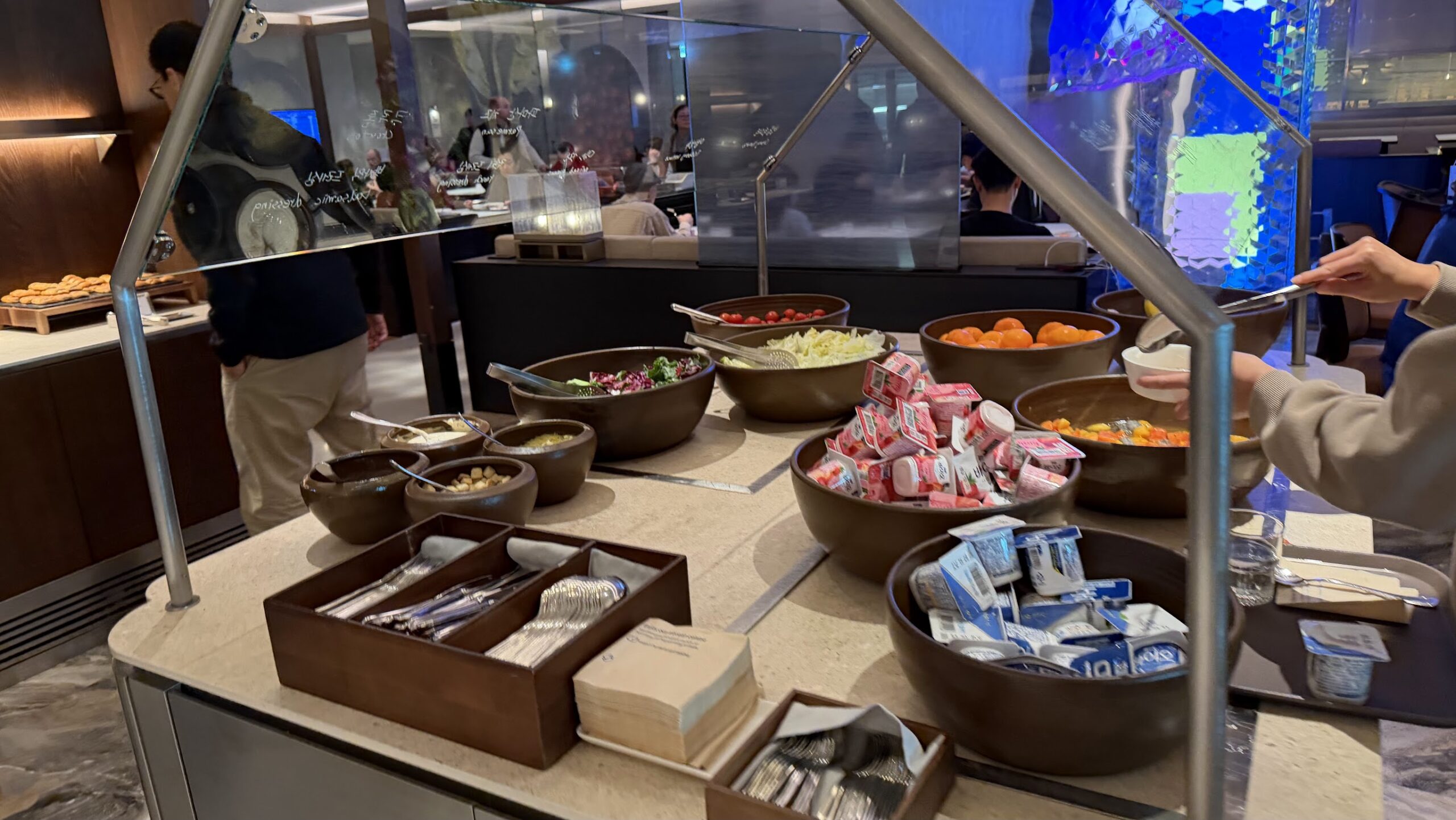
Bread, pastries, and jam were available near the buffet. On the island counter, there were two types of yoghurt (strawberry and plain) alongside fresh fruits.
Amenities
Nap rooms
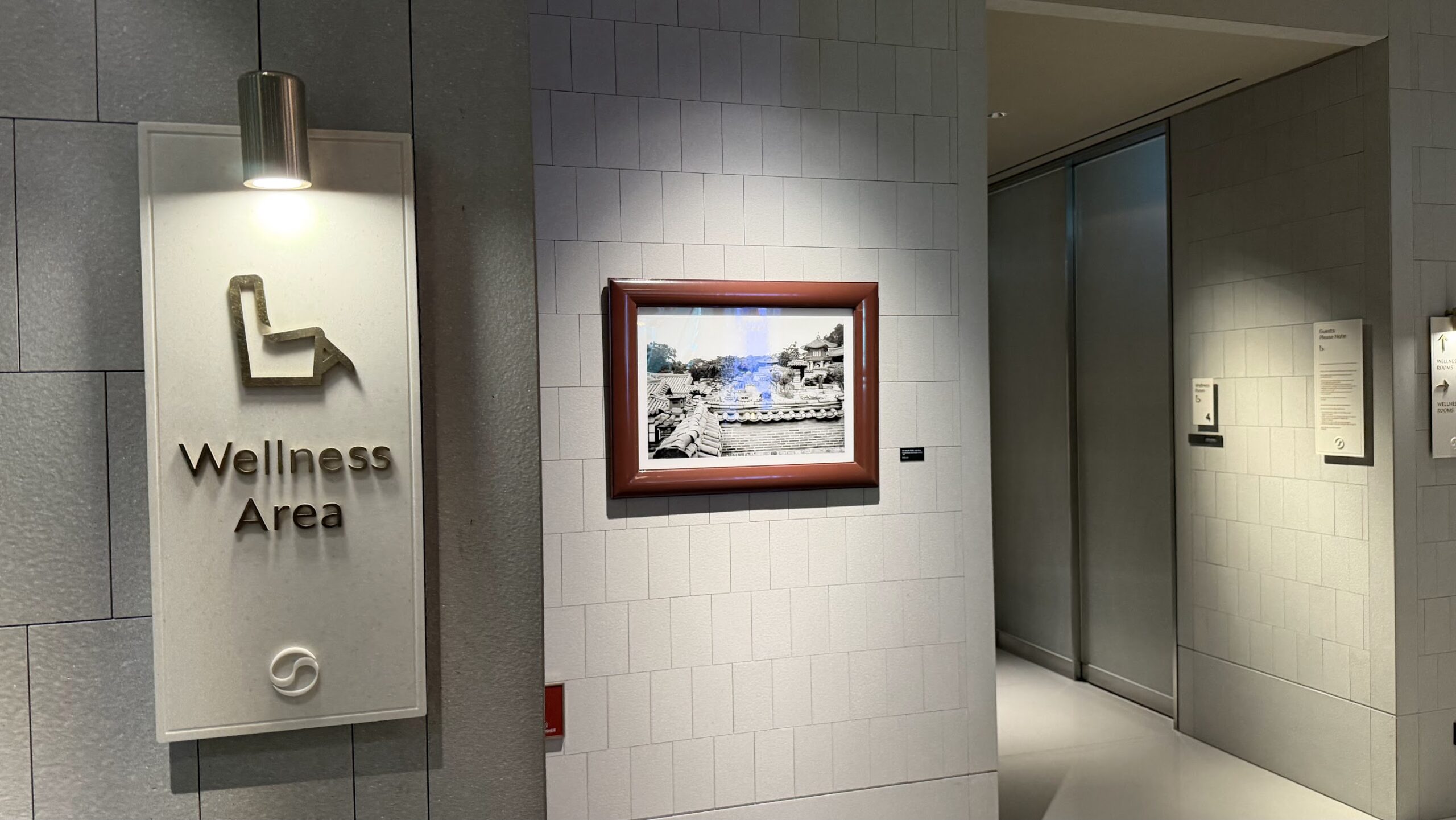
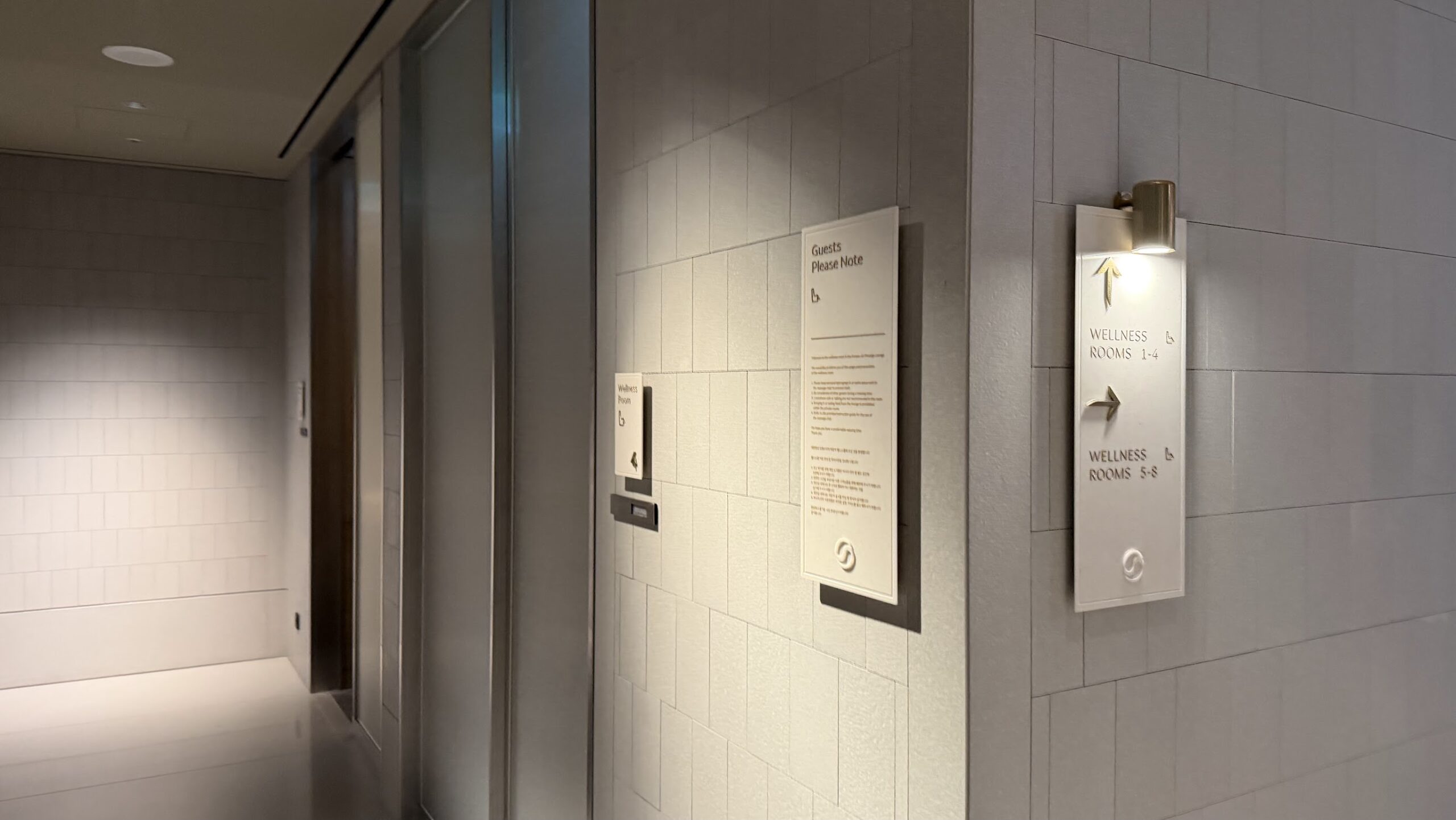
The lounge has a Wellness Area with nap rooms, a total of eight in all. On both our visits, every room was occupied, so we didn’t get to see the inside. If you want to use one, plan to arrive early or be prepared to wait.
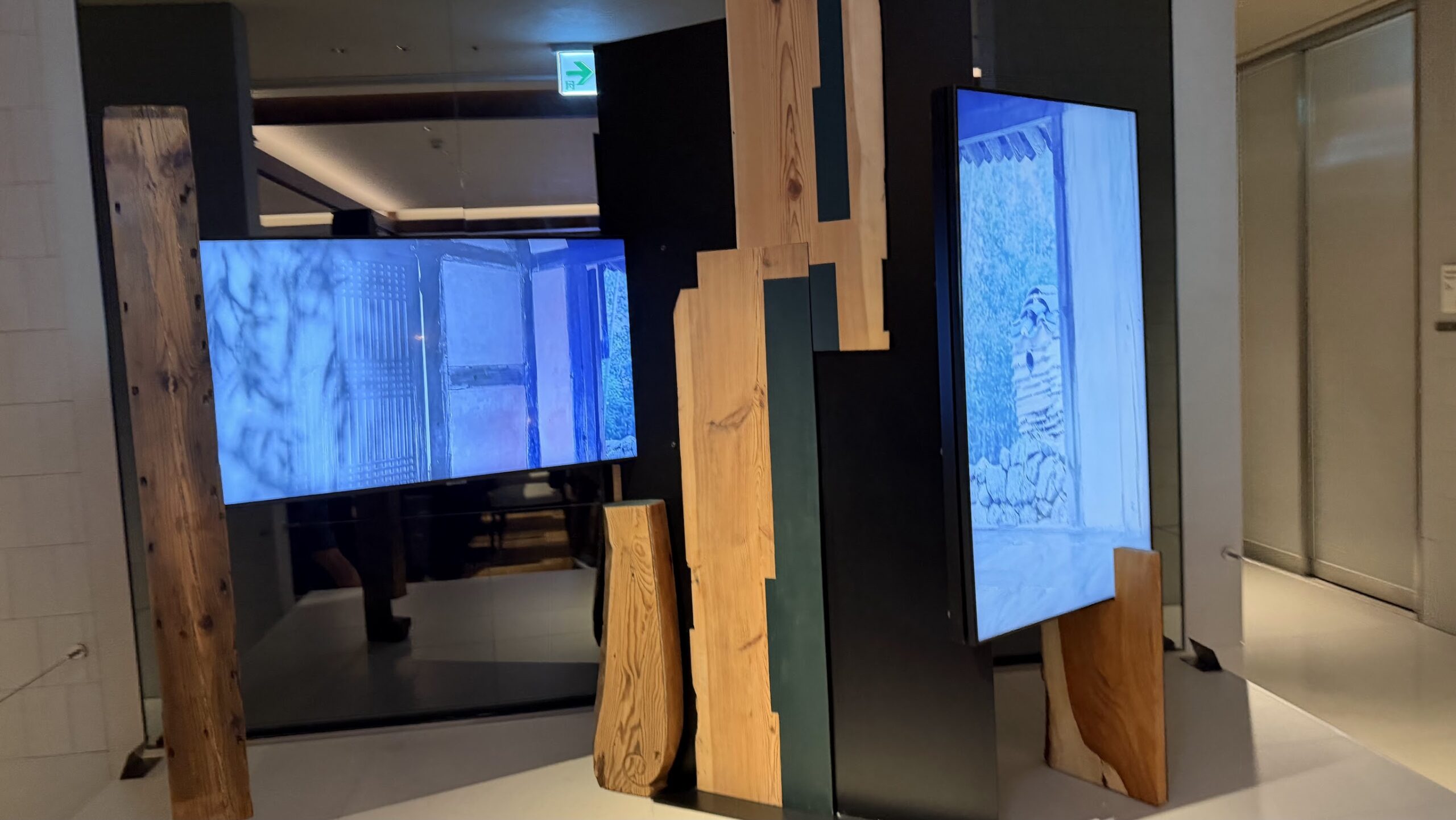
Outside the Wellness Area, there are decorative sculptures and artwork worth a glance on the way past.
Showers and toilets
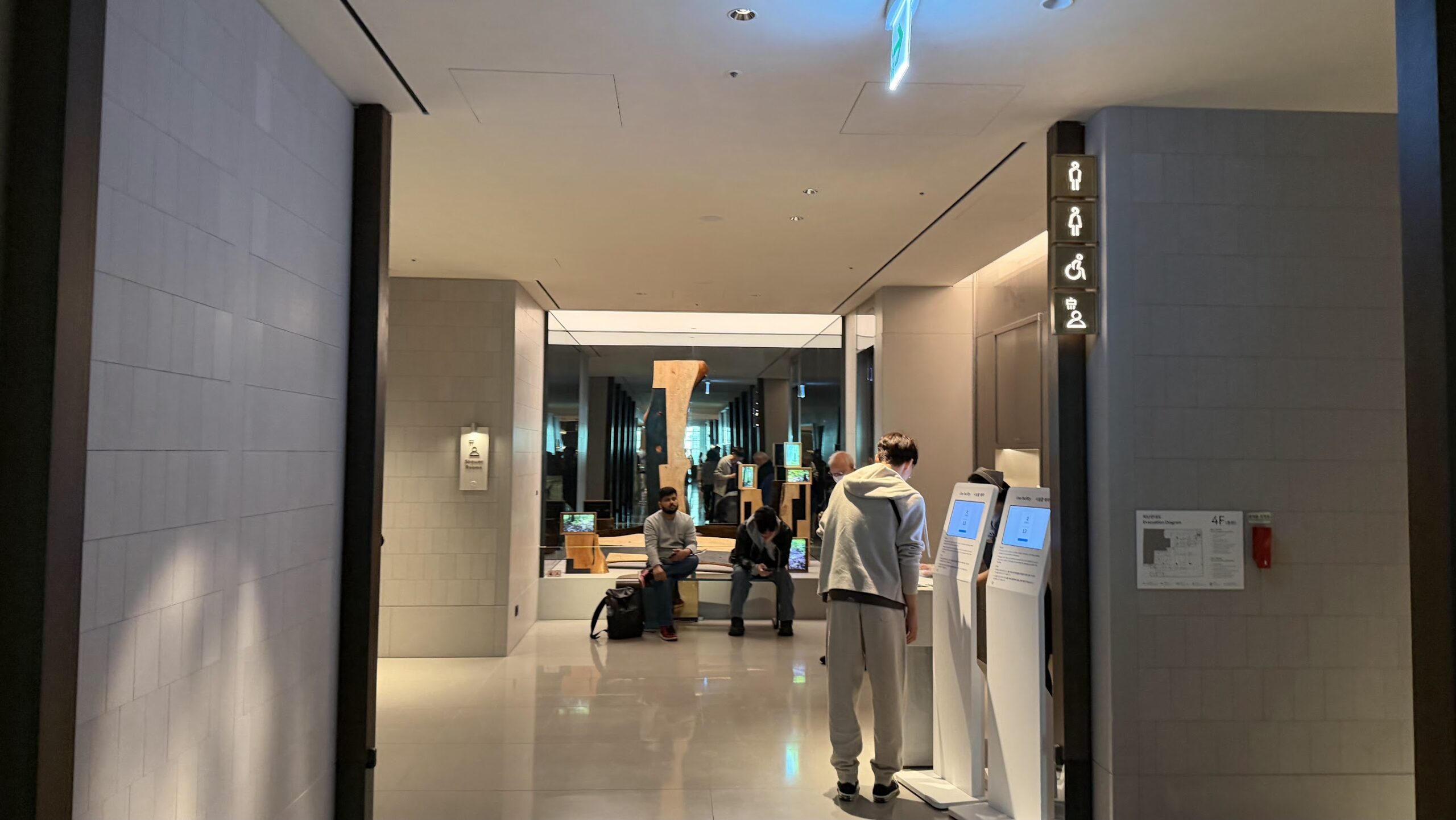
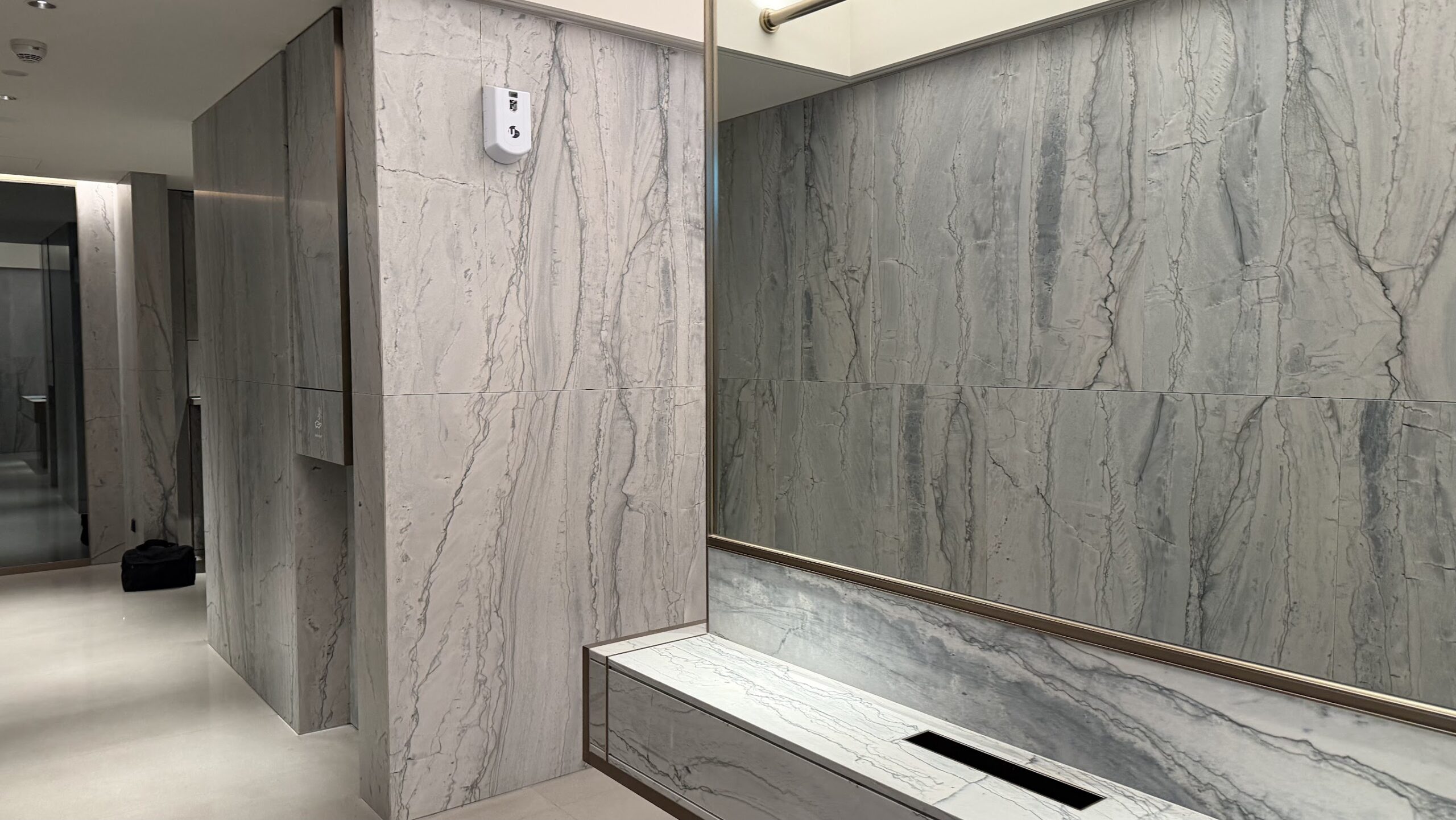
Toilets are available inside the lounge. Showers are also available, though they were busy during our visits. You’ll need to take a queue number from a kiosk and wait for your turn.
Concluding thoughts
The Korean Air Prestige Lounge East (Right) at Incheon is a strong lounge. The renovation that completed in August 2025 has clearly raised the bar, and it shows in everything from the layout and seating variety to the quality of the food. The DIY bibimbap station alone makes it worth spending time here, and the noodle bar adds a welcome made-to-order option that elevates the dining beyond a standard buffet.
The lounge can get busy, particularly the sofa seats overlooking the atrium and the nap rooms in the Wellness Area. If those matter to you, arriving earlier helps.
For Star Alliance passengers on Asiana, the current access arrangement during the merger transition is a genuine bonus. Korean Air has clearly invested in its Incheon lounges, and the difference compared to what was here before is substantial. If you’re transiting through Incheon, this lounge is worth building time into your schedule for.