In this article:
This was a work trip to San Francisco on United Airlines flight UA2, and an opportunity I had been looking forward to: trying out the new Polaris Elevated interior (also known as the Polaris 2.0), the airline’s refreshed business class product that debuted on the 787-9 in April 2026.
United had announced the Elevated interior back in May 2025, promising sliding privacy doors, 4K OLED screens, and a suite-style upgrade to the existing Polaris product. The first aircraft entered service on this very Singapore to San Francisco route, making it one of the earliest flights where you could experience the new cabin.
I’ll be upfront: I was a bit wary about the flight actually operating given that I had to be in San Francisco by the following week. In the week leading up to our departure, three or four flights on this route had been cancelled due to operational issues, leaving two United 787-9s stranded at Changi. The day before us saw another cancellation, and it led to some confusion at the airport, with the departure board showing a 10.50am flight that turned out to be the previous day’s cancelled service rescheduled. Thankfully, our morning departure went ahead without issue.
Check-in and boarding
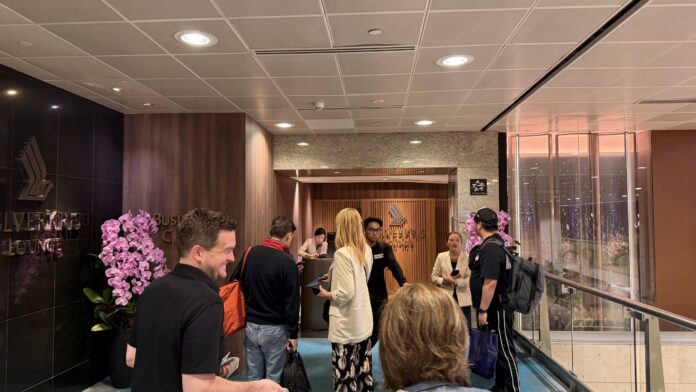
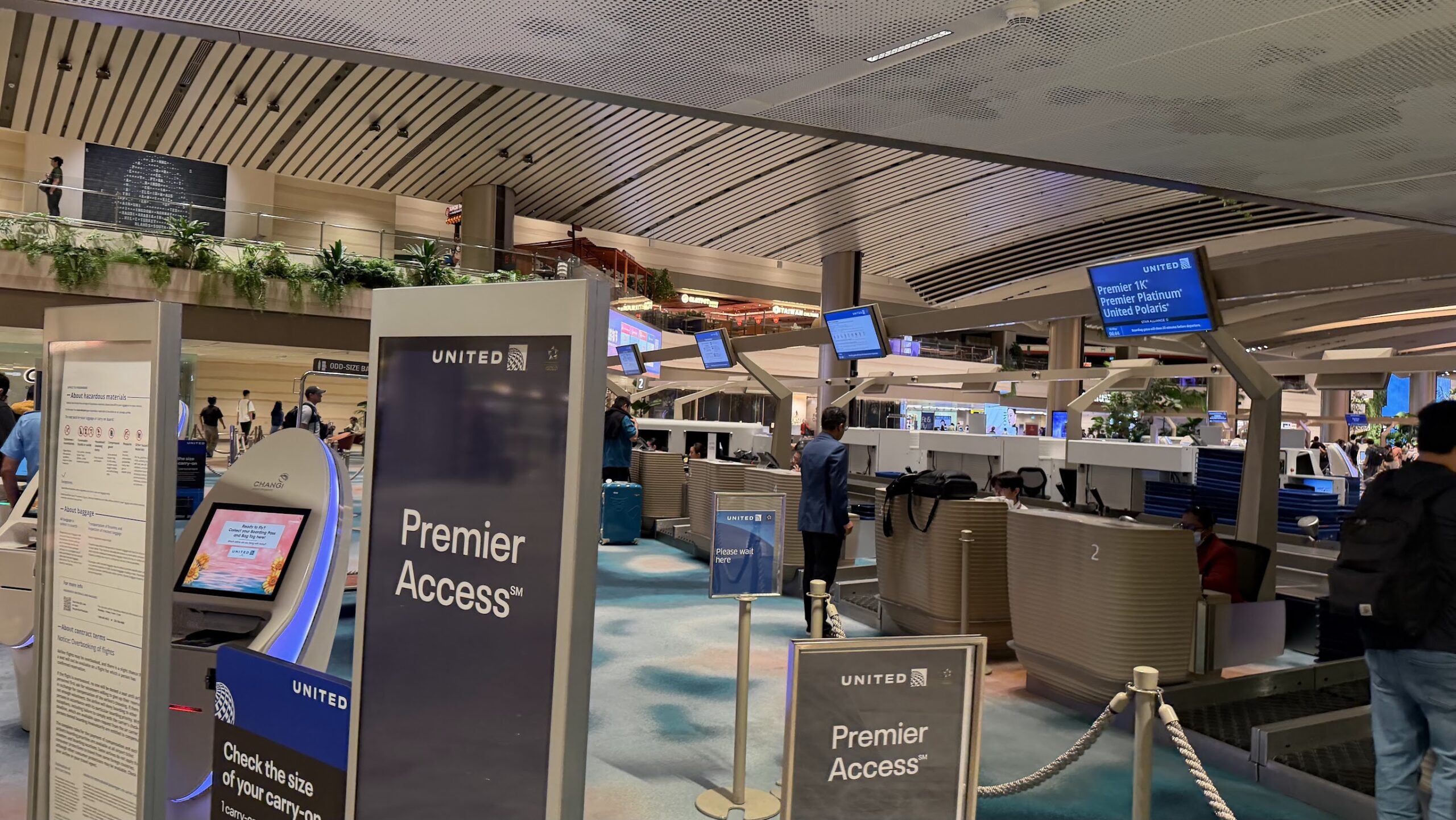
Check-in at Changi Terminal 2 was well-organised. United Airlines has clearly marked counters for Premier Access passengers, with separate queues for 1K, Platinum, and Polaris, plus a dedicated counter for Global Services members. I arrived at around 6.30am for the 9am departure, which gave us time to visit the newly renovated Singapore Airlines SilverKris Lounge T2 before heading to the gate.
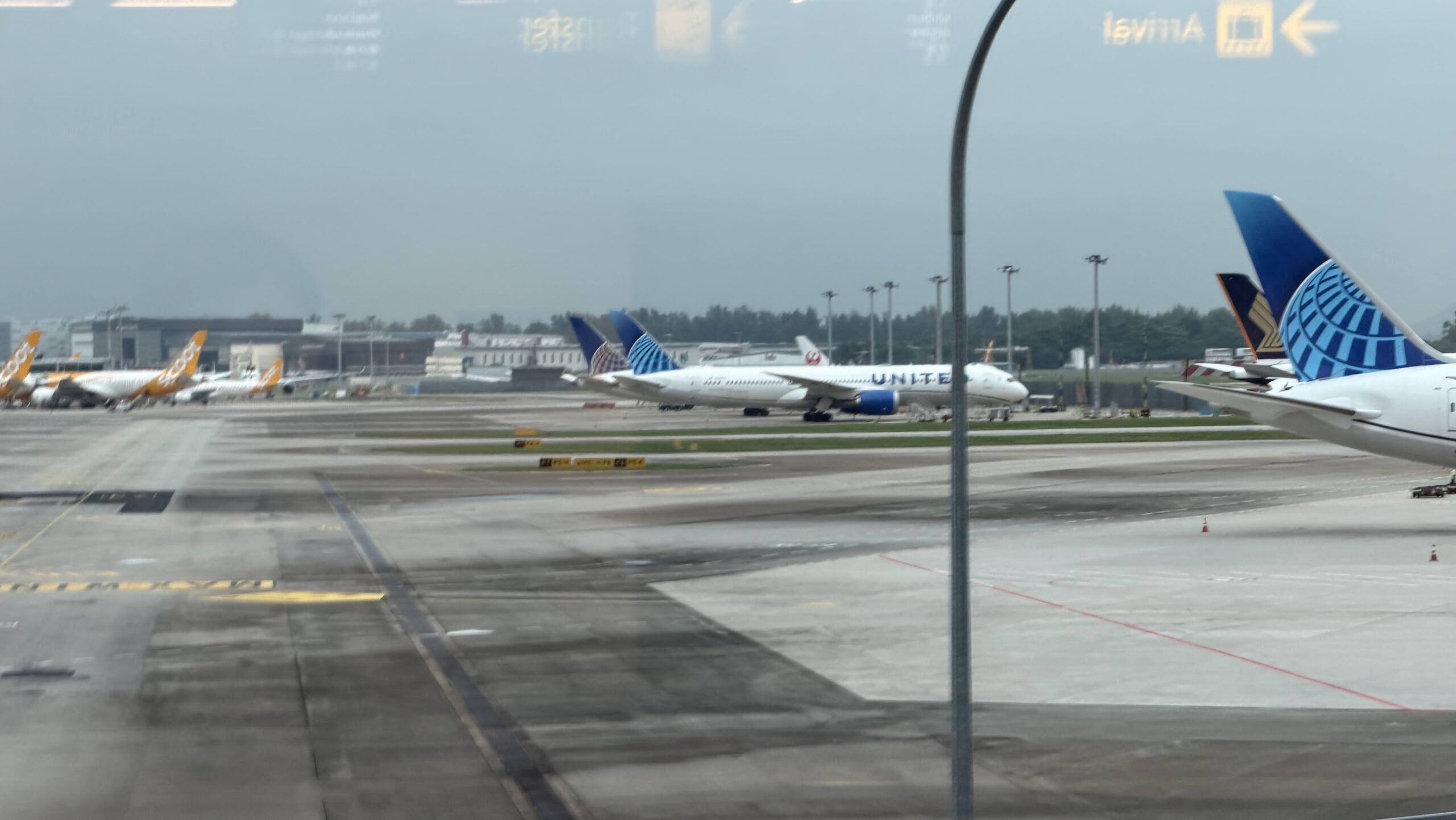
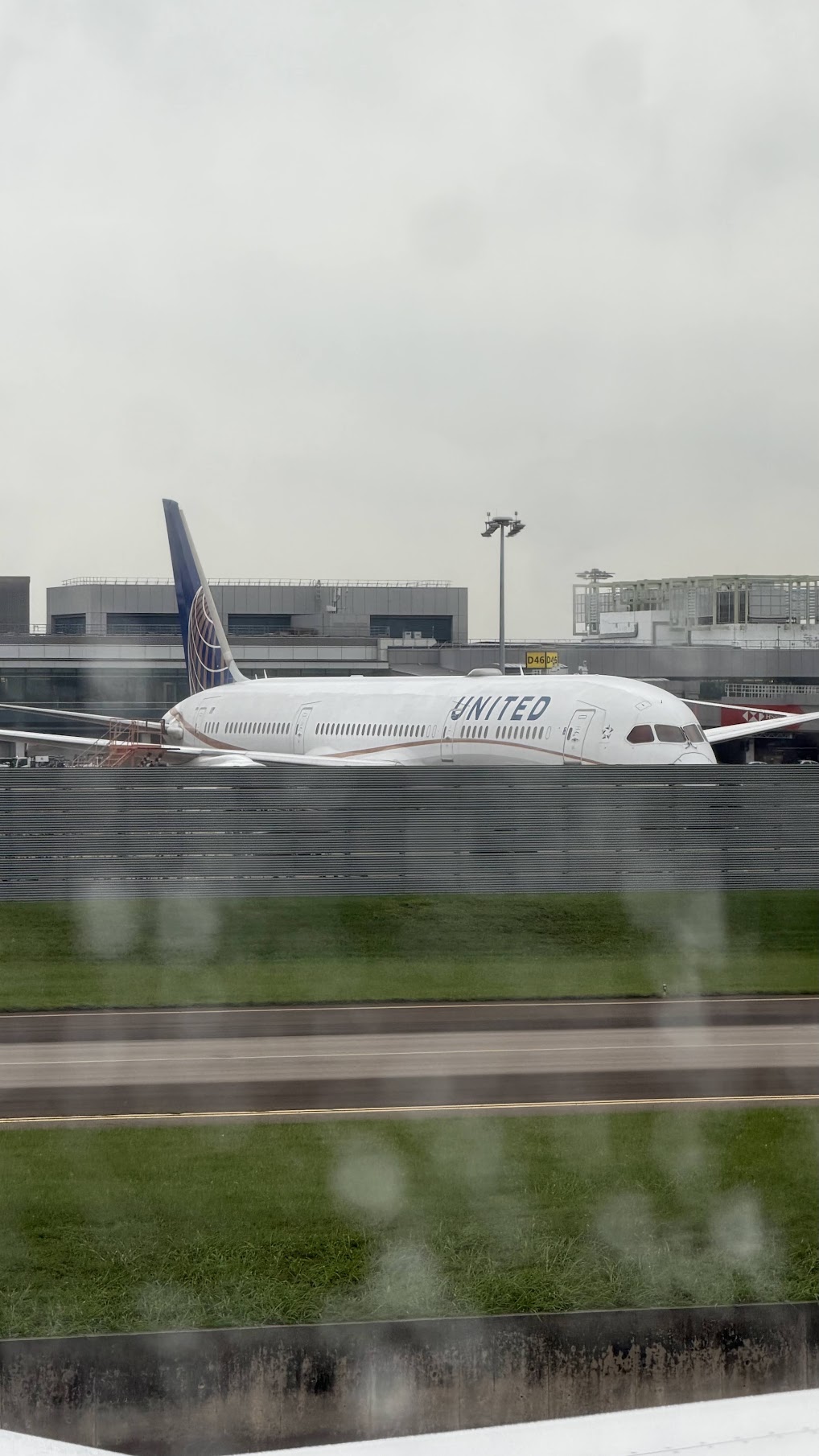
On the way to the gate, we spotted two United Airlines 787-9s parked at the terminal, stranded from the cancellations earlier that week. A visible reminder of how chaotic the week had been.
At the gate, passengers who have United Premier Access are also accorded to priority security screening, something that Singapore Airlines is finally trialling after United Airlines having such a priority lane in Singapore for many years. For the uninformed, Singapore practices decentralised security screening for Terminals 1 to 3, so that’s why you’ll usually see queues forming outside very gate.
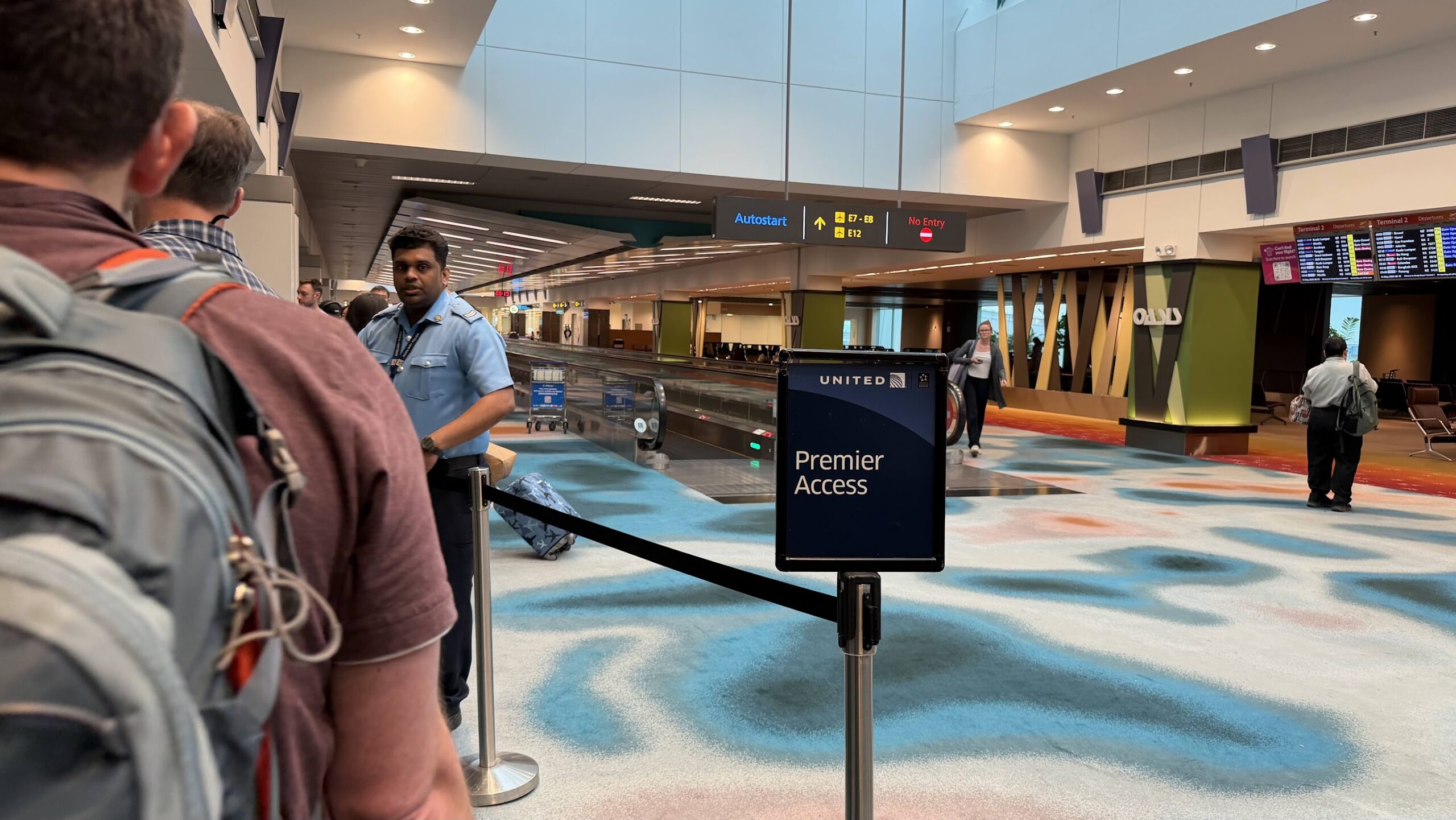
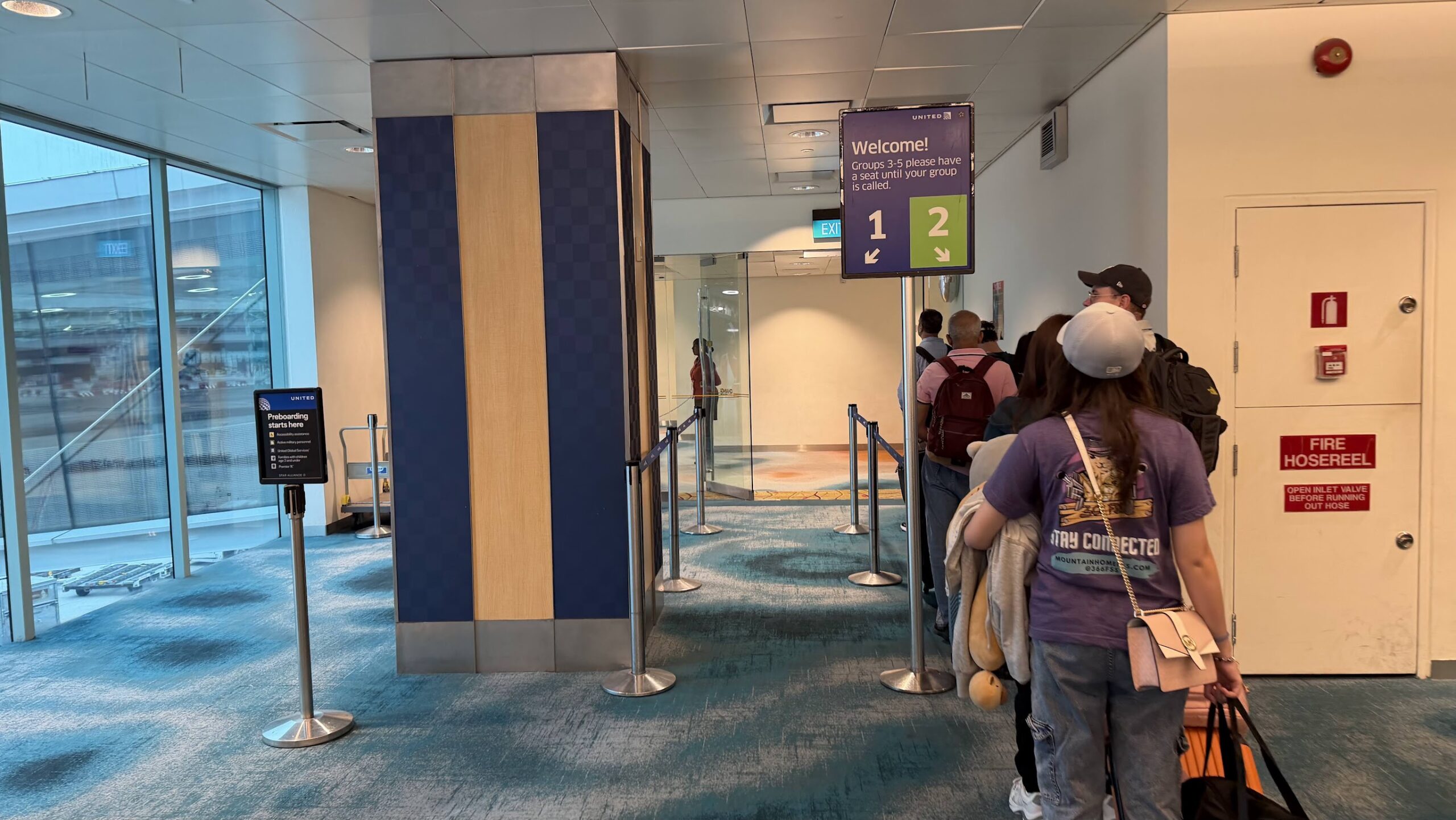
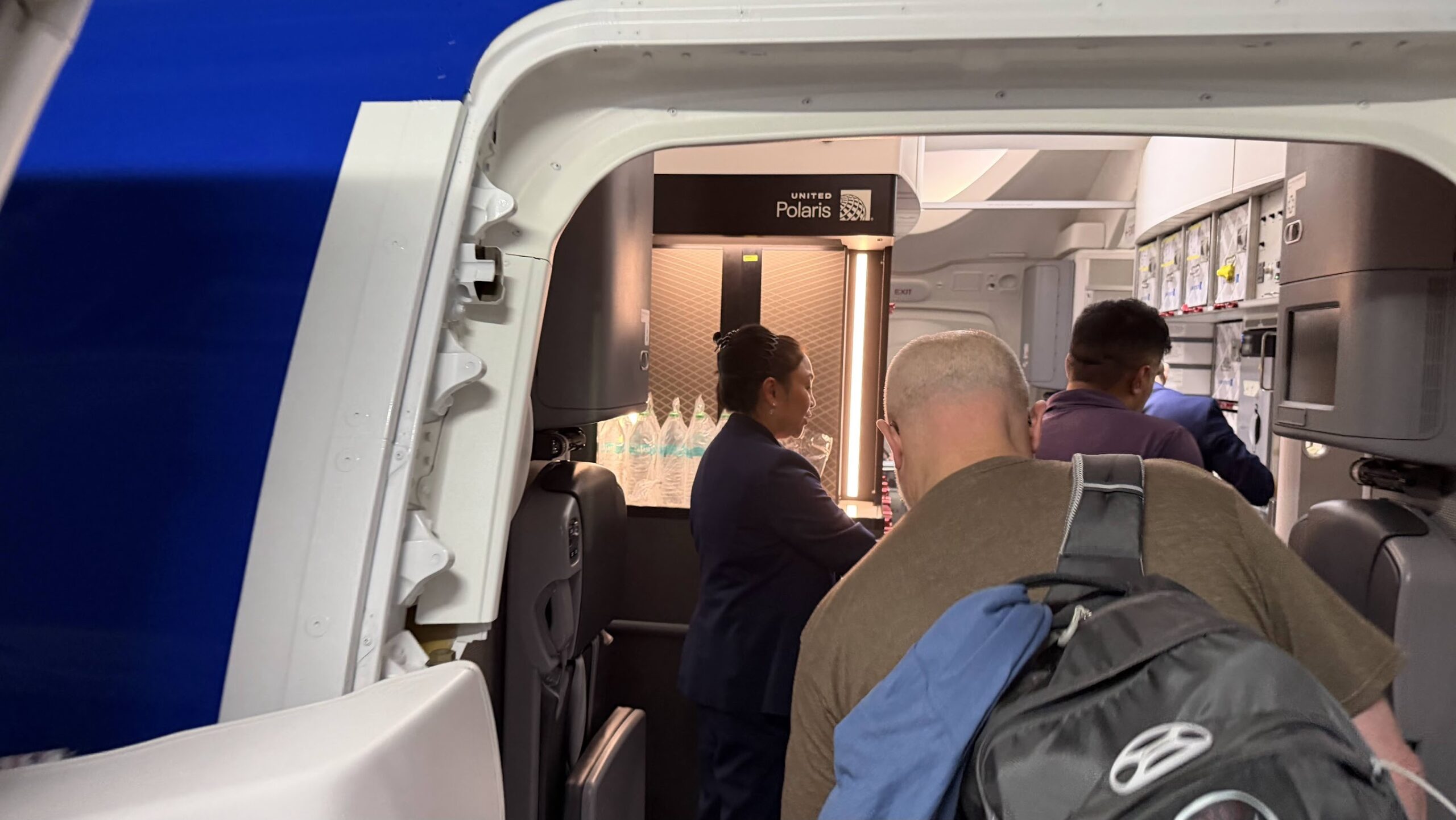
Boarding was then called by groups, and Polaris passengers boarded in Group 1, immediately after Preboarding. The process was smooth and efficient.
The seat
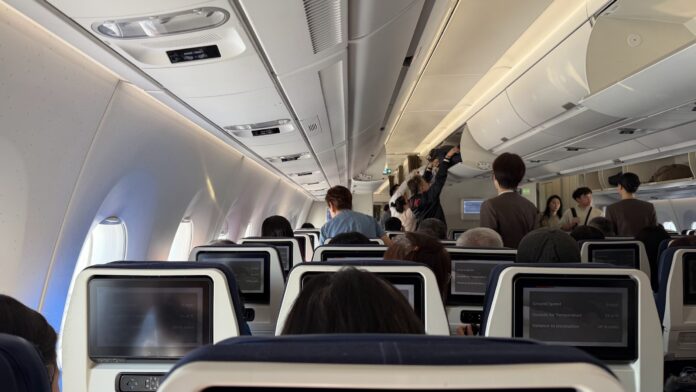
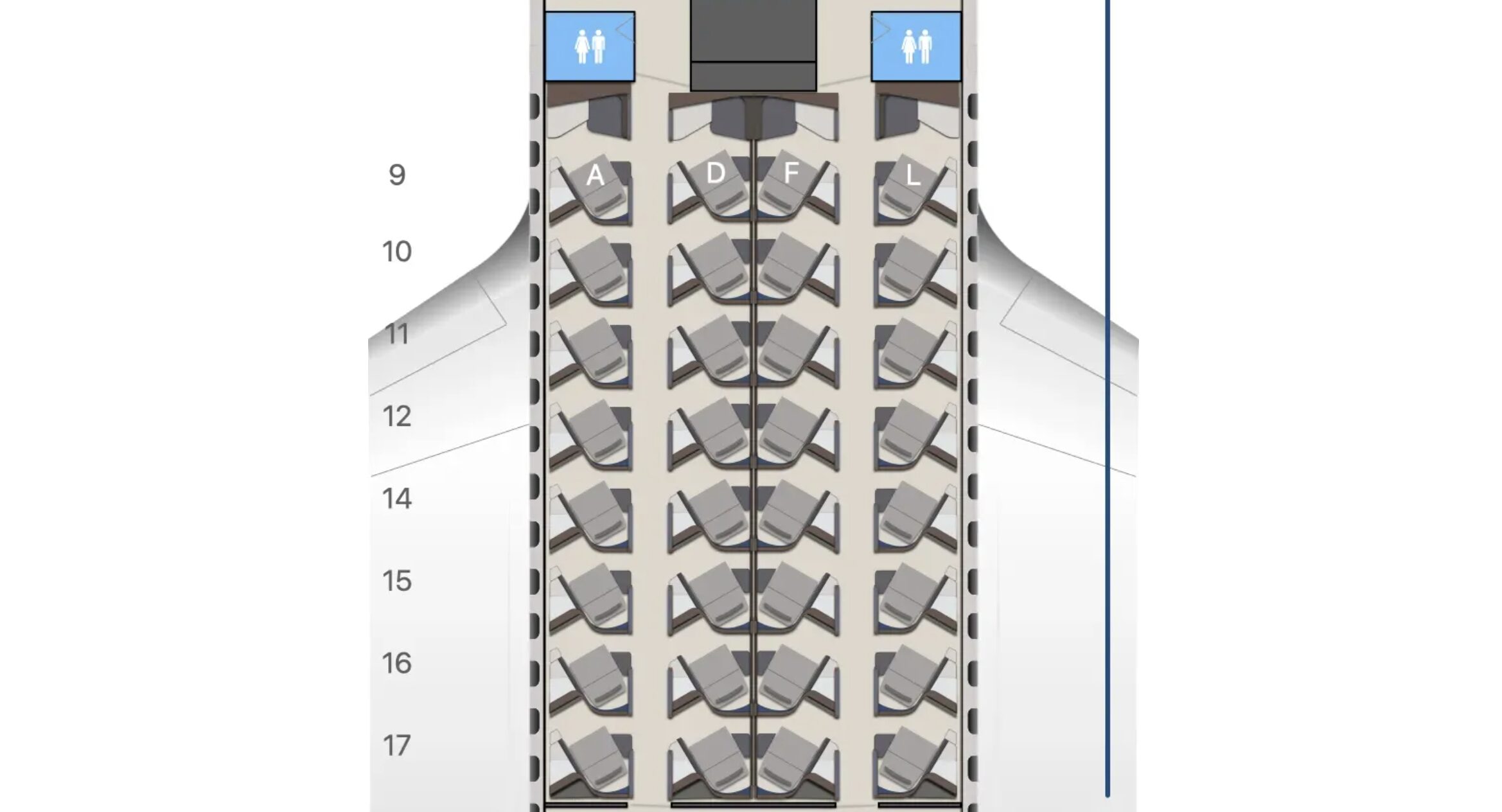
At roughly 16 hours, Singapore to San Francisco is the longest flight in United Airlines’ network, so this was a proper endurance test for the new seat. The aircraft is a Boeing 787-9 configured in a 1-2-1 reverse herringbone layout, meaning every Polaris seat has direct aisle access. There are 64 business class seats in total, split across two cabins, with eight of those being the larger Polaris Studio suites at the bulkhead rows, making it one of the more premium-heavy aircraft operated by United Airlines.
I was seated in 17A, a window seat in the last row of the rear cabin, which is the second of the two business class sections.
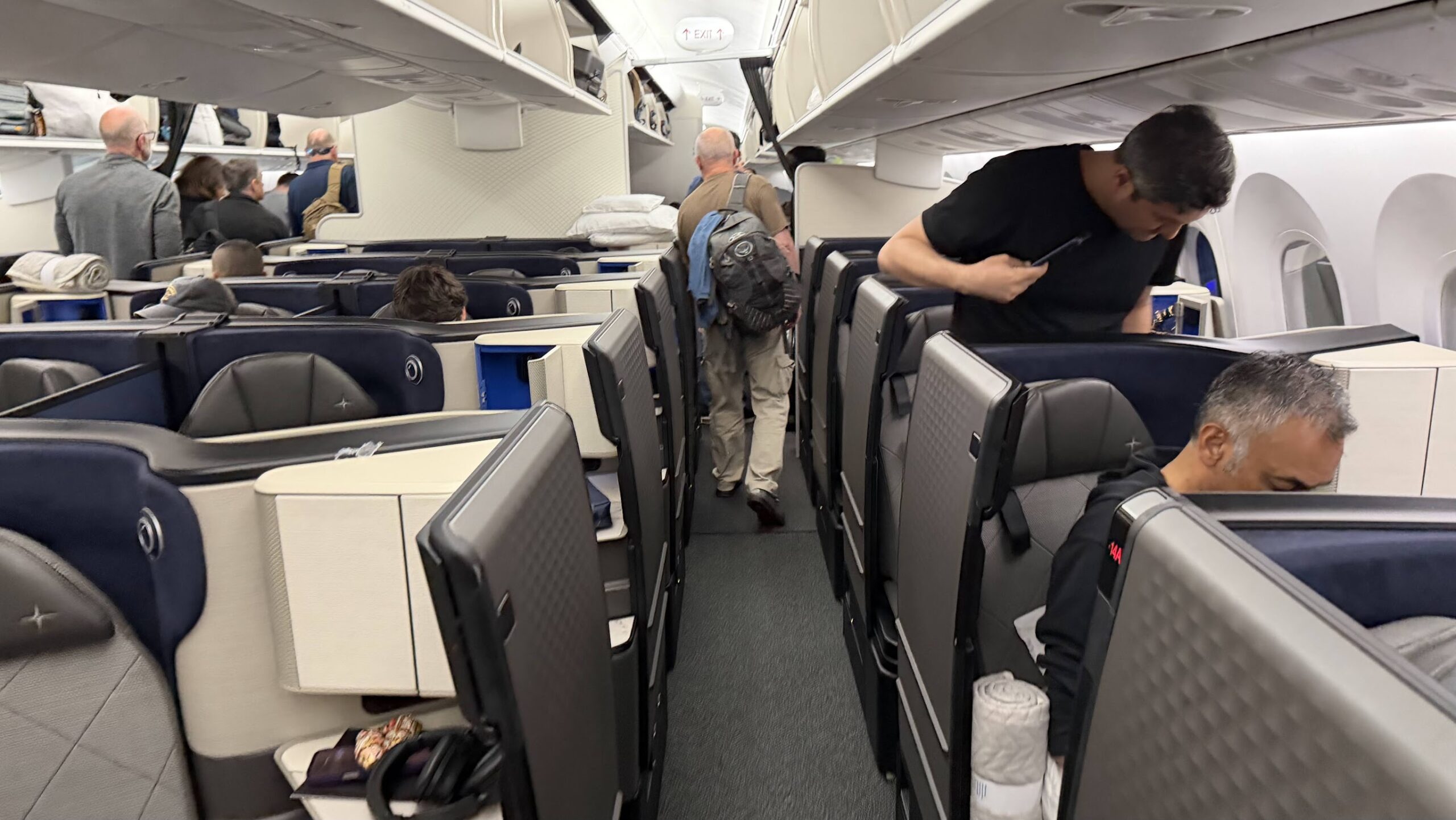
This aircraft was just a few months old when I flew it, and it showed. Everything felt fresh.
When I first sat down, my windows appeared completely blacked out. I initially assumed it was the jetbridge blocking the light, but it turned out to be the Dreamliner’s electrochromic dimming set to its darkest by default. The 787 has no traditional sliding window shades; instead, you adjust the tint electronically. A small thing, but worth knowing if it’s your first time on the type.
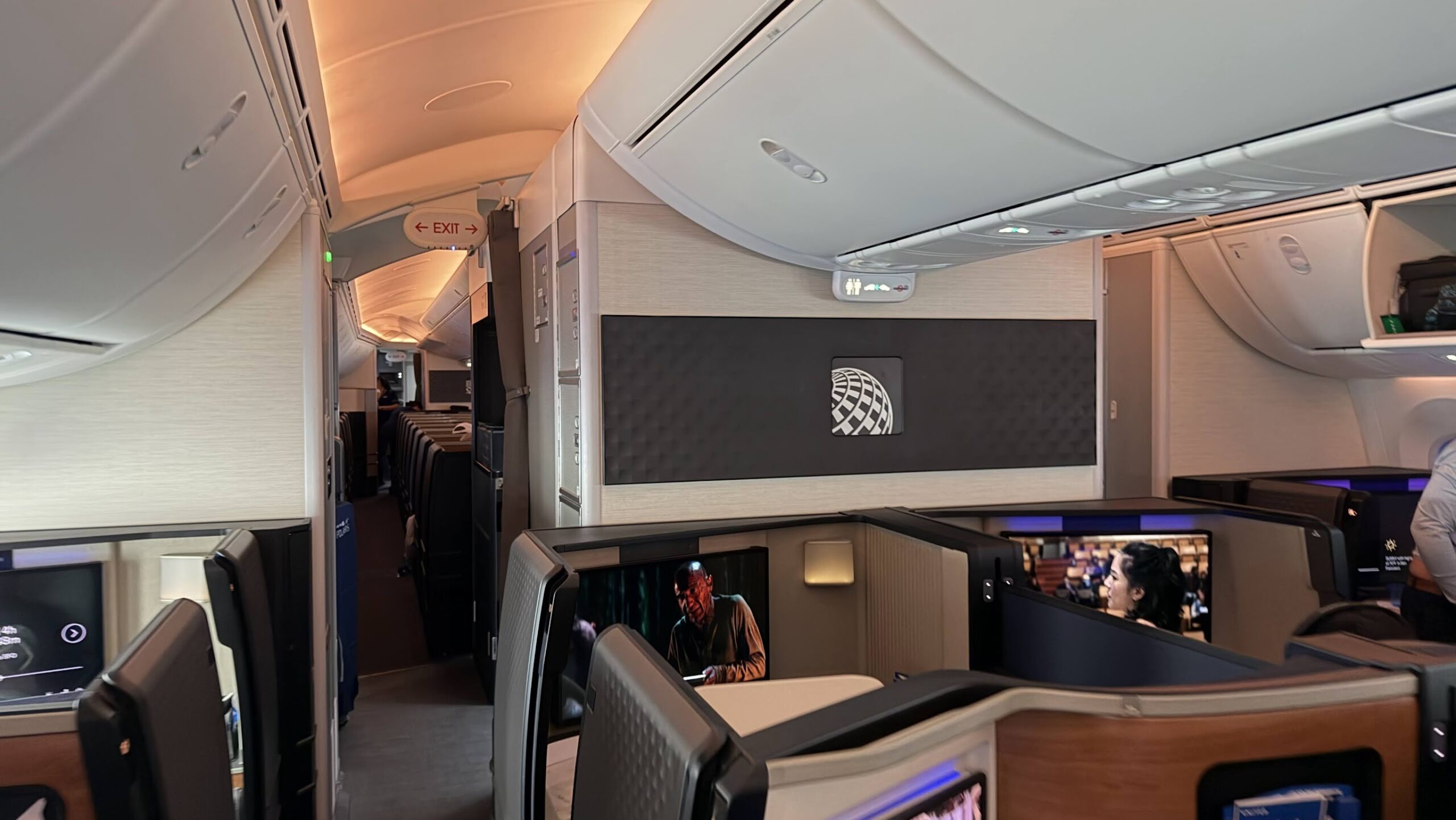
The cabin design is noticeably more upmarket than what I’ve come to expect from a US carrier: clean lines, quartzite-finish console tables, wood-grain trim, and a generally polished aesthetic that wouldn’t look out of place on an Asian airline.
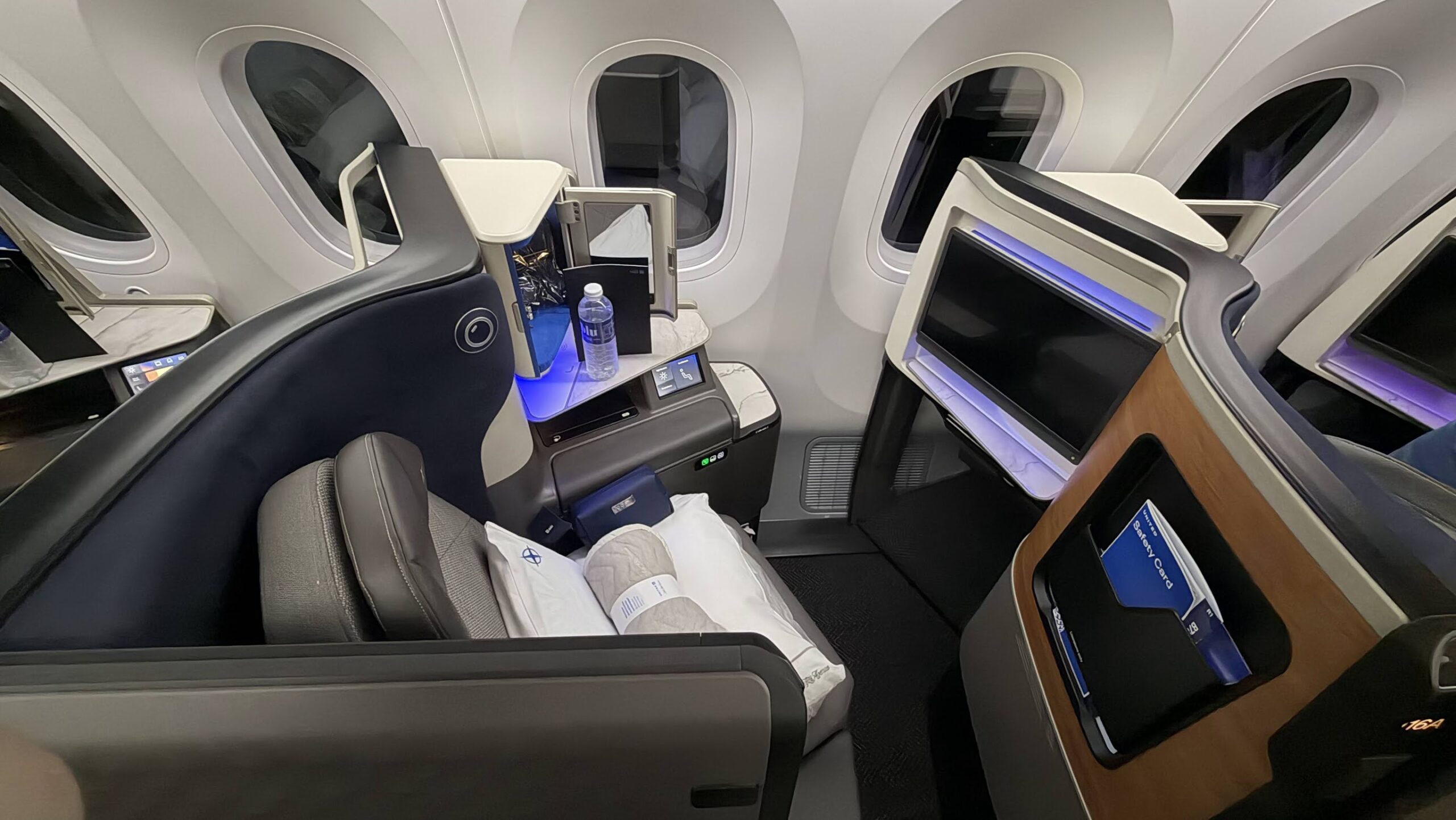
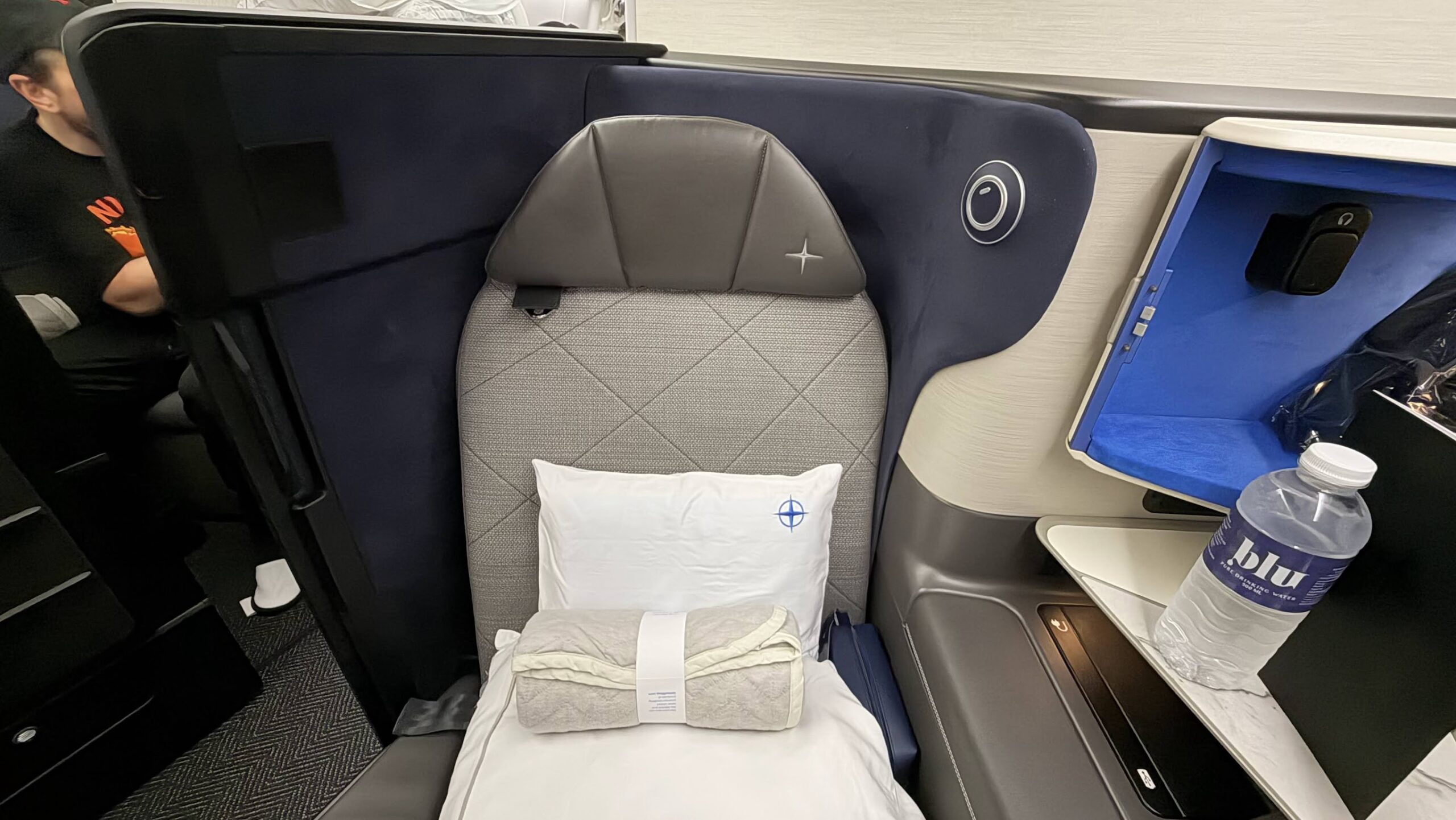
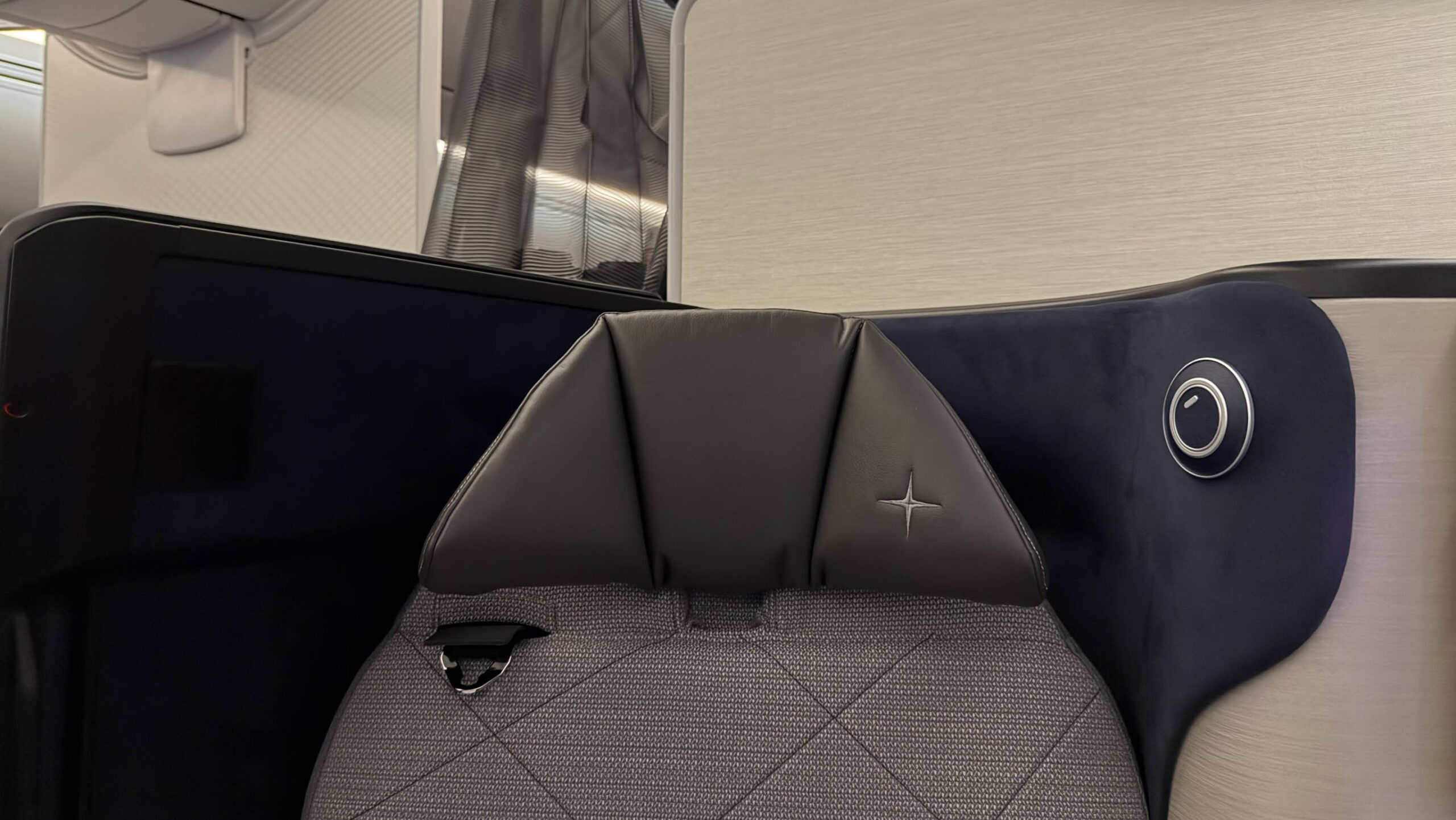
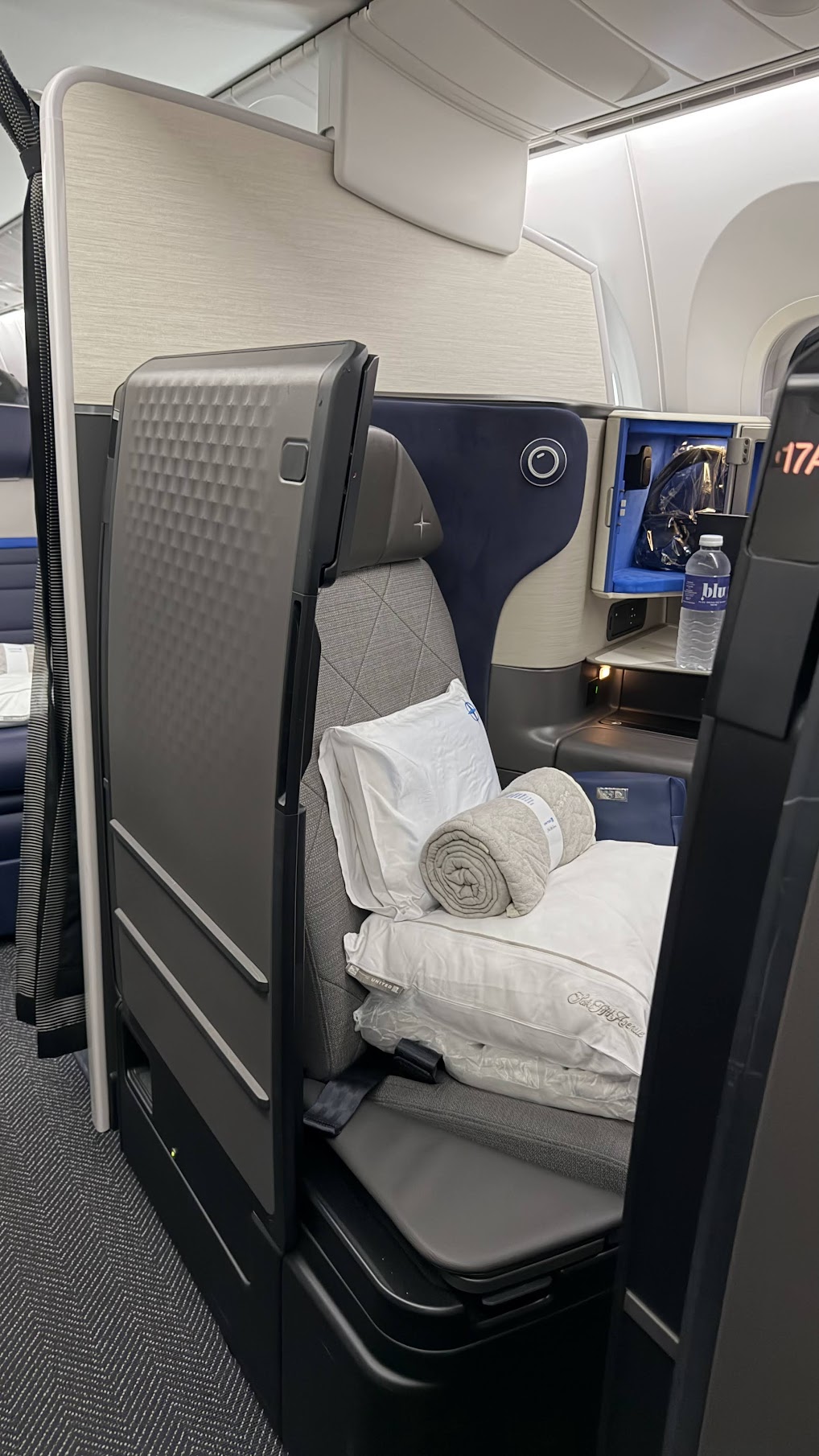
The seat itself is covered in a breathable wool-blend fabric and comes with an adjustable headrest imprinted with the recognisable Polaris north star logo. I didn’t need to adjust the headrest at all on this flight. There’s also a small reading lamp built into the headrest area.
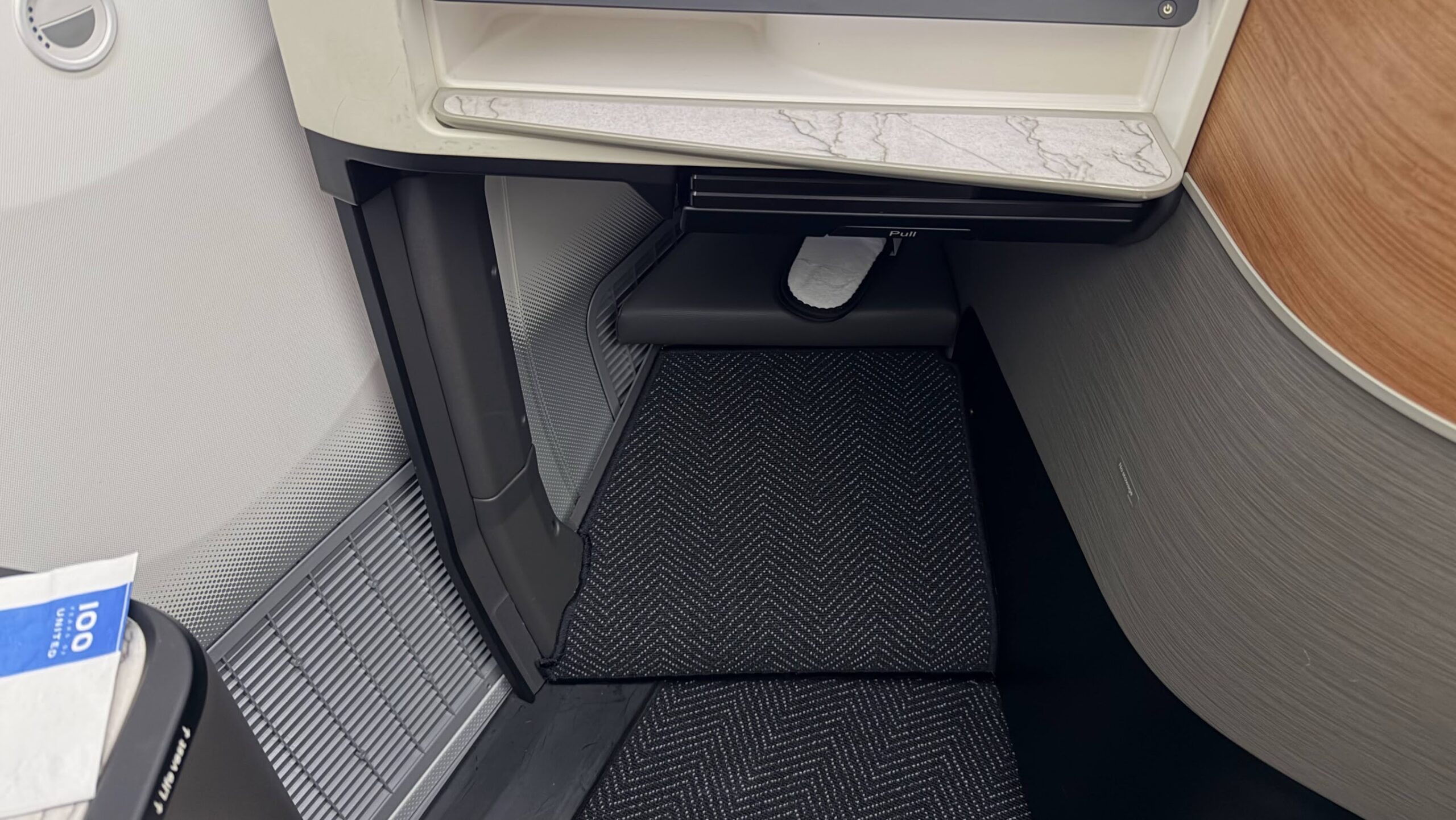
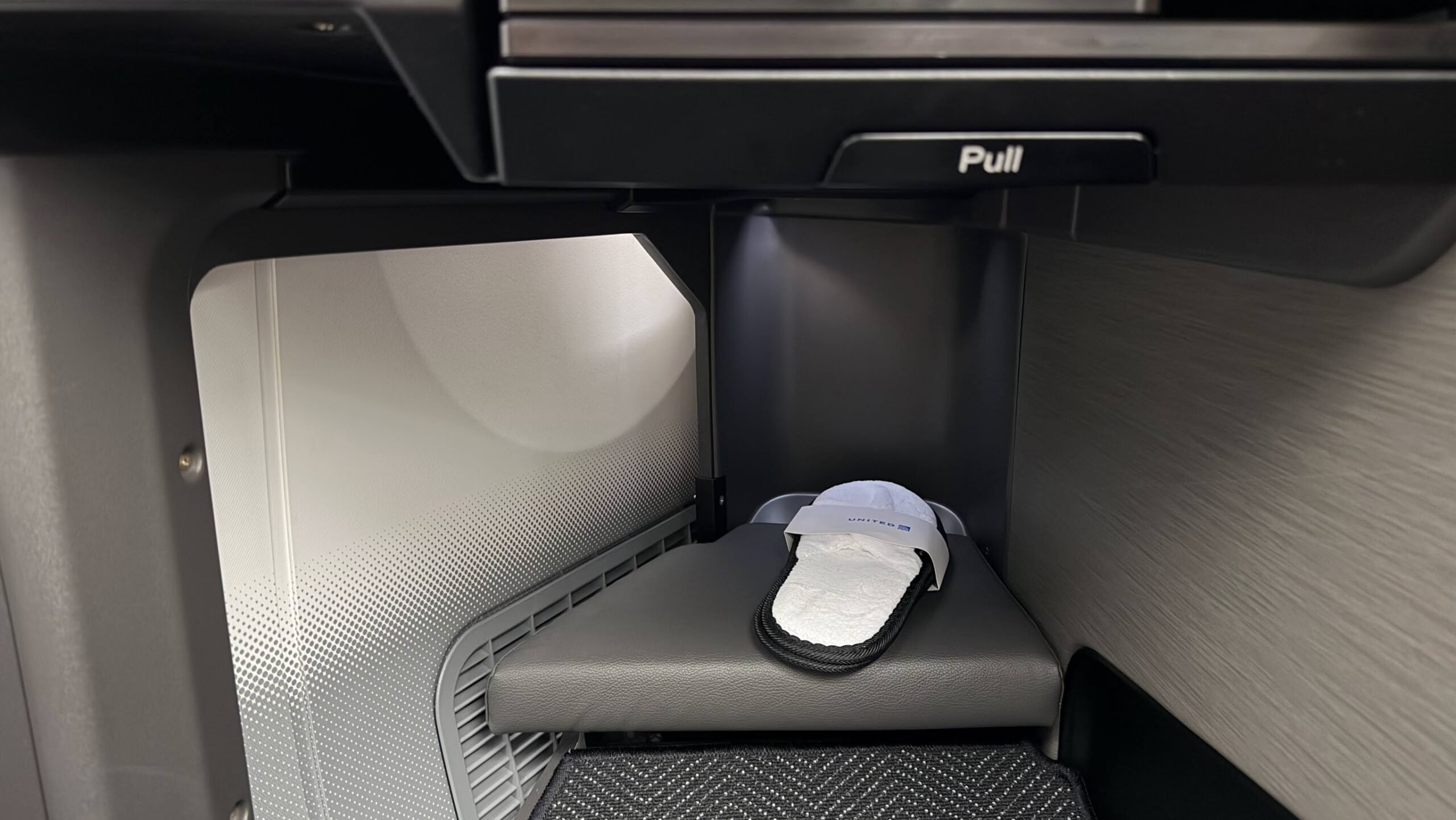
The footwell narrows towards the end, with slippers provided inside for you to change into. It’s not the most spacious footwell I’ve encountered, but it’s perfectly adequate for sleeping.
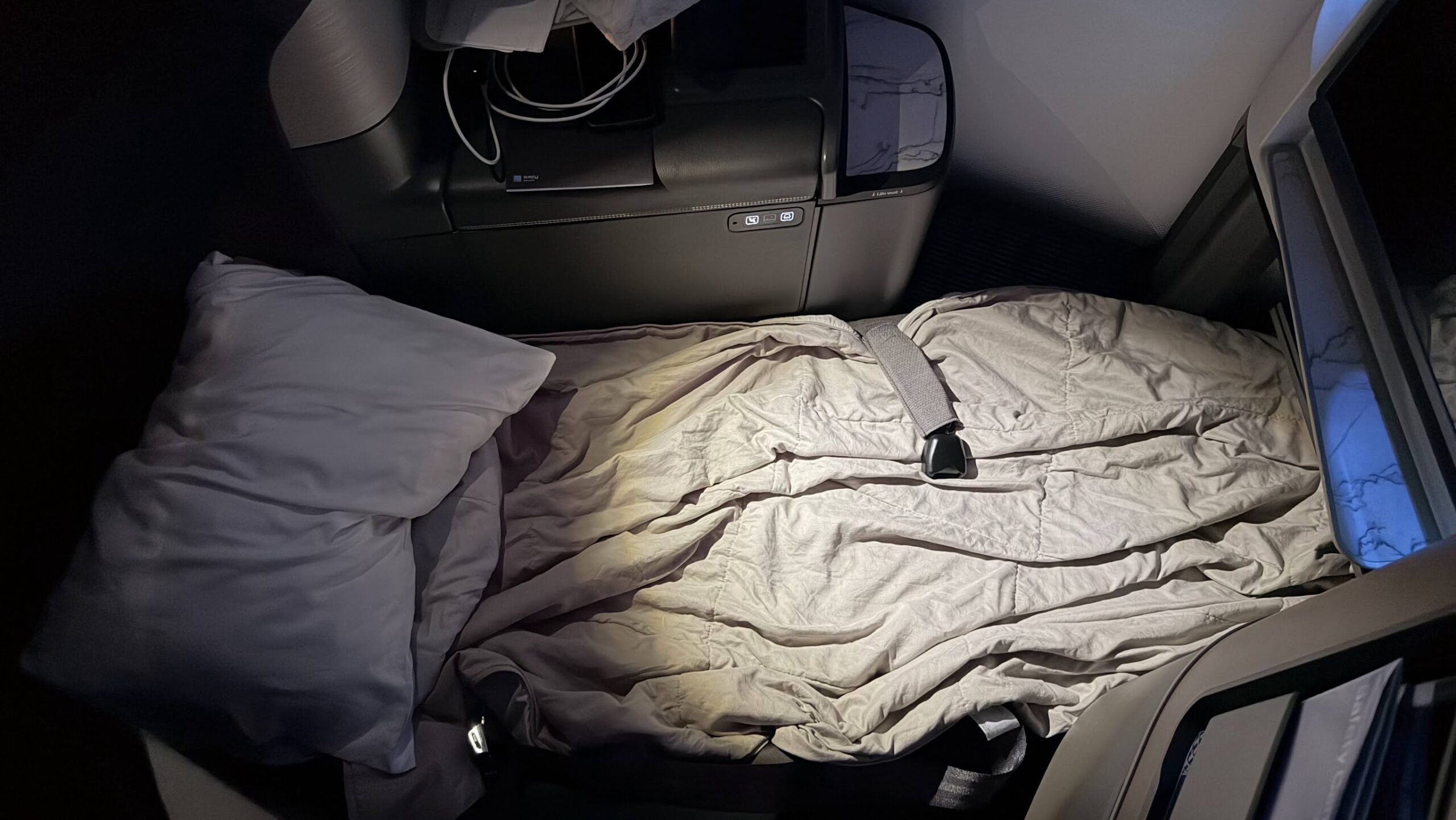
Where this product really shines is the bedding. United’s partnership with Saks Fifth Avenue provides a duvet, day blanket, large pillow, and a cooling gel pillow. There’s also a mattress pad available on request, though it isn’t provisioned by default. I set up the bed myself and the process was straightforward.
The sleep quality was genuinely excellent, and the bedding felt like a tangible step up from what Singapore Airlines provides in business class on the same route (and you don’t even need to flip over your seat). In fact, the Saks Fifth Avenue partnership continues despite the retailer undergoing bankruptcy restructuring, which is interesting.
The 19-inch 4K OLED screen is a standout. It’s crisp, responsive, and thoroughly modern, with Bluetooth connectivity if you prefer to use your own headphones. The provided headphones are from Meridian, stored in a dedicated compartment beside the seat.
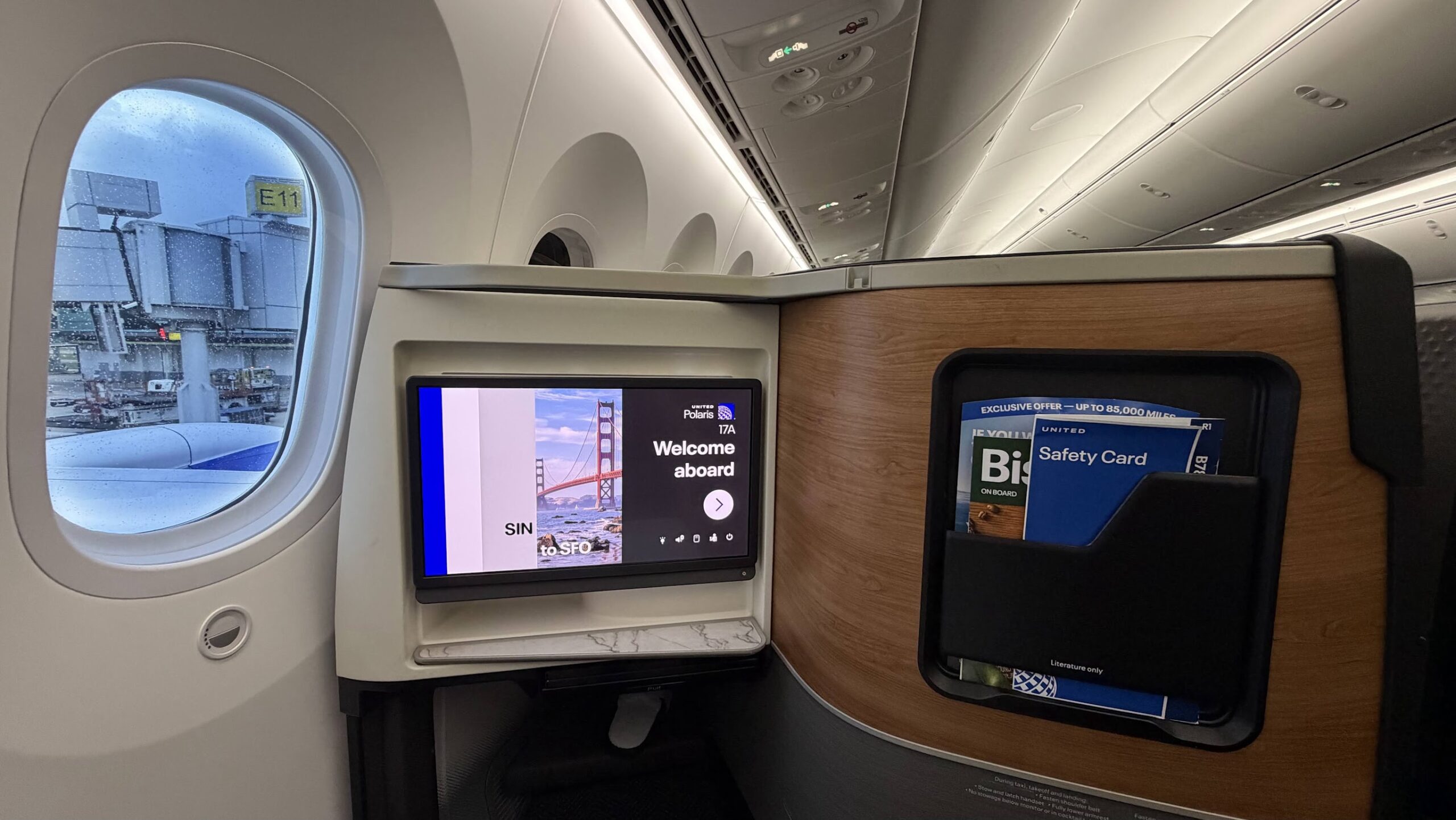
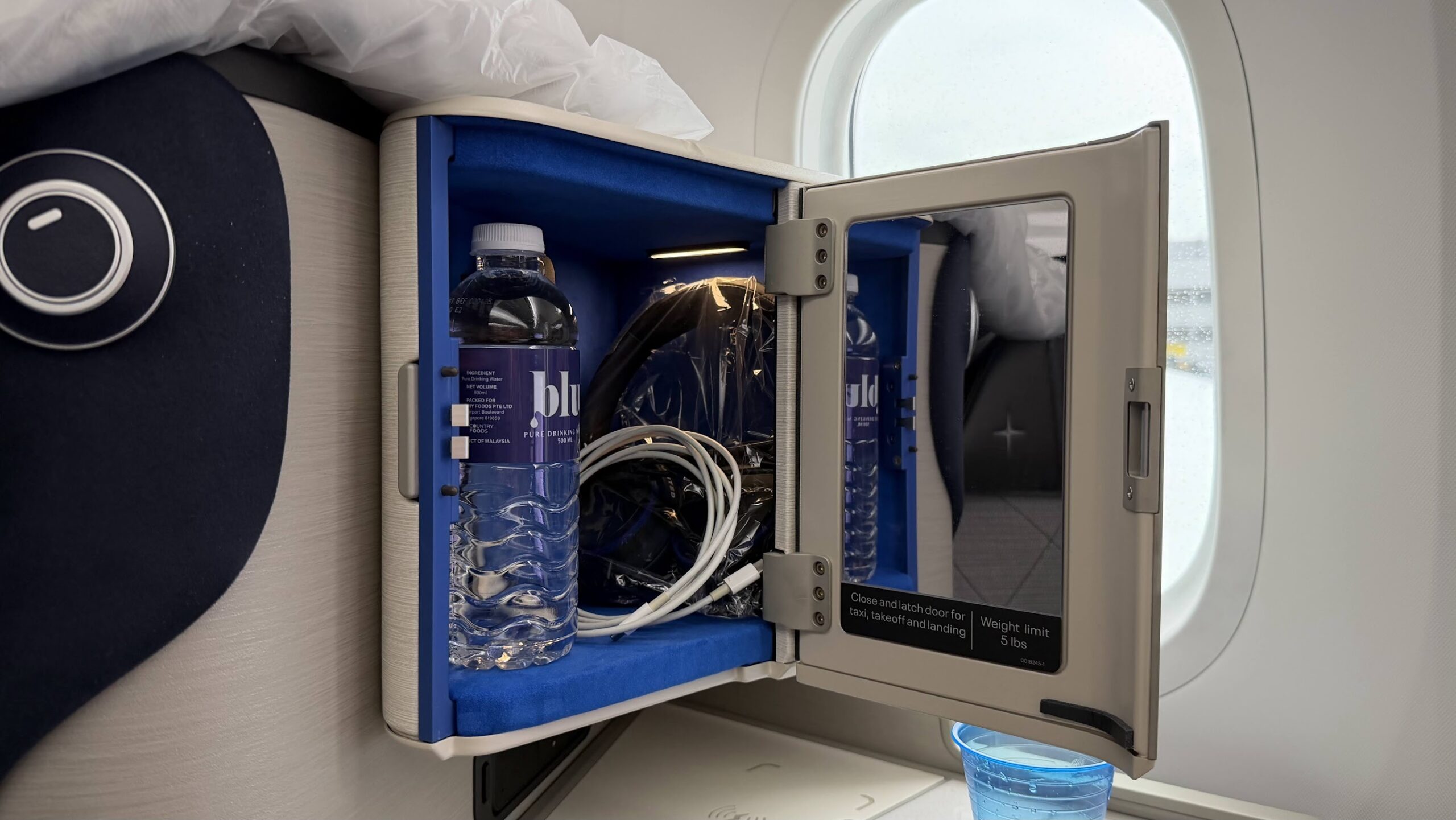
The console area features a wireless charger, a USB-C port, and an international power socket. The console table itself is supposedly made of quartzite, but I thought it was more of faux marble instead.
The touchscreen control panel lets you adjust the console lighting and the TV backlight independently, plus a third lighting zone that I never quite figured out the purpose of. Seat position controls are accessible from the same panel, or alternatively from the physical buttons located below the armrest.
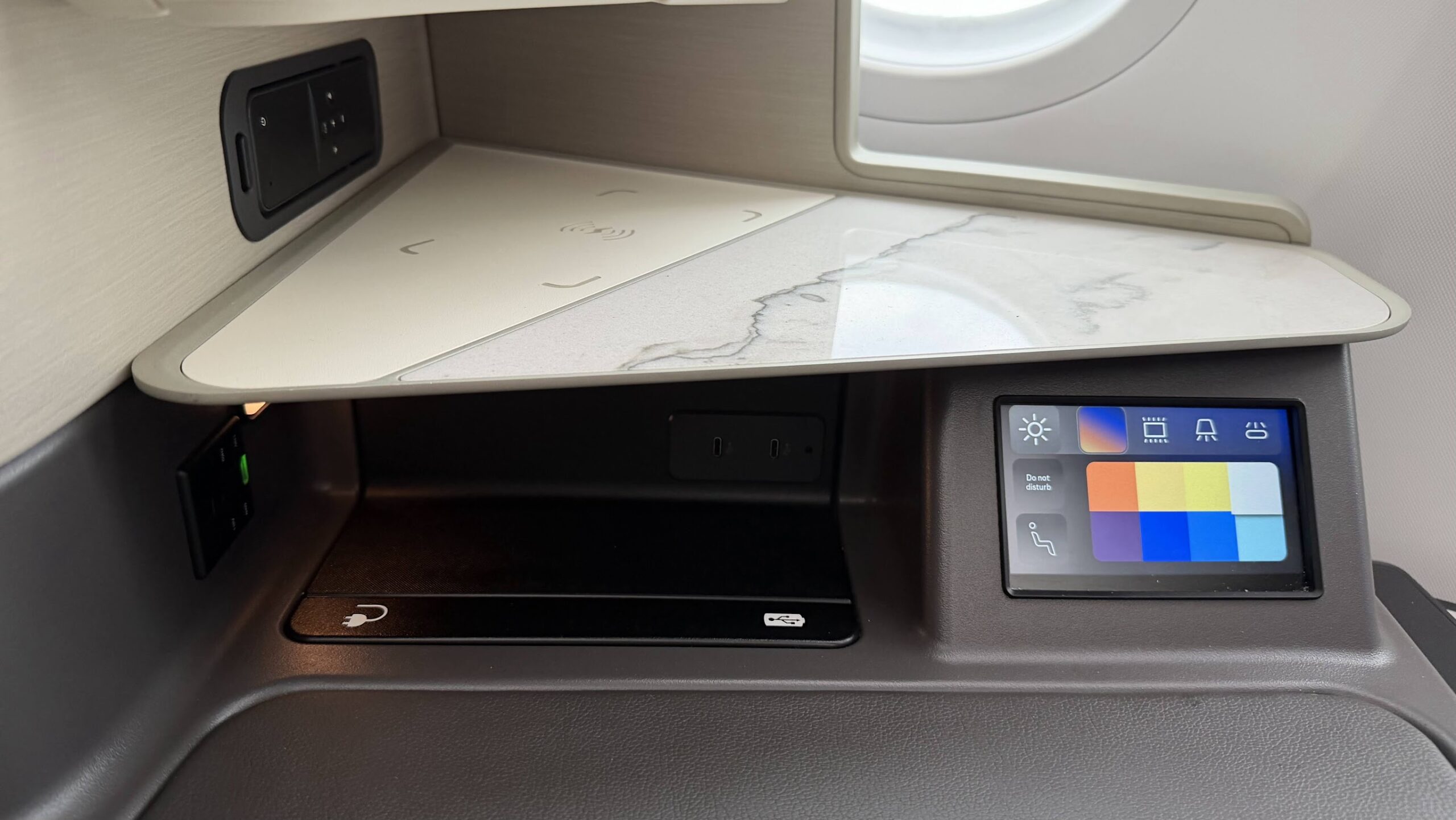
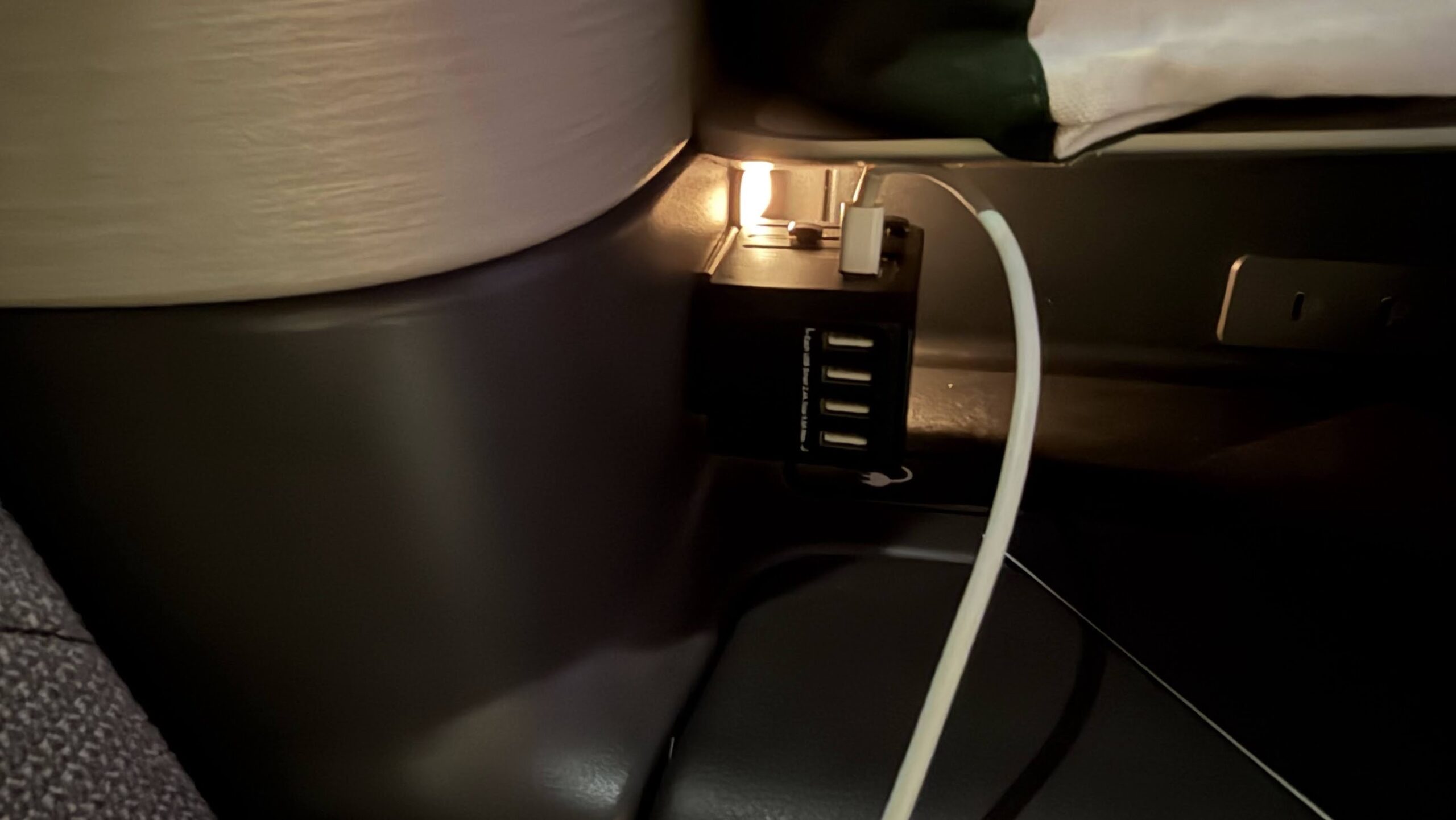
One small annoyance: the three-pin UK adapter I brought never worked in the international power socket, though a two-pin US adapter worked without issues.
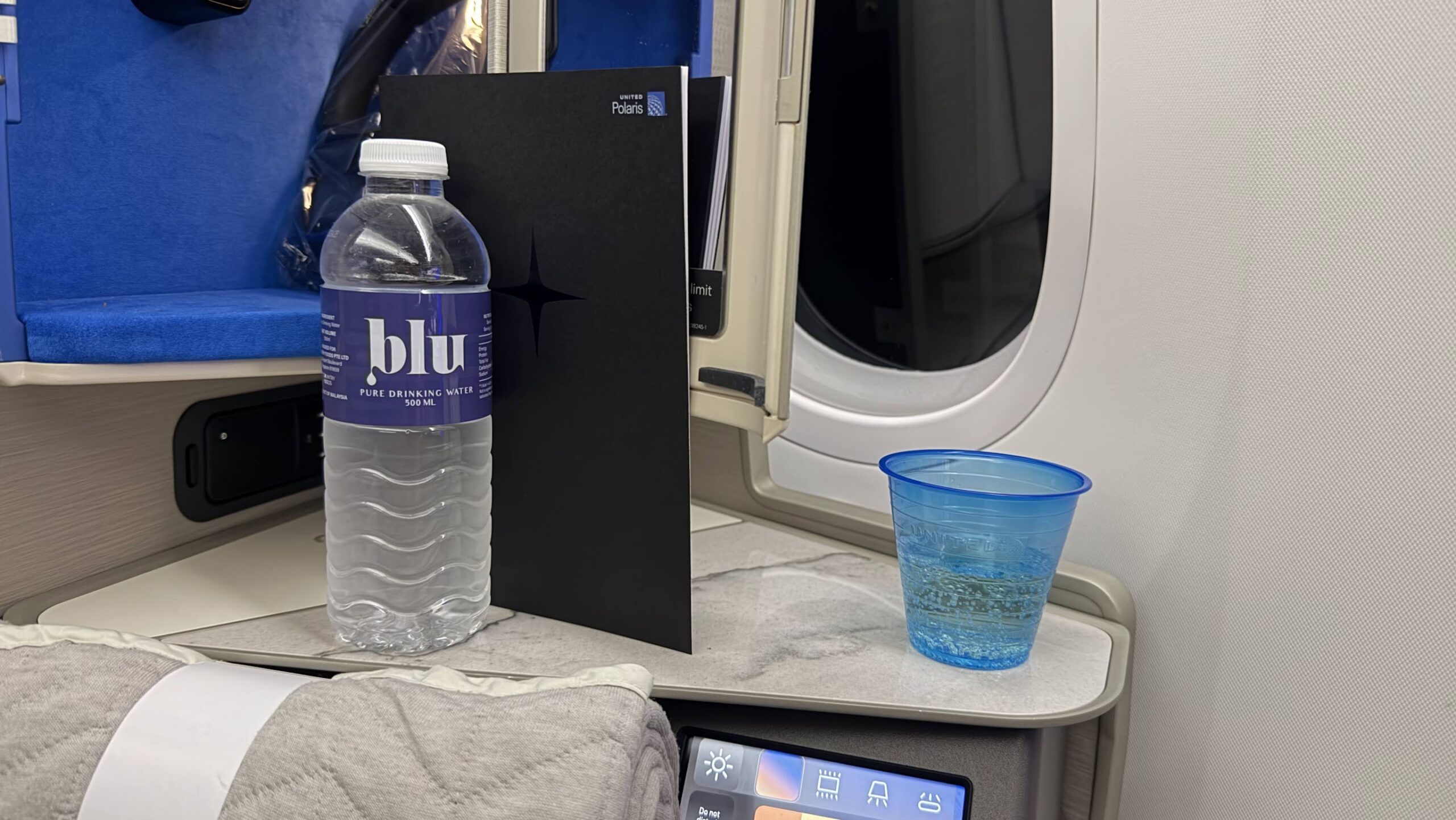
Before departure, I was offered champagne or water as a pre-departure drink, served in a plastic cup. Not the most glamorous presentation, but fine for what it is.
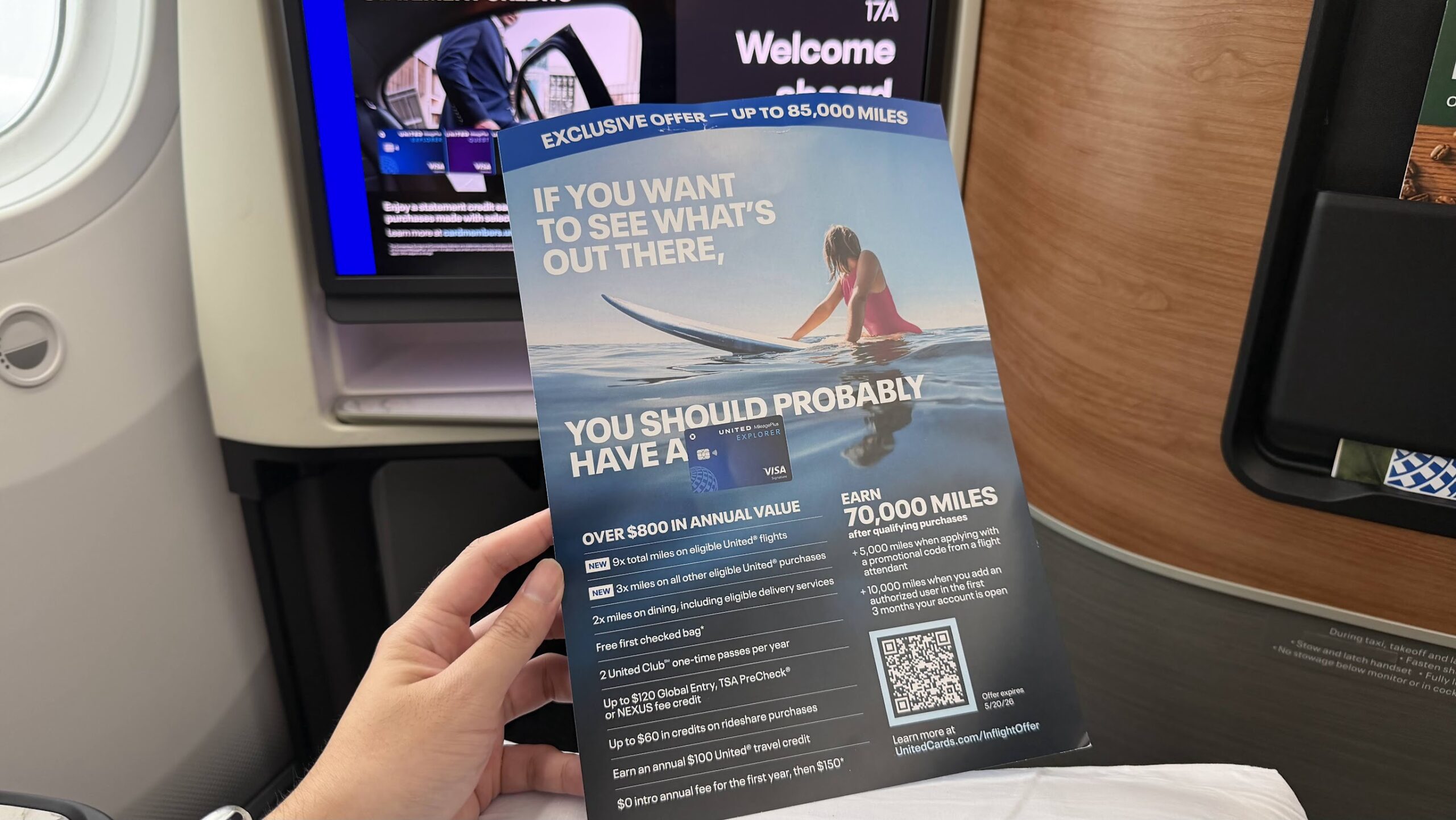
There was also an in-seat MileagePlus Explorer card advertisement, which offers 70,000 bonus points over the regular 50,000 points offer if you were to apply publicly.
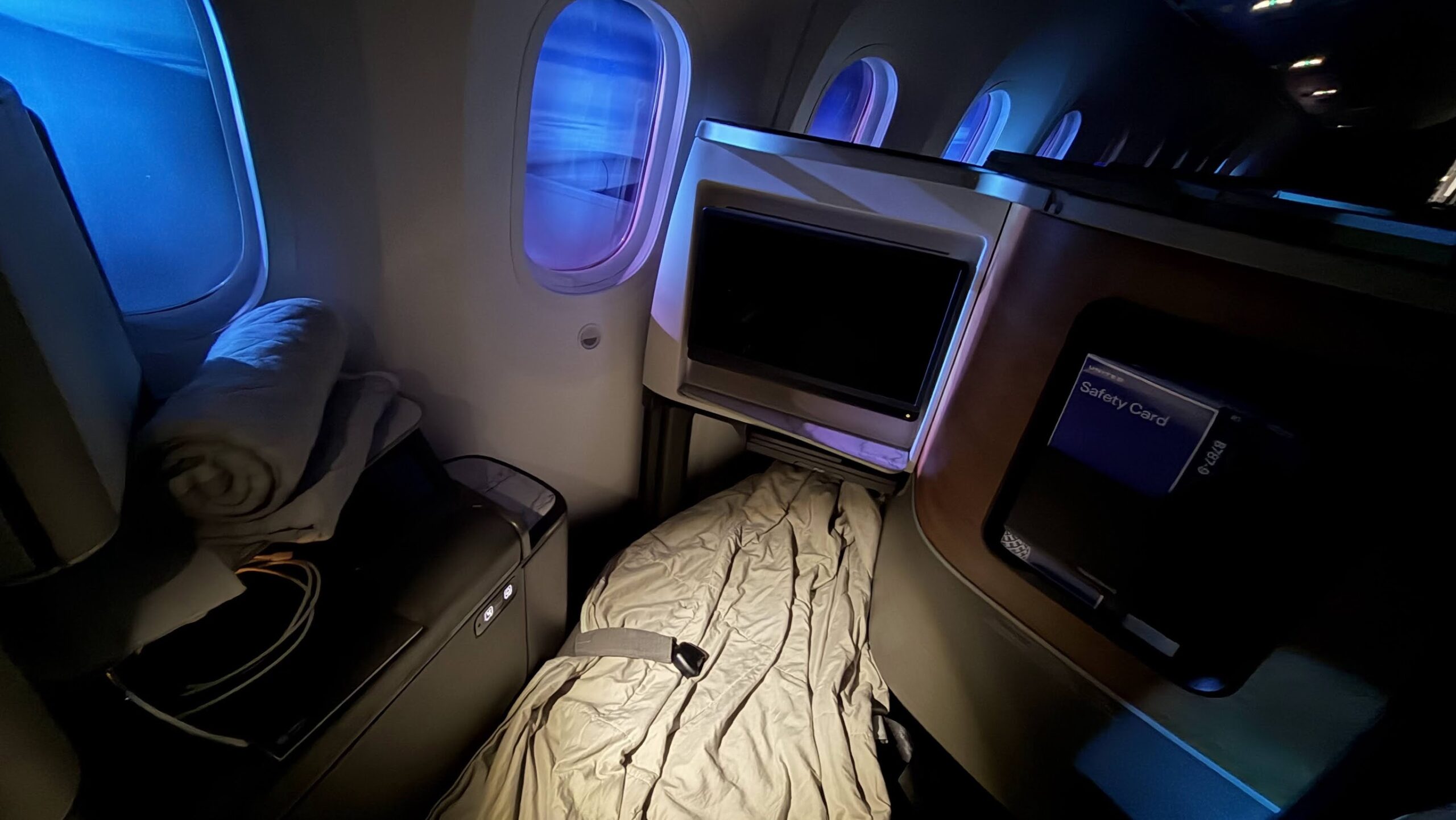
Now, the elephant in the room: the sliding doors. They are physically installed on every suite, and you can see them. But they are locked in the open position pending FAA certification. The Federal Aviation Administration still needs to evaluate how the doors affect emergency evacuation procedures, and until that certification comes through, they remain fixed open. That said, even without the doors engaged, the seat felt noticeably more private than I expected. The high walls and reverse herringbone angle do most of the work already.
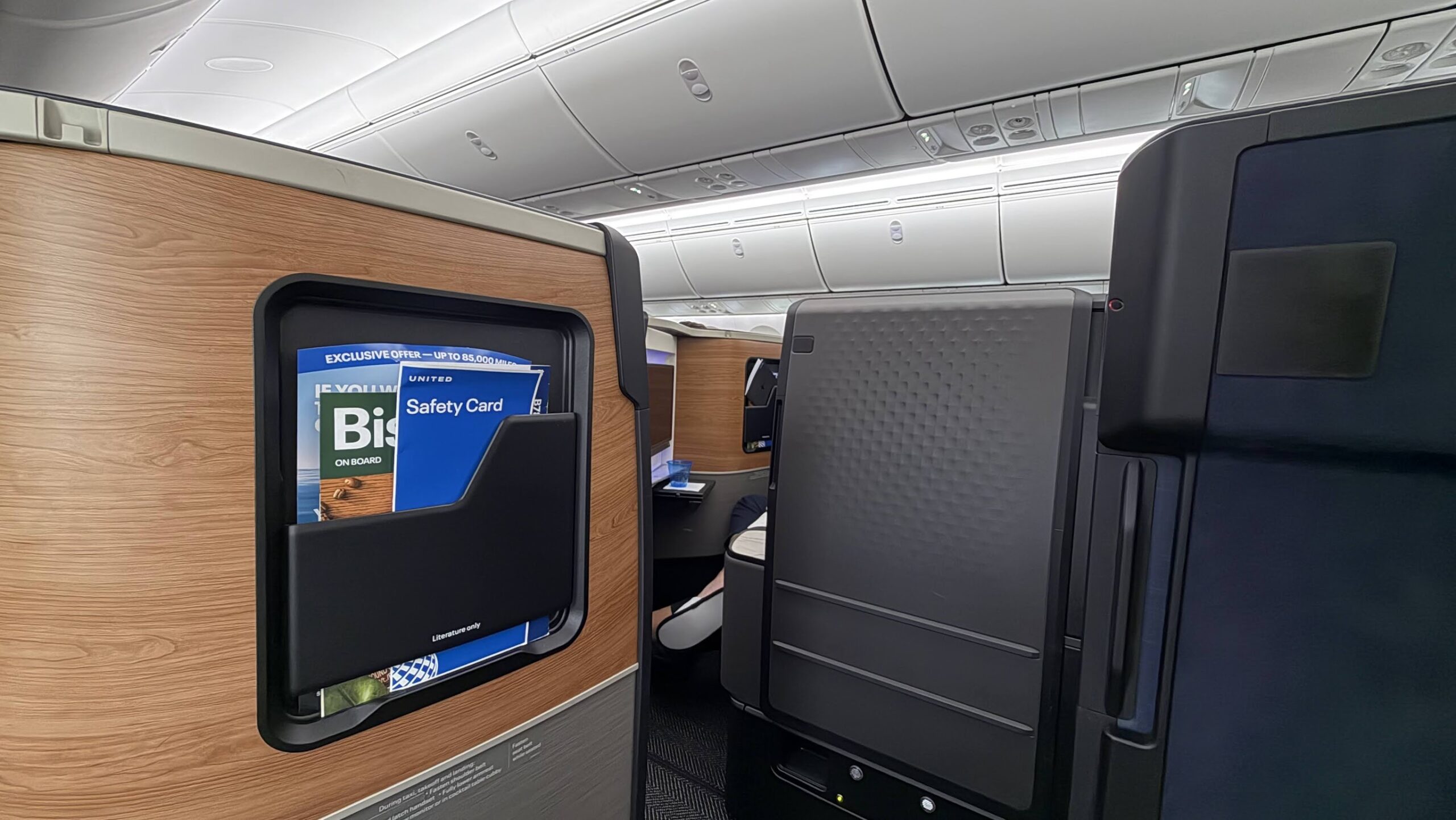
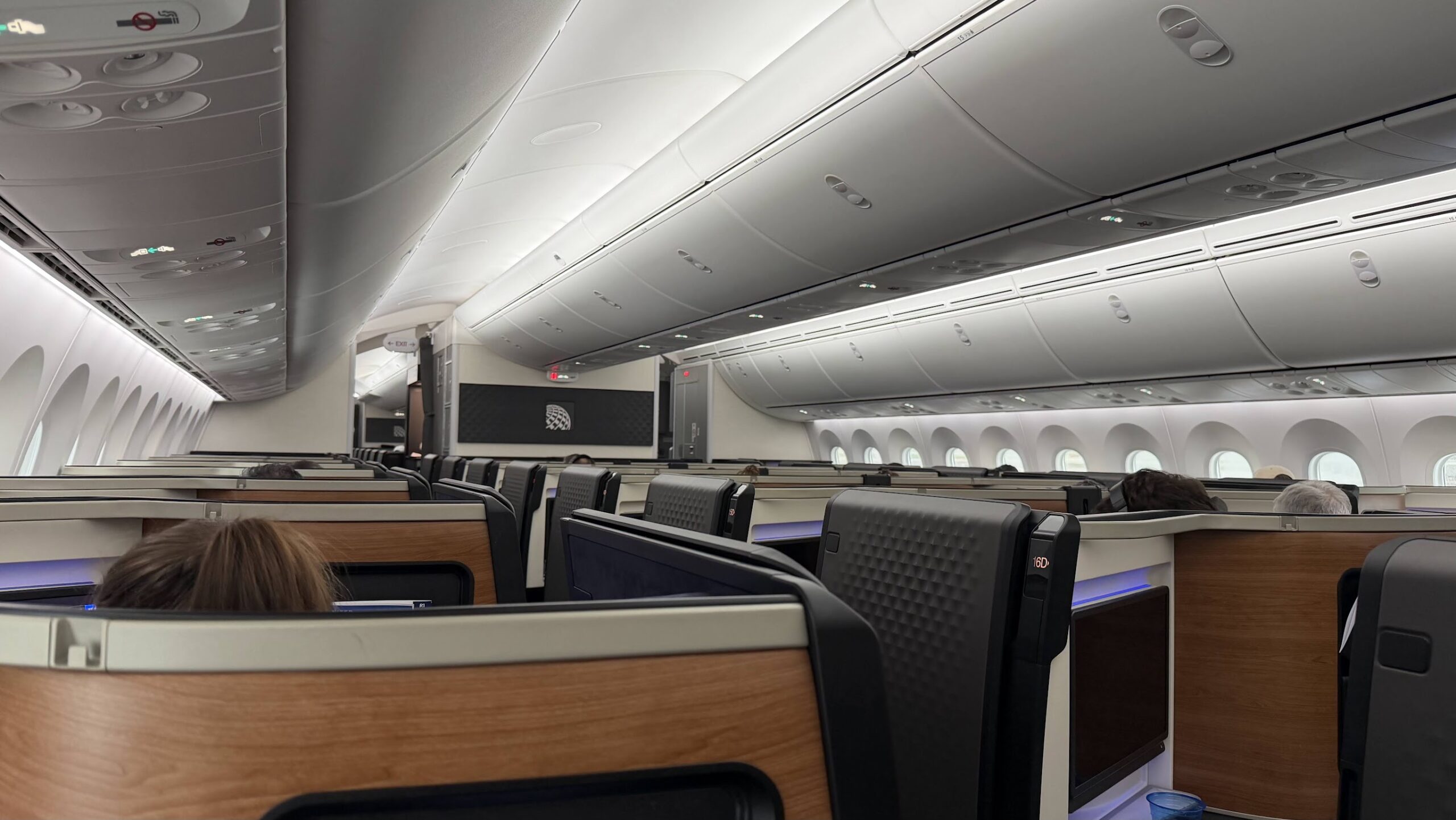
I did want to see the Polaris Studio suites up close, the larger bulkhead seats with 27-inch screens and companion ottomans, but all eight were occupied, and I didn’t want to disturb anyone for photos.
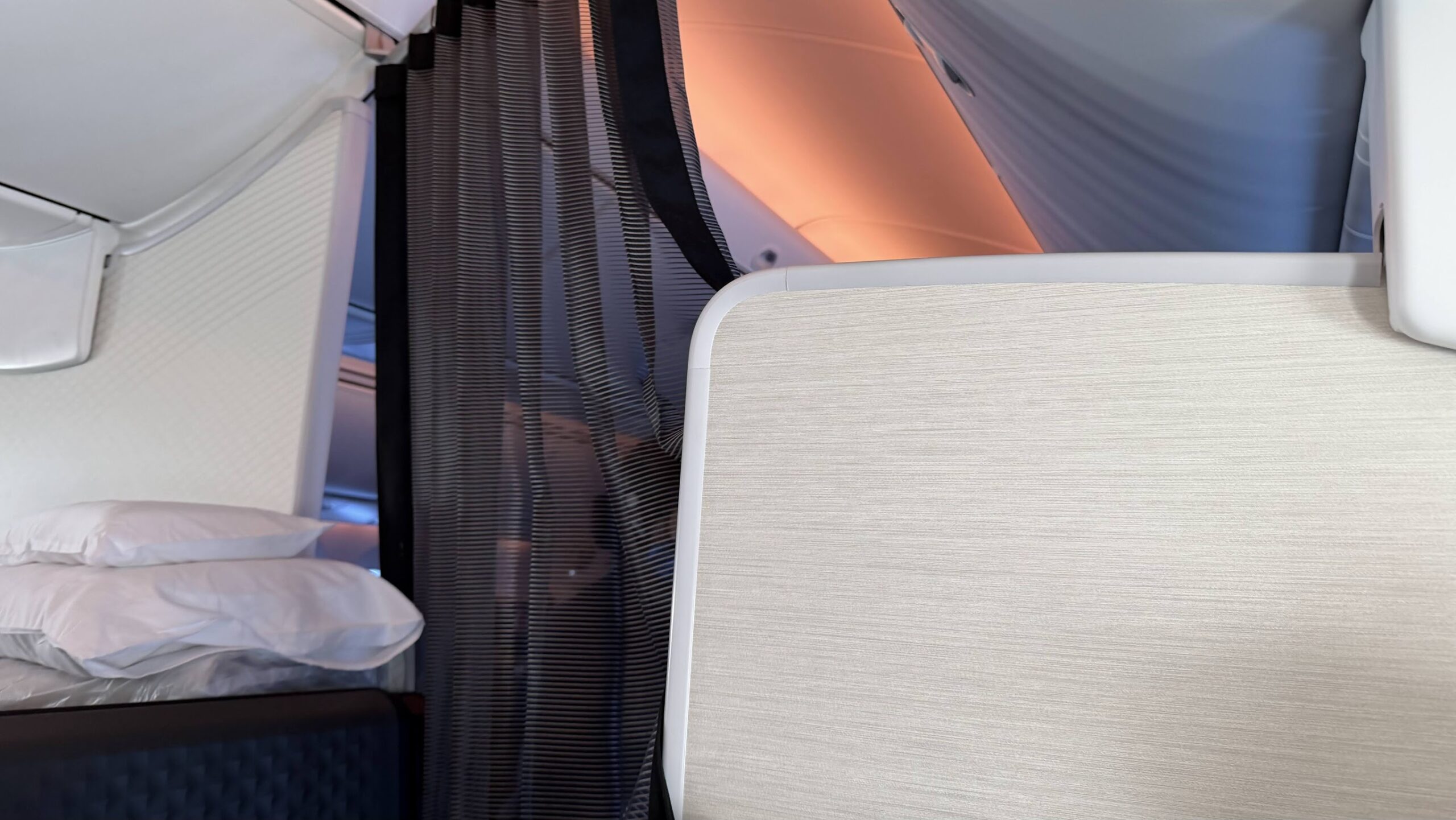
One thing I wasn’t thrilled about in my seat at 17A: the partition separating the business class cabin from the section behind is made of a translucent fabric. It’s noticeably see-through, which undercuts the privacy you’d otherwise feel in the suite. By contrast, Singapore Airlines uses an opaque divider between cabins, and even the forward cabin on this aircraft has a more solid partition. If you’re sensitive to this, aim for a seat further forward.
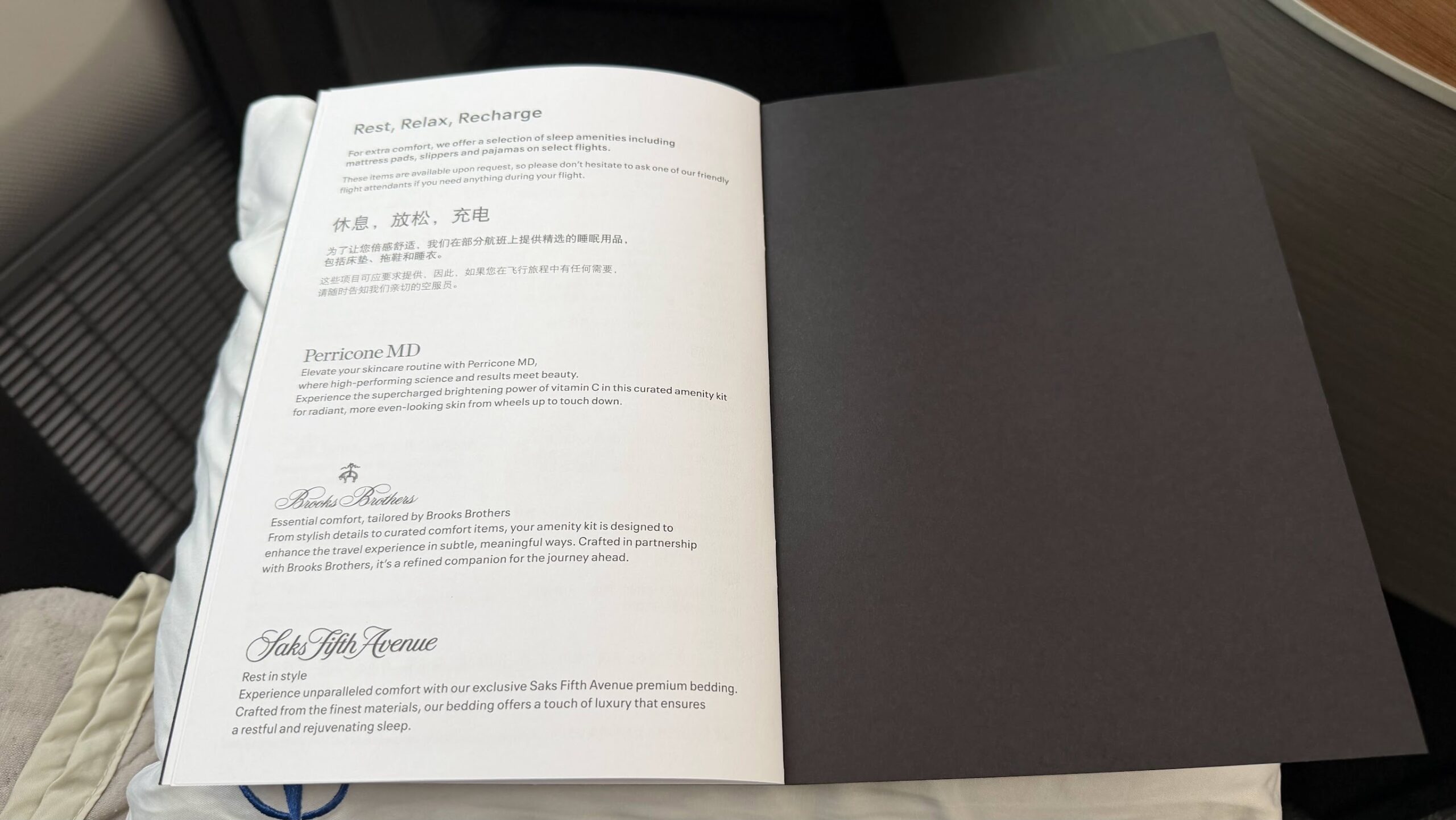
There’s also a menu card at the seat listing extra bedding amenities you can request, which is how I learned the mattress pad was available only after my flight.
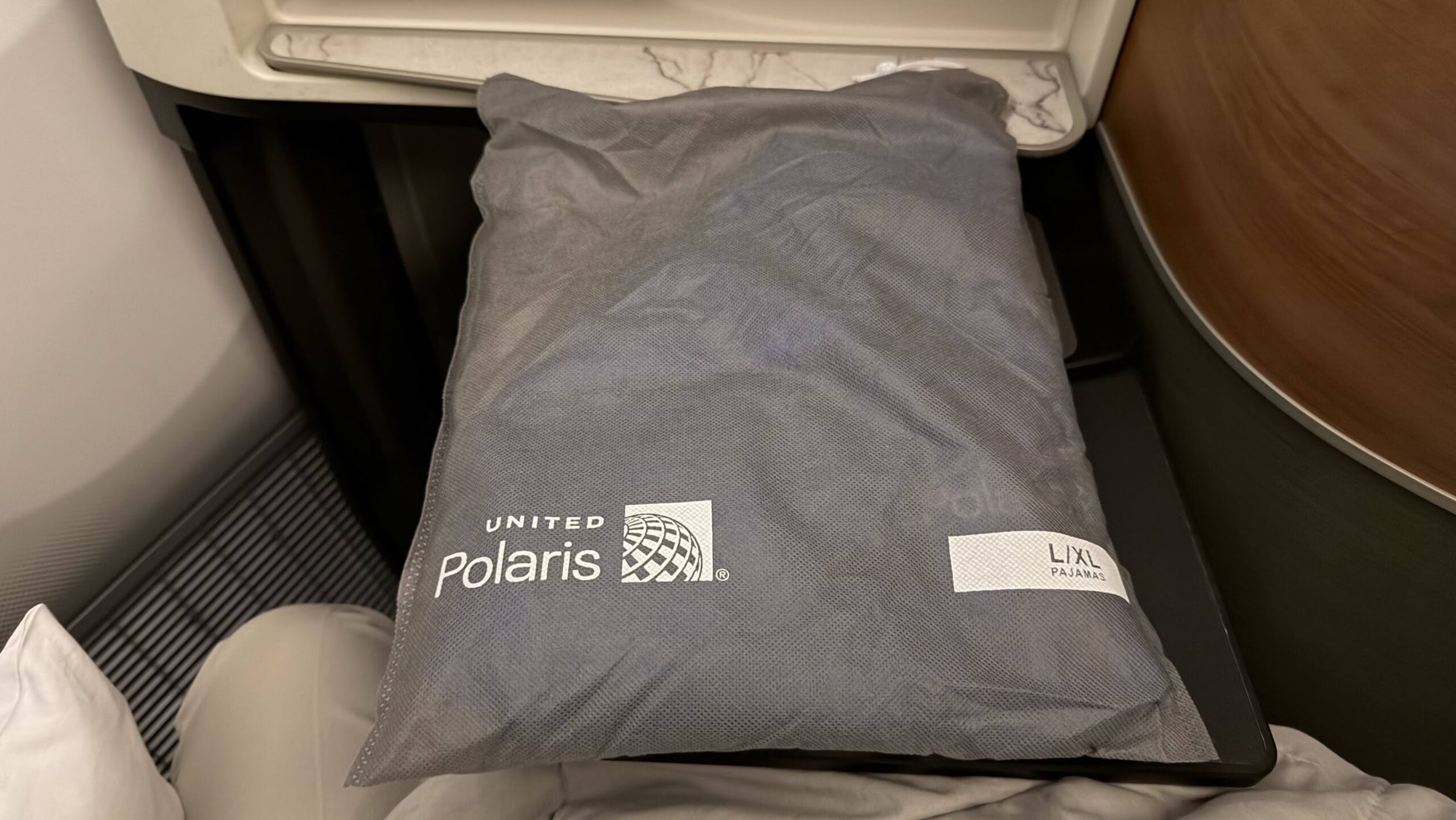
Pyjamas were also offered on request: a blue top with grey bottoms. The colour combination doesn’t quite match, but they’re comfortable enough.
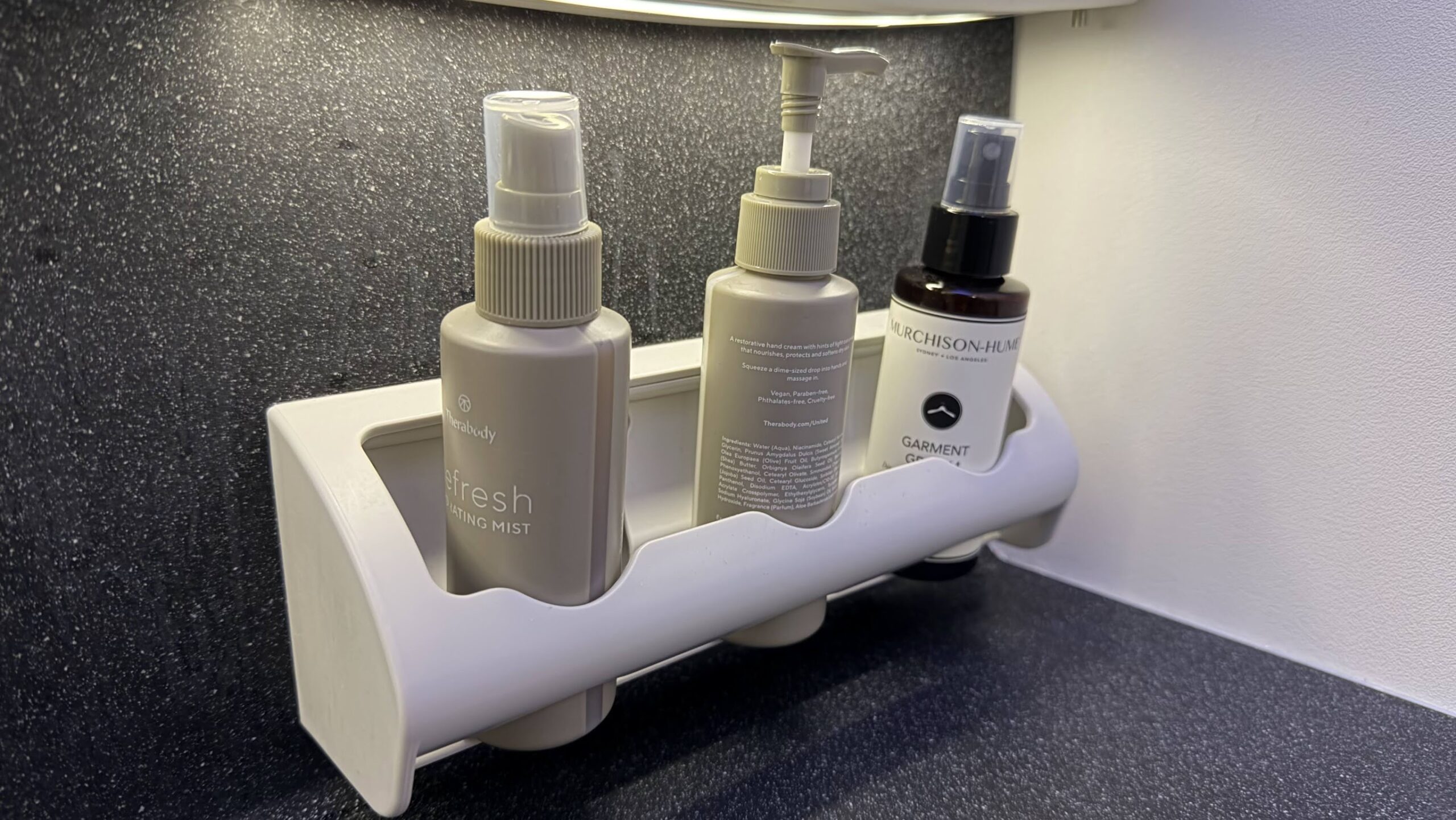
The toilet had a small selection of amenities available for passengers to use, by Therabody and Murchison-Hume.
In-flight entertainment and Wi-Fi
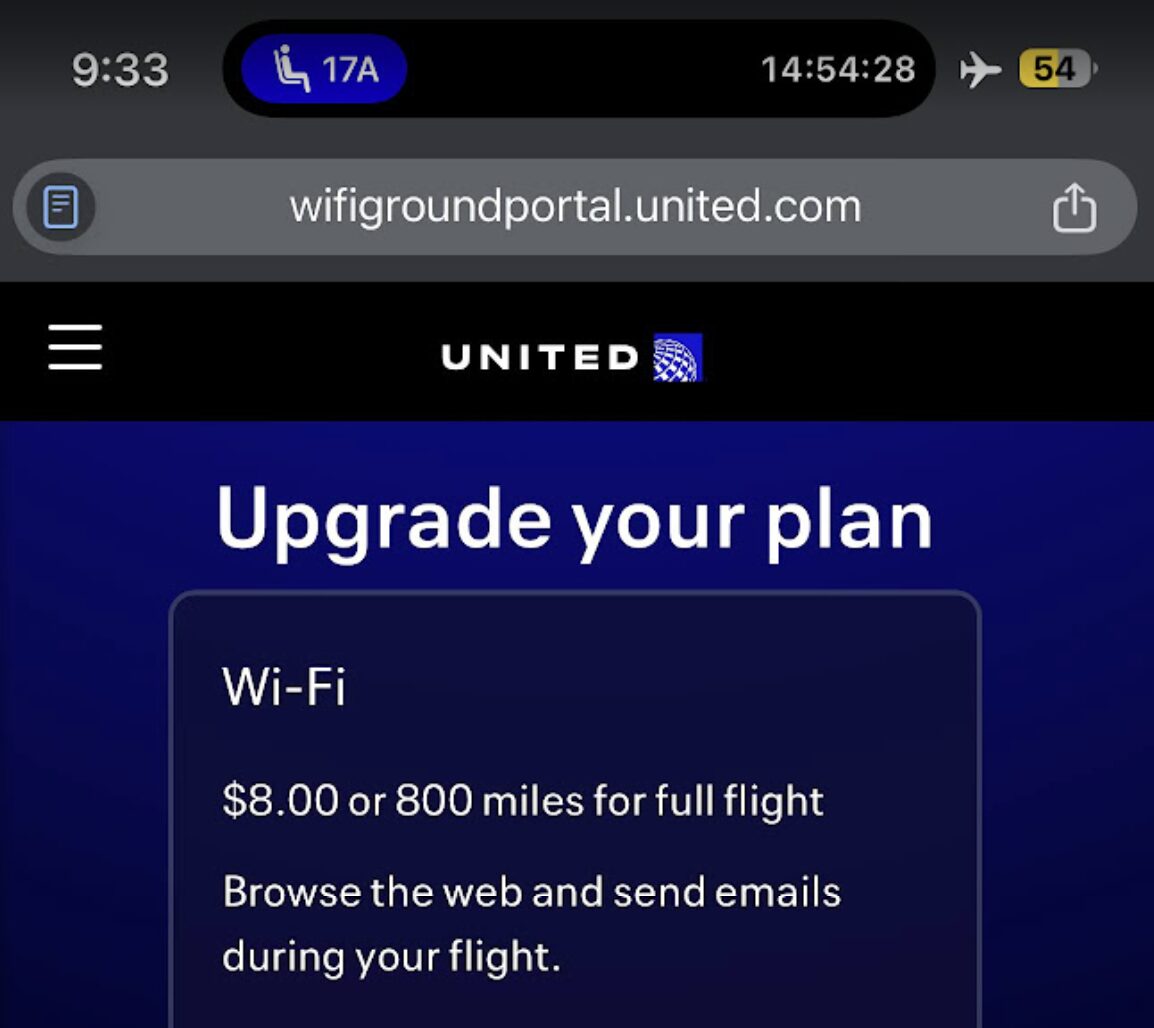
Wi-Fi is priced at US$8 for United MileagePlus members (you can sign up for free to get the rate). On this mid-May 2026 flight, the connection was reliable for most of the journey.
I noted there were some reports about spotty Wi-Fi. In my experience, coverage was without noticeable issue across the Asia-Pacific portion of the route, with only minor spottiness as we approached Alaska and the US mainland. Speeds were serviceable for messaging and browsing, which is about what you’d expect from Panasonic’s aviation system. Nothing blazing, but workable for a long-haul flight. I wished there were Starlink on this flight though, which would’ve been good given the number of corporate travellers on this flight.
The IFE itself is excellent. The 4K OLED screen is sharp and responsive, and the content library is extensive with a wide selection of recent movies and shows. Bluetooth connectivity is available if you want to pair your own headphones, though the provided Meridian headphones are perfectly good. There’s also a handheld controller at the seat, though I barely used it.
Food and drinks
Lunch
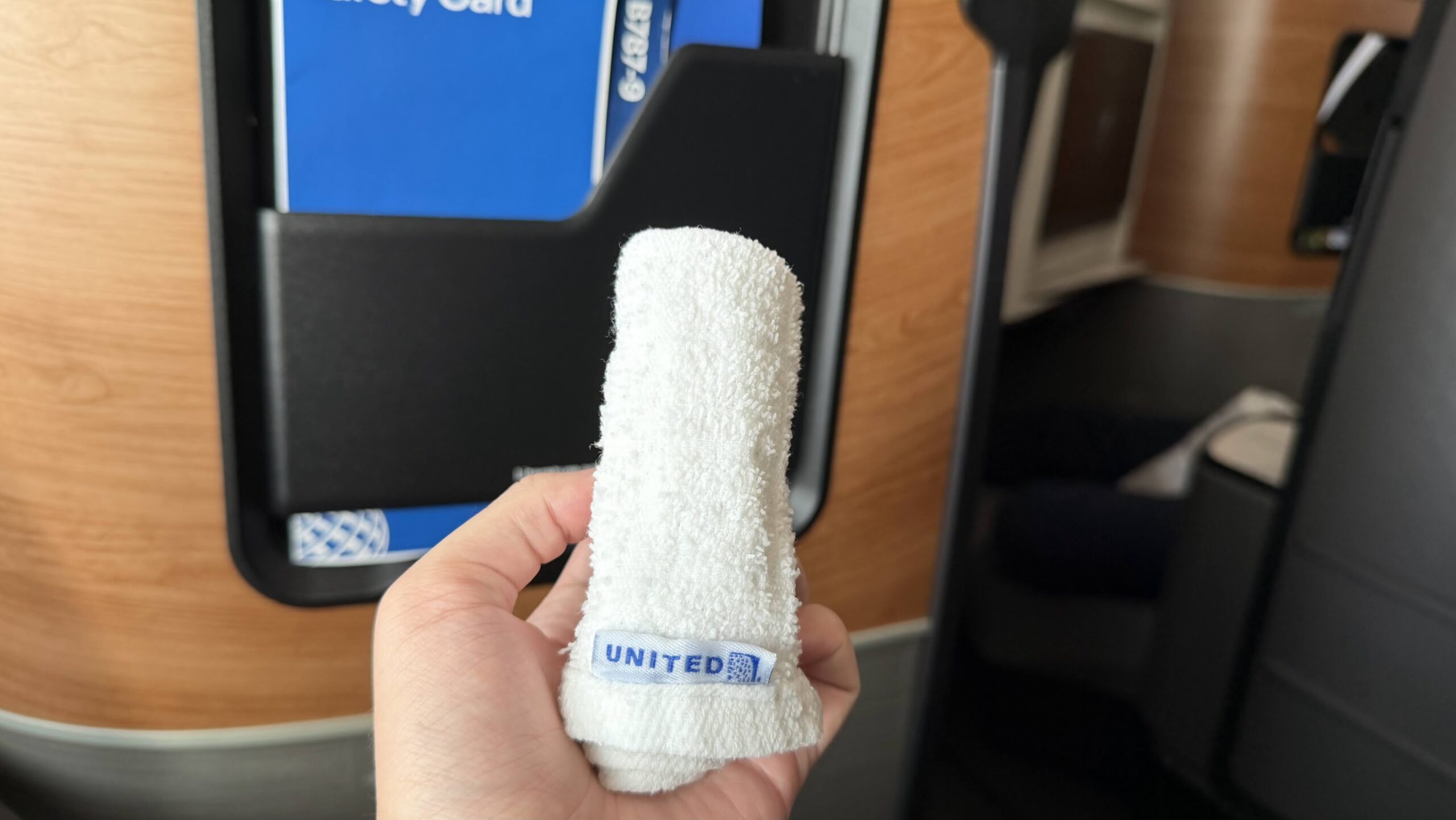
The meal service began with a hot towel, which was very appreciated after settling in for a long flight.
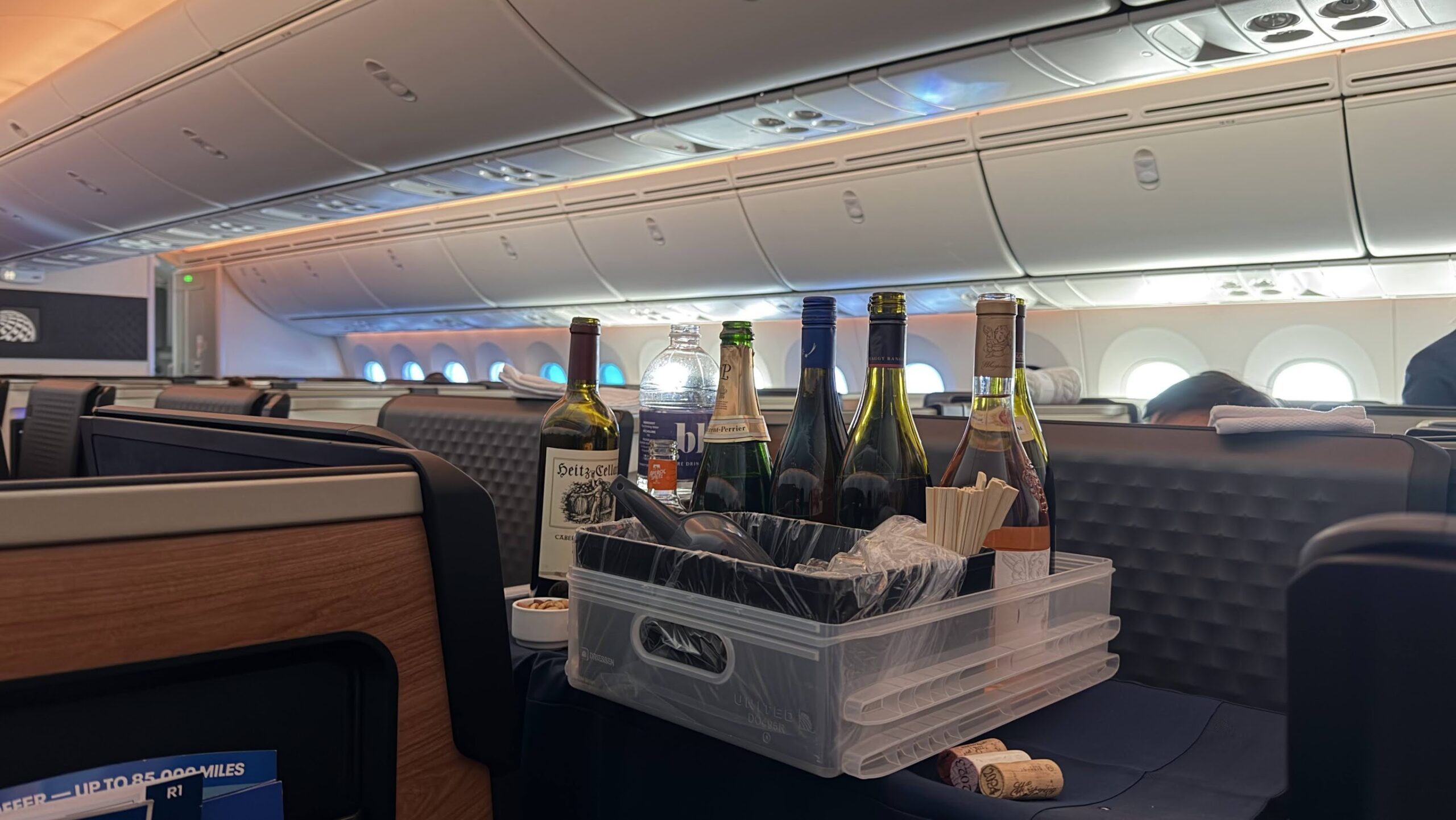
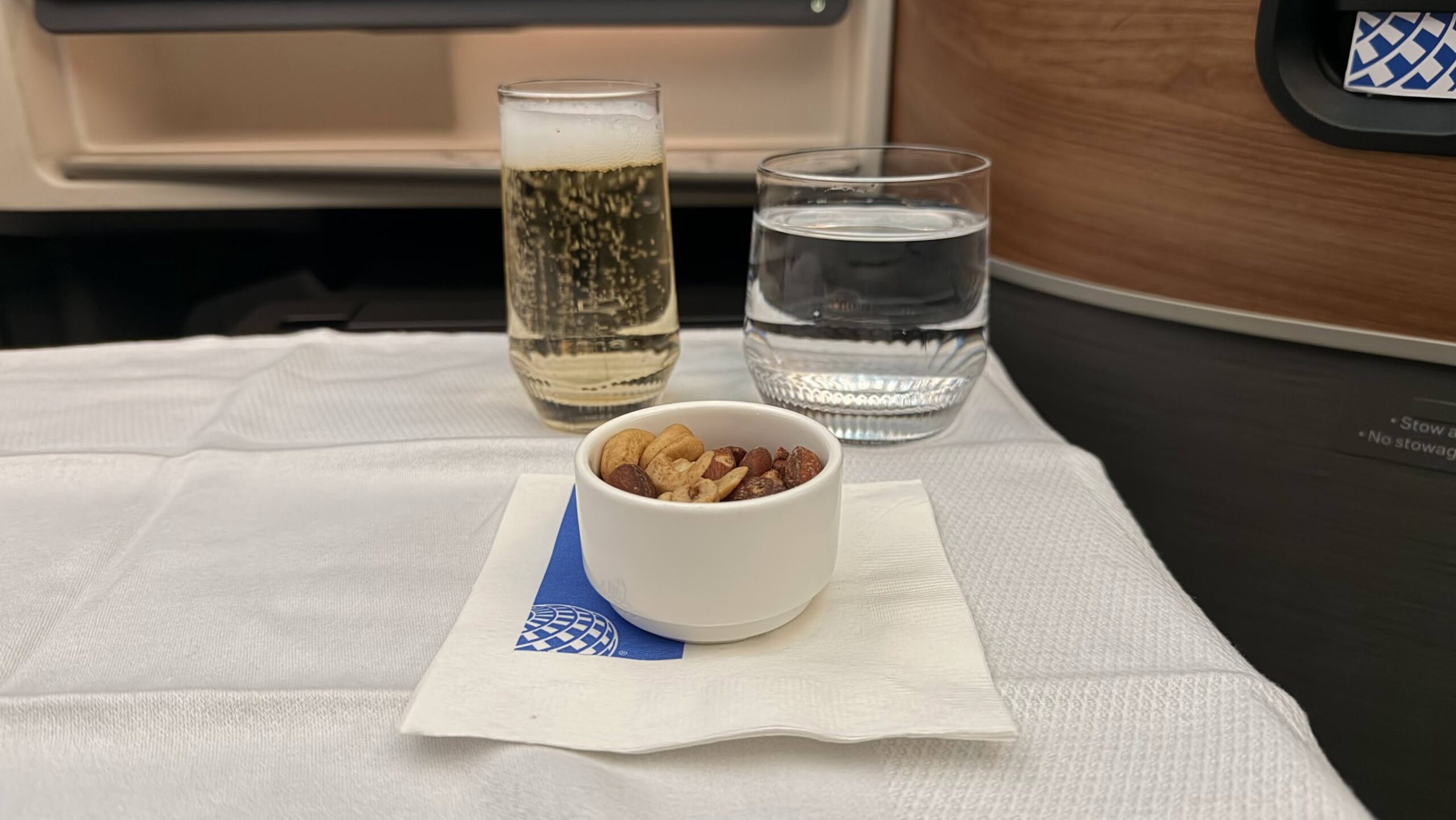
A welcome snack of premium roasted mixed nuts was served warm, alongside a drink of your choice. I chose the Laurent-Perrier’s La Cuvée Champagne.
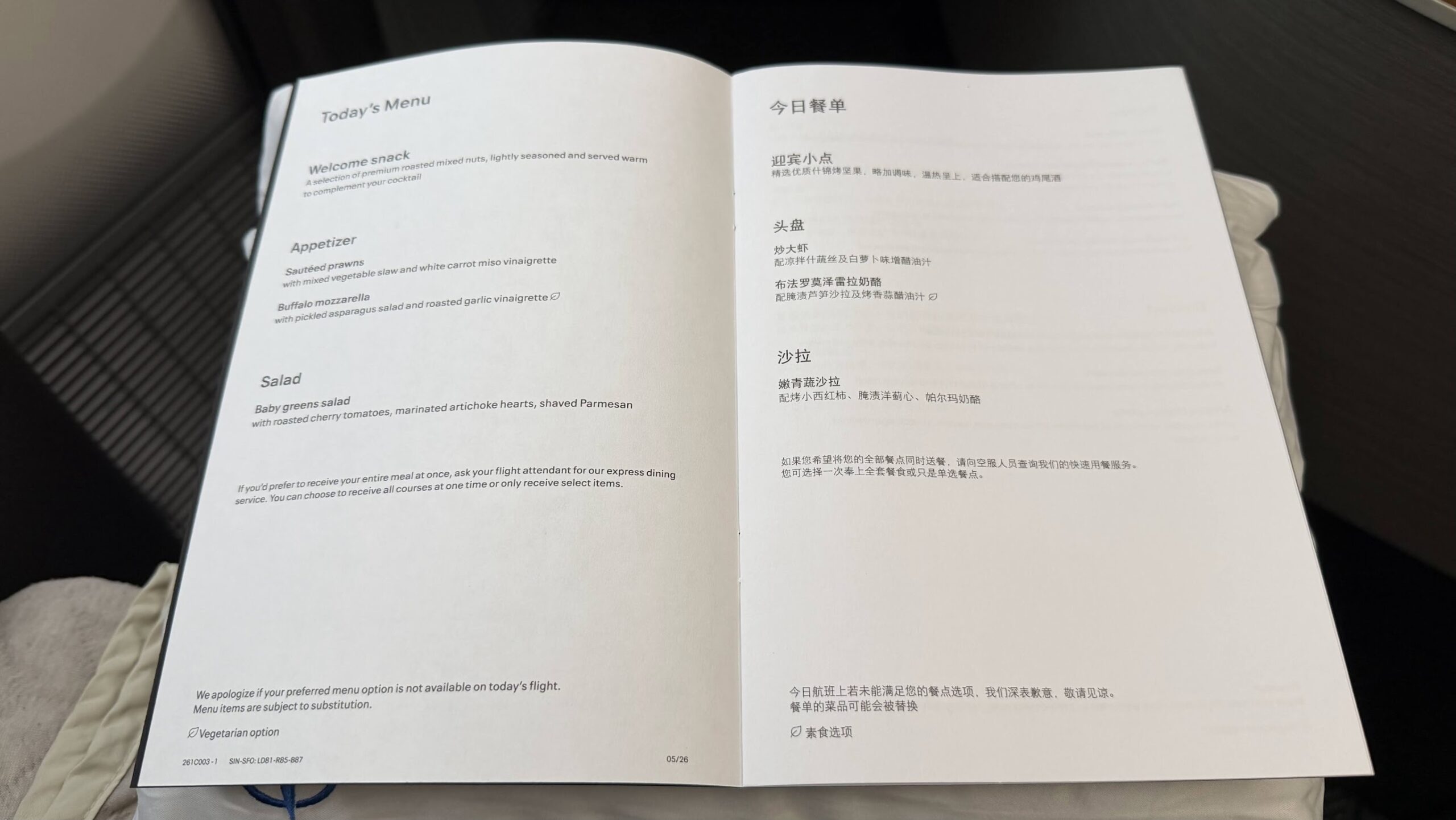
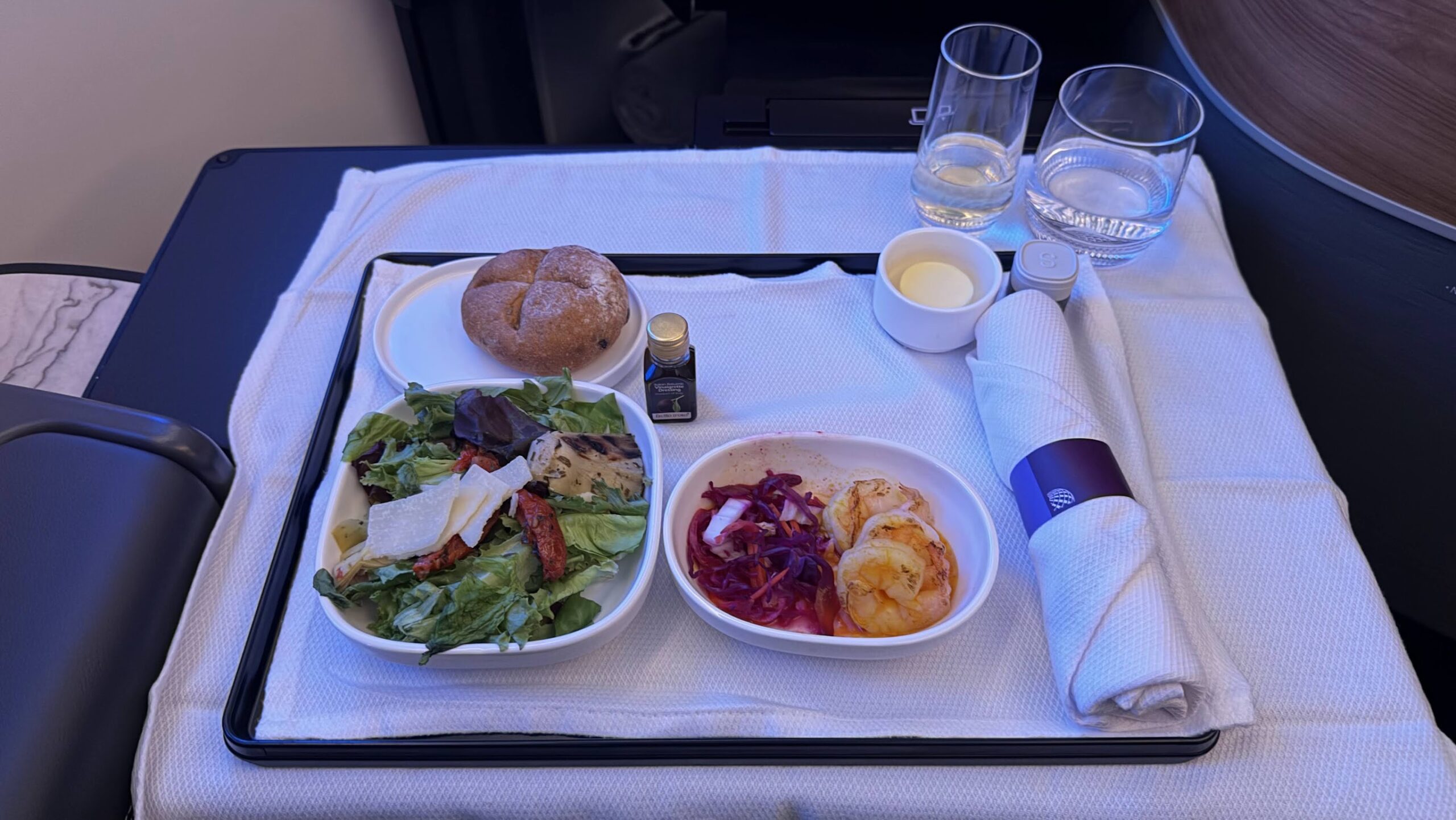
For the appetiser, the options were sauteed prawns or buffalo mozzarella. I went with the prawns, which were well prepared. This was followed by a baby greens salad with roasted cherry tomatoes, marinated artichoke hearts, and shaved parmesan.
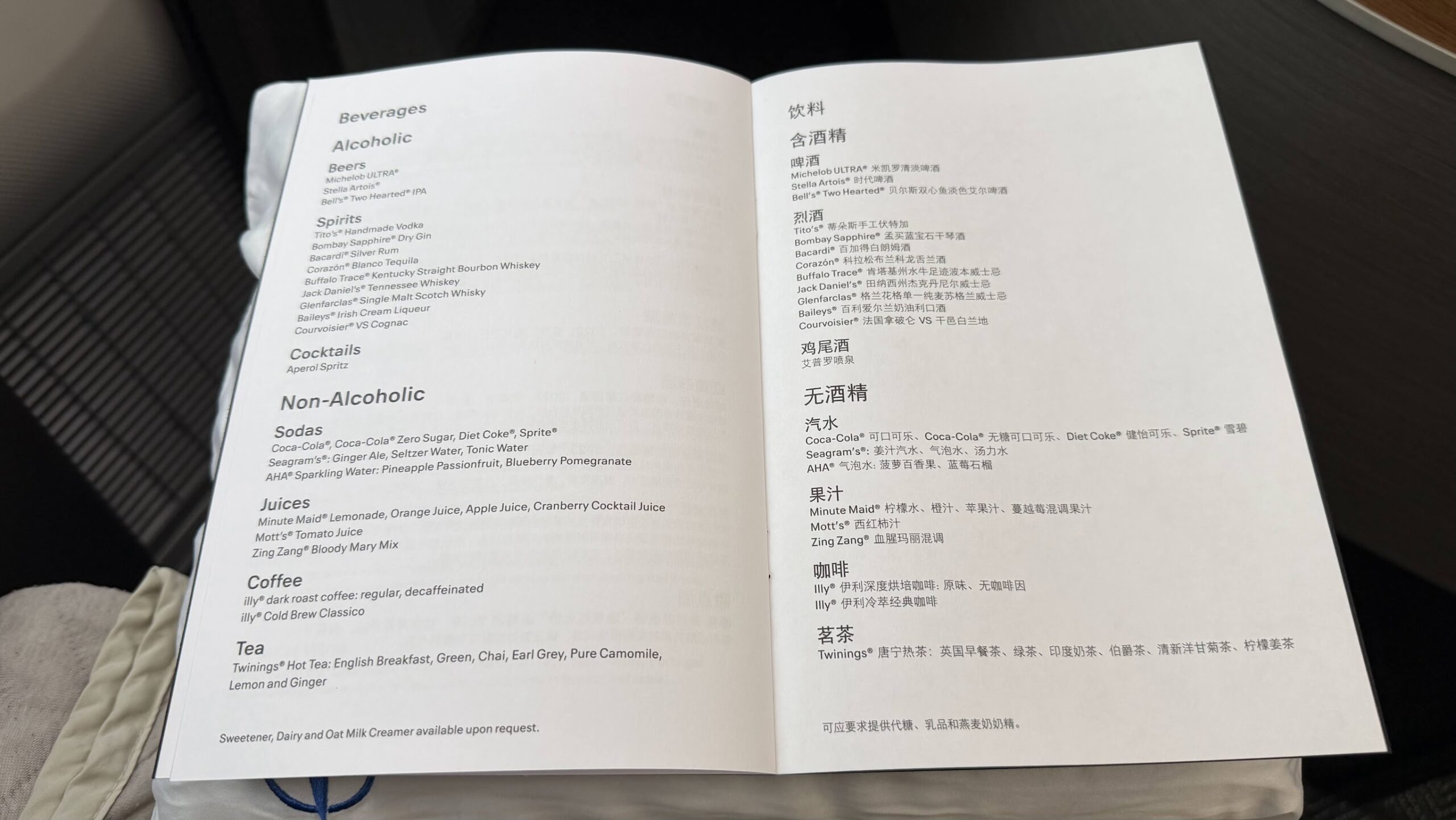
The beverages menu were also pretty extensive, across beers, spirits, cocktails, sodas, juices, coffee and tea.
The main course offered pan-roasted salmon, beef tenderloin, and a vegetarian option. I pre-selected the salmon, which was pretty good.
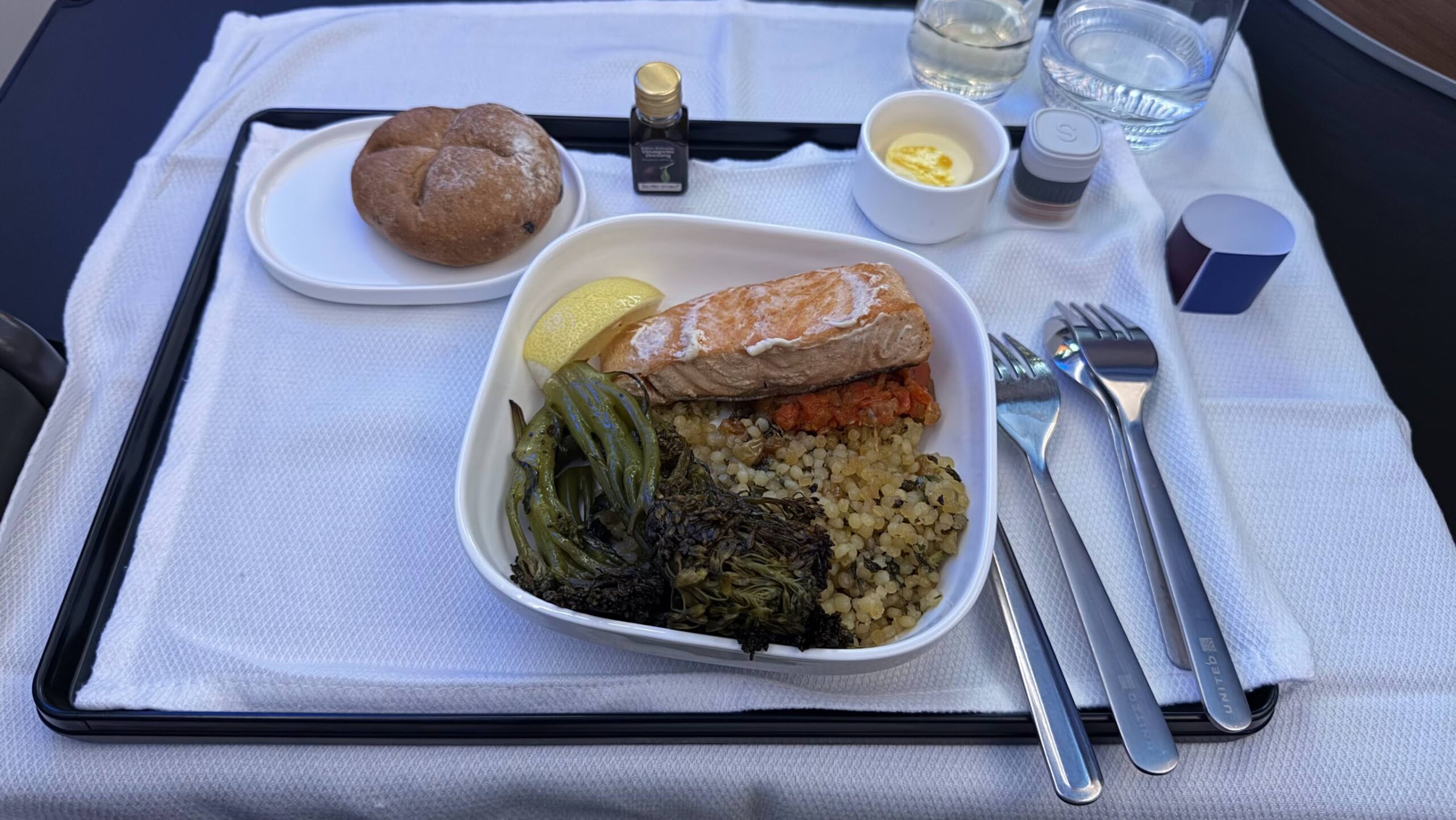
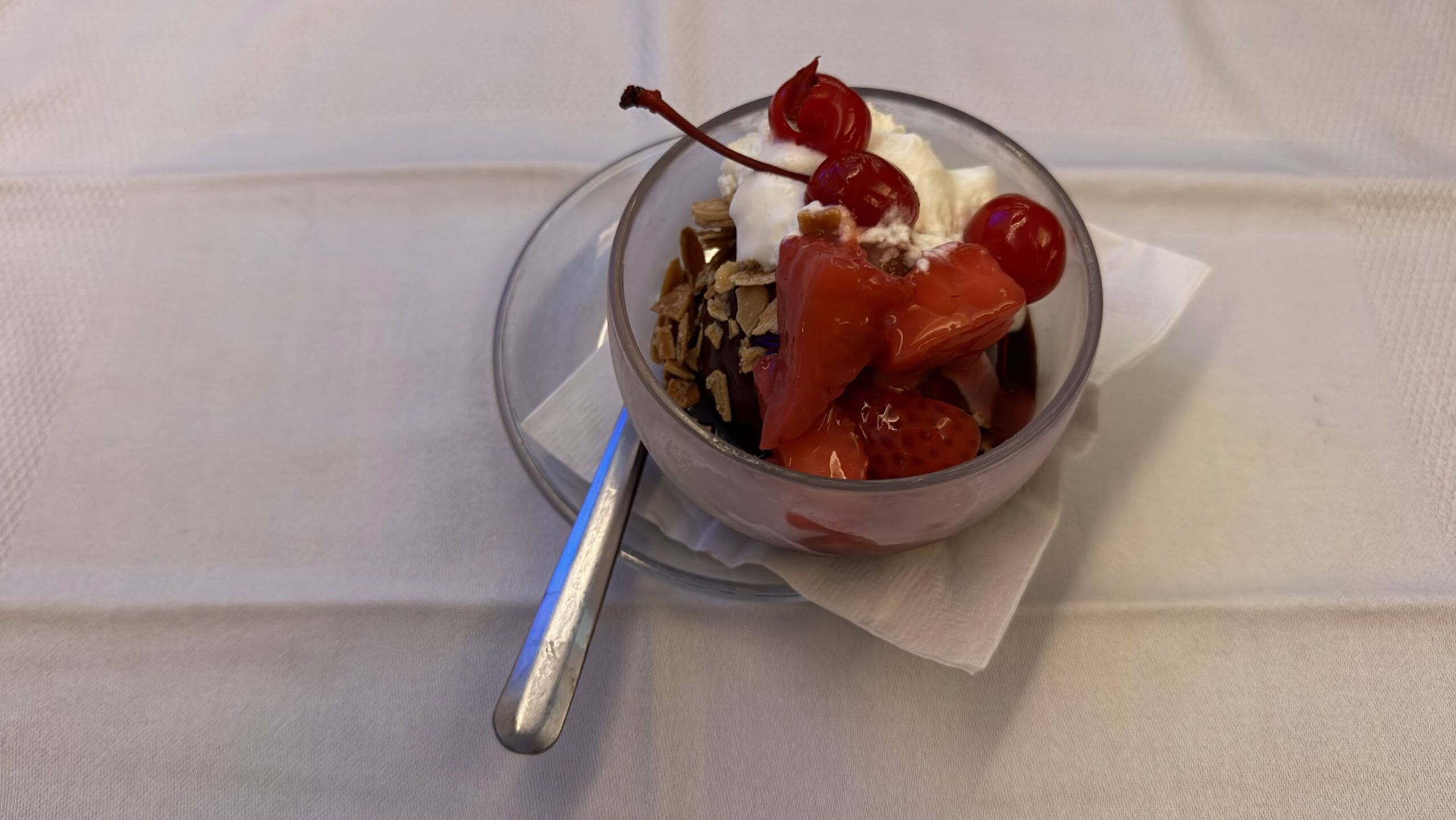
Dessert was the signature United Polaris sundae cart. A flight attendant would supposedly wheel a three-tier cart to your seat and builds a sundae to your specifications, but mine was served to my seat and I only saw the cart brought out to the first few seats.
I had the Tillamook vanilla bean ice cream with almond flakes, strawberries, and cherry, without whipped cream. The concept is fun and distinctly American, though on this flight the ice cream was too frozen to feel properly creamy. My return flight was better in this regard.
Mid-flight snack
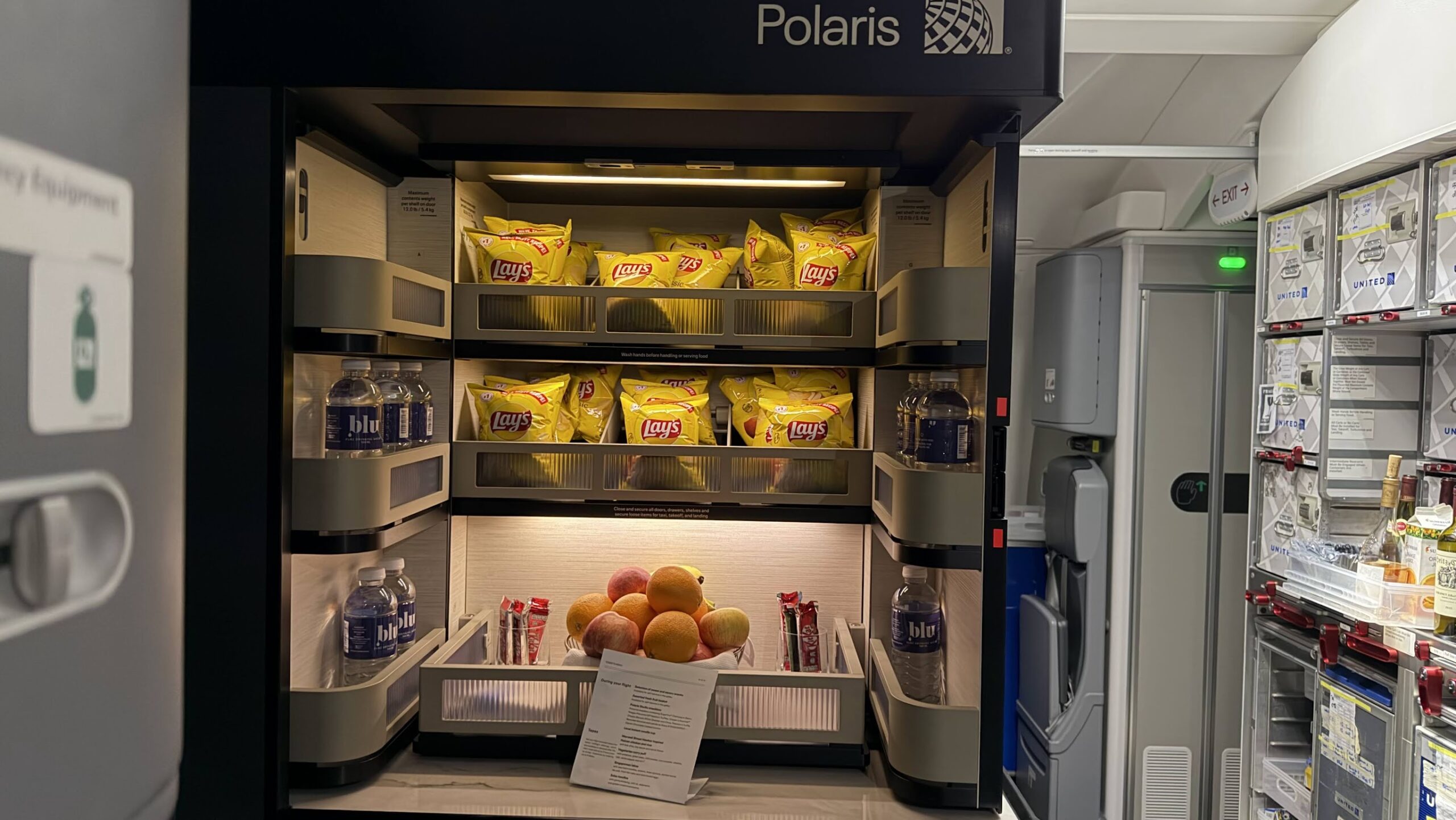
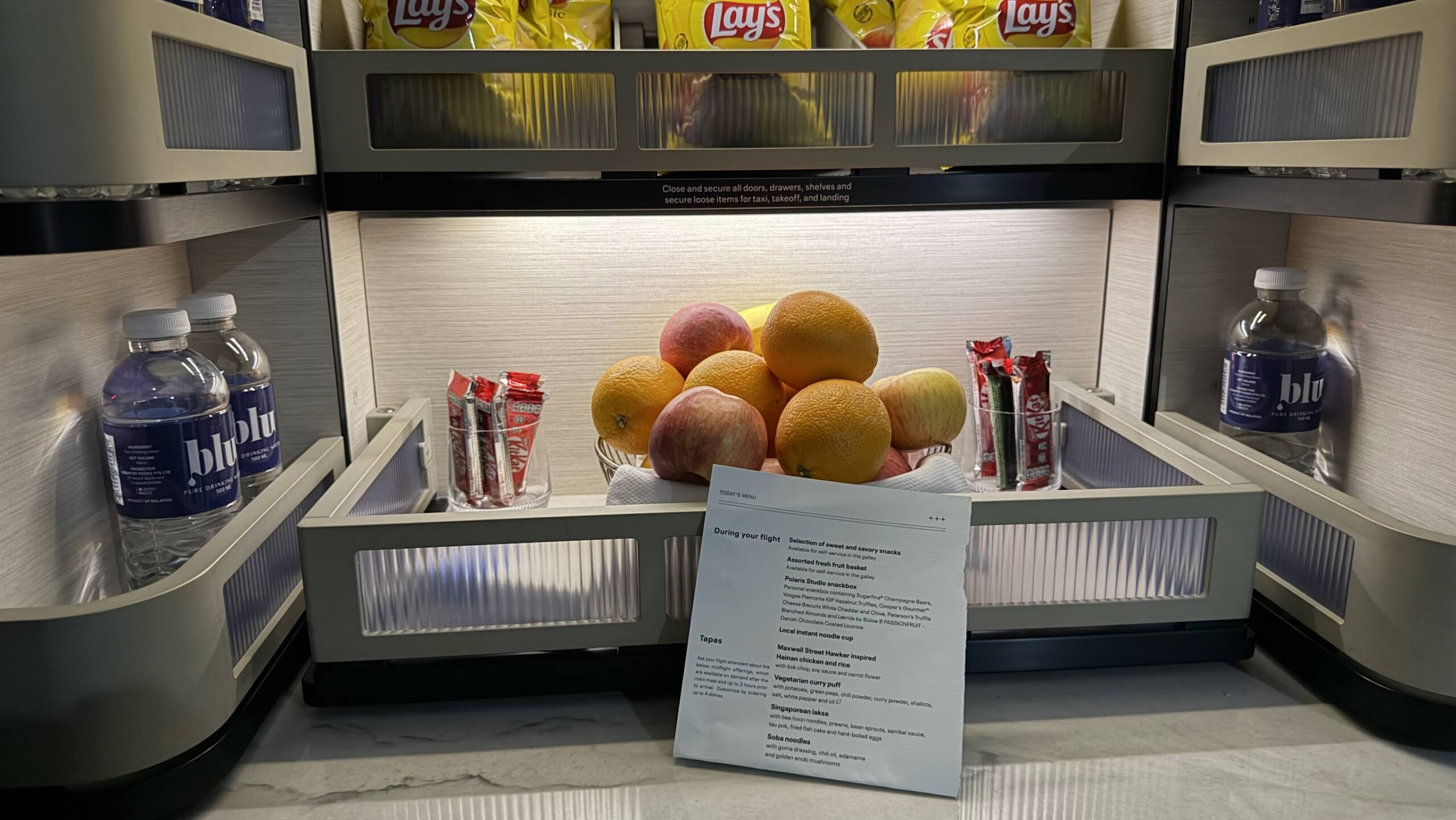
The self-serve snack bar between the cabins was, honestly, a bit underwhelming. Lays Classic crisps, a blu water bottle, fruit, Kit Kat, and that was essentially it. I would have expected a broader selection of American snacks for a 16-hour flight. Instant cup noodles are available on request from the crew.
Tapas
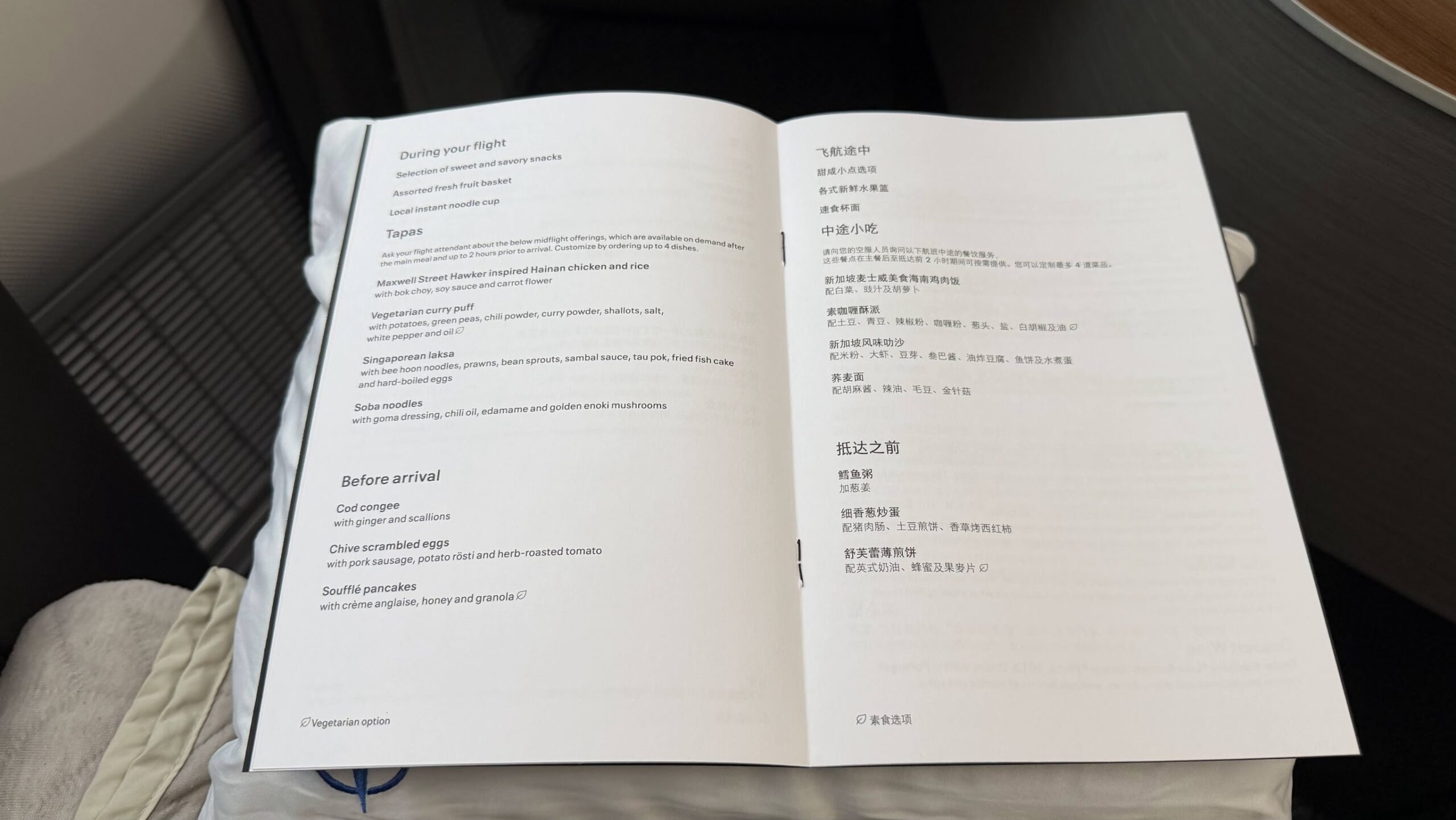
The tapas service was the real surprise of this flight. I had expected small bites, but it was closer to a full meal. The bowl used was smaller than a full entrée. The menu featured Maxwell Street Hawker-inspired Hainan chicken rice, vegetarian curry puff, Singaporean laksa, and soba noodles, a clear nod to the Singapore departure.
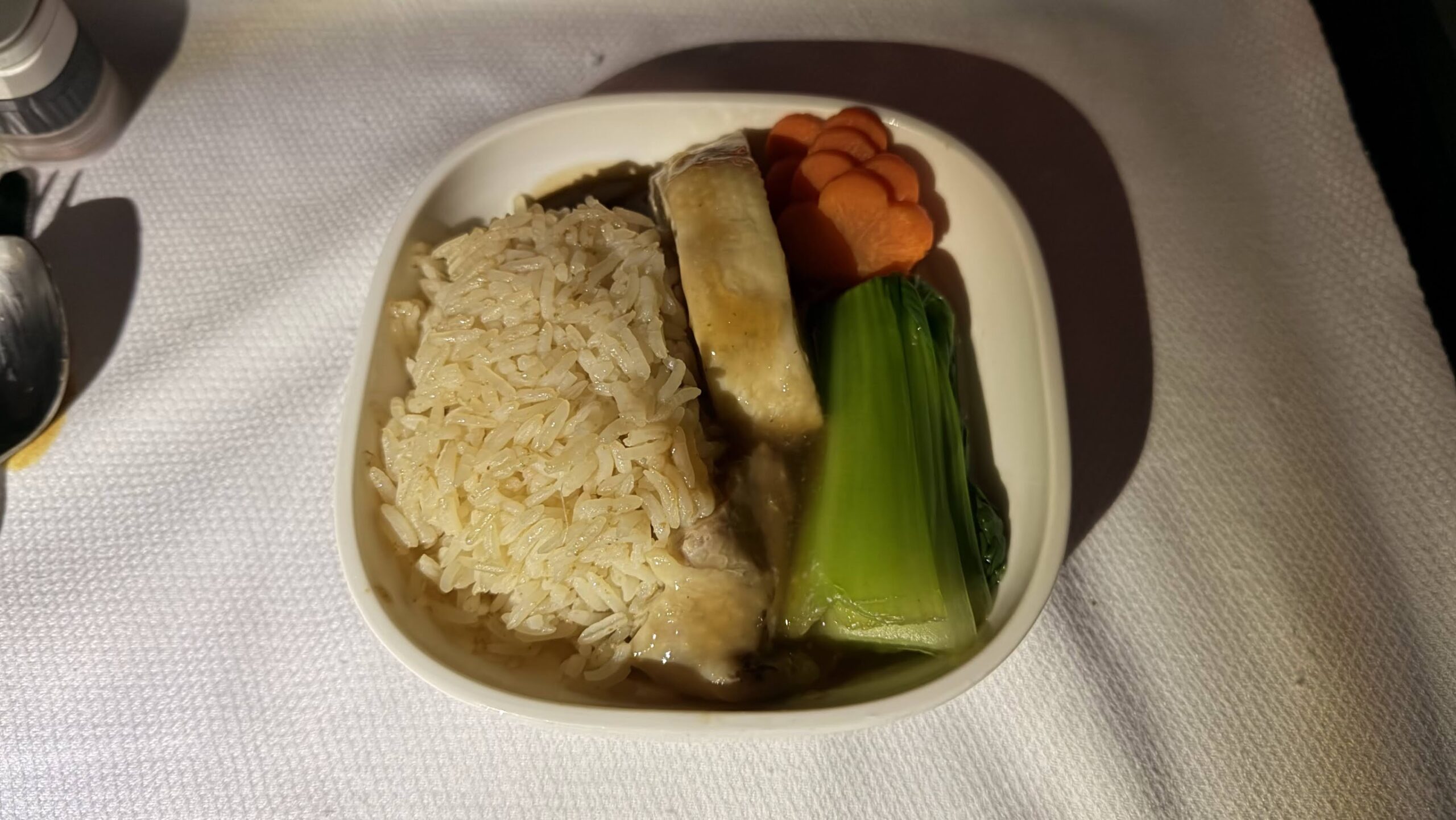
I chose the Hainan chicken rice and the Singaporean laksa. As a Singaporean, I was curious how these would translate to an American airline’s galley. The chicken rice was a fair distance from the real thing, but I’ll give credit to United Airlines for even attempting it. You won’t find Hainanese chicken rice on Singapore Airlines’ business class menu, oddly enough.
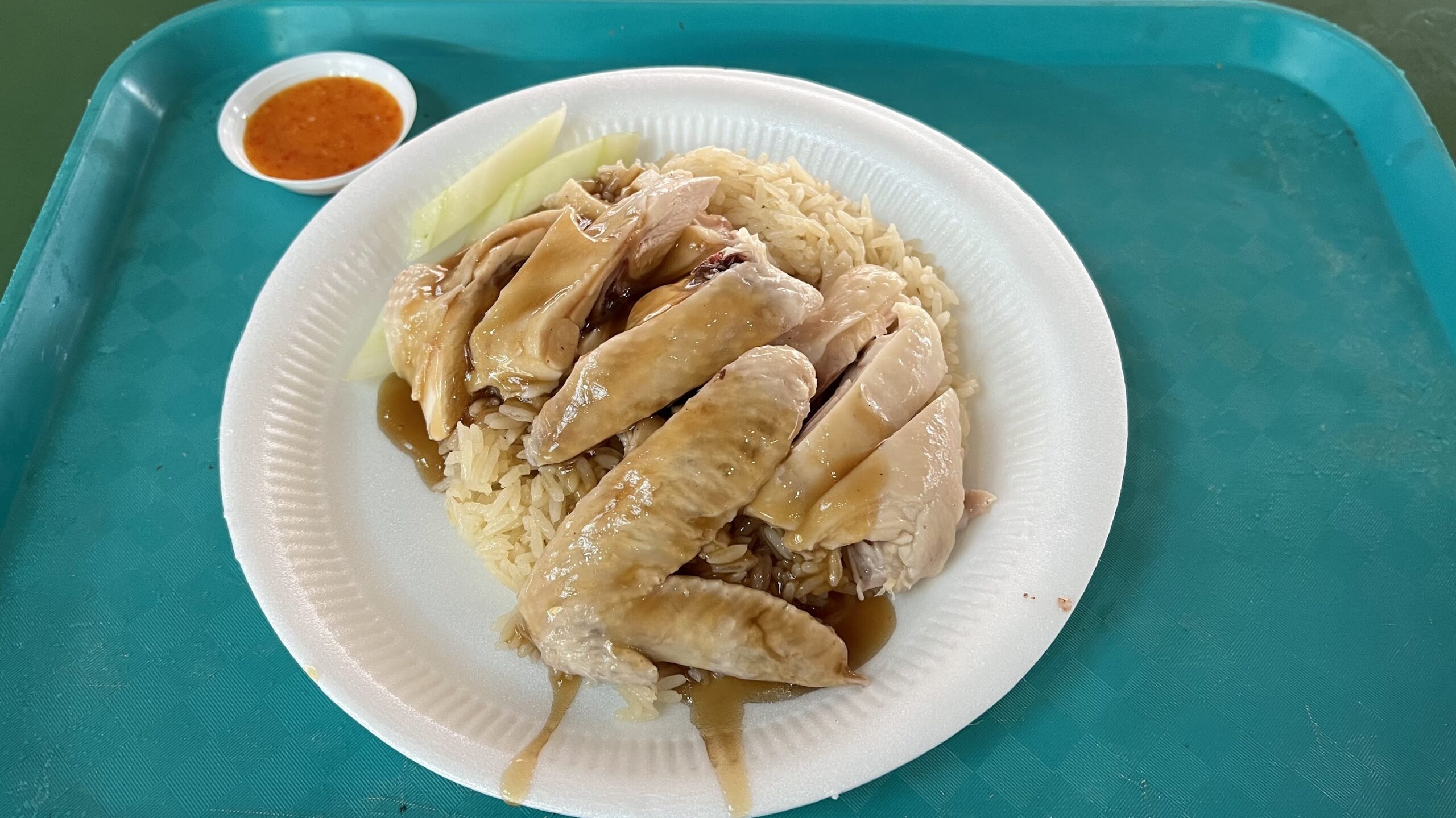
For context, here’s what the actual chicken rice looks like at Maxwell Food Centre, from the Tian Tian stall that I sometimes would go when I was working near Tanjong Pagar.
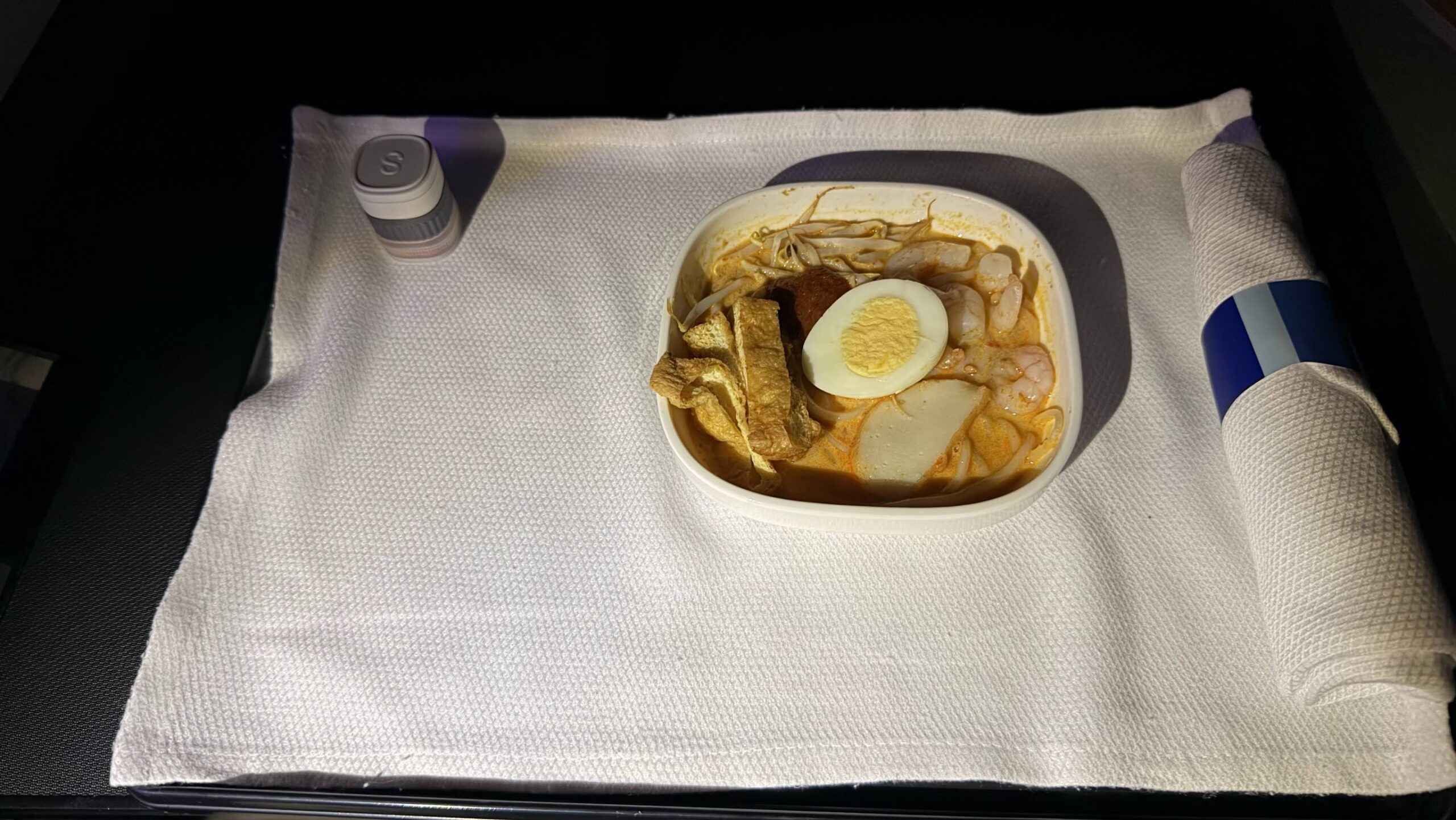
The laksa was decent but can get messy to eat due to the stains.
Breakfast
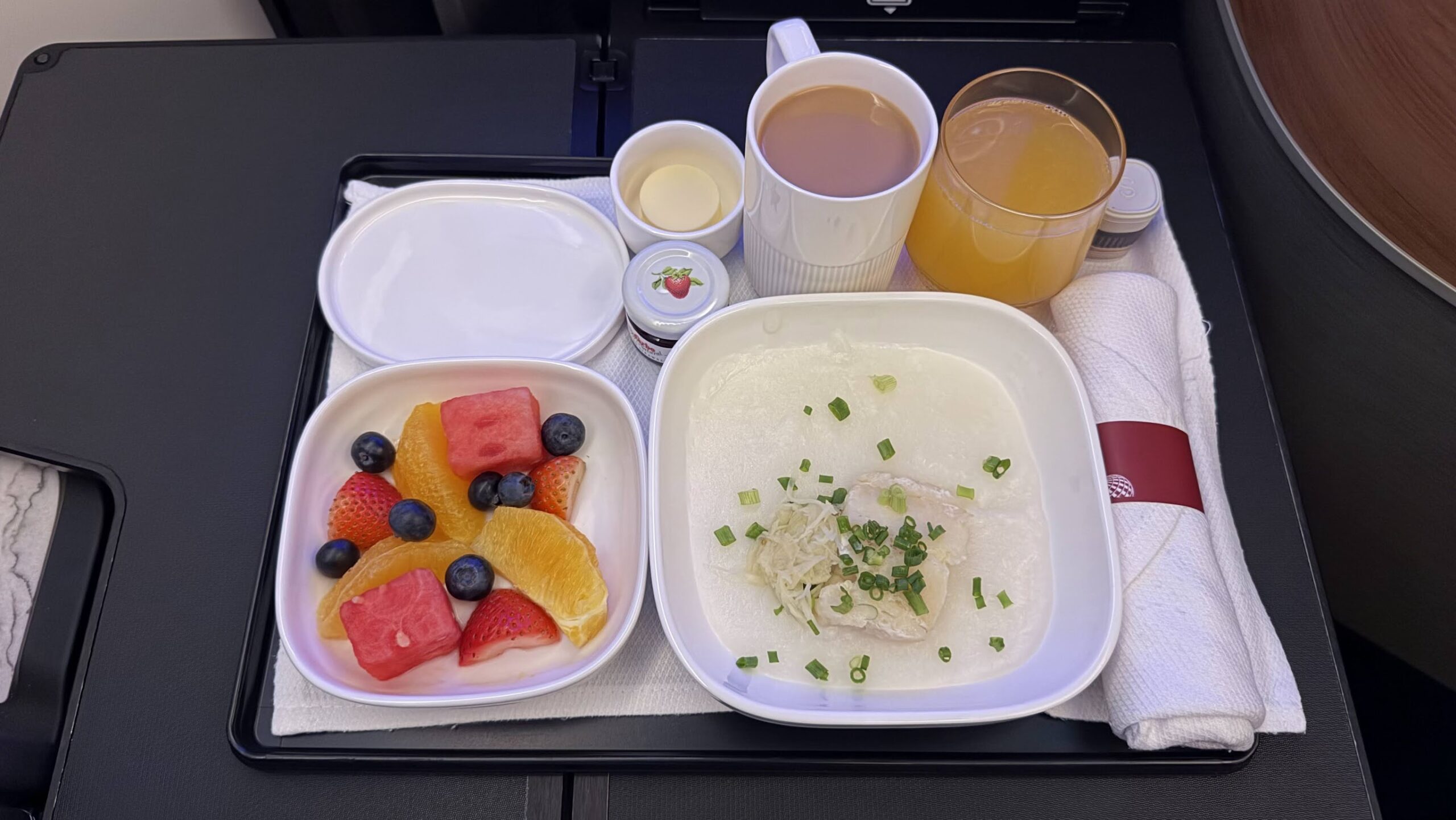
Before landing, breakfast was served. I had pre-selected the cod congee, which arrived alongside illy coffee with milk, Minute Maid orange juice, and fresh fruits. The congee was on the bland side, as airline congee tends to be, but it was comforting and suited my preference for a lighter meal before arrival.
Bonus: pilot trading cards
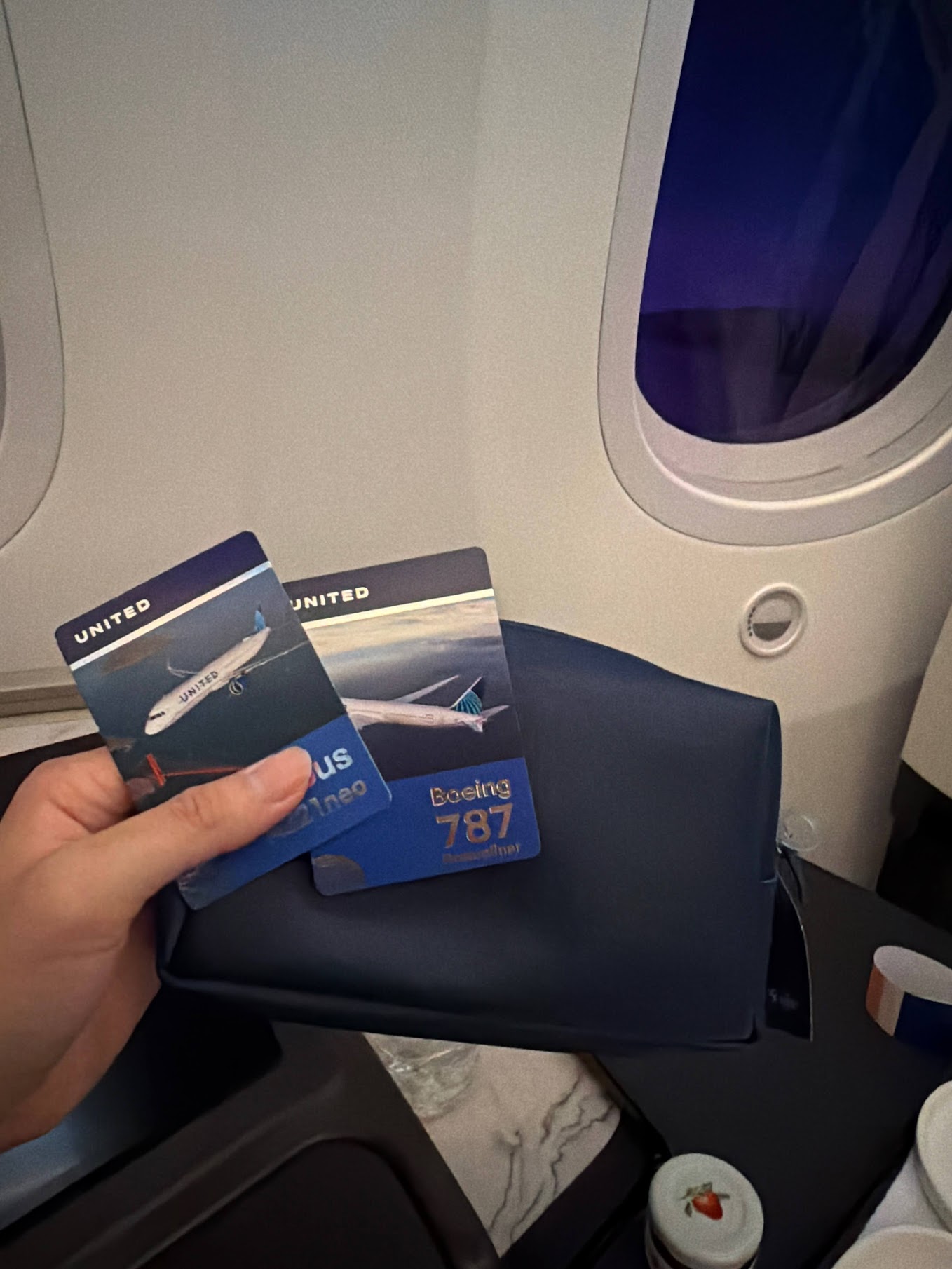
Having read online about the pilot trading cards of the big few U.S. airlines, I tried my luck to request one. The crew helped to relay my request to the pilot and luckily enough, I managed to get the Boeing 787-9 and the Airbus A321neo trading cards.
Arrival
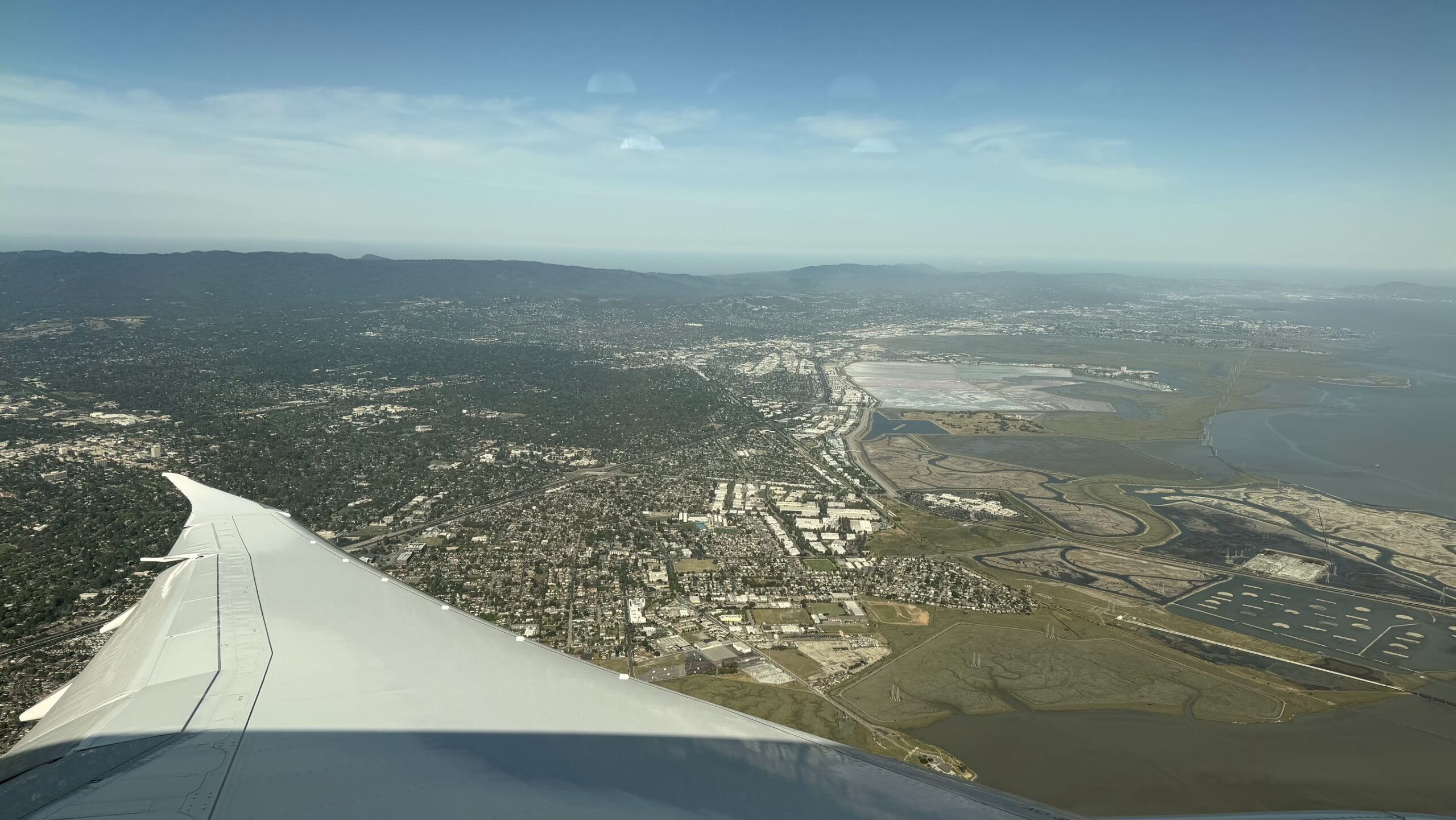
The descent into San Francisco offered clear views of the Bay Area mountains and coastline, which is always a pleasant way to end a transpacific flight. The approach from the Pacific side gives you sweeping views before you cross over the peninsula.
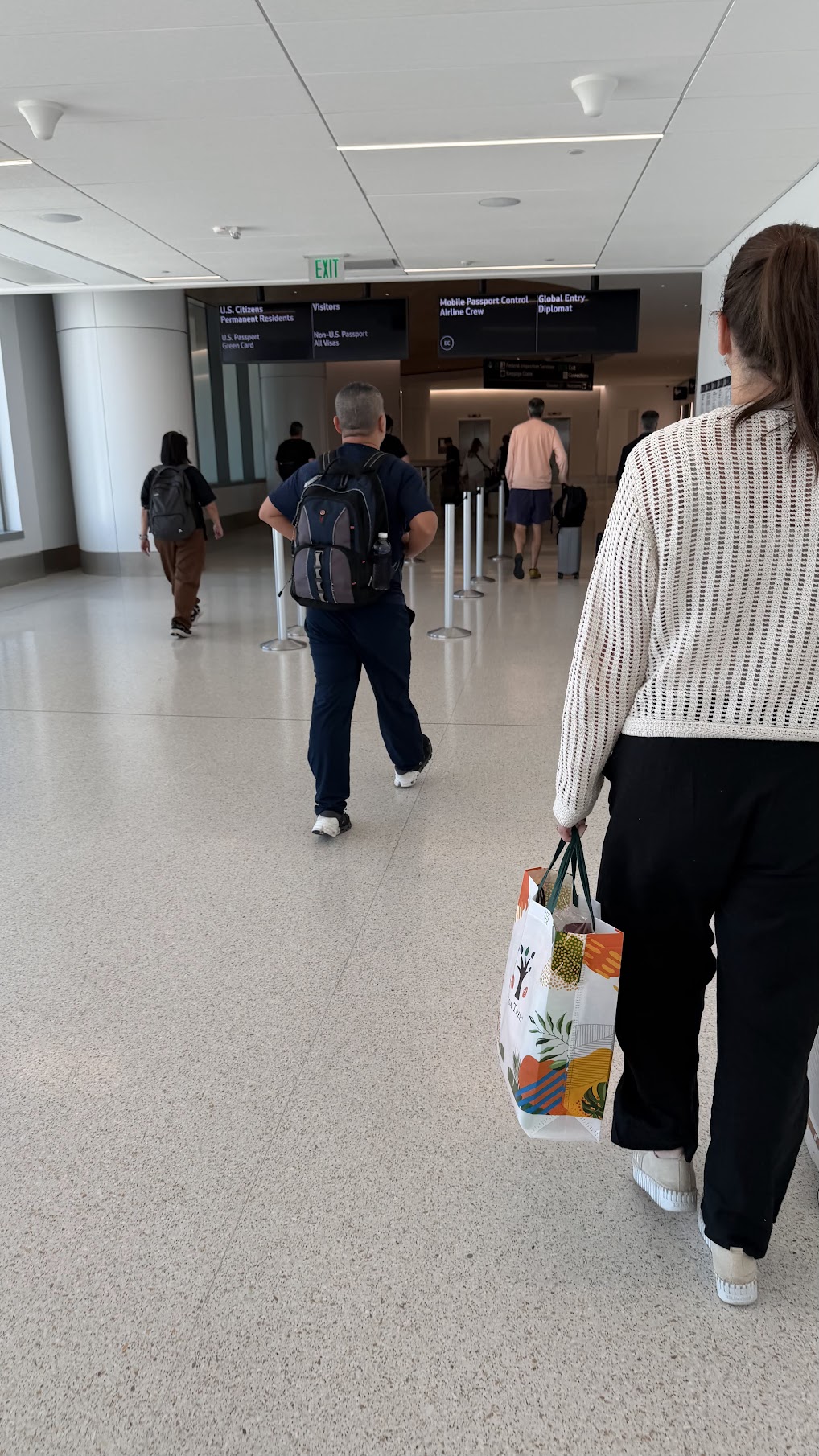
At immigration, there’s a queue for Asia-Pacific Business Travel Card (ABTC) holders and another for Global Entry. A useful tip: the ABTC lane, which is shared with airline crew, can sometimes be faster than the Global Entry line. My colleague who went through the ABTC lane cleared long before I did on Global Entry!
Concluding thoughts
The United Airlines Polaris Elevated interior is a genuinely impressive product. Even without the sliding doors locked into a usable position (the FAA certification is taking longer than expected), the suite already feels private and enclosed. I found myself forgetting the door wasn’t functional. The high walls and reverse herringbone angle do enough on their own to create a sense of personal space.
The bedding deserves special mention. The Saks Fifth Avenue duvet and cooling gel pillow provided one of the better business class sleeps I’ve had, and the option to request a mattress pad makes it even better. It’s a clear differentiator over some Asian carriers.
The food programme had its highs and lows. The tapas service with local Singaporean-inspired dishes was a thoughtful touch, and the sundae cart is distinctly United, a fun ritual even if the ice cream wasn’t at its best on this particular flight. The mid-flight snack bar, on the other hand, felt like an afterthought. For a flight of this length, I’d expect more variety.
For a 16-hour flight that tests every aspect of a business class product, the Polaris Elevated interior holds up well. A brand new aircraft, a modern cabin, and a hard product that competes with the best in the region. I’d happily fly it again.