This was the second flight of my Shenzhen Airlines journey from Singapore to Shanghai. After flying from Singapore to Shenzhen on flight ZH240, I continued to Shanghai Hongqiao Airport on flight ZH9509. Both sectors were part of the same S$550 Trip.com itinerary, and I had received the boarding passes at Singapore Changi Airport. As with the first flight, the main reason I had booked premium economy was the fare class and the status miles it earned towards renewing my Turkish Airlines Miles&Smiles Elite status.
Shenzhen Airlines’ premium economy product doesn’t vary much between aircraft, the seat itself still felt close to economy class. The service stood out again. For the second flight in a row, a crew member greeted me by name and personally explained the flight details.
I still wouldn’t book Shenzhen Airlines premium economy expecting the sort of wider, more private seat offered by long-haul airlines. For a short domestic flight, however, the extra space was useful, and the repeated recognition of my Star Alliance Gold status made the journey feel more personal than the hard product suggested.
Check-in
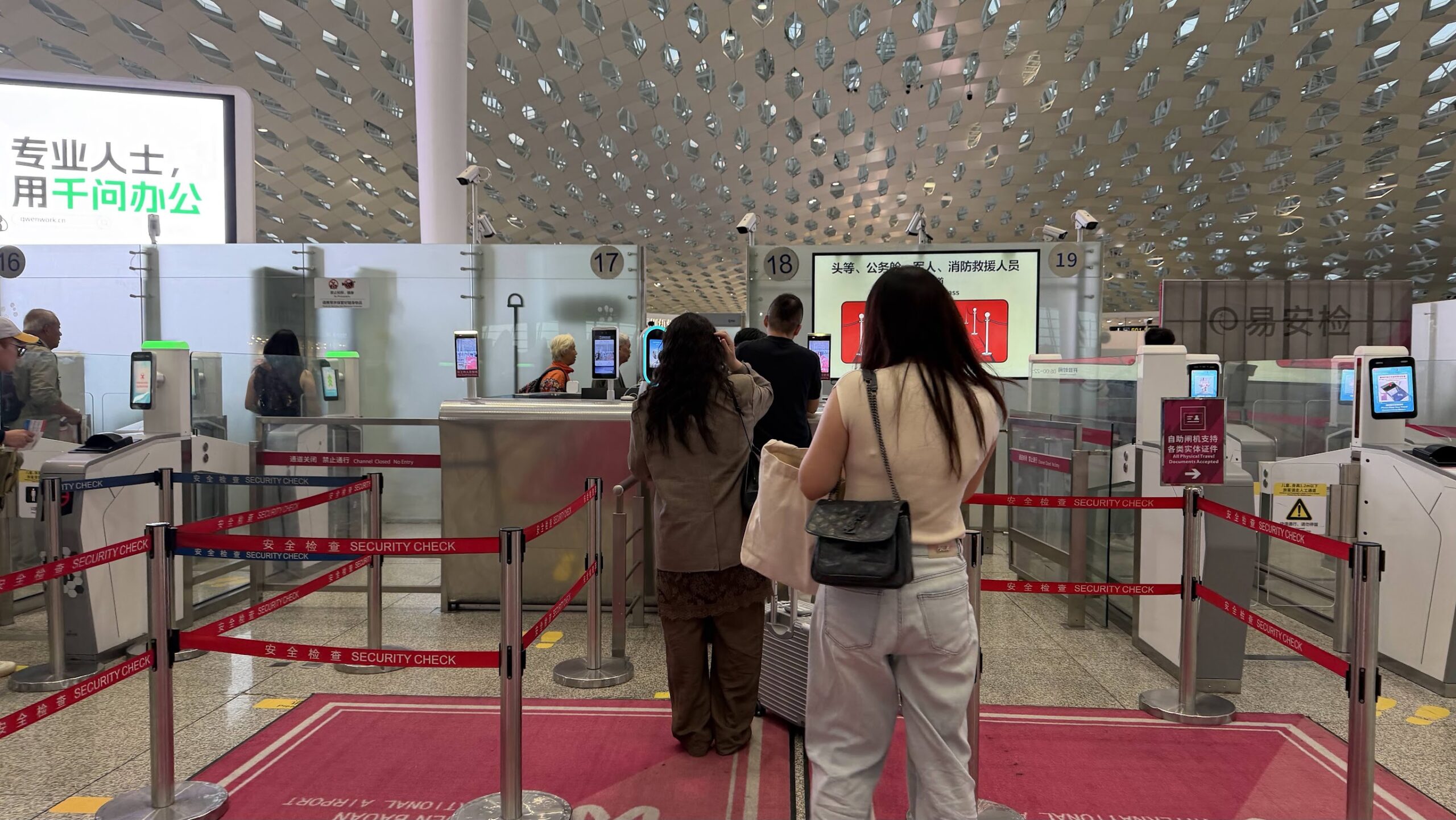
The transfer at Shenzhen Bao’an International Airport was not an airside connection. After arriving from Singapore, I had to clear Chinese immigration and customs, exit into the landside part of the terminal, then head upstairs to the domestic departure hall and pass through security again.
I didn’t need to visit a check-in counter because both boarding passes had been issued at Singapore Changi Airport, and my bags had been checked through to Shanghai Hongqiao. This removed one step from a connection that otherwise involved leaving and re-entering the secure area.
The domestic departure area was extremely busy. There were plenty of passengers moving through the terminal, but I was able to show my APEC Business Travel Card and use the business priority lane. I didn’t see any indication that Star Alliance Gold passengers could use the same lane, so the card saved a substantial amount of time here.
Boarding
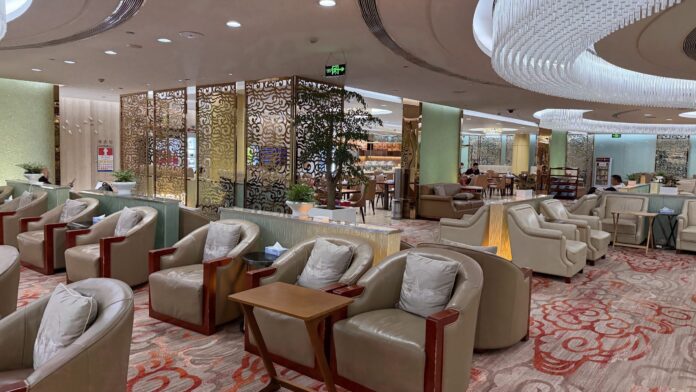
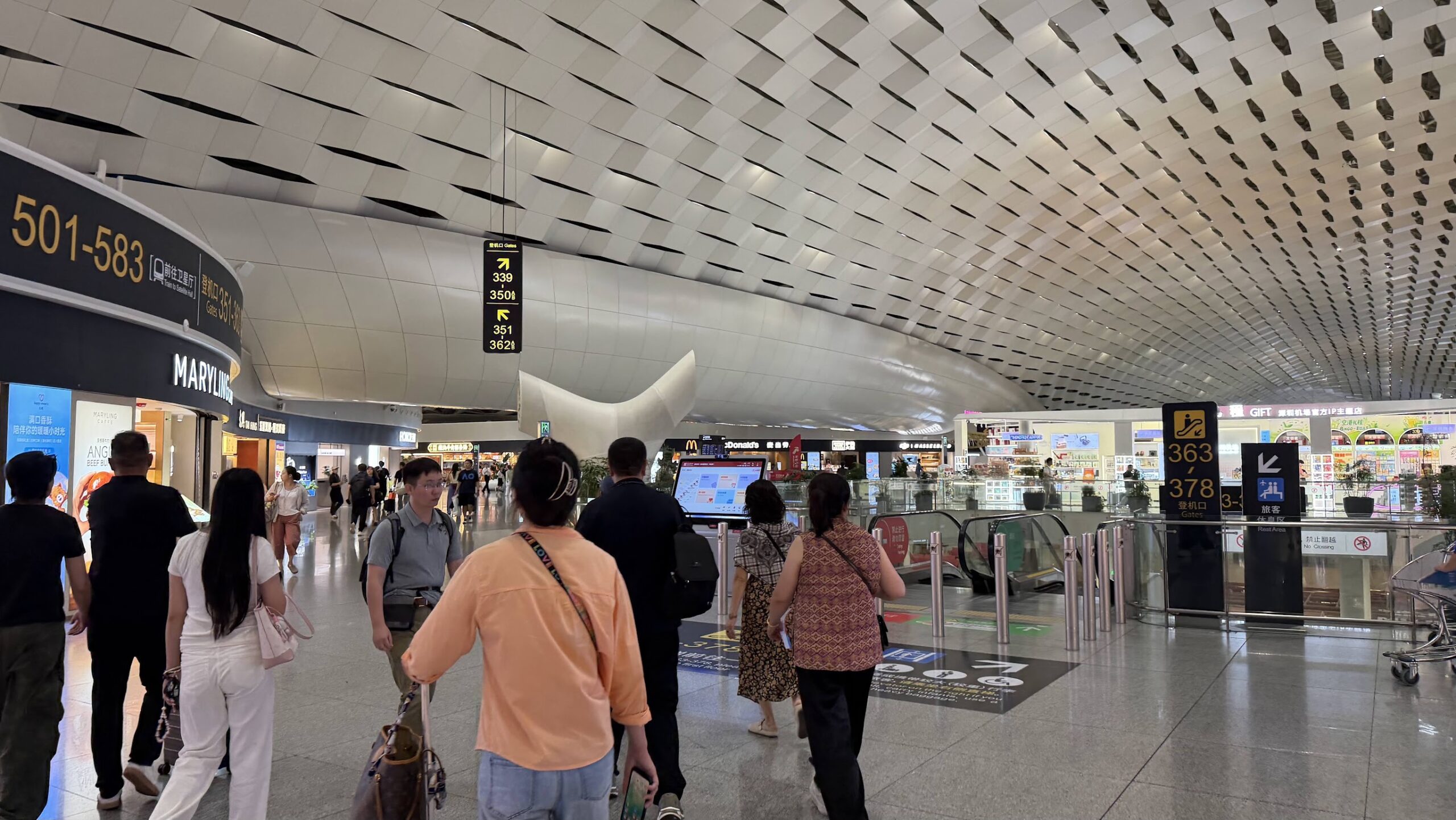
Once through security, I had enough time for a short lounge visit before walking to the gate. Shenzhen Bao’an is a large terminal, and the walk took around 10 minutes. The gate was downstairs, roughly around the middle of the terminal rather than near the main domestic departure area.
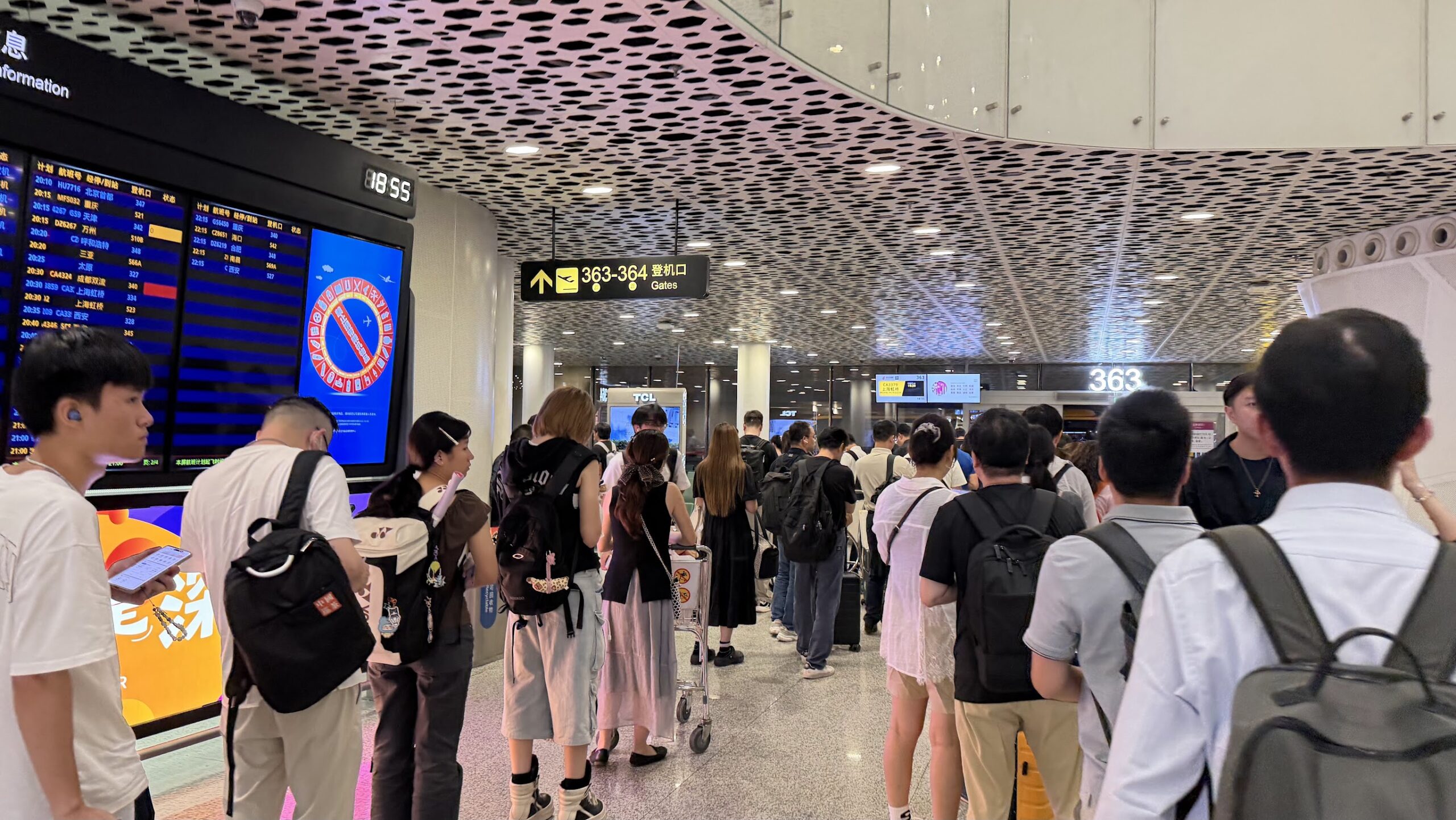
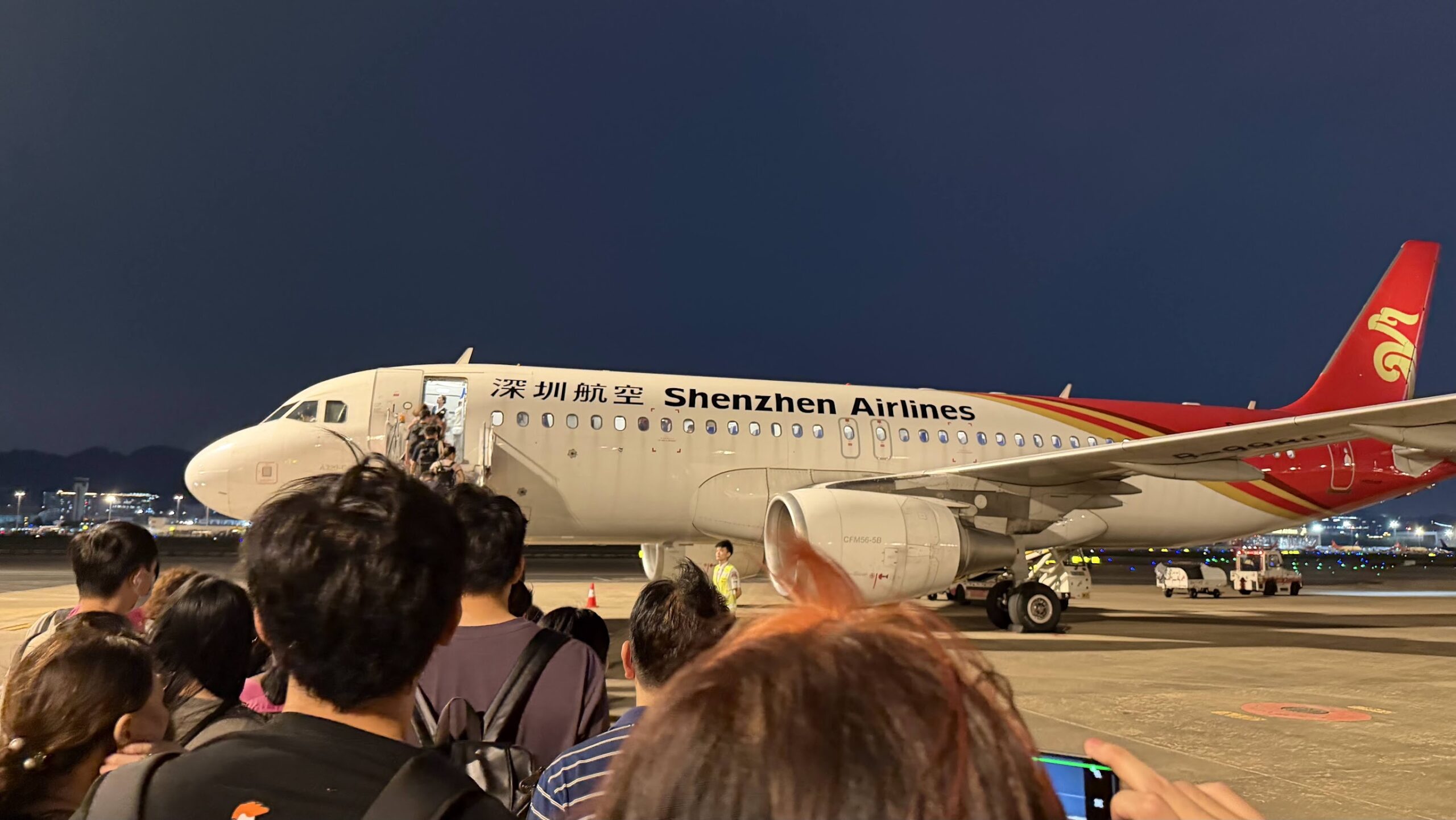
Boarding at Gate 363 was quite disorganised. I couldn’t see a separate queue for business class, premium economy or elite passengers by the time I arrived. The staff may have made a priority call at the beginning and I simply missed it, but there was no obvious priority lane still operating, so I joined the regular queue.
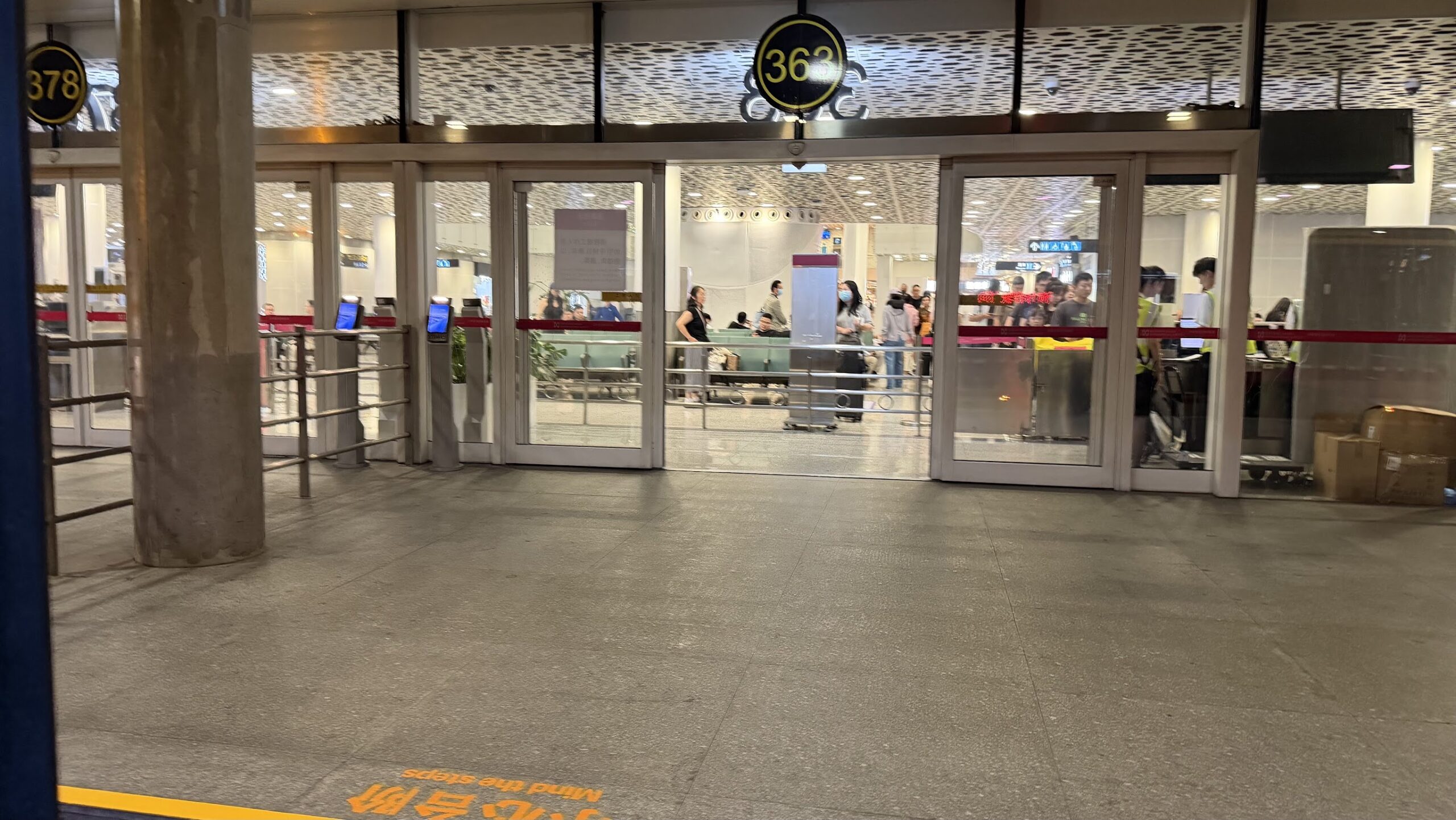
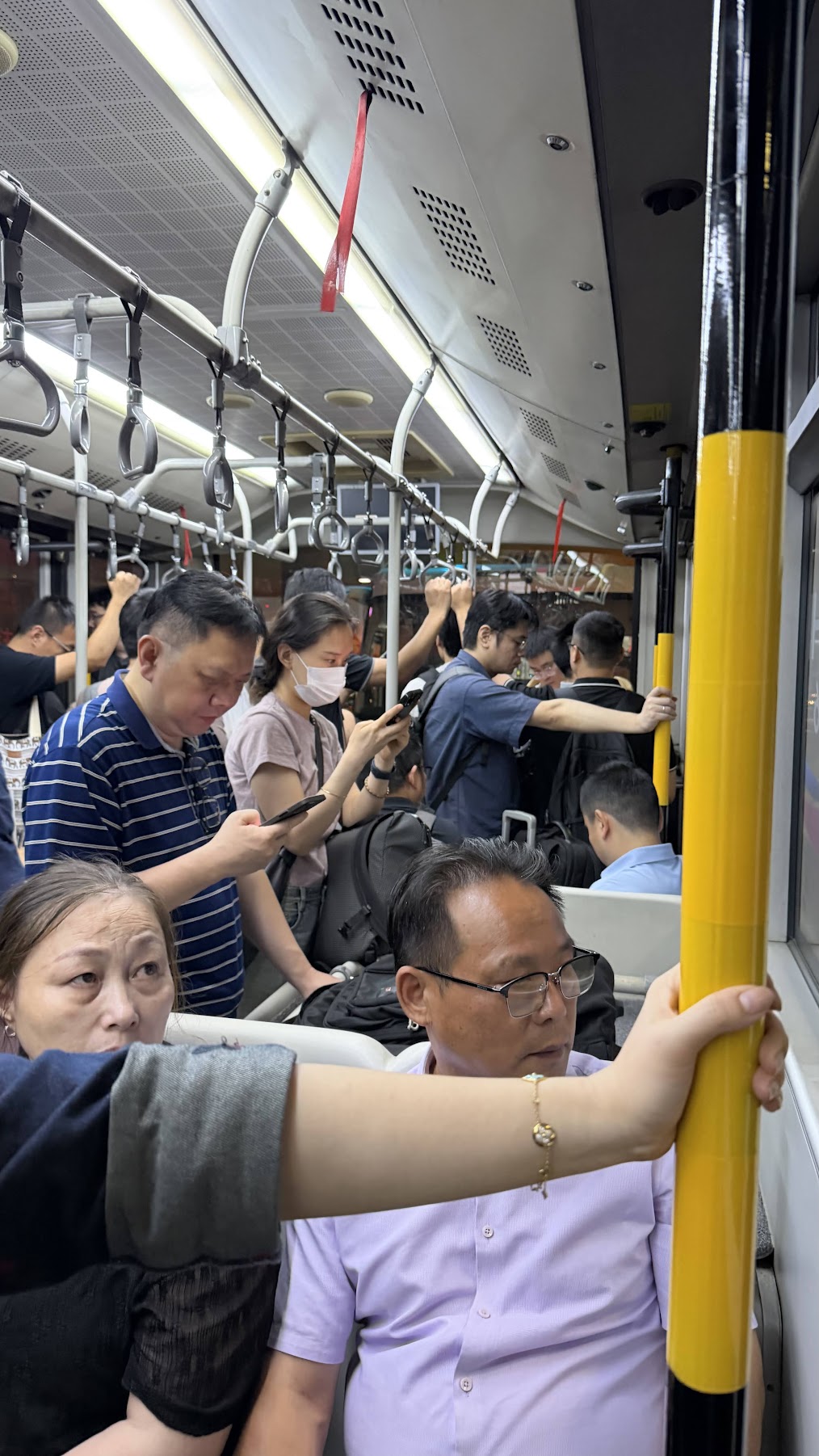
This was a bus gate, and the apron bus was crowded. After the drive across the apron, we boarded the Airbus A320-200 using stairs at the front of the aircraft.
The seat
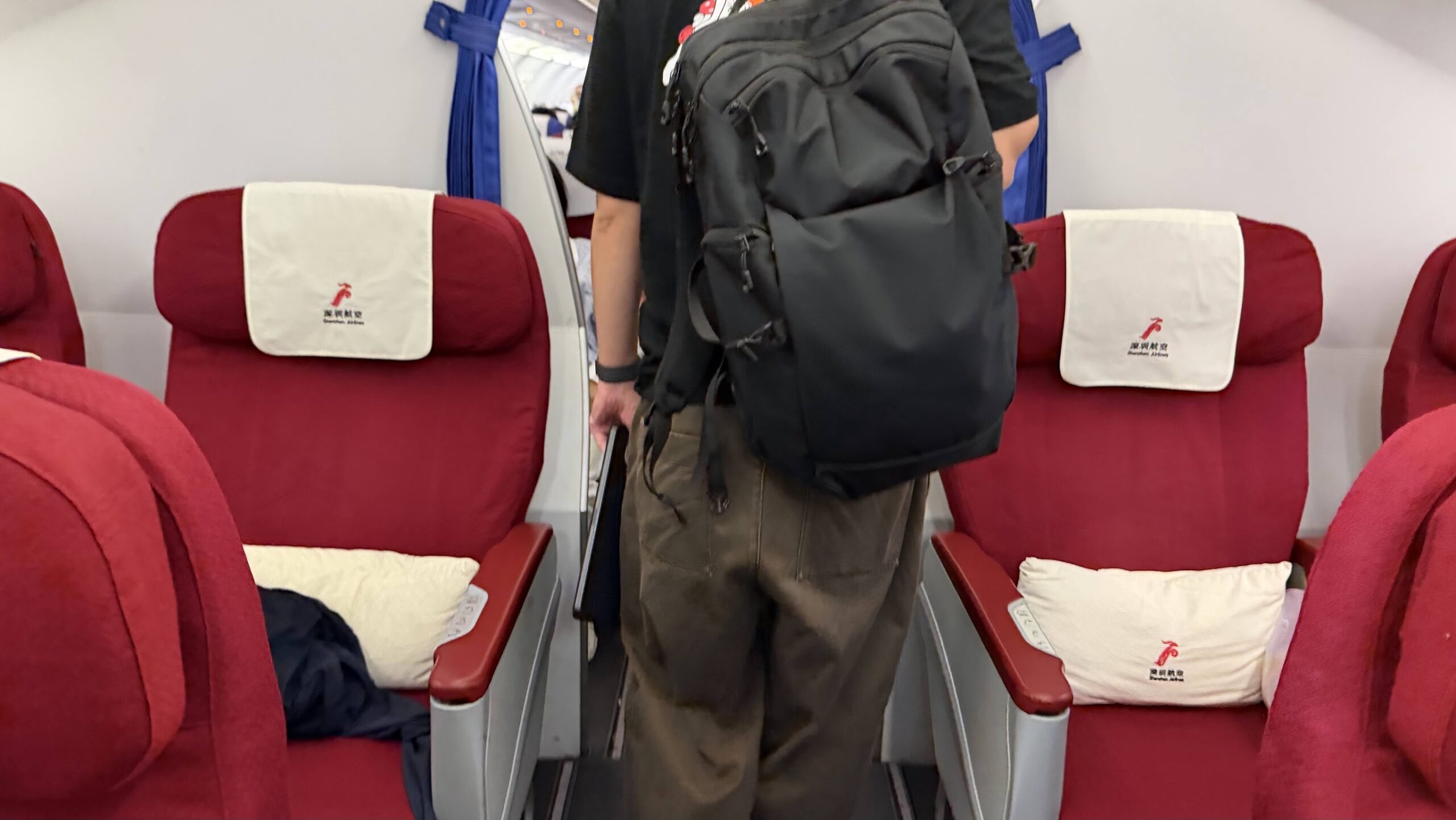
The first two rows were business class. I only saw them while boarding, but the recliner seats looked very old, with large grey armrests and seat controls built into the side. They would be adequate for a flight of around 1.5 hours, though the cabin did not look remotely modern.
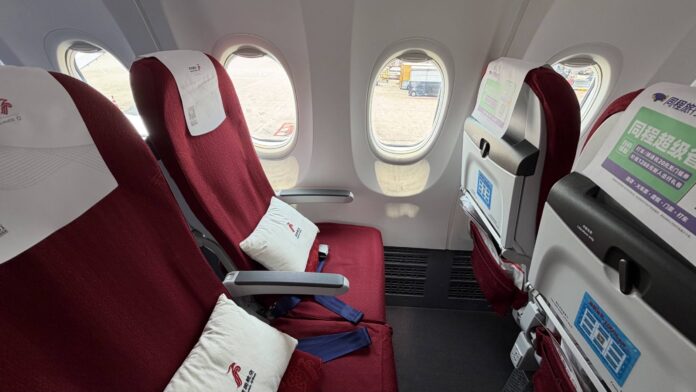
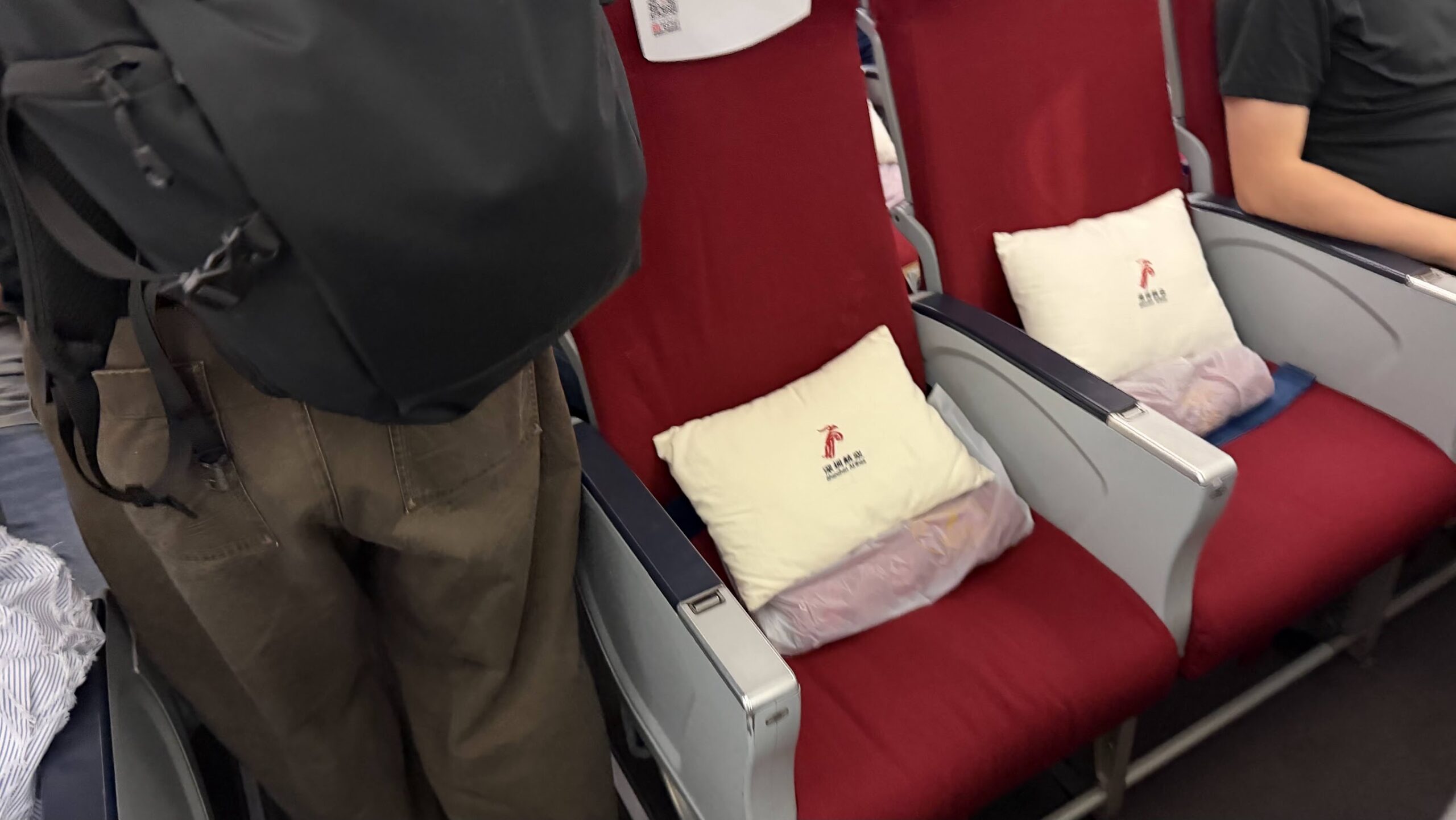
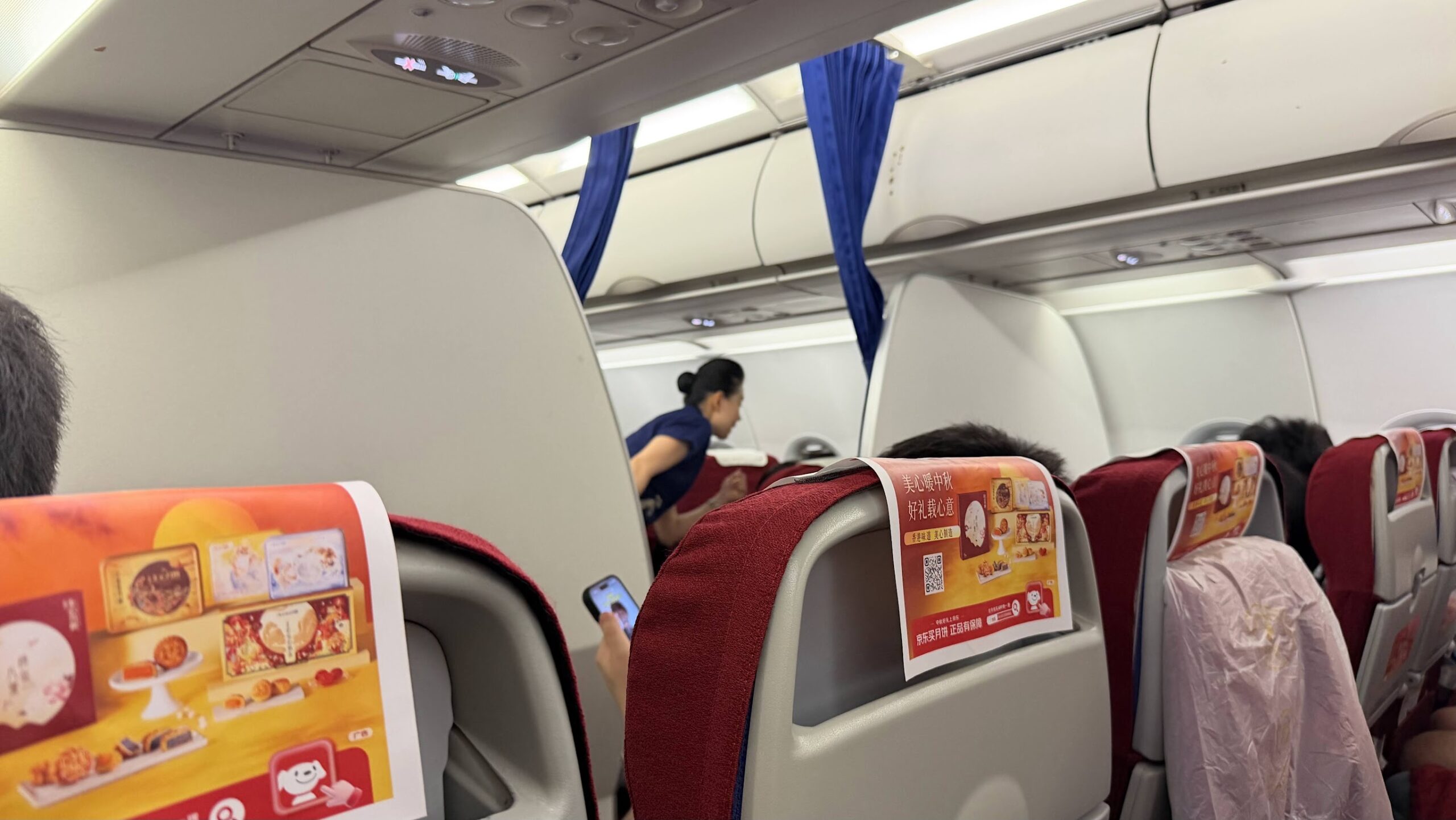
Premium economy was behind business class and used a more conventional narrow-body seat. The seat width and basic design felt much like economy class, so this was not a distinct premium cabin in the international sense. There was, however, noticeably more legroom. Those were some tiny improvements over a standard economy row even if the seat itself was otherwise familiar.
The seatback was very simple, with a tray table and a fabric pocket rather than a personal entertainment screen. A bottle of 5100 Tibet Glacier Spring Water and a pair of slippers were provided again, matching what I had received on the flight from Singapore.
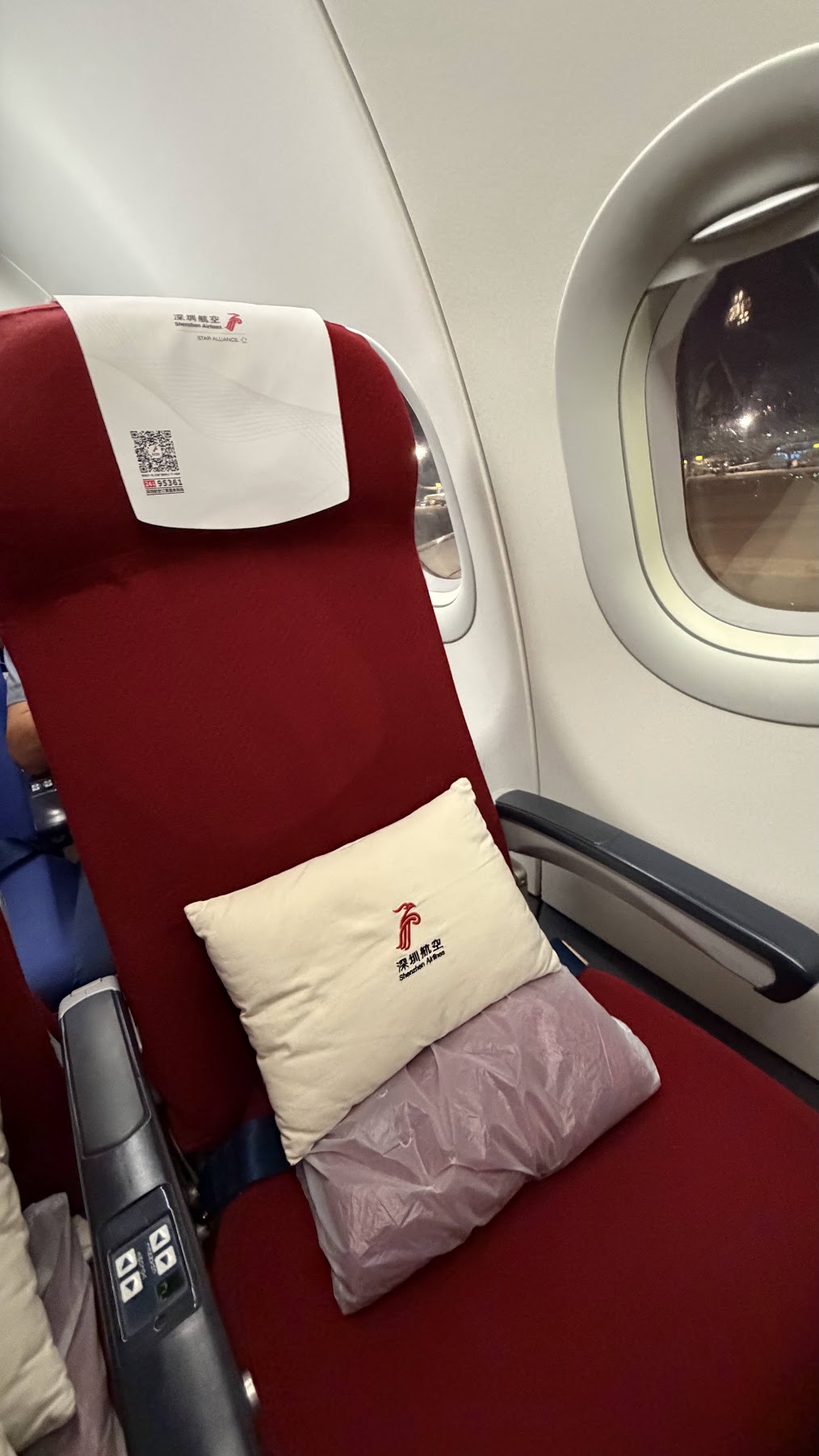
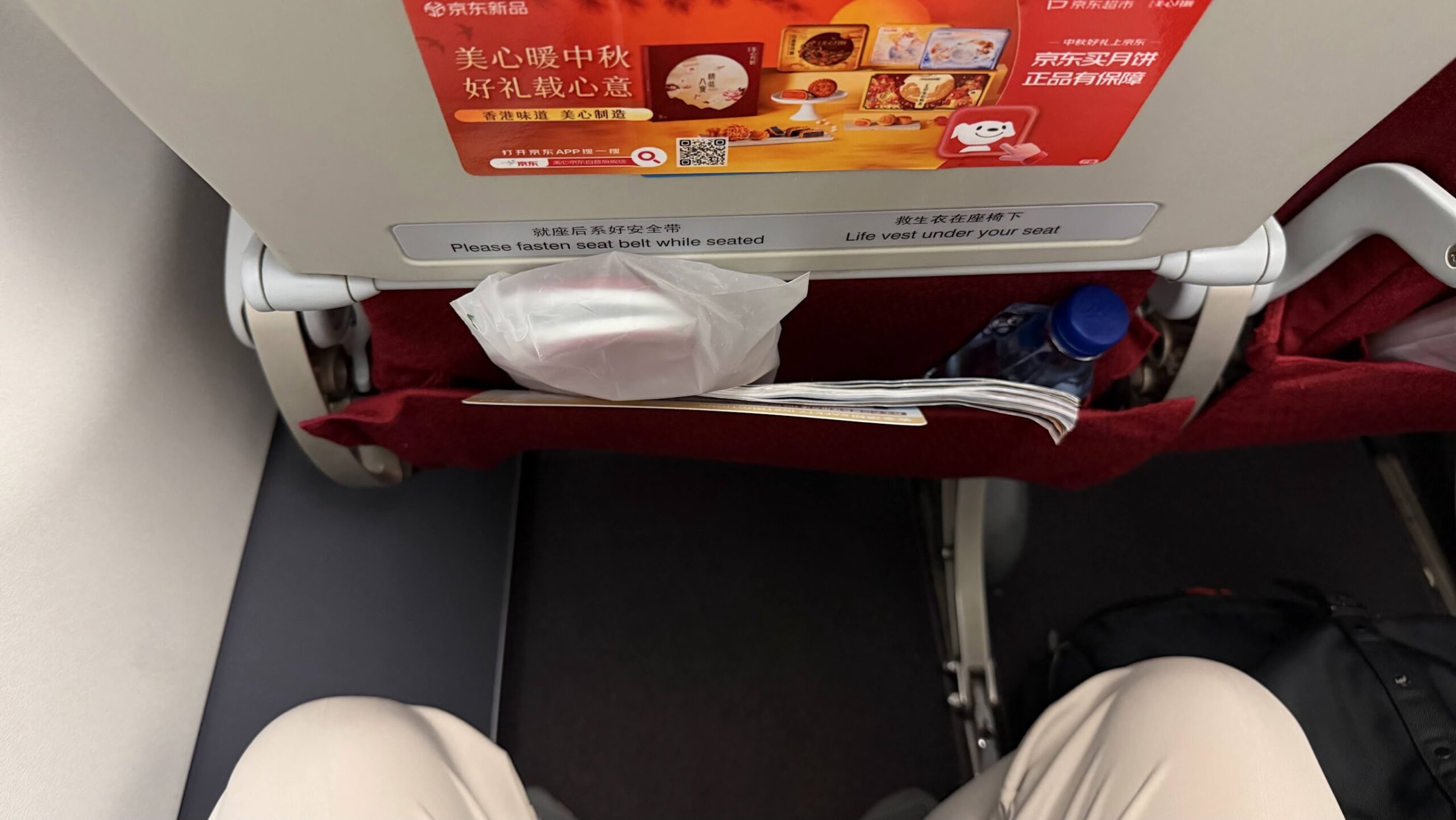
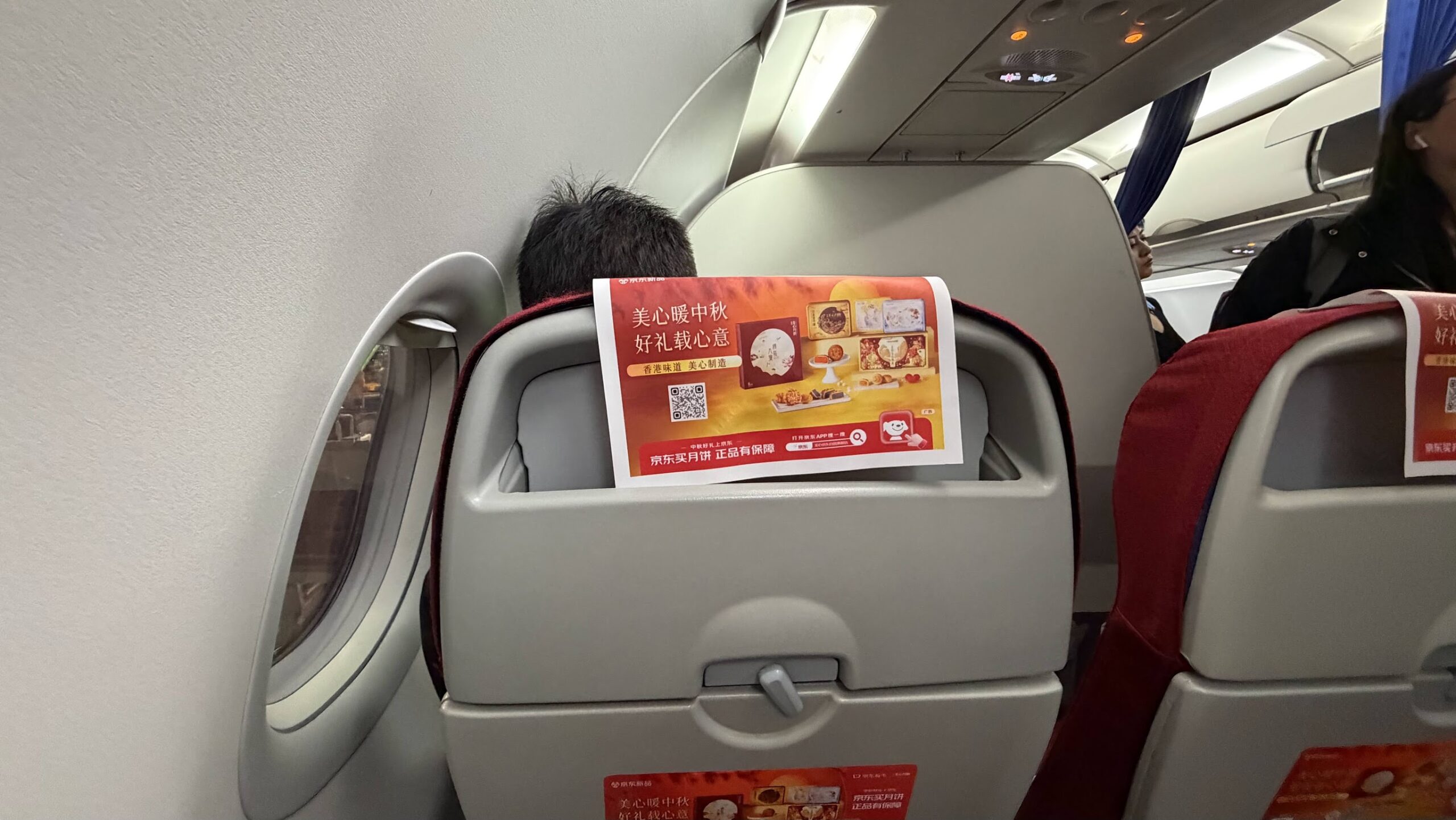
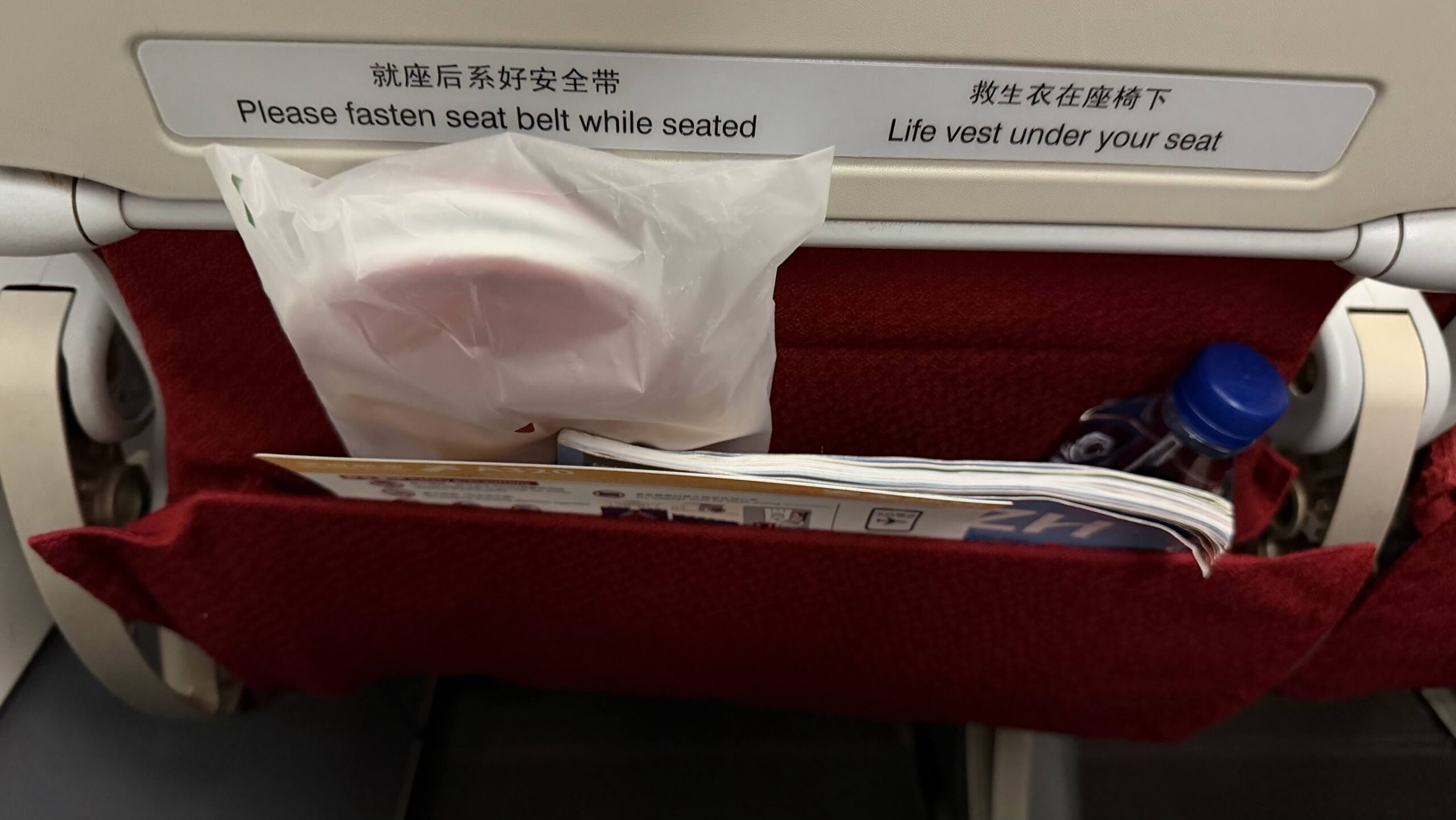
Sitting near the front remained one of the more practical benefits. Premium economy passengers could leave soon after business class, which is useful when trying to get through a large airport quickly. The benefit was less pronounced at both ends of this flight because we used buses, but I would still rather be near the front than wait for most of the aircraft to empty.
Service
Shortly after I settled into my seat, a flight attendant came over, greeted me by name and gave me the expected flight information. This was almost exactly what had happened on my earlier Shenzhen Airlines flight from Singapore.
The crew did not explain why I received the personal greeting, so I can’t say with certainty that it was a Star Alliance Gold benefit. Once could have been a particularly attentive crew member. Receiving the same recognition on a second flight made it feel much more deliberate, and it was easily the most premium part of the experience.
The service remained courteous throughout the short flight. Shenzhen Airlines’ seats and catering may not give premium economy passengers a dramatically different journey, but the status recognition was consistent across both sectors rather than a one-off encounter.
In-flight entertainment and Wi-Fi
There was no personal in-flight entertainment screen at the premium economy seat. The flight lasted about 1.5 hours, so this wasn’t a major omission for me. I don’t have a useful observation about Wi-Fi on this sector, so anyone who wants something to watch should have it downloaded before boarding.
Food and drinks
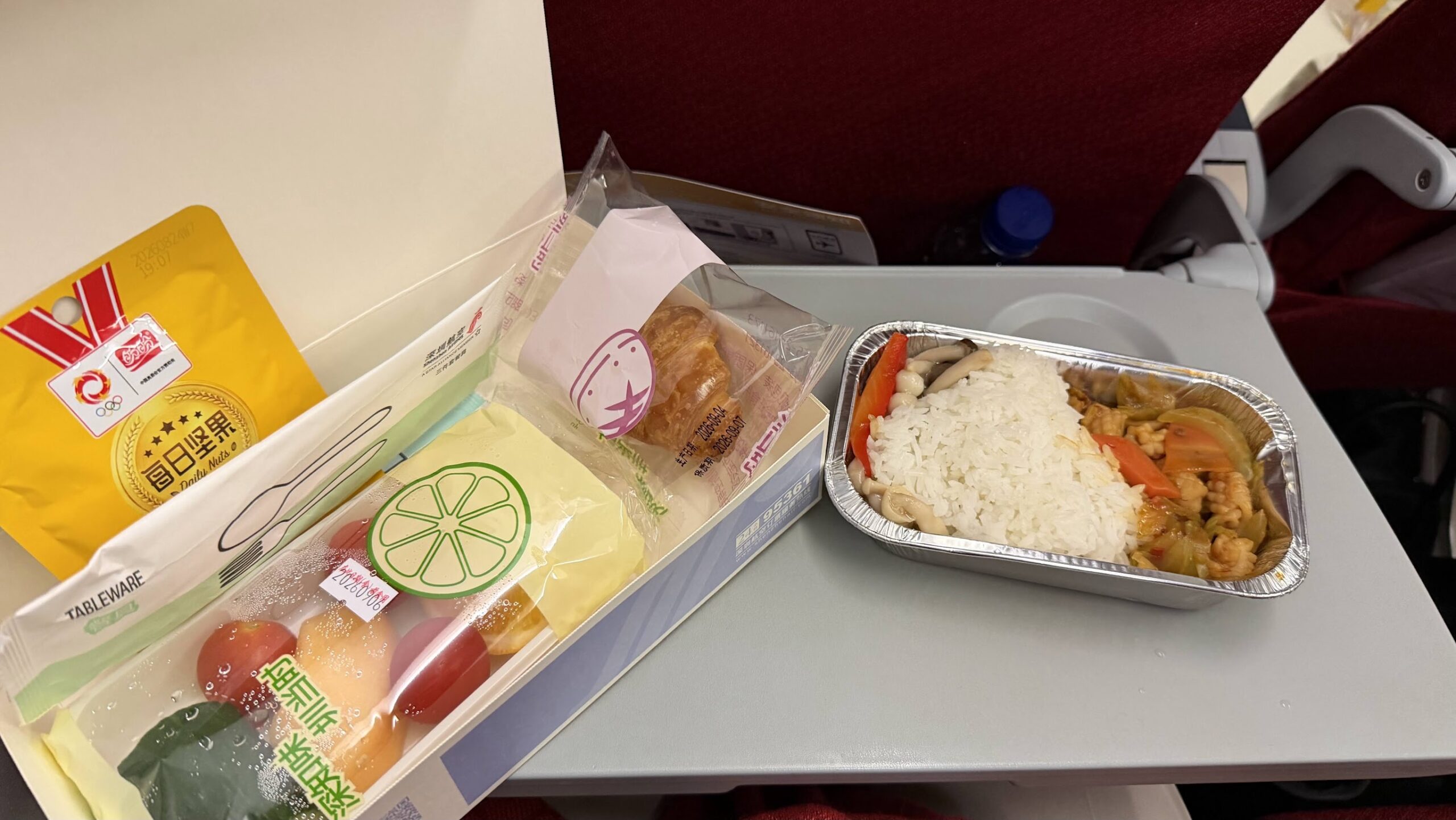
Shenzhen Airlines served a meal despite the flight lasting only around 1.5 hours. The snack box contained cut fruit, tomatoes, cucumber, a croissant and nuts.
Premium economy passengers also received a separate hot seafood meal with squid, seasonal vegetables, mushrooms and rice. Drinks were served alongside it.
The meal was enough for a short domestic flight, but there was little to distinguish it from an economy class meal, though neither the presentation nor the snack box made this feel like a substantially more premium cabin.
Arrival
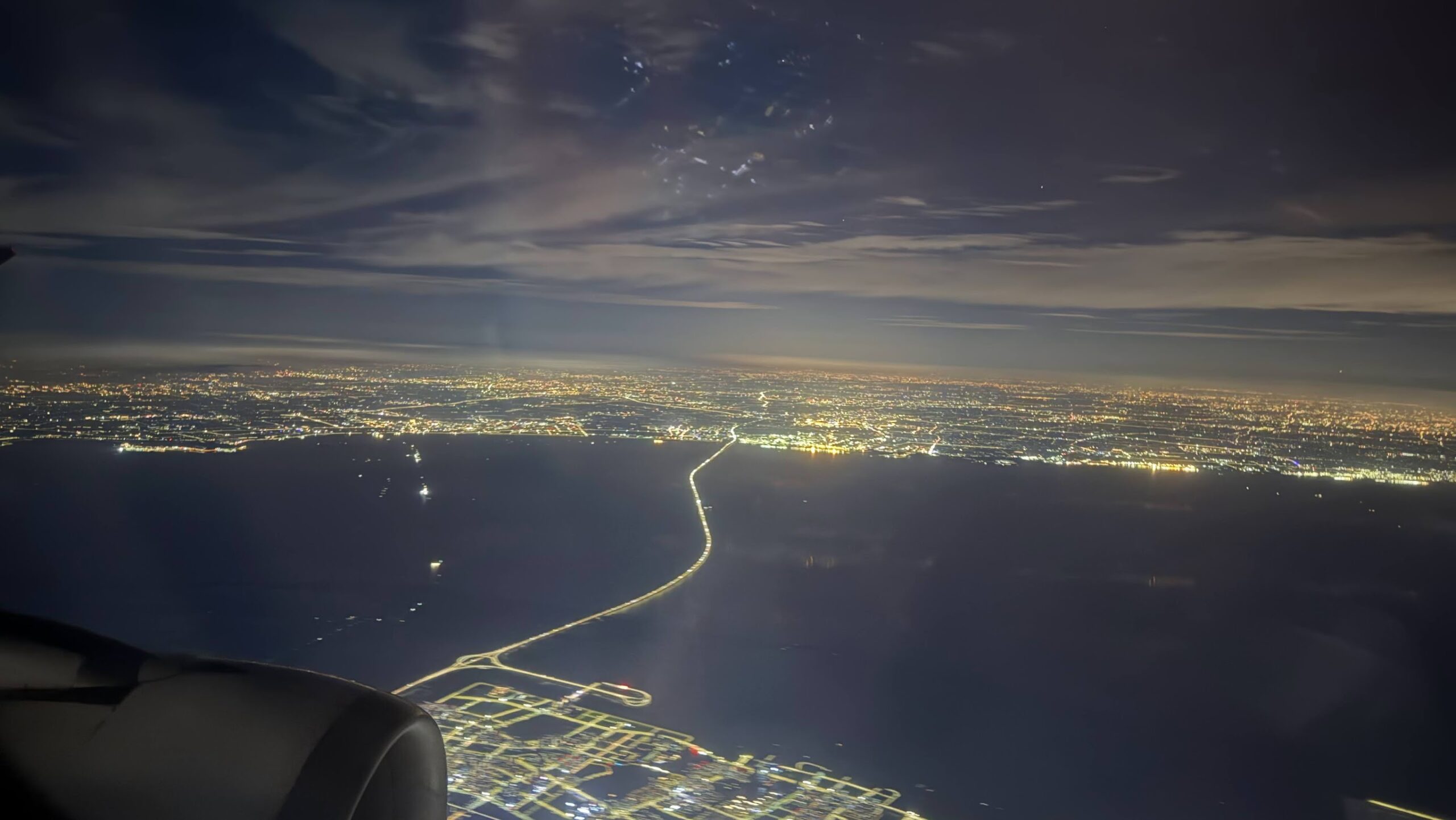
After around 1.5 hours, we began our approach into Shanghai Hongqiao International Airport. The flight arrived after dark, with the city lights visible from the window during the descent.
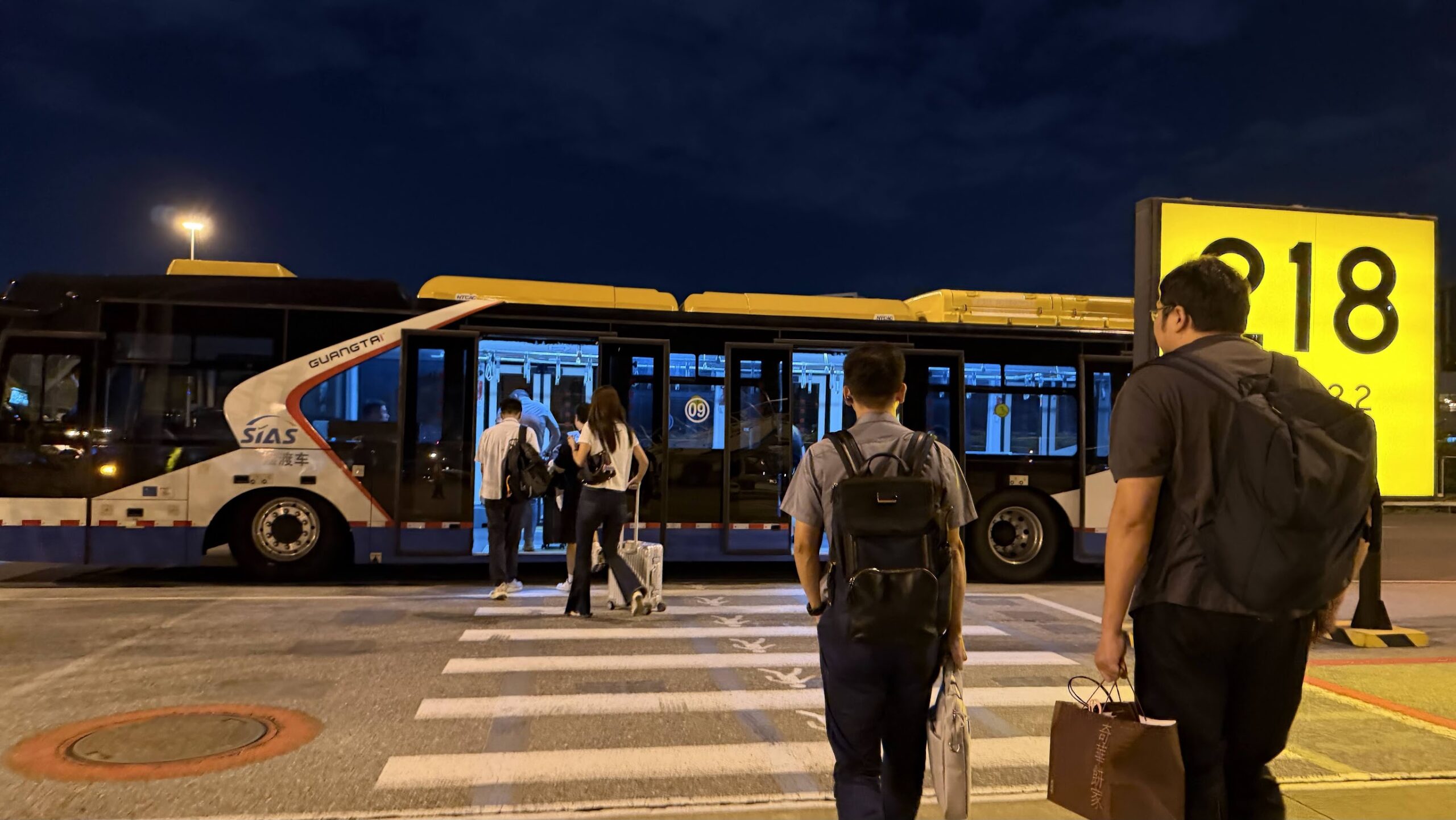
We parked at another remote stand and took a bus to the terminal. Being seated near the front meant I could leave the aircraft quickly, although everyone still had to wait for the apron bus before continuing into the airport.
Concluding thoughts
Shenzhen Airlines premium economy on this Airbus A320-200 was a little more useful than the version I had flown from Singapore. The extra legroom and footrest were genuine improvements, but the seat remained close to economy class in width and overall design. The meal was ordinary, and the cabin itself looked dated.
The strongest reason to remember this flight was the service. Being greeted by name and given the flight information felt unusually personal on the first flight. When it happened again on this flight, it began to look like consistent recognition rather than luck. I still can’t say whether that treatment is guaranteed for every Star Alliance Gold member, but Shenzhen Airlines handled it very well on both of my flights.
I wouldn’t pay a large premium for this product purely for the seat or food. If the fare difference were modest, or if I needed the higher fare class to earn status miles, the extra legroom, footrest and position near the front would make it a reasonable choice for a short domestic flight. Otherwise, economy class would be sufficient. In the end, the crew made a stronger impression than the seat did.