I stayed at the Renaissance Shanghai Yu Garden Hotel for two nights in early September, on a trip that also gave us some time to see more of Shanghai. If sightseeing is the priority, the location is hard to argue with. Yu Garden, the City God Temple and some very famous xiaolongbao are all around the corner.
The hotel itself is not quite as fresh as its location. The interior finishes have been around for some time, the executive lounge is small enough to feel crowded during the main services, and the welcome amenity became a rather longer story than it needed to be. Marriott Bonvoy Platinum Elite status made the stay better, though. We received an upgrade to a 48 sqm studio, lounge access and breakfast downstairs at the main restaurant.
My verdict is about as straightforward as the hotel: it was not bad. The location is excellent, the studio gave us plenty of space and breakfast was really good. I would stay here again at a cheaper rate, especially if my Marriott Bonvoy benefits were doing some of the work, but I would not pay a large premium for an older hotel simply because Yu Garden is outside the door.
Location
The Renaissance sits at 159 South He Nan Road in Huangpu, directly beside Shanghai’s Old City. Yuyuan Garden station on Metro Lines 10 and 14 is nearby, although we arrived by Didi and were dropped at the hotel entrance.
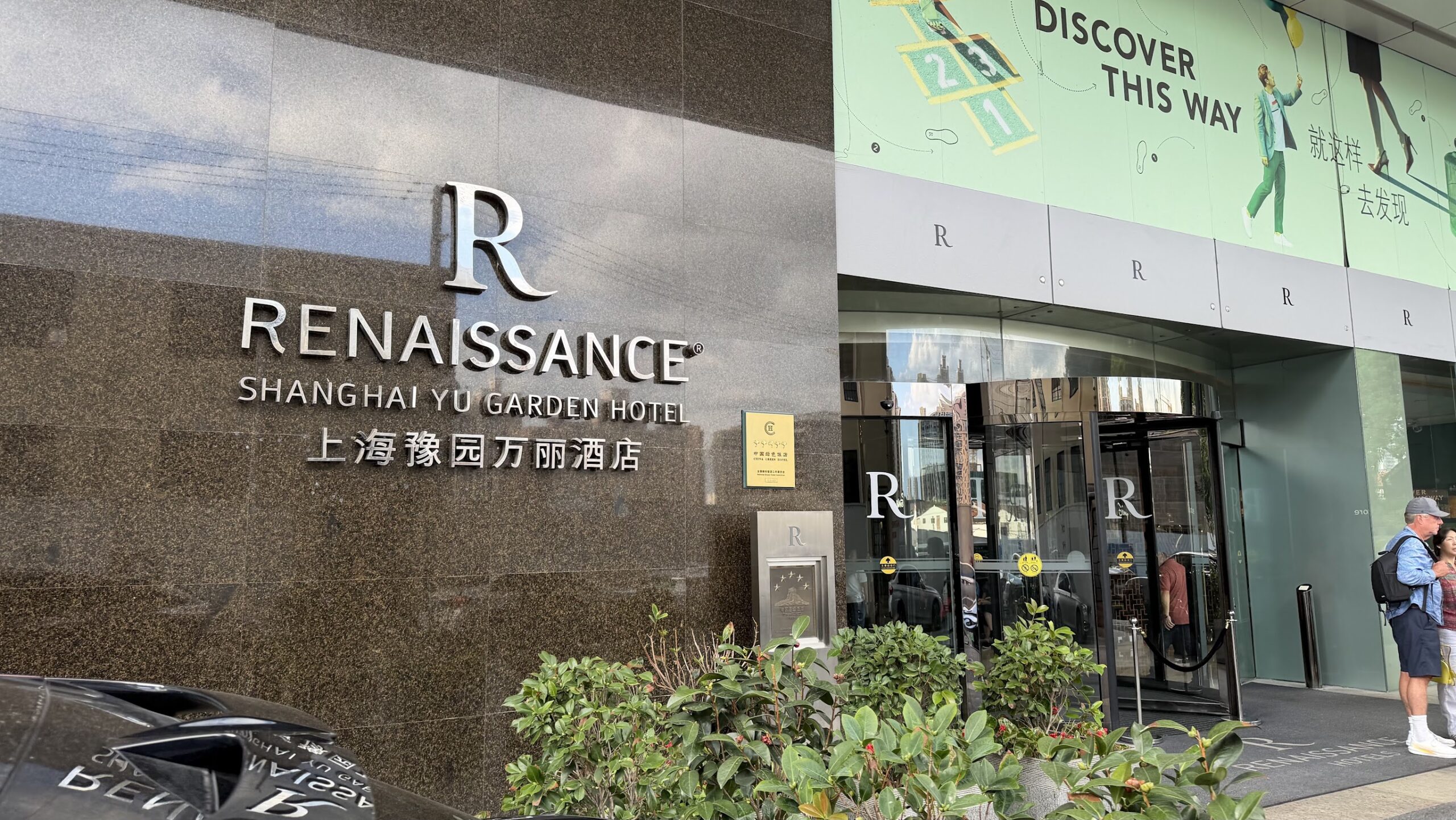
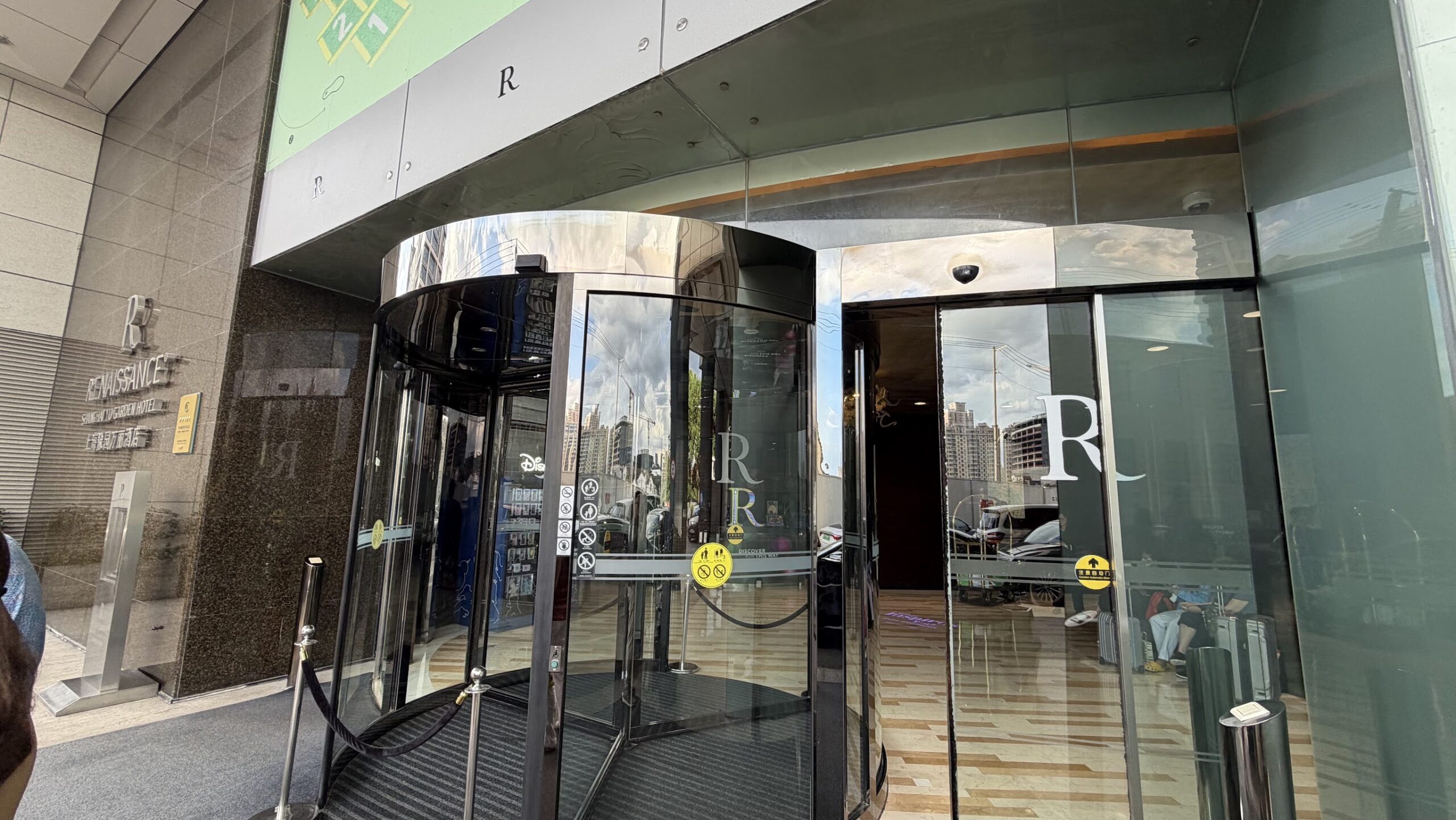
The main appeal is what you can reach on foot. Yu Garden, the City God Temple and the surrounding lanes are only a few minutes away. This is one of the most recognisably Shanghai parts of the city, with traditional roofs, crowded shopping streets and no shortage of places selling xiaolongbao. The famous steamed dumplings are not some attraction at the other end of a metro journey. You can walk out of the hotel and be eating them shortly afterwards.
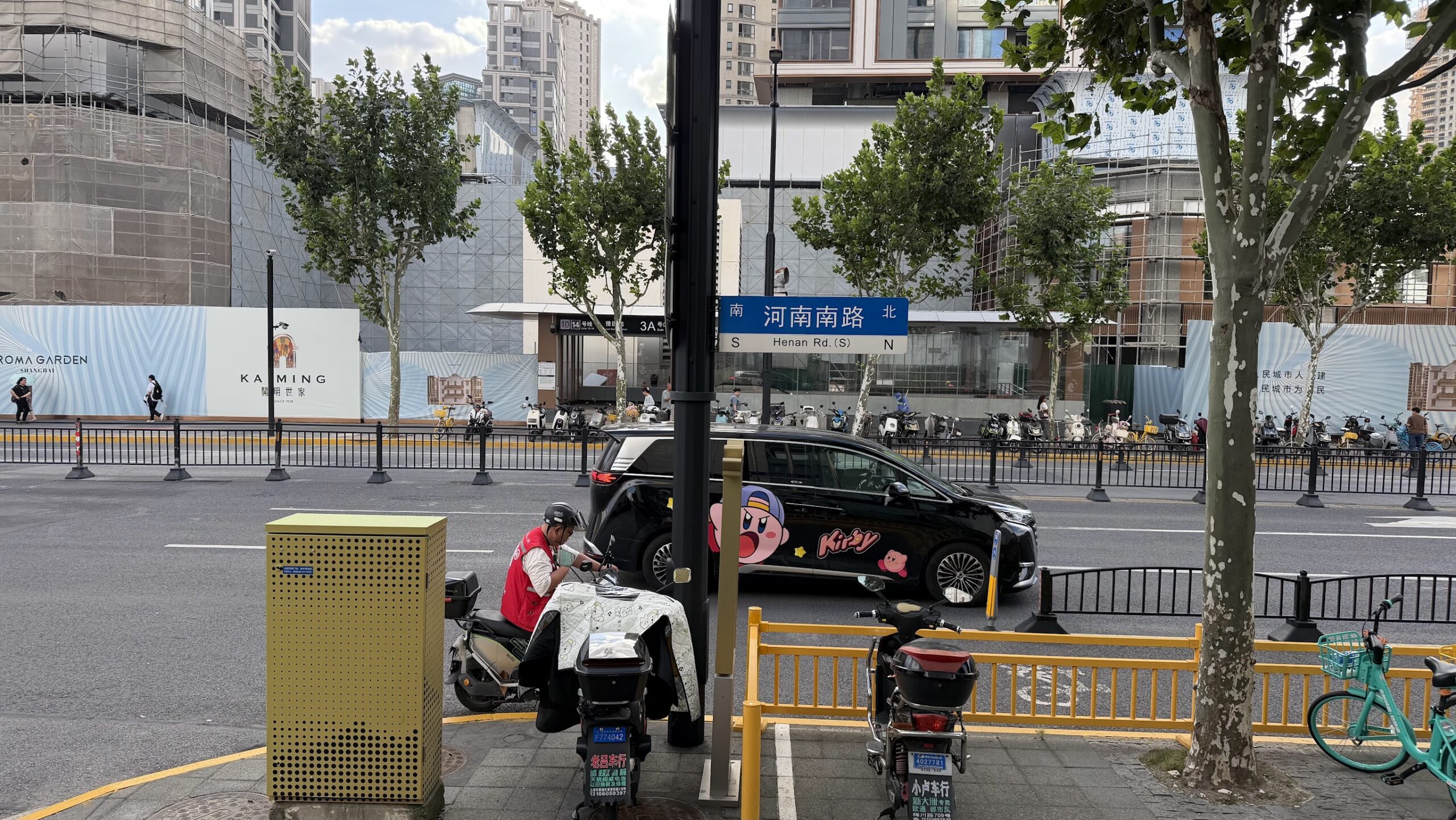
The Bund is also reasonably close, though the hotel’s name and some of its room-category descriptions may leave you expecting more of a direct Bund setting than you actually get. This is first and foremost a Yu Garden and Old City location. For seeing that side of Shanghai, it is extremely convenient.
Check-in
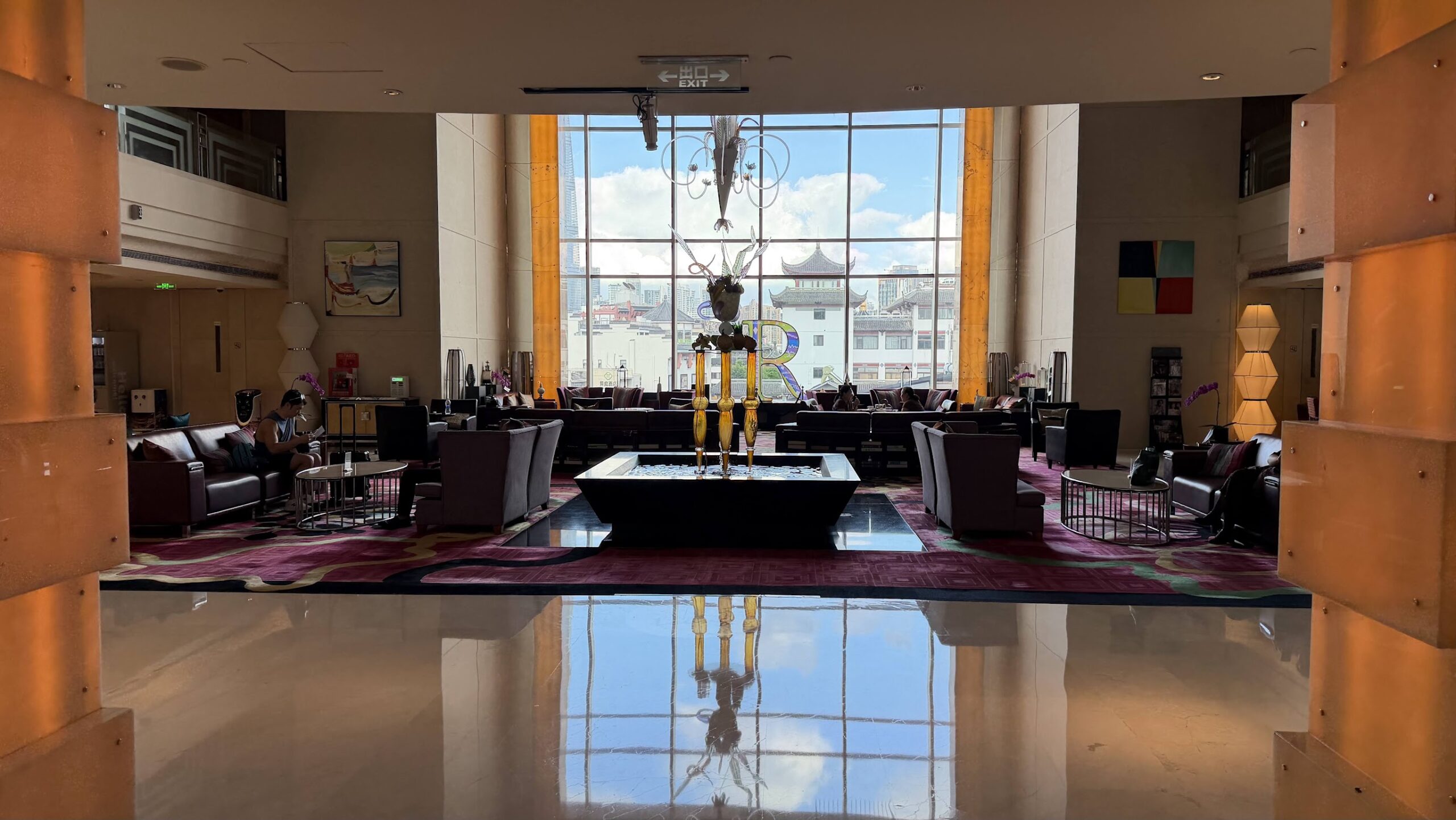
The ground-floor entrance leads to lifts up to the lobby on the 4th floor. After arriving by Didi, we went upstairs and were greeted at reception. The staff recognised my Marriott Bonvoy Platinum Elite status and explained that we had been upgraded to a Bund River View Studio.
The room
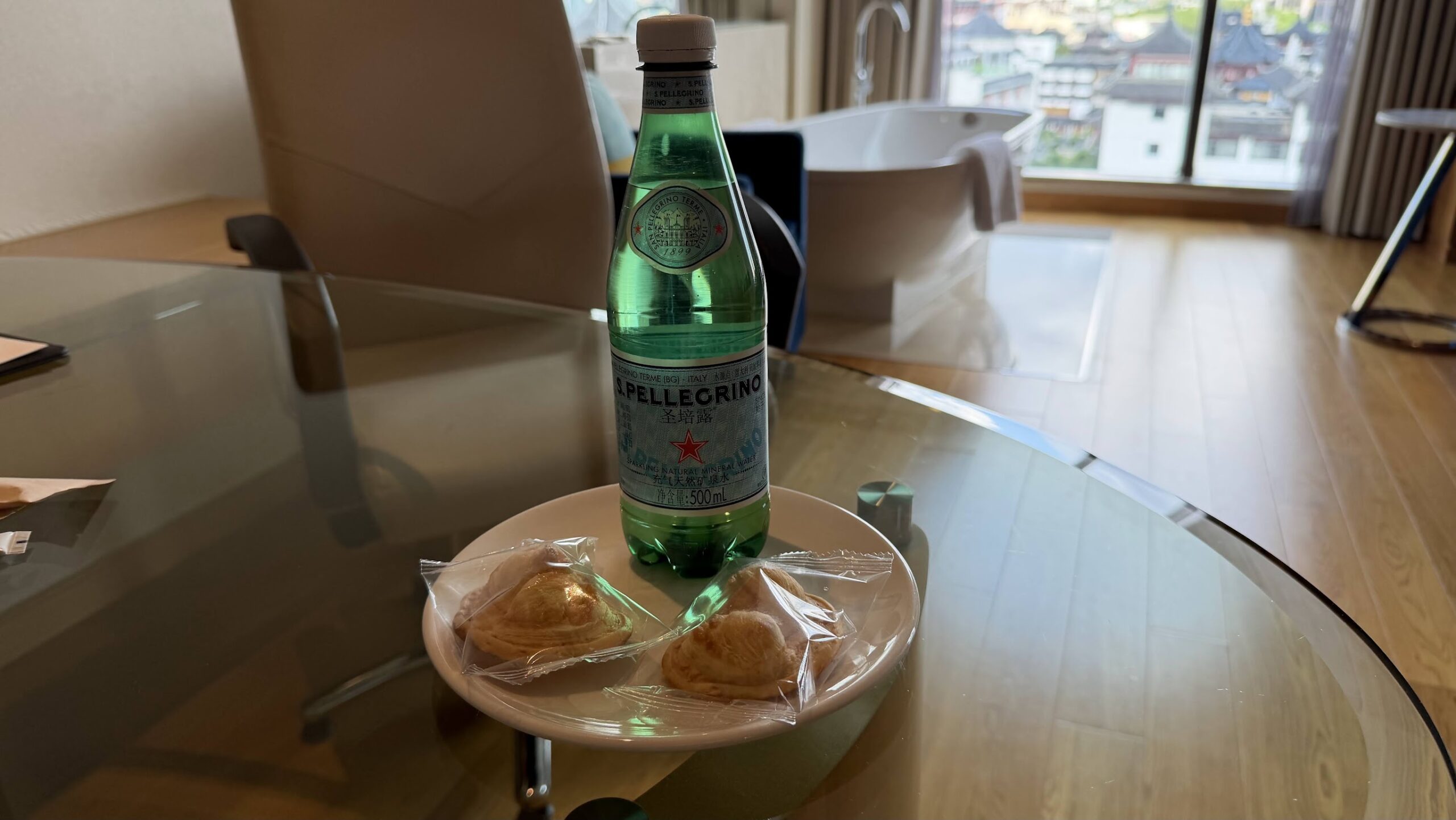
Platinum members could choose between points and a welcome amenity. We took the amenity and selected xiaolongbao with drinks. What arrived in the room was a plate of packaged pastries and S.Pellegrino sparkling water, which was sufficiently different from what we had discussed that we asked the hotel to correct it.
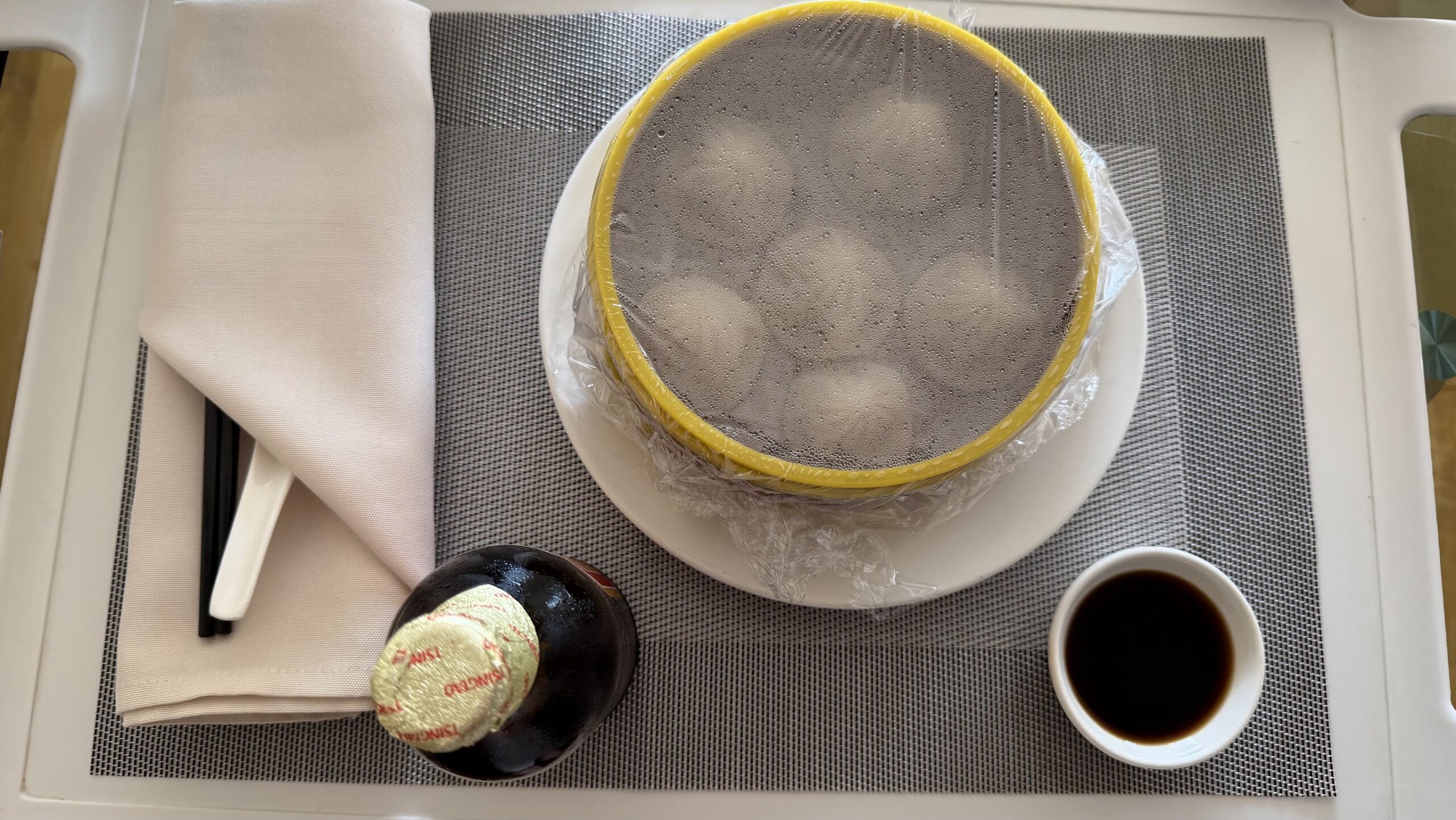
The xiaolongbao eventually arrived on the second day with Tsingtao beer. We had asked the hotel to redo the amenity after the first delivery, and at least the dumplings finally made it. None of this ruined the stay. It was simply more back and forth than a welcome gift should require, particularly when the hotel had offered the choices itself.
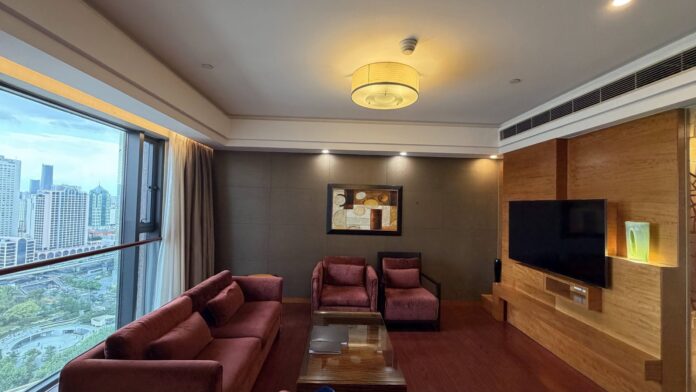
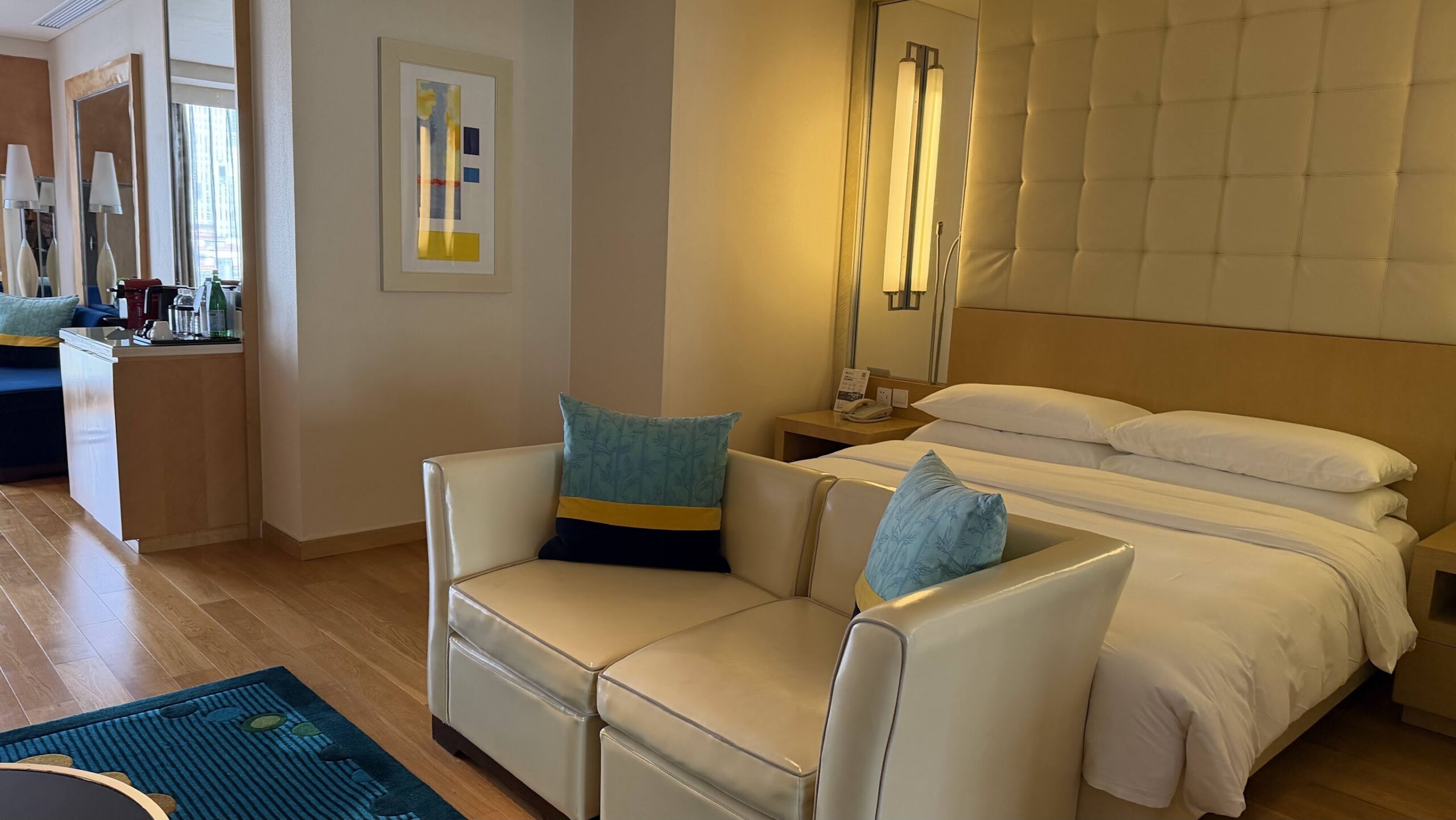
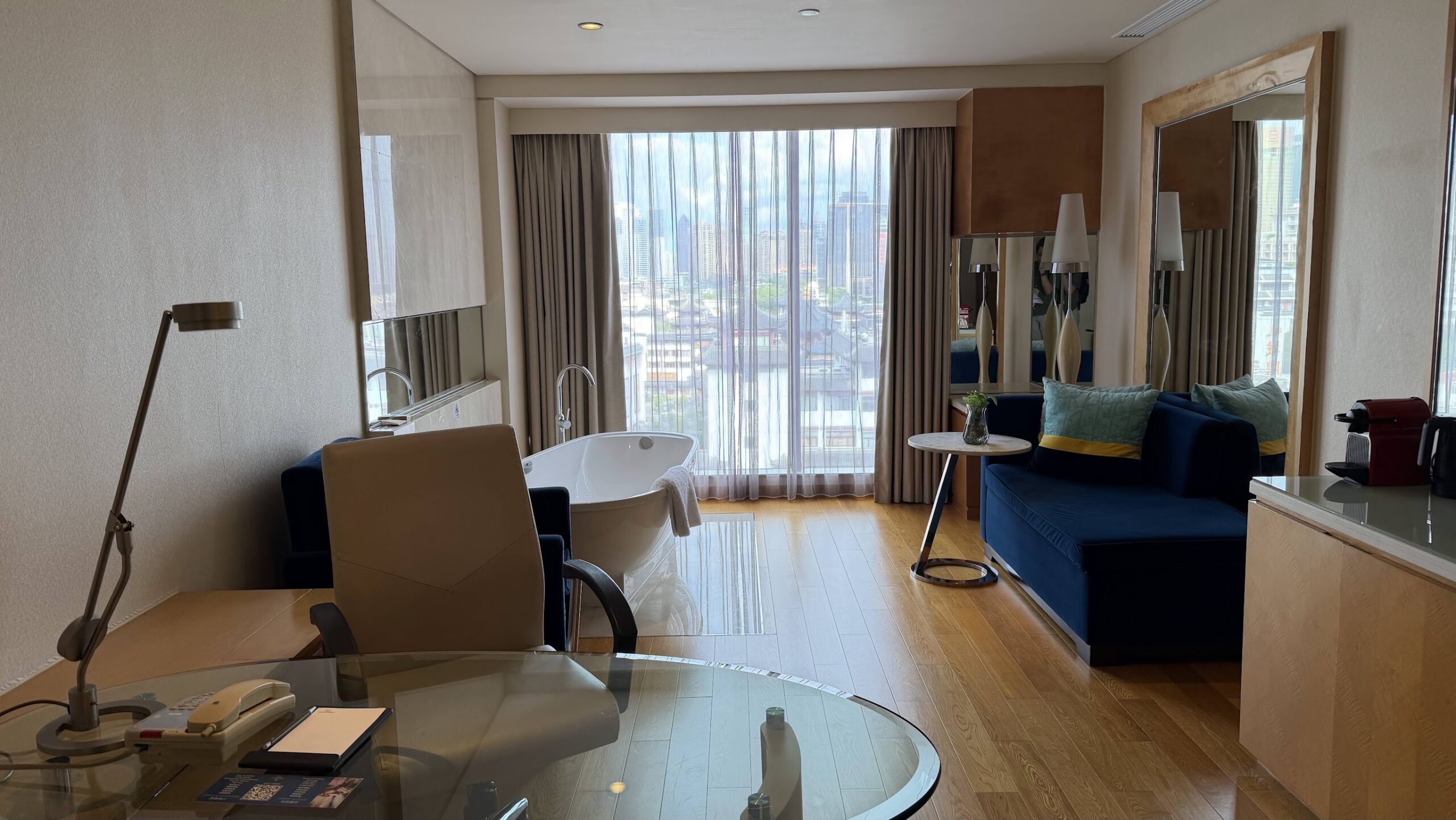
The studio has an L-shaped layout. The living area comes first, with a large television, a sofa, and plenty of open floor space. The bed and bathroom are on the right, while the room continues around the corner to the windows and work area.
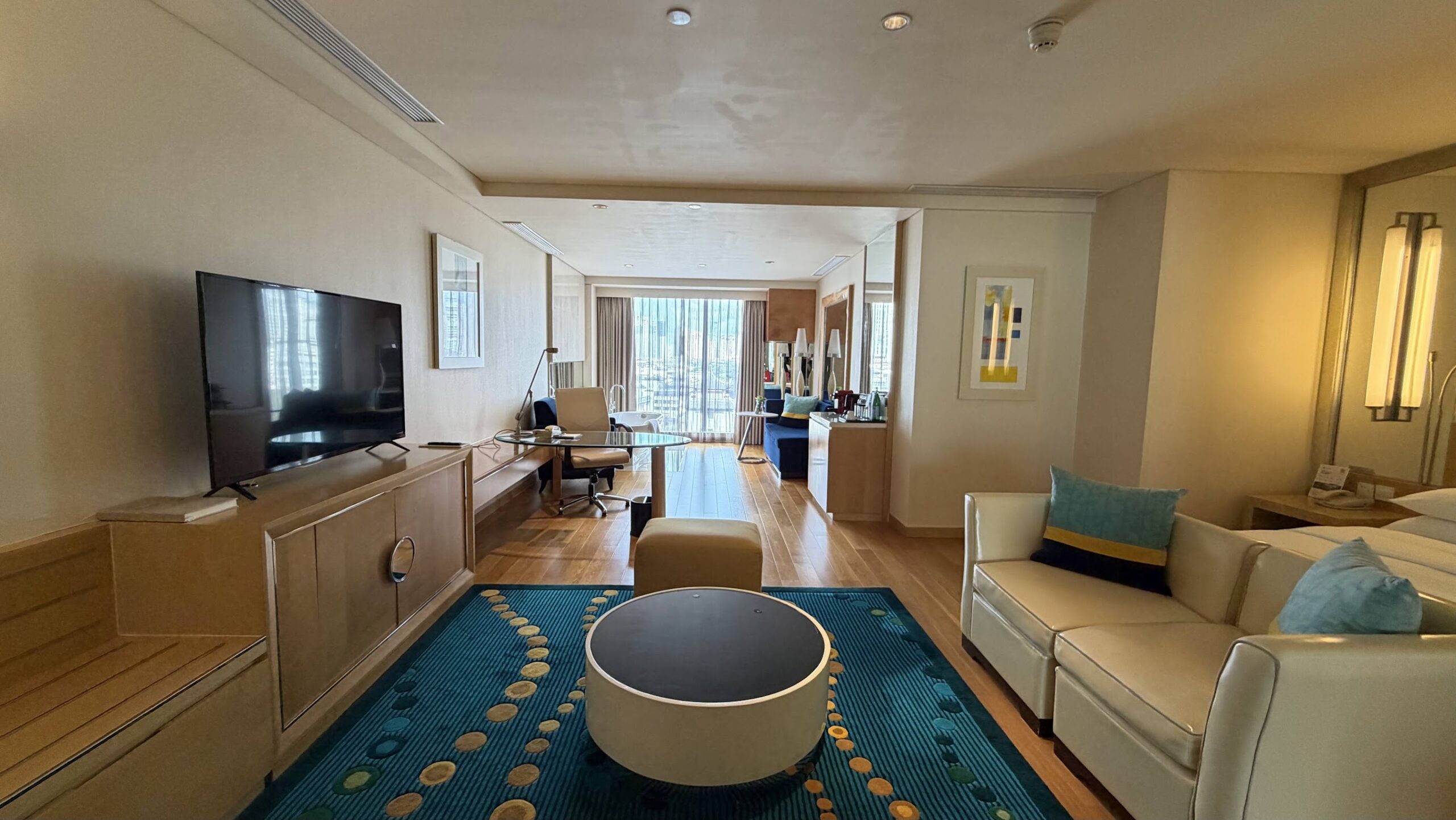
This arrangement makes the room feel larger than a conventional rectangular hotel room. It also gives some separation between the entrance, bed and desk even though there are no walls dividing them. It never becomes a true suite, but there is enough room for two people without every bag and jacket ending up on the bed.
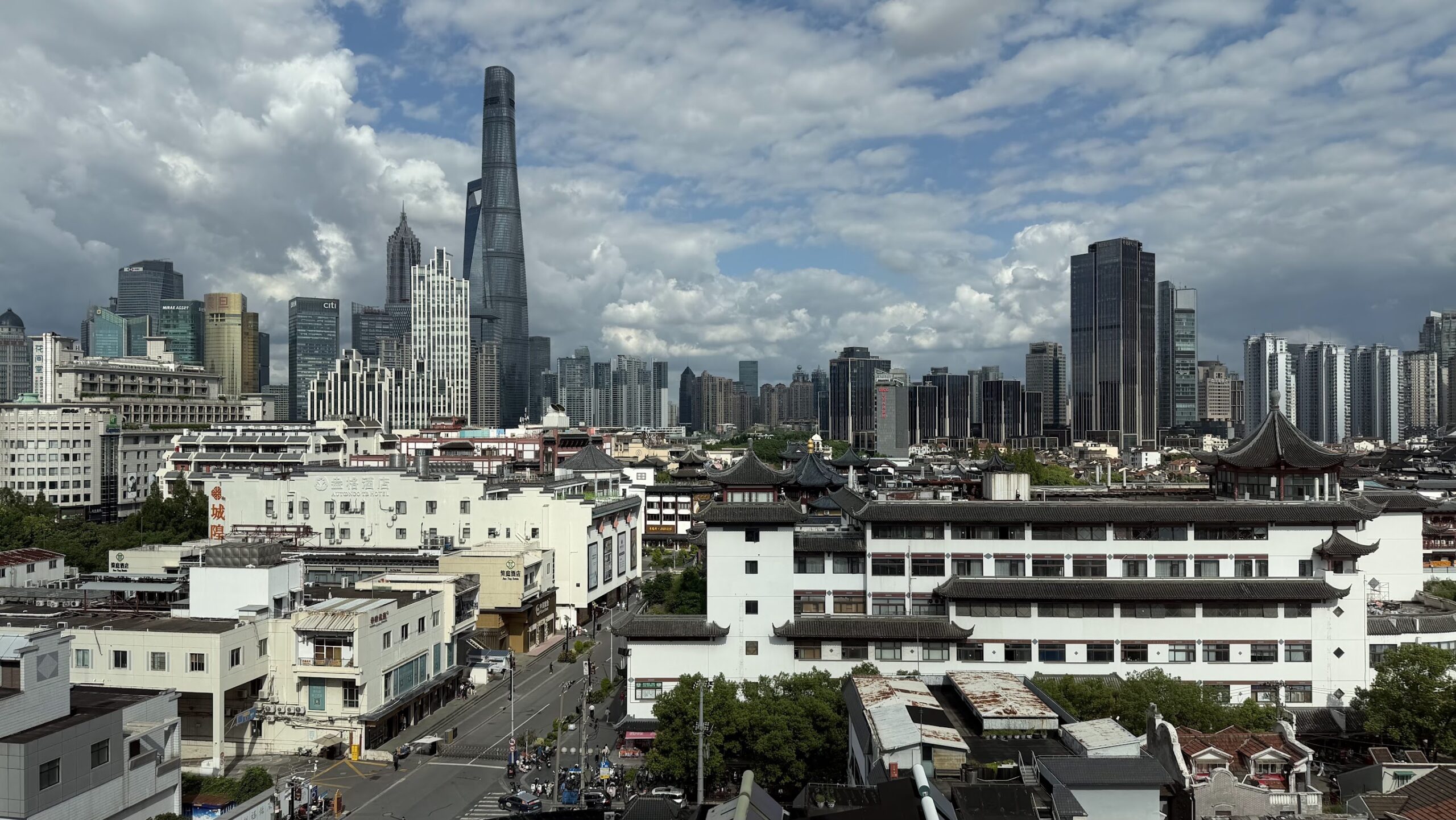
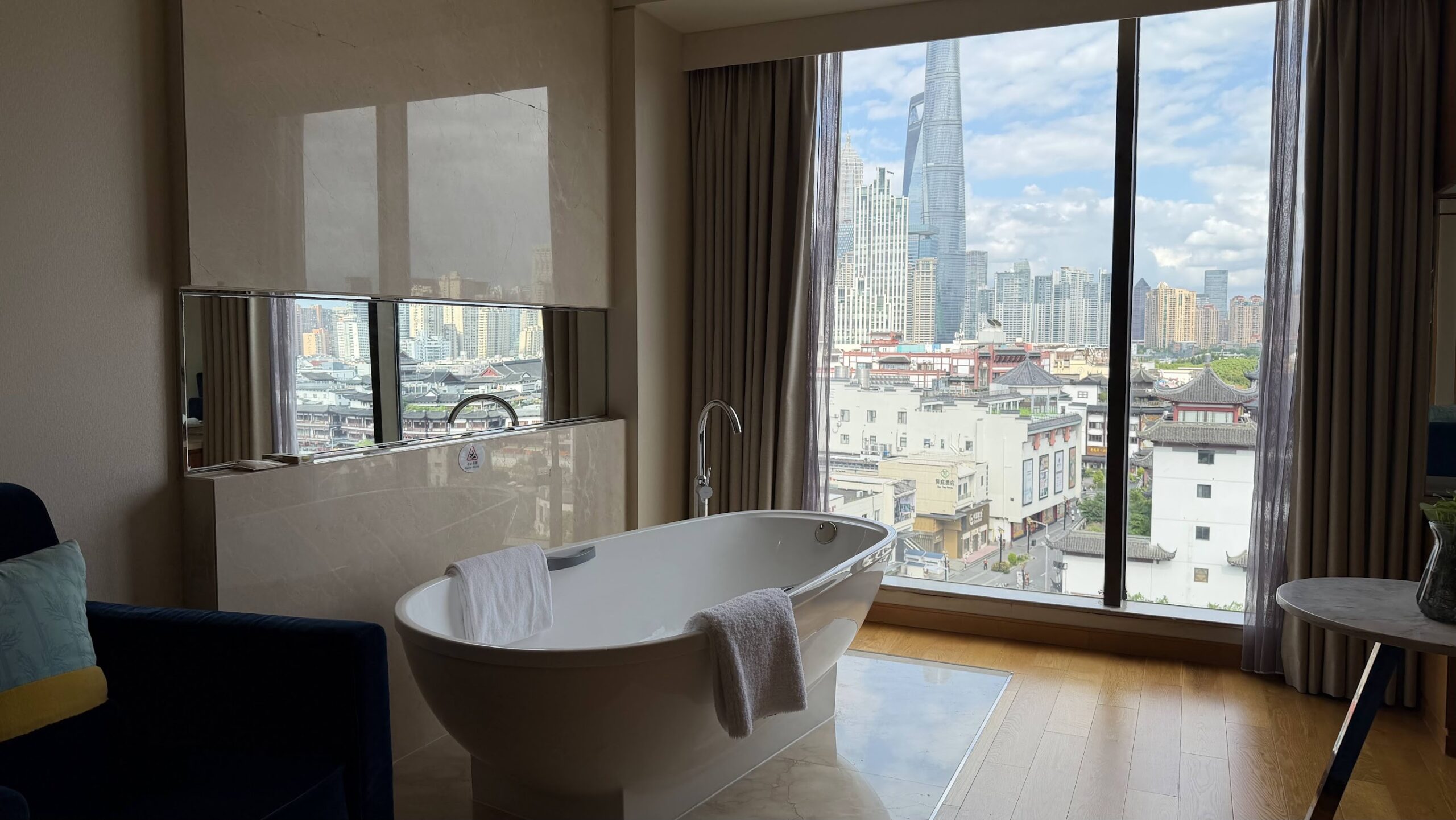
Our room faced towards Yu Garden and the wider Bund side of the city. The city view was very pleasant, particularly from the far end of the room, although the Bund itself was not especially visible. I would book this category for the space before booking it for a guaranteed postcard view.
Living and sleeping areas
The first part of the room contains the main sofa and television. The scale of both suits the room, rather than leaving a small sofa floating awkwardly in a large empty space. The bed sits off to the right, still within the same open-plan room but far enough from the entrance to feel like its own area.
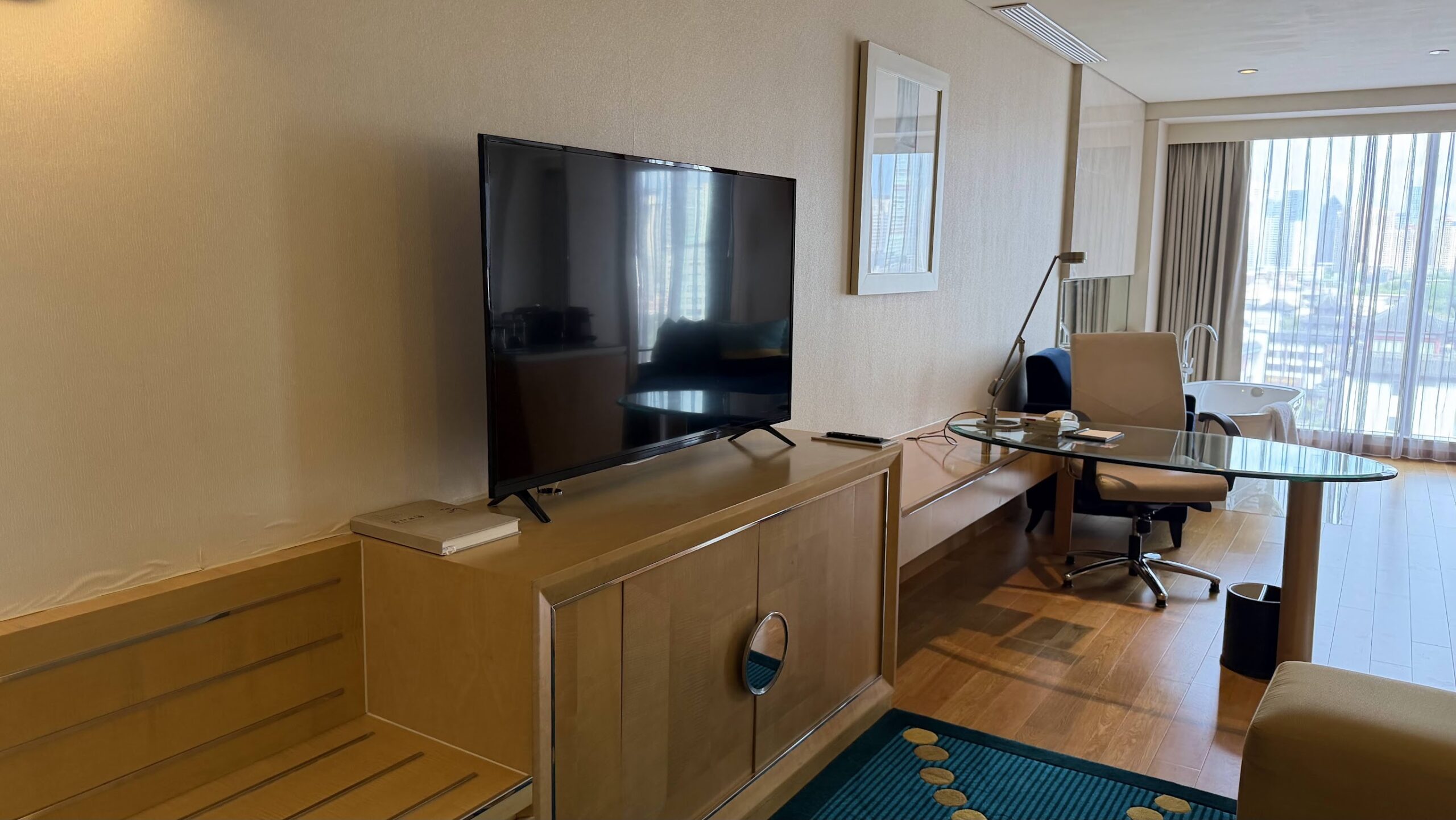
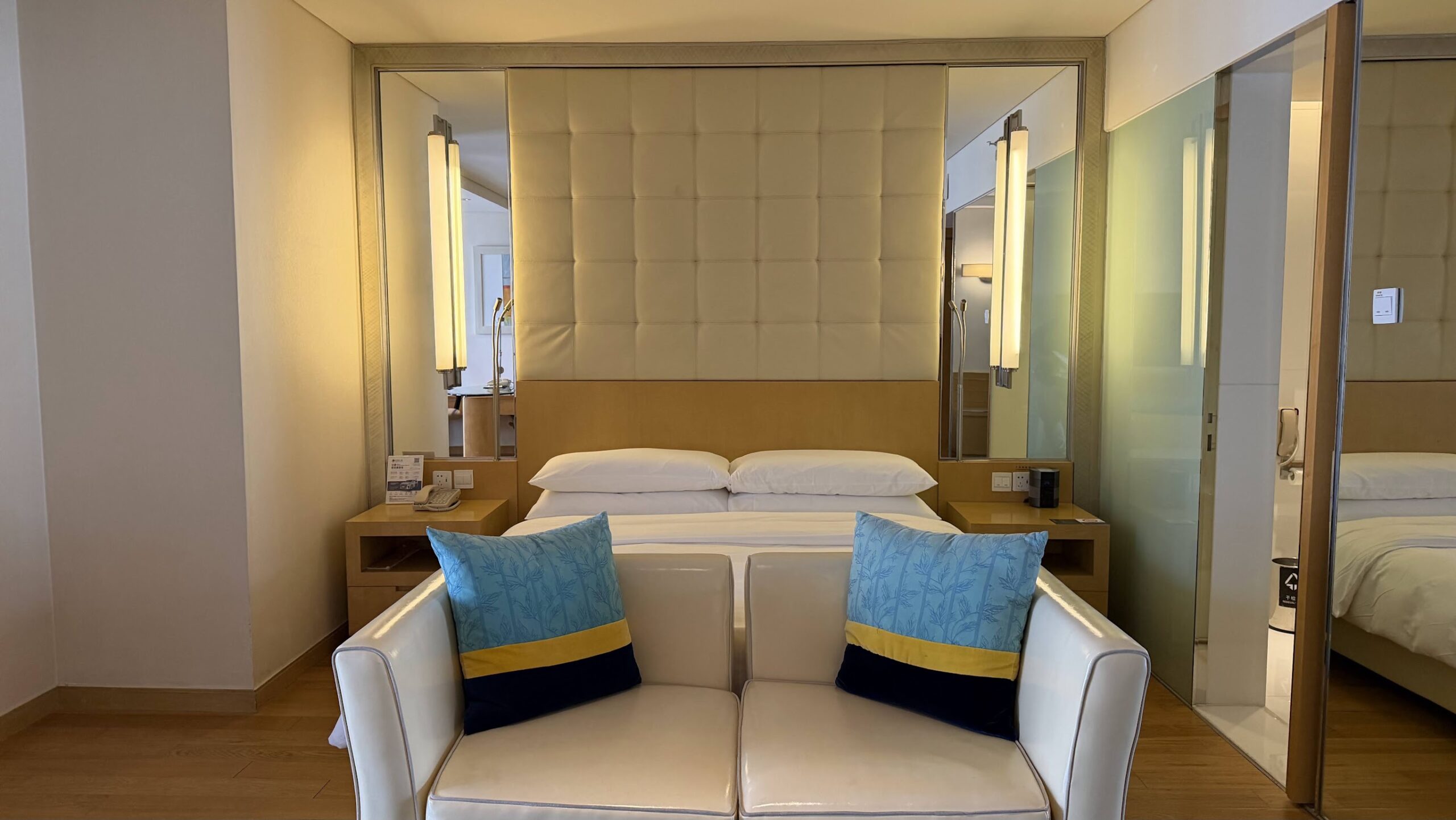
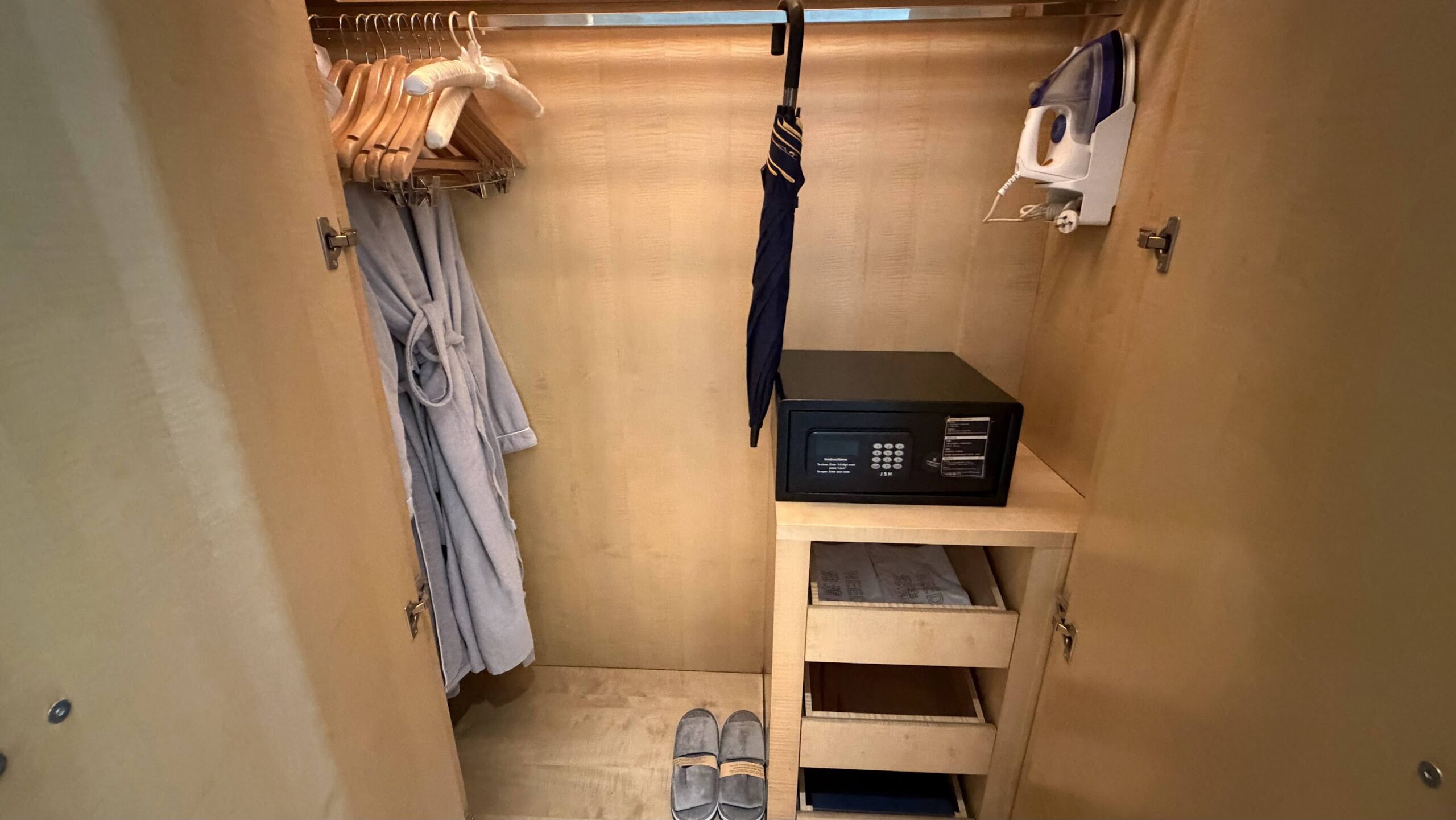
The age of the hotel is fairly clear in the finishes. Nothing struck me as unusable or in poor condition, but the colours, cabinetry and general styling do not look new. This is not the hotel to choose if the latest interior design matters more than space. The 48 sqm footprint makes the age easier to forgive, because we did at least receive a genuinely large room rather than an old and cramped one.
Work area and pantry
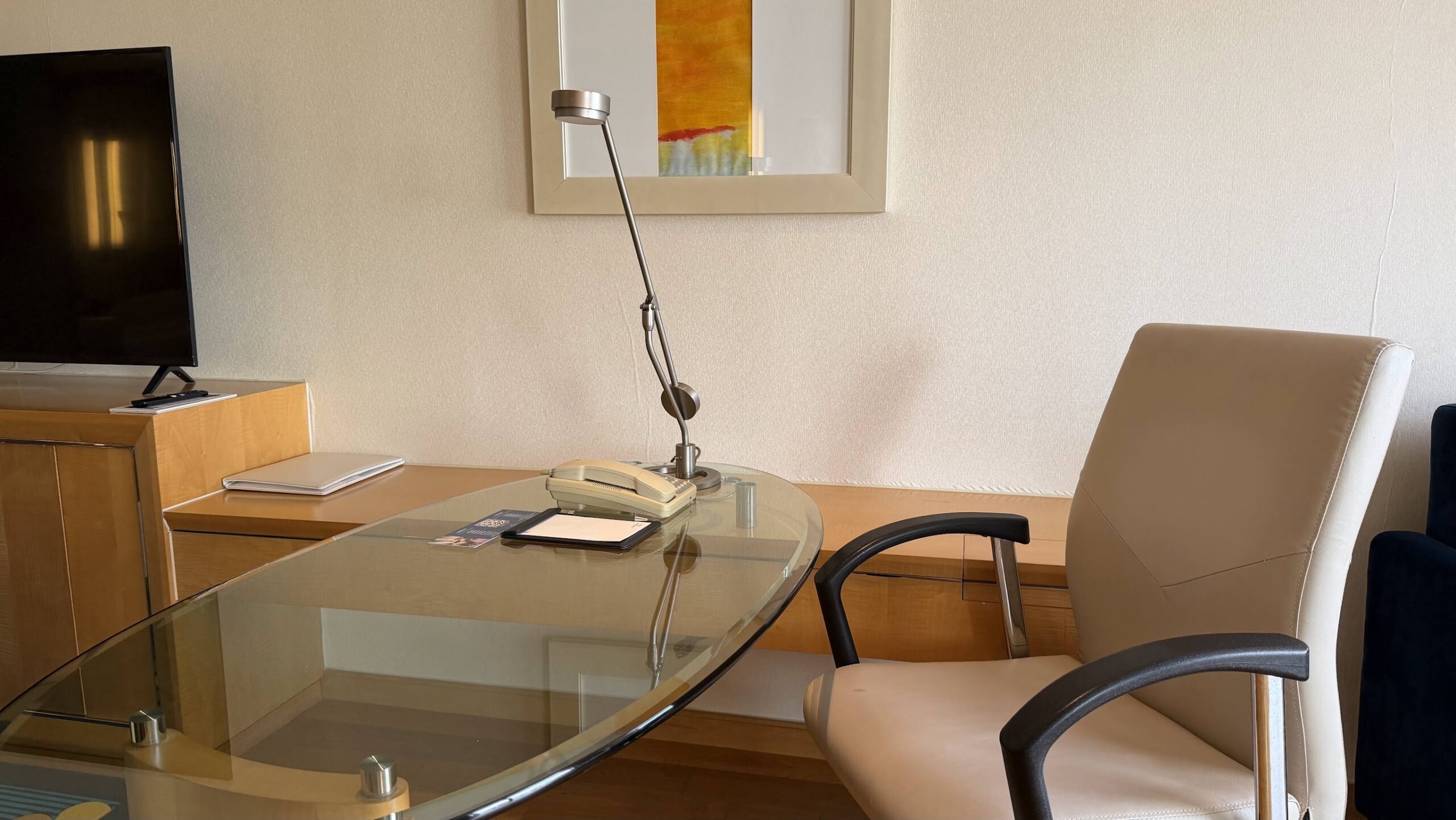
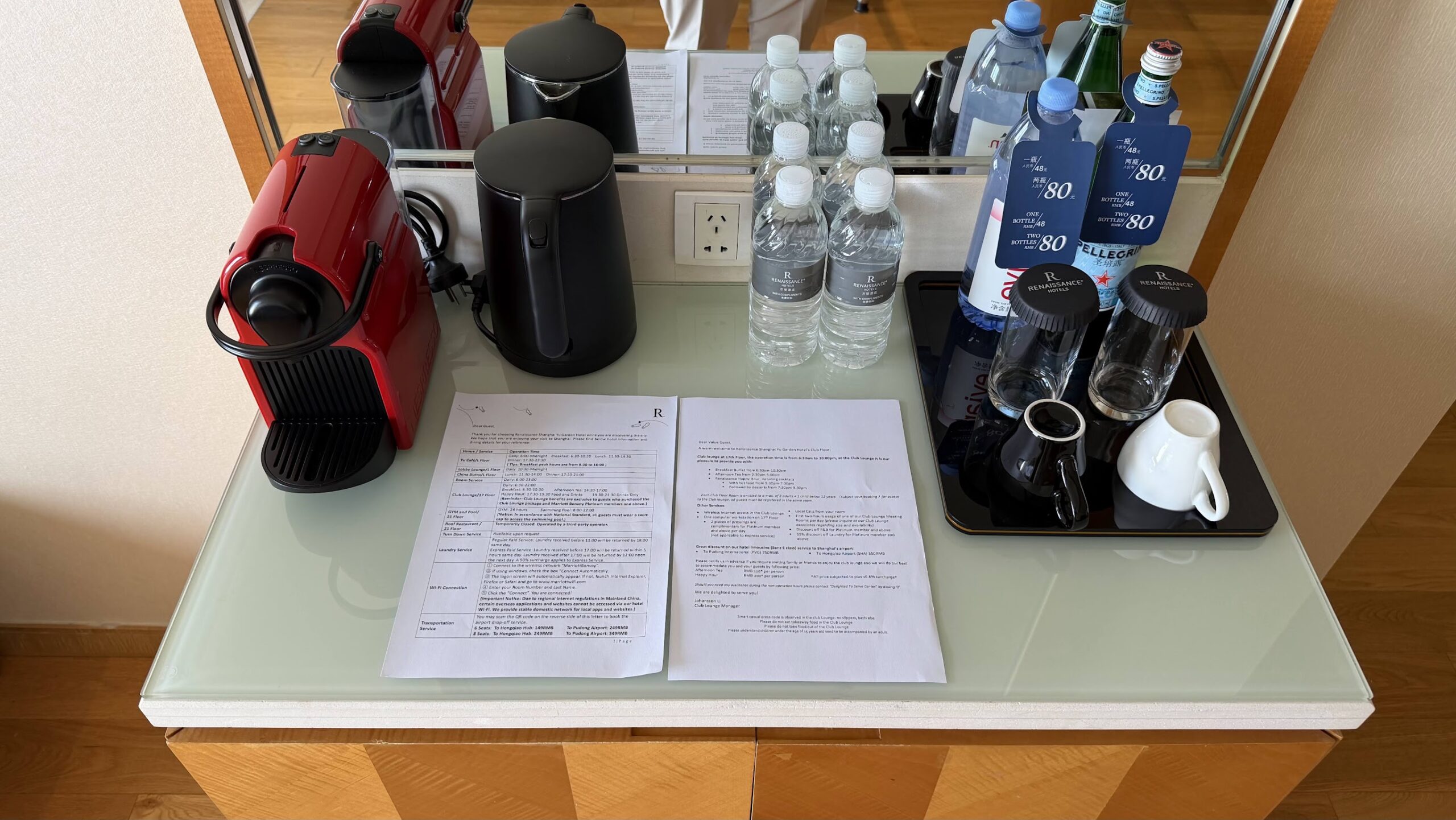
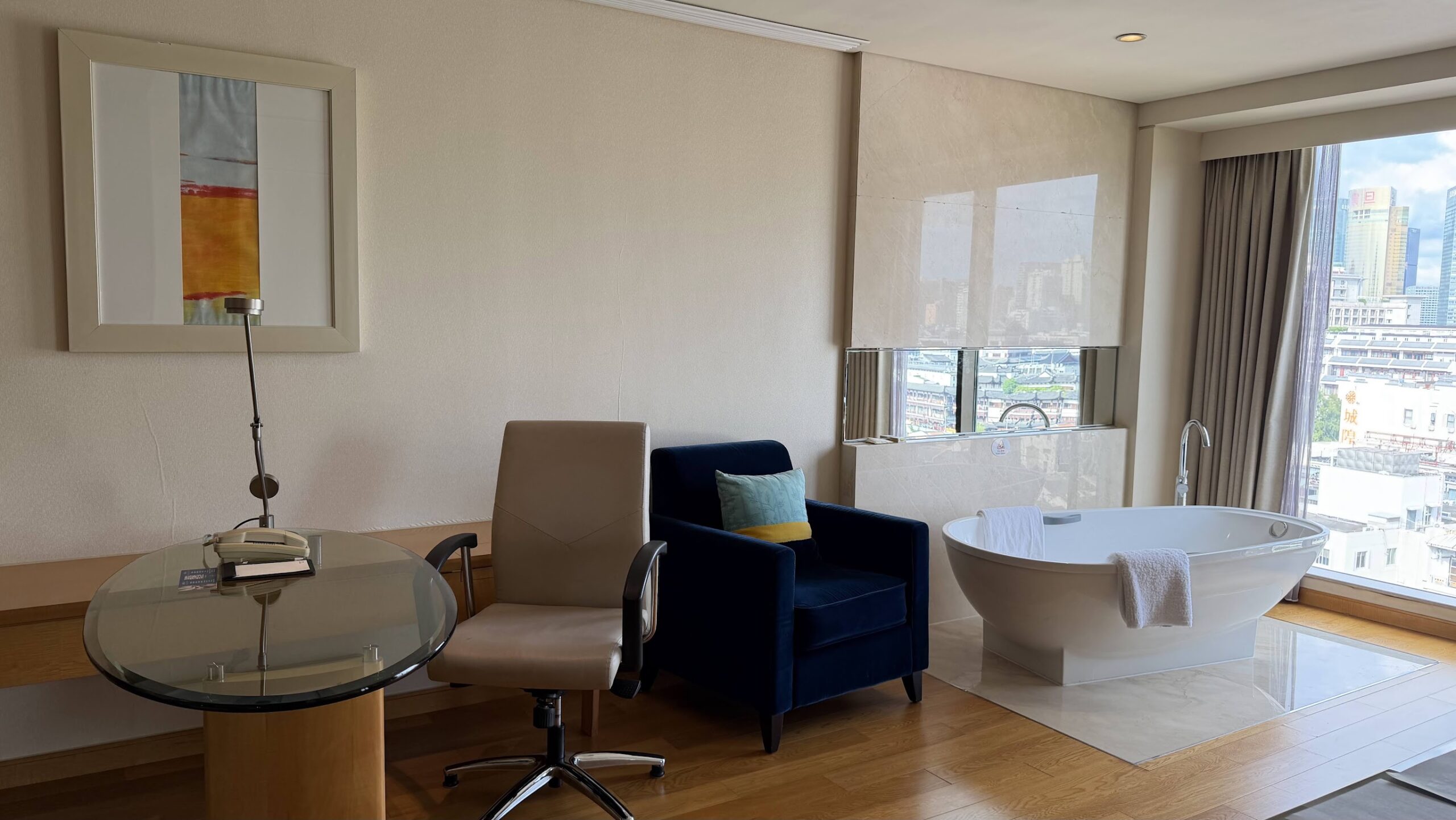
The far end of the L-shaped room contains a glass work desk, another sofa and the dry pantry. The pantry had a coffee machine and complimentary bottled water, which covered the basics without taking up much of the room.
The work desk looked fine until I tried to use a mouse on it. Without a mouse pad, the optical mouse did not track properly across the glass surface, so working there became more irritating than it should have been. A glass table looks nice, but it is a poor choice for a hotel desk if guests are expected to use it with a laptop and mouse. Bring a mouse pad, or be prepared to improvise with whatever flat surface you can find.
The bathrub and bathroom
The strangest feature sits directly behind the work desk: a freestanding bathtub beside the windows, out in the open room. It is not inside the bathroom and there is no proper partition enclosing it. The idea, presumably, is to let you soak while looking out over Yu Garden and the Shanghai skyline.
I can understand the view part. I still found the placement very strange. Someone could be working at the desk while someone else is in the bathtub a short distance behind them, and because the entire studio is open plan, there is no pretending these are separate spaces. It may appeal to couples who like the idea of a bath with a city view. For anyone who expects a bathtub to be in the bathroom, it is a slightly weird design choice.
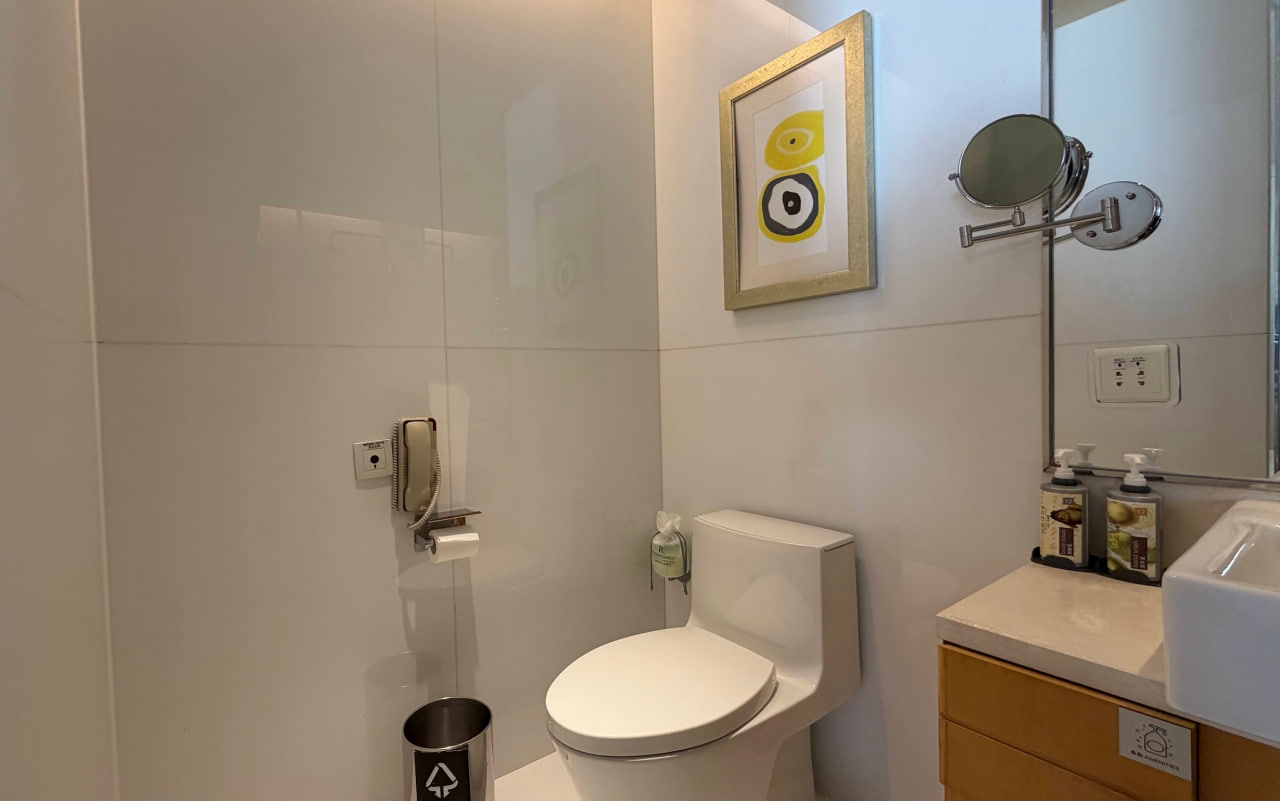
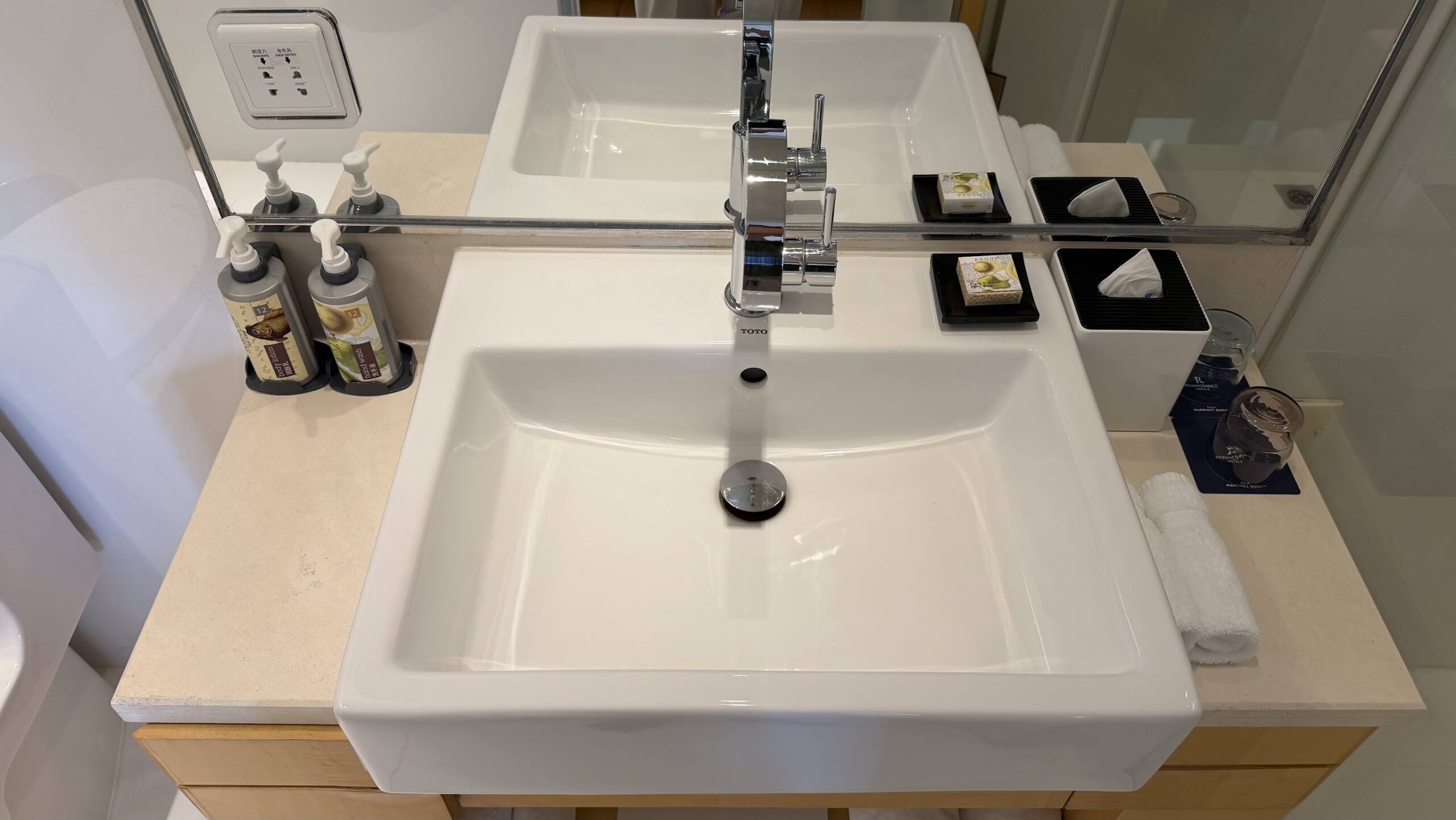
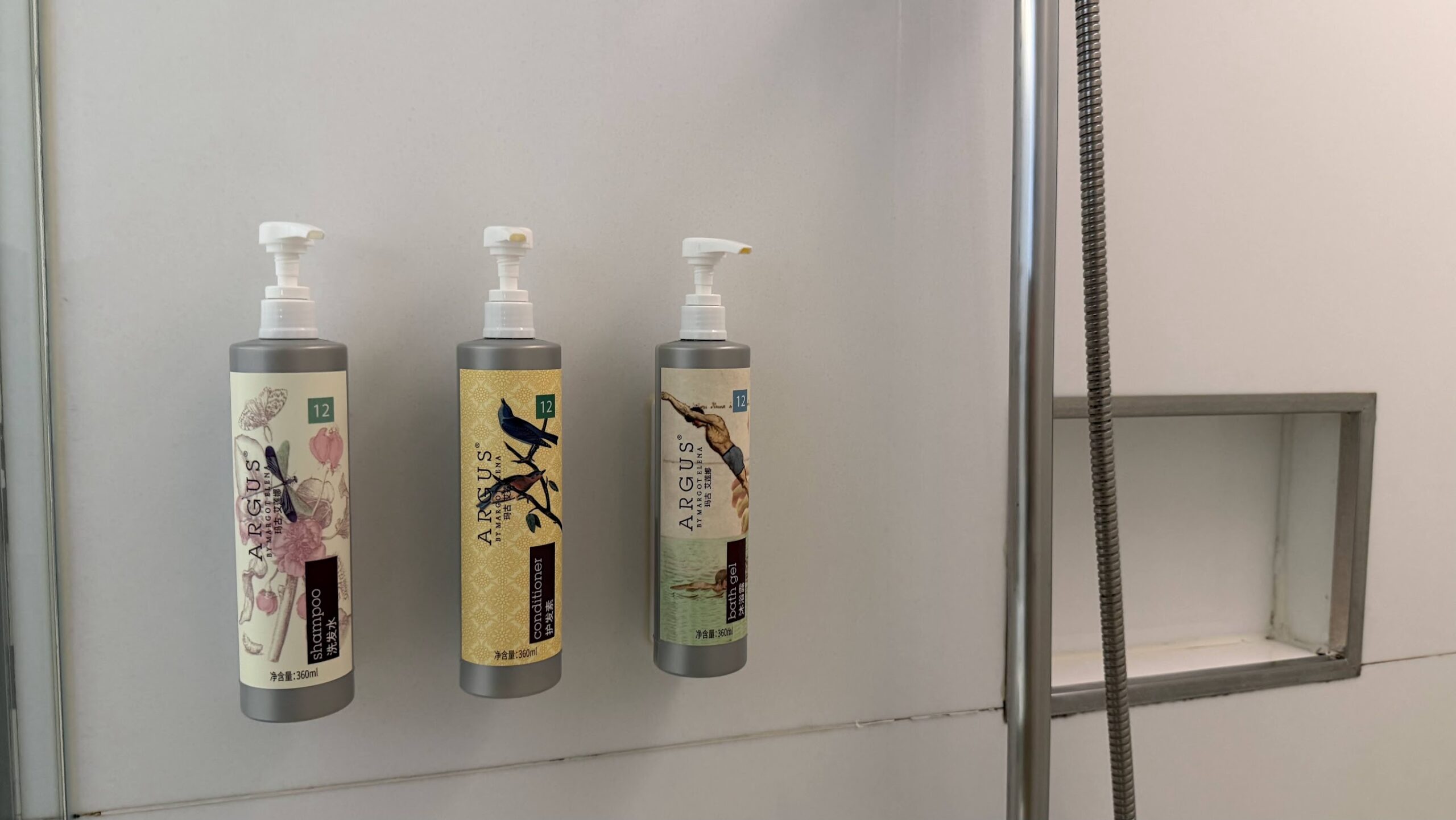
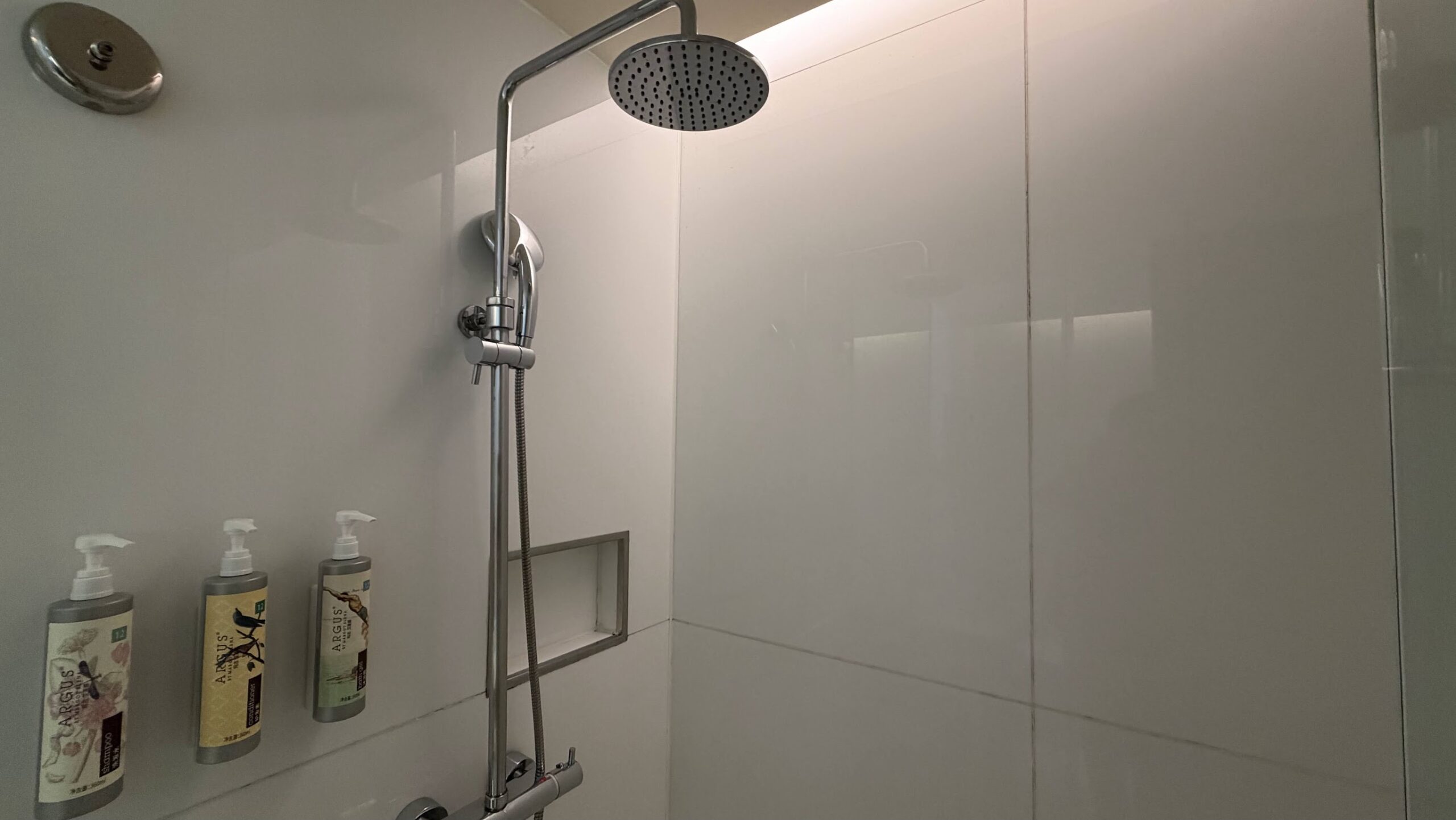
The actual bathroom is more conventional. It has a sink, a toilet beside the vanity and a separate shower with both a regular shower head and rainfall shower. Shampoo, conditioner and shower gel came from ARGUS by Margot Elena. The space worked well enough, though it remained mildly amusing that the room called the bathroom did not contain the bathtub.
Executive lounge
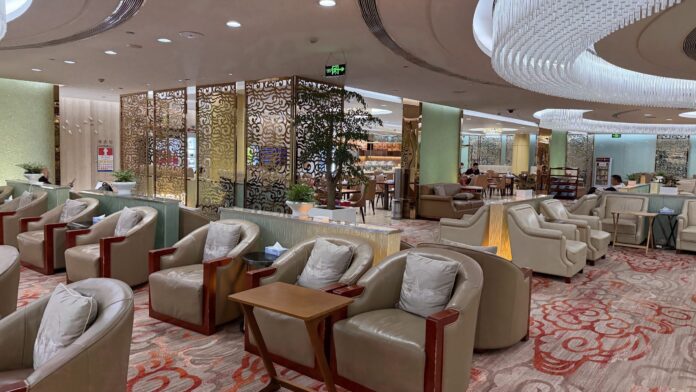
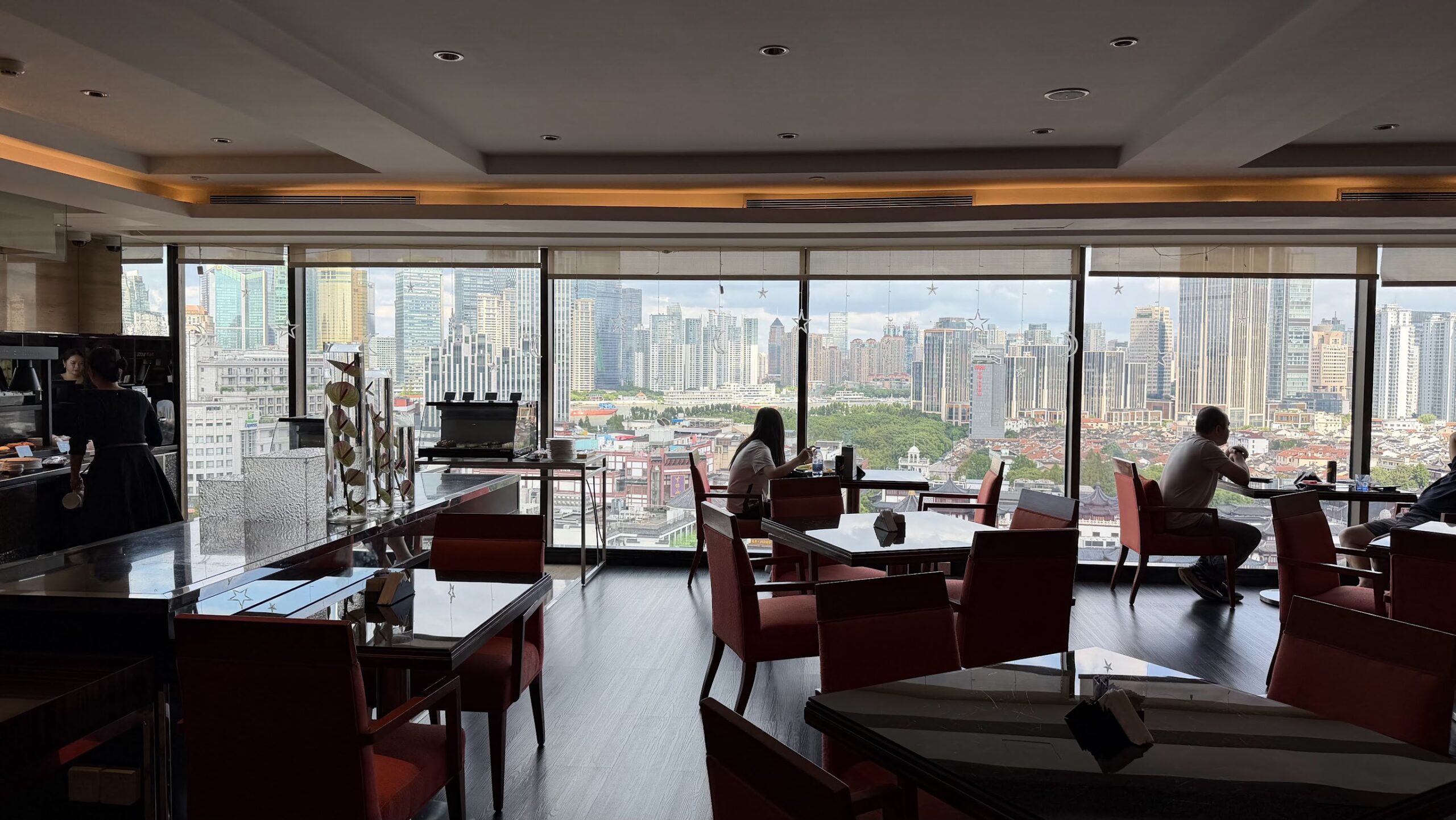
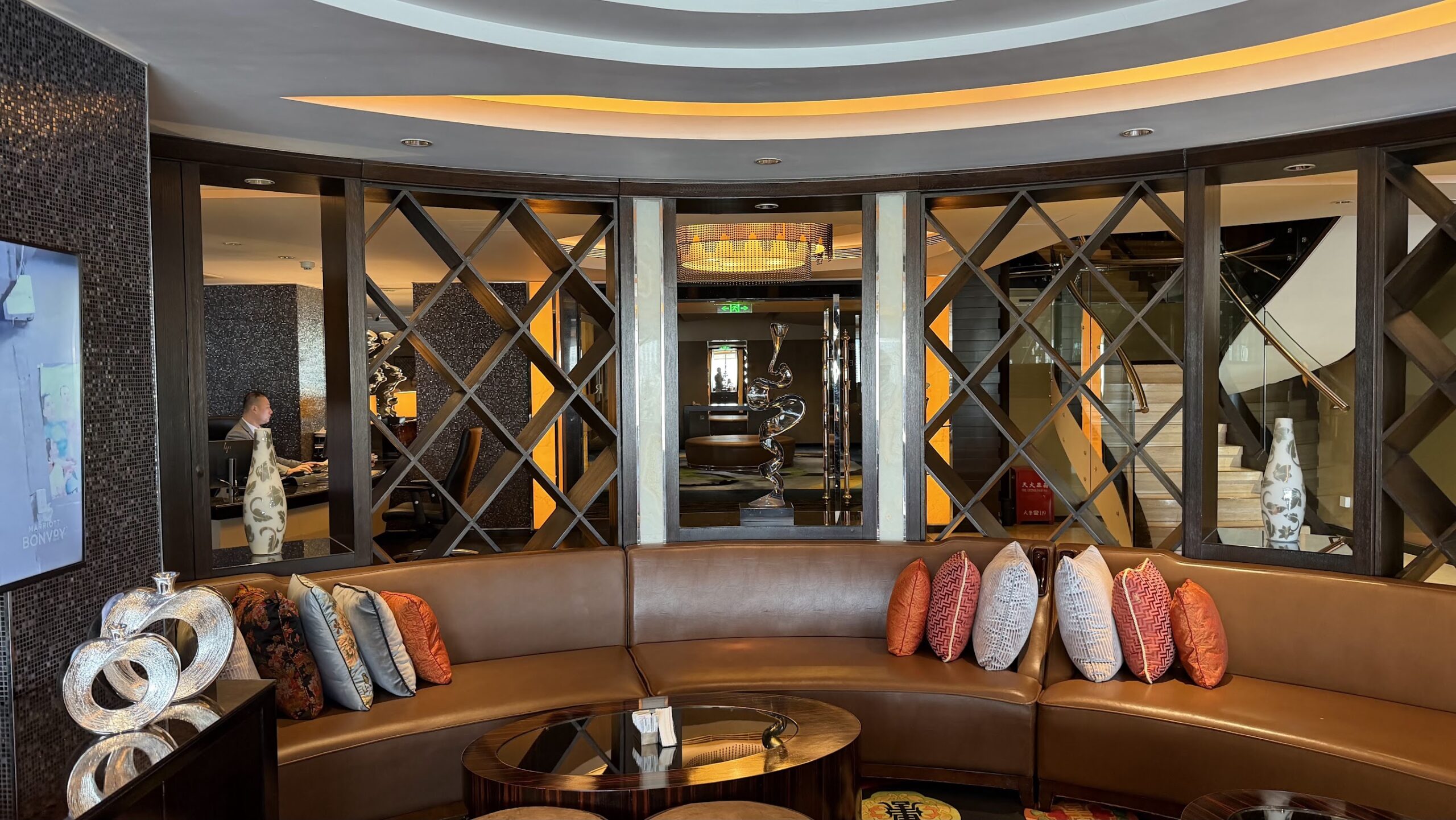
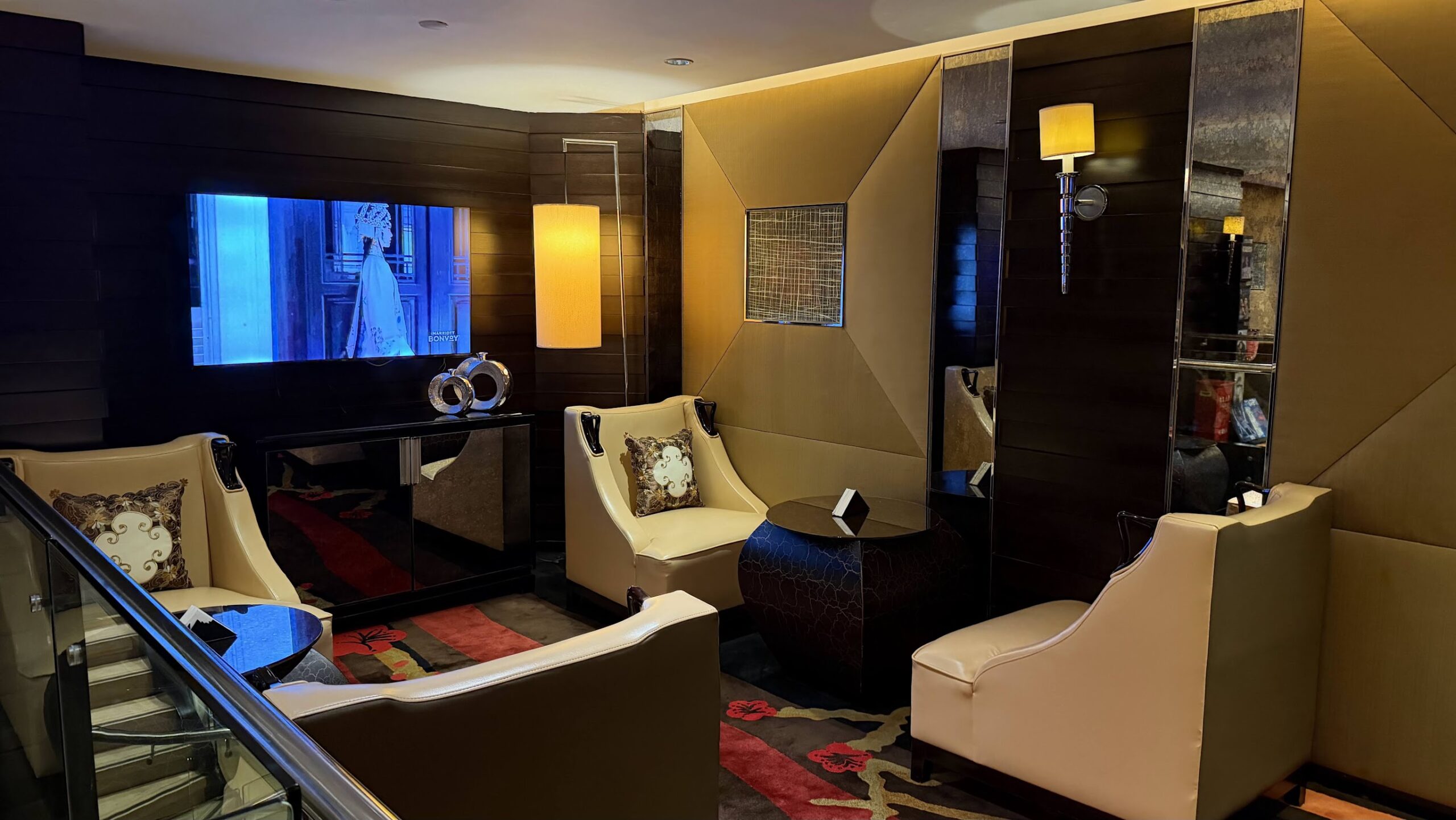
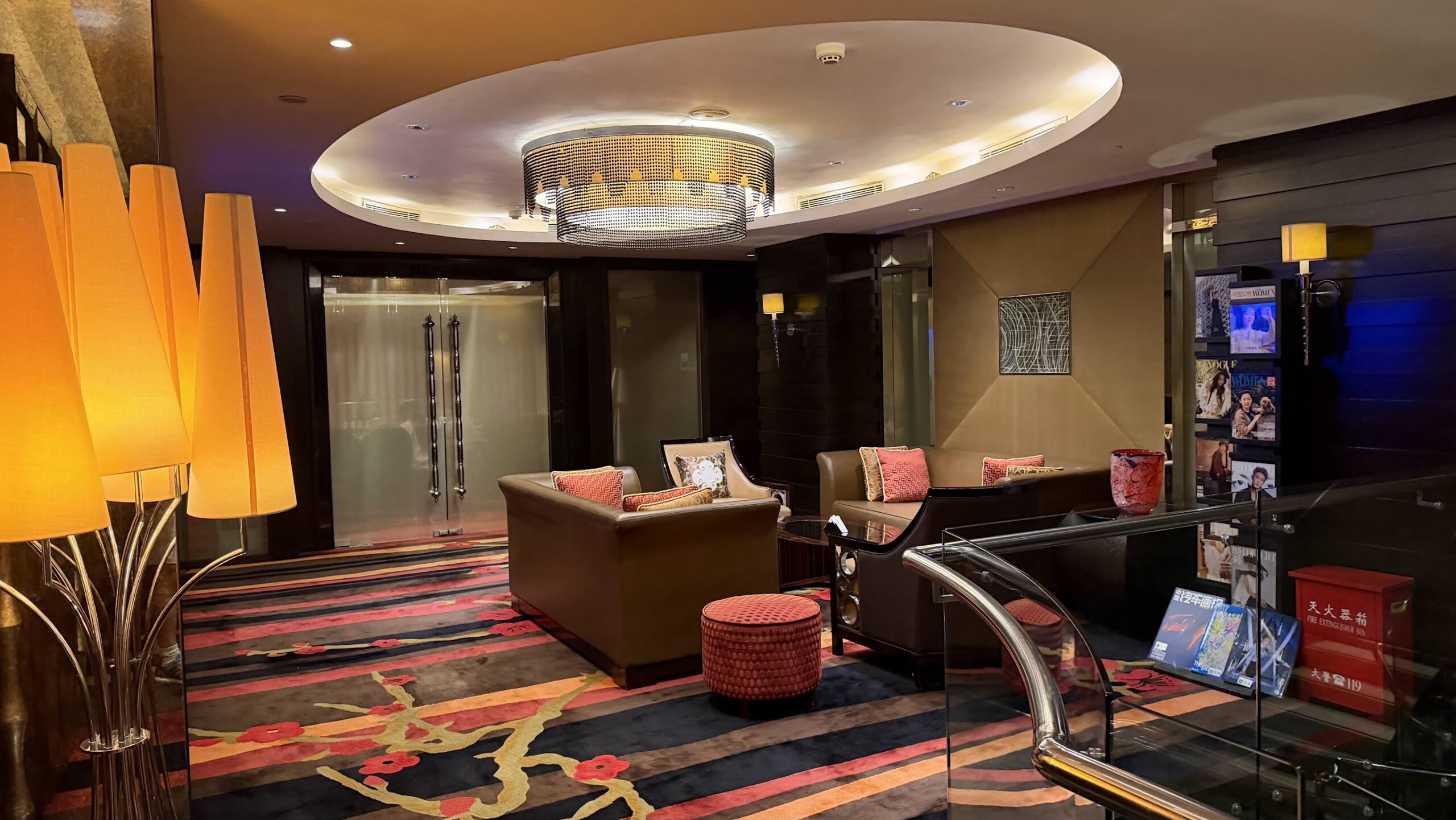
The executive lounge is on the 17th floor and occupies two levels. Most guests naturally gravitated towards the lower level, where the seats have the better city views and are closer to the food. The upper floor was much less popular, but it also did not offer the same outlook, so moving upstairs felt like accepting a weaker seat simply to escape the crowd.
Afternoon tea
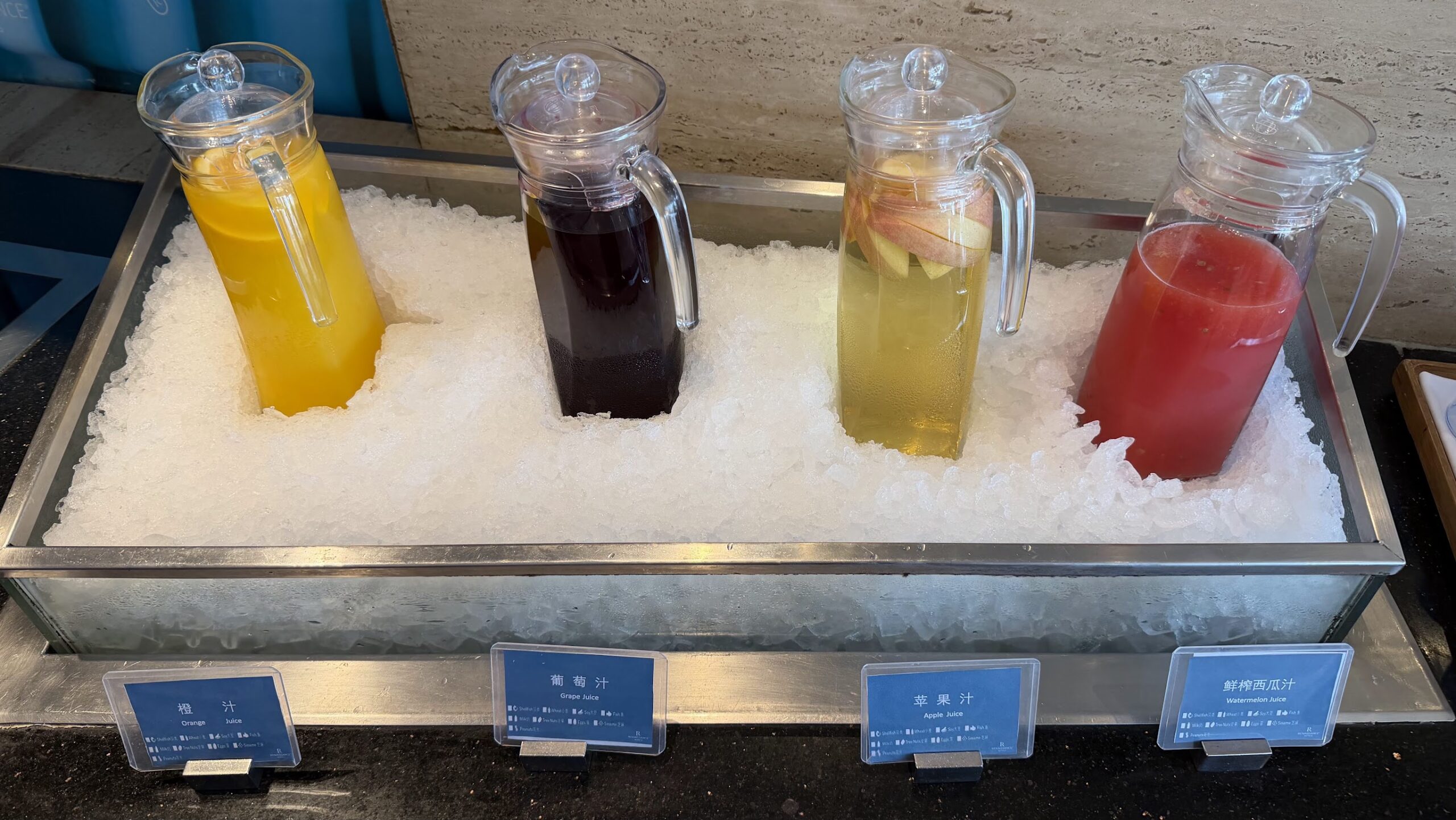
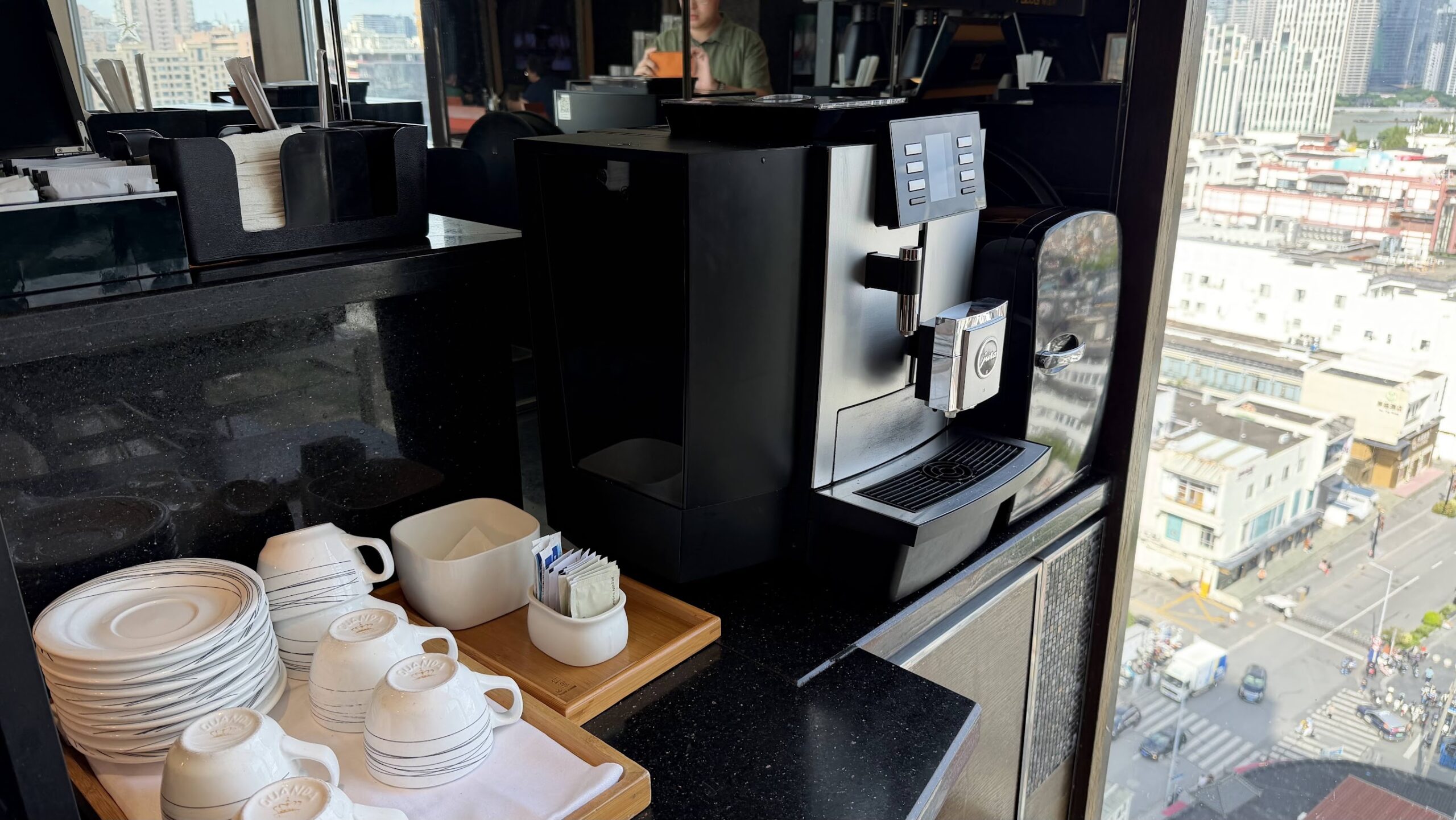
Afternoon tea covered more ground than just tea and cake. The drinks included orange juice, grape juice, apple juice and watermelon juice, along with Coca-Cola, ginger ale and coffee from a self-service machine.
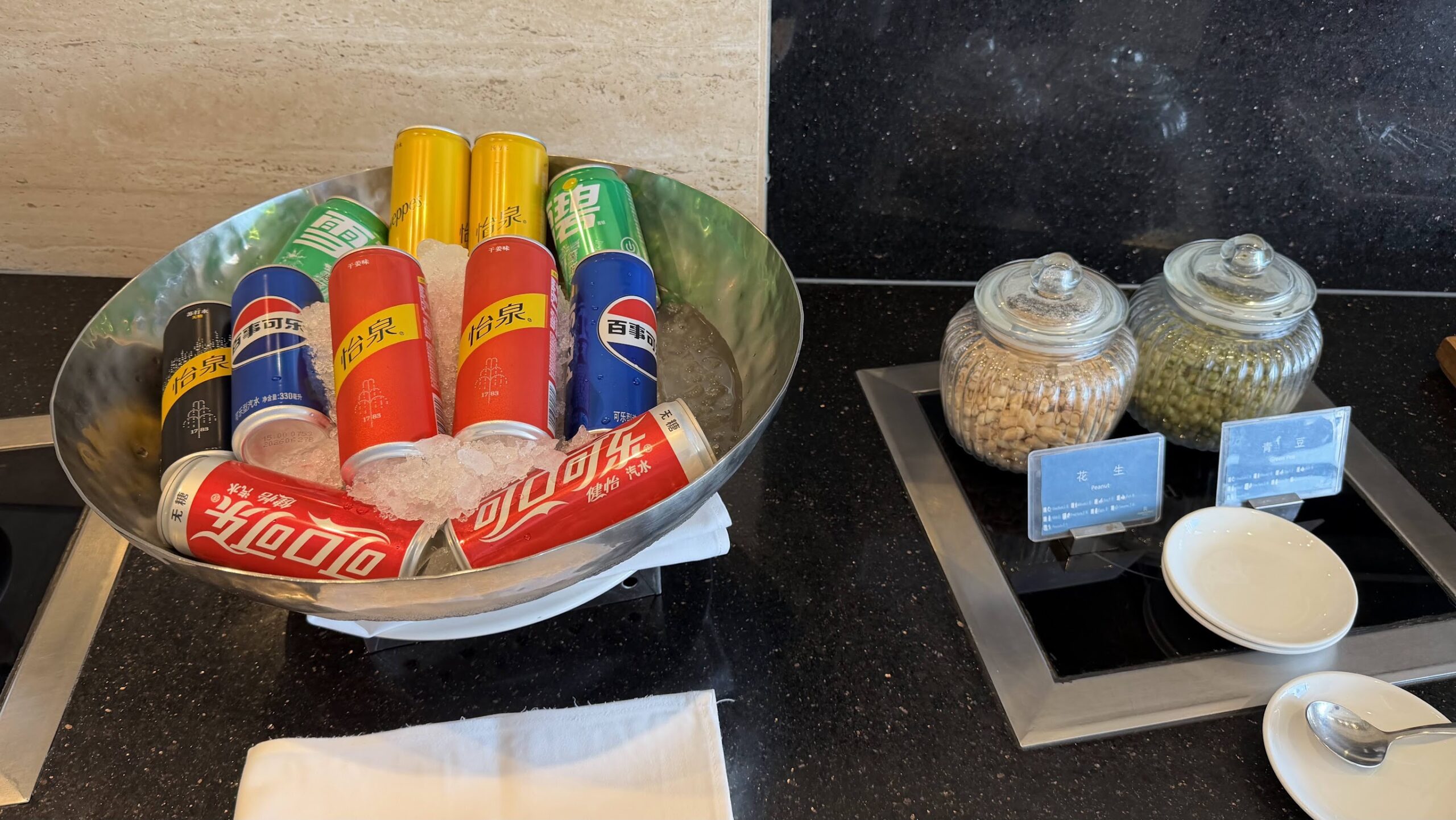
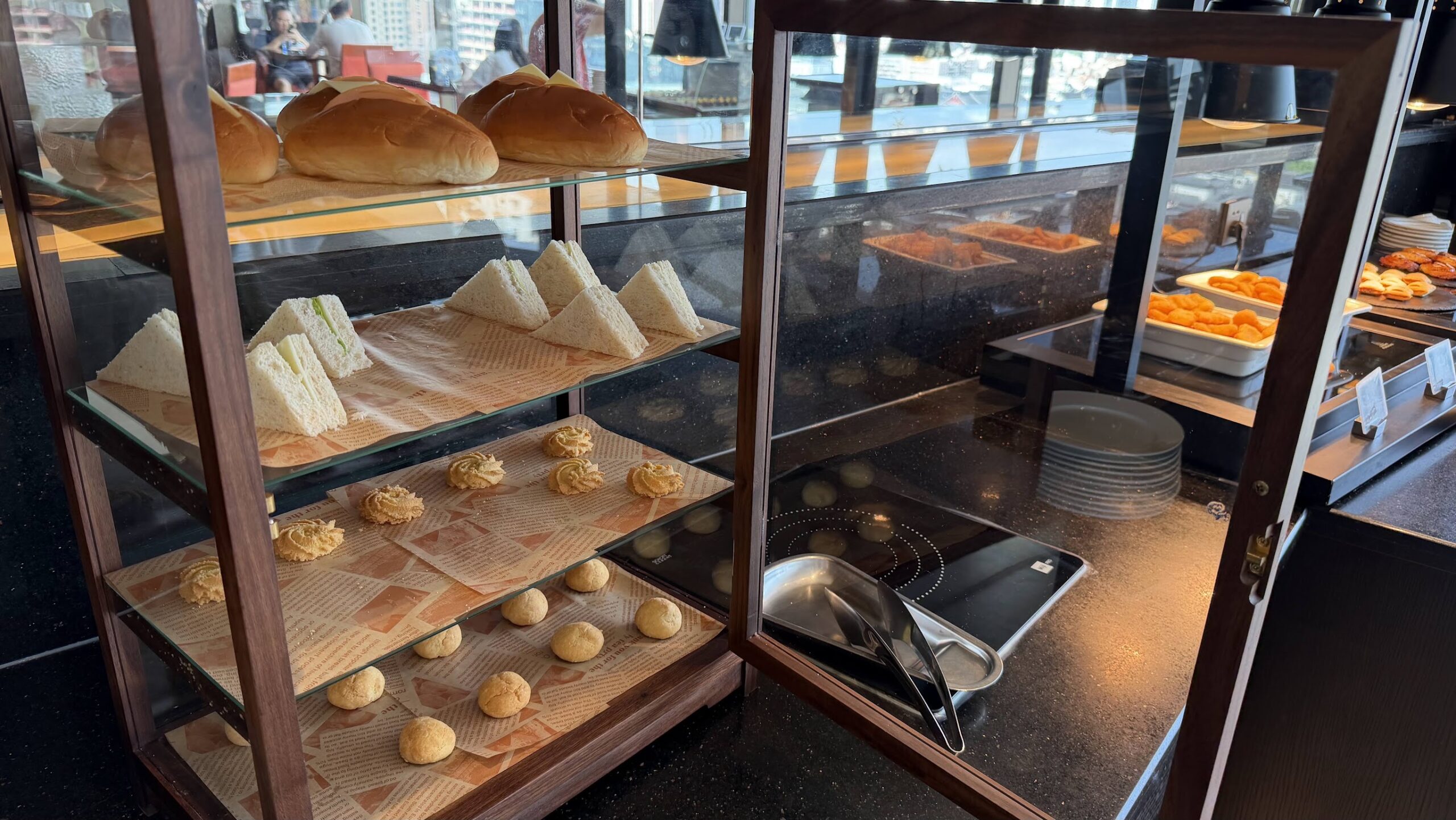
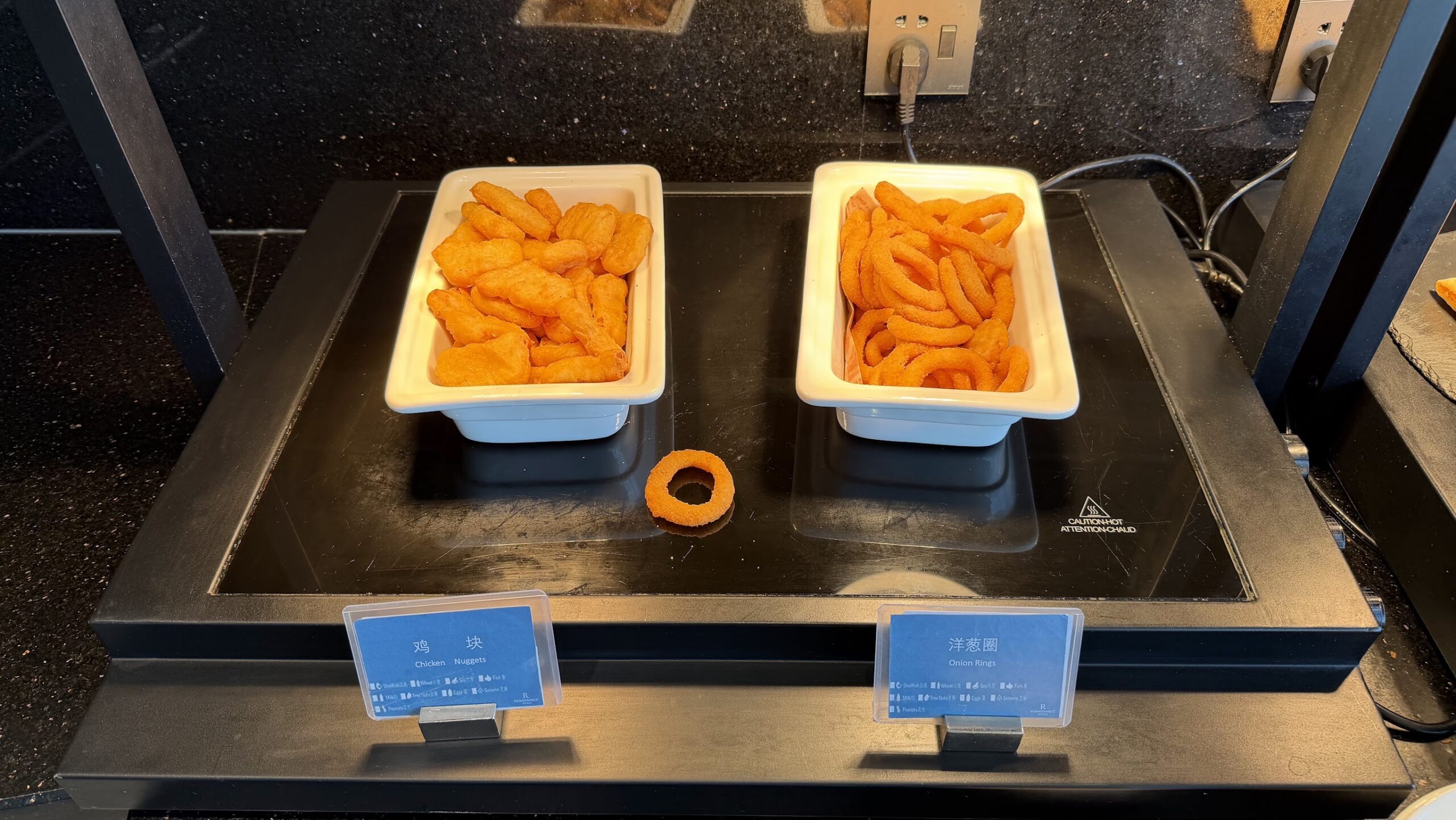
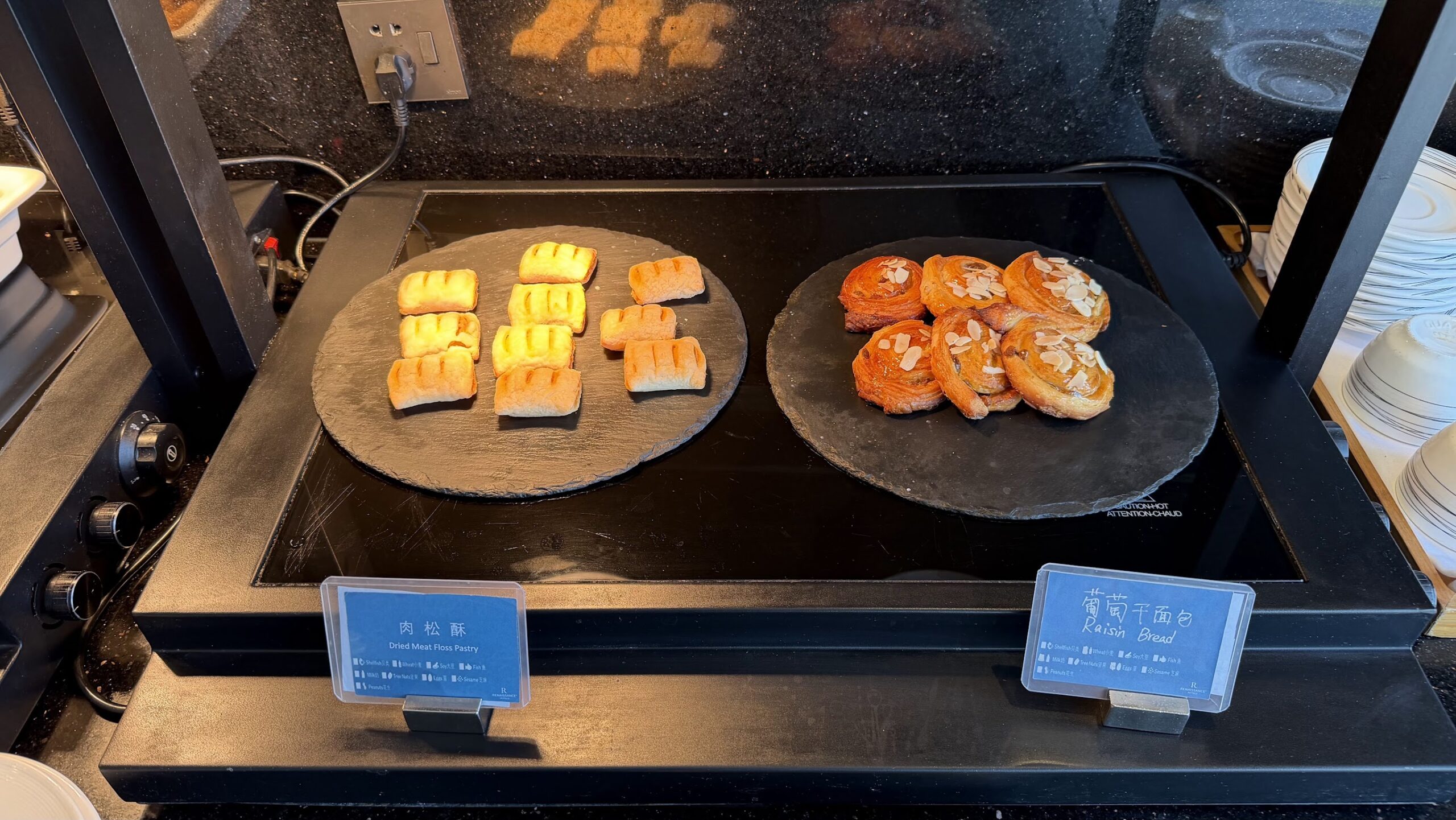
The light snacks started with peanuts, green peas, butter cookies, sandwiches and buns. There were also several hot and savoury items, including chicken nuggets, onion rings, dried meat floss pastries and raisin bread.
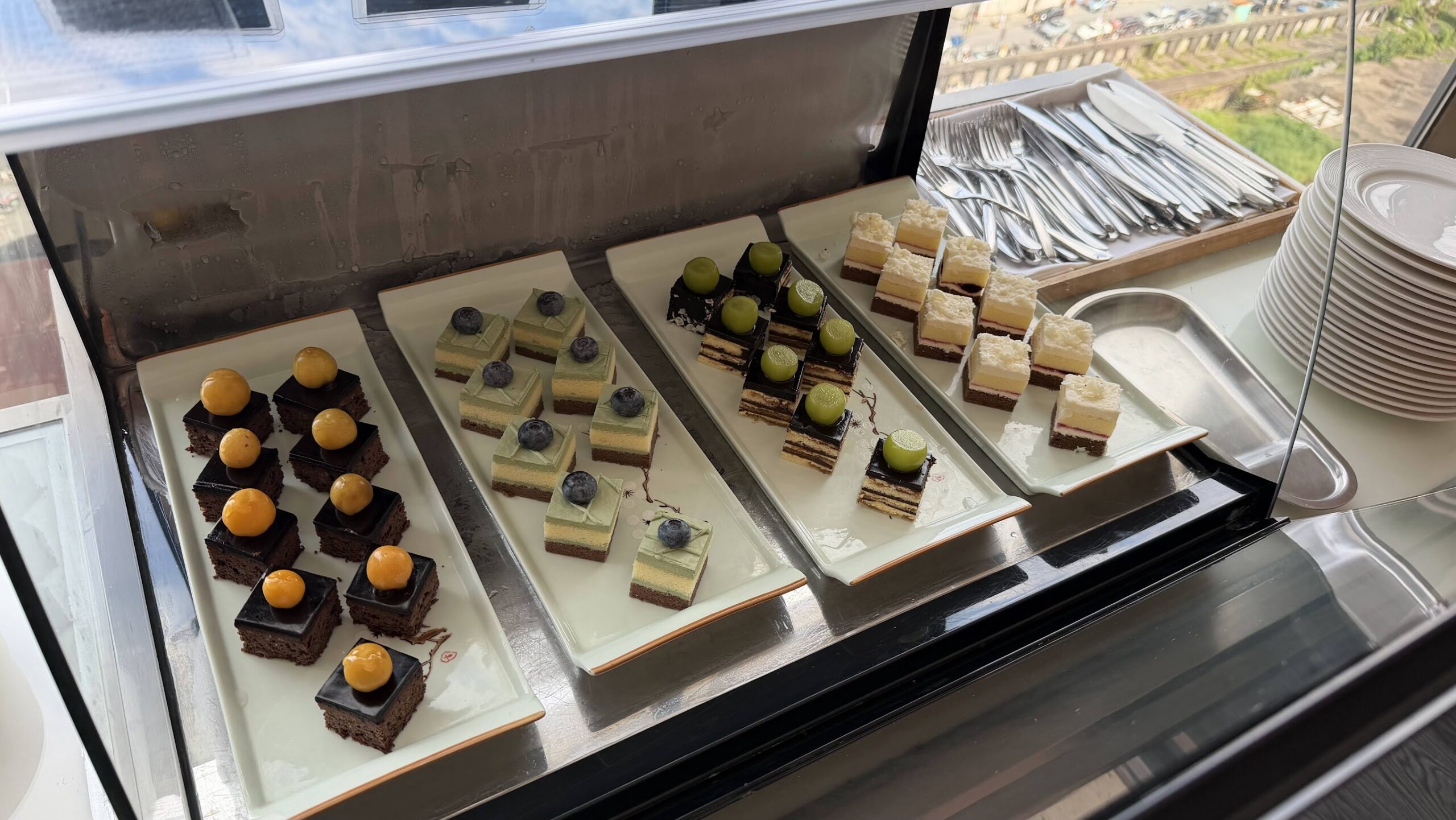
For dessert, the lounge put out opera cake, chocolate cake and several other small cakes. It was enough for a proper snack between lunch and dinner, though this was not an elaborate hotel afternoon tea with tiered stands and table service. The food was self-service, straightforward and useful if you were already back at the hotel.
Evening canapés
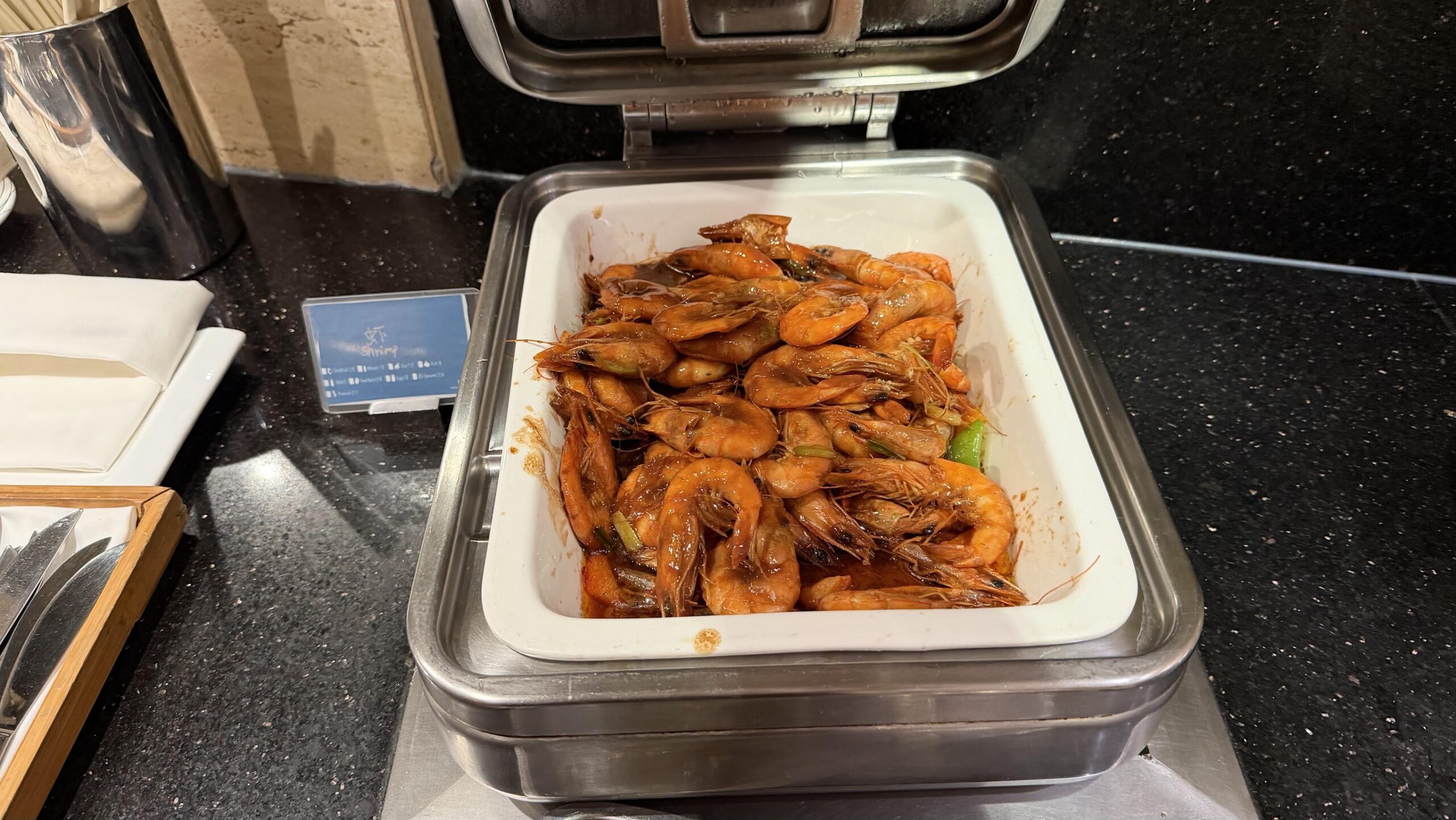
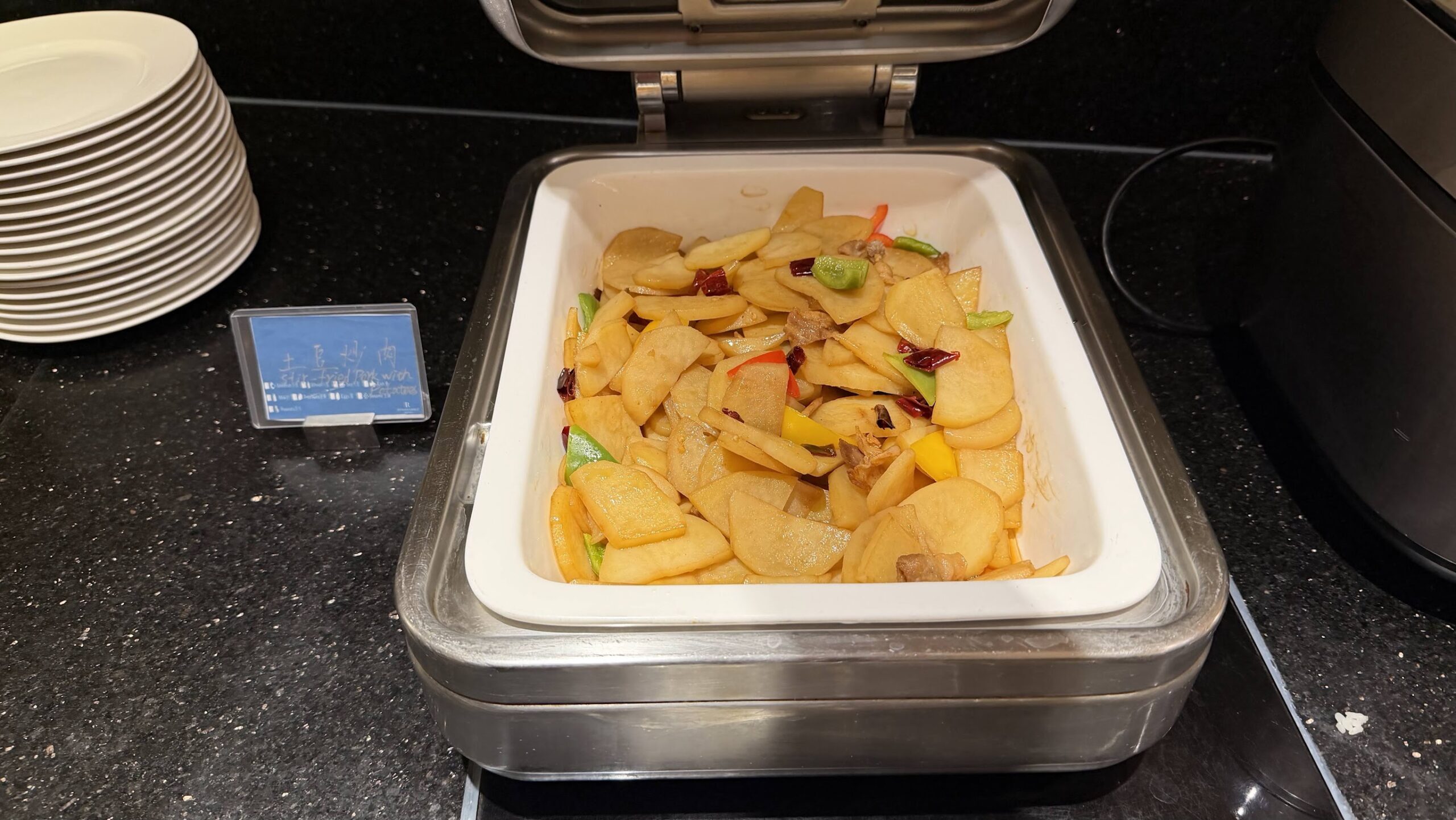
The evening selection was considerably larger. The Asian side included vegetable steamed buns, sweet corn soup, chicken skewers on one of the nights, prawns, stir-fried pork with potatoes and rice.
There was also cream of carrot soup, rotini and mashed potatoes among the more Western choices.
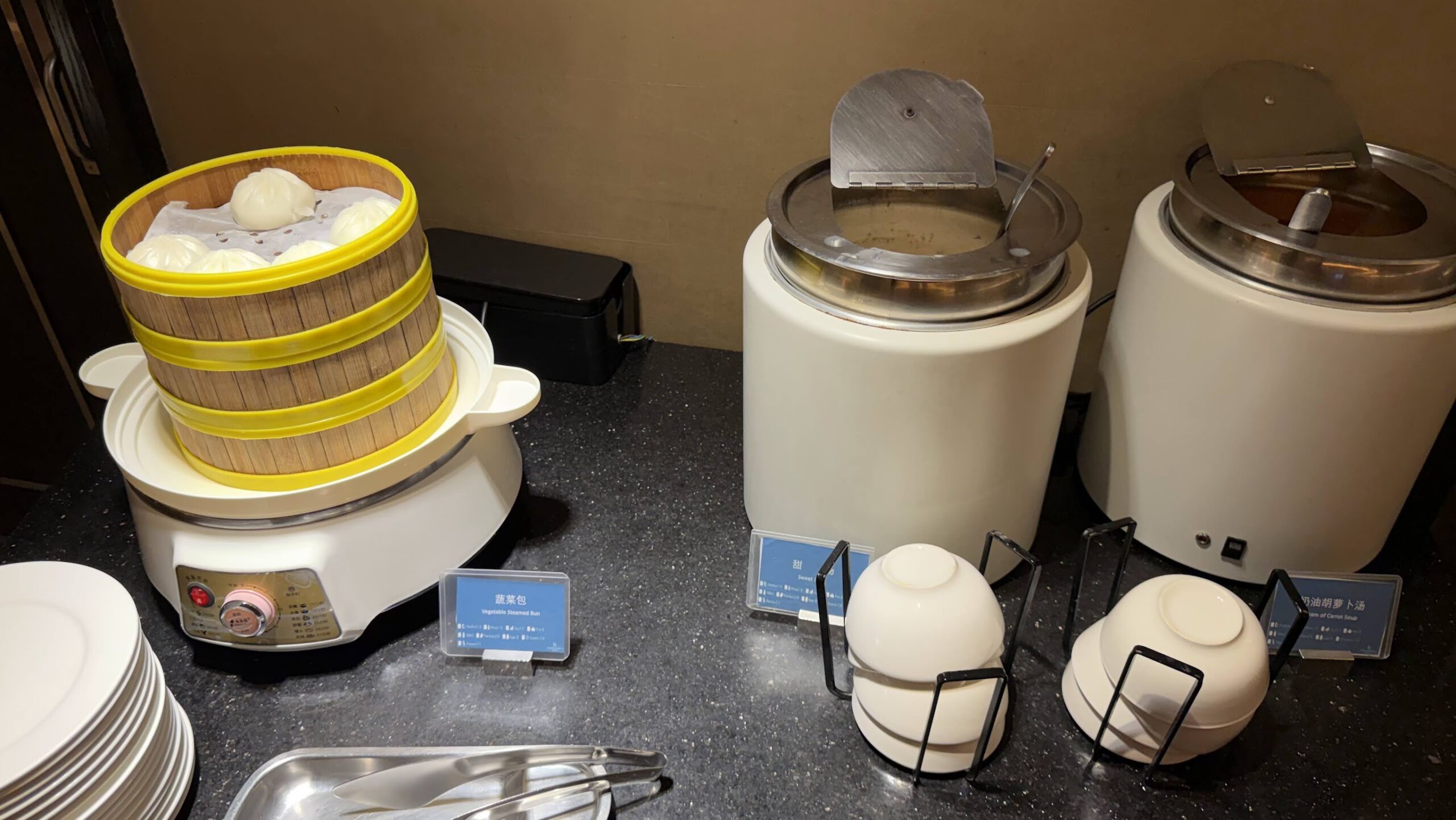
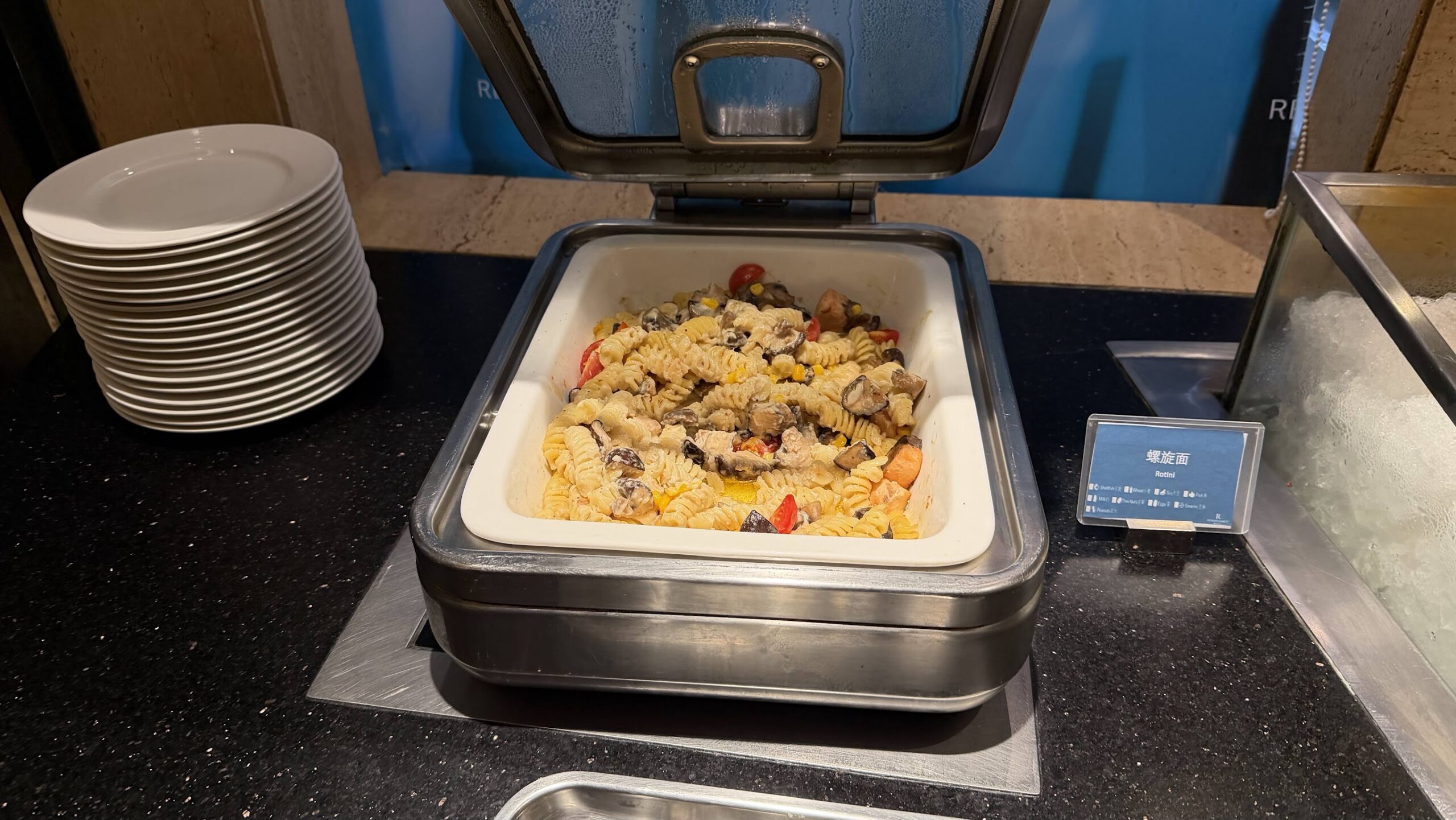
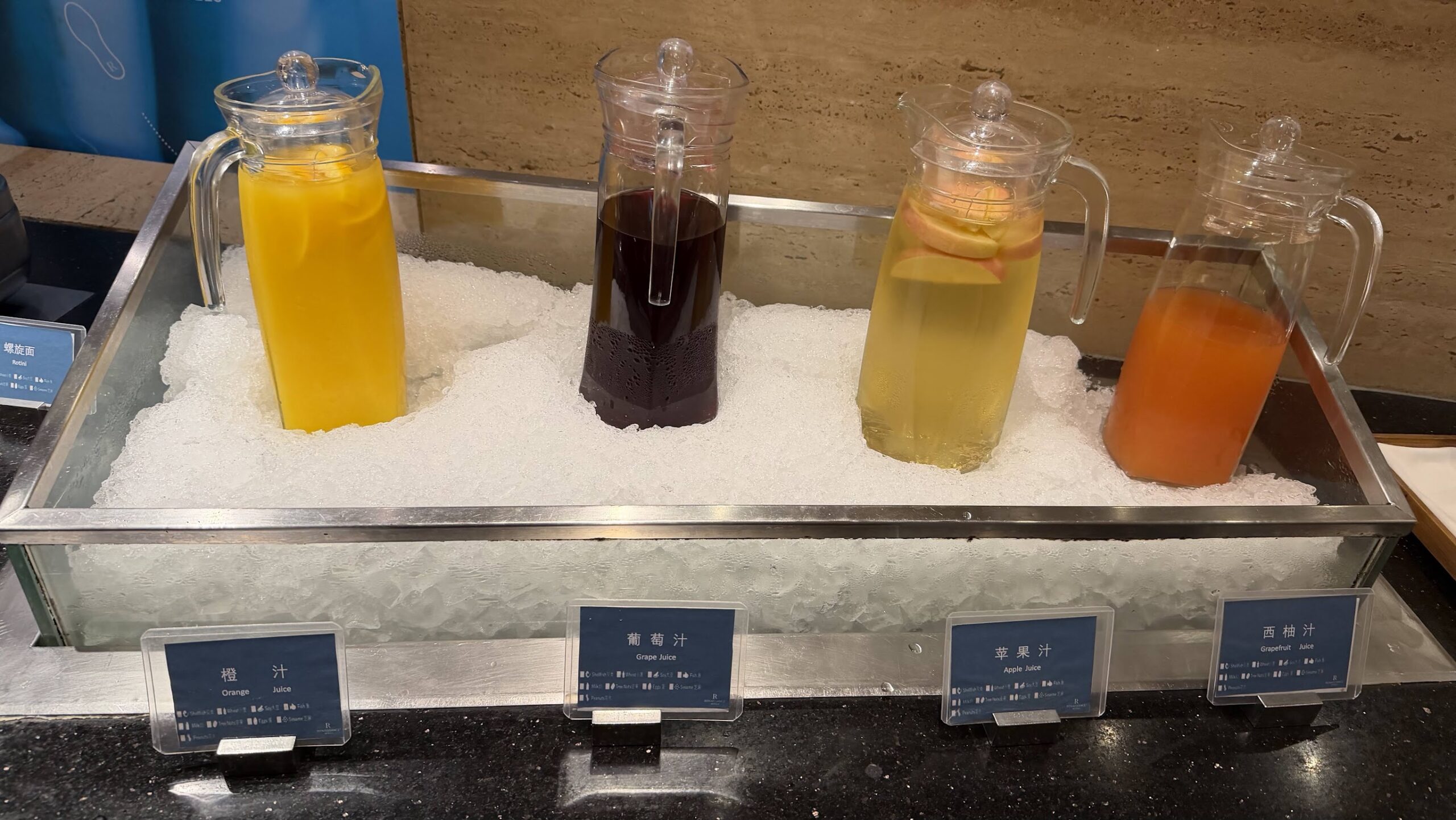
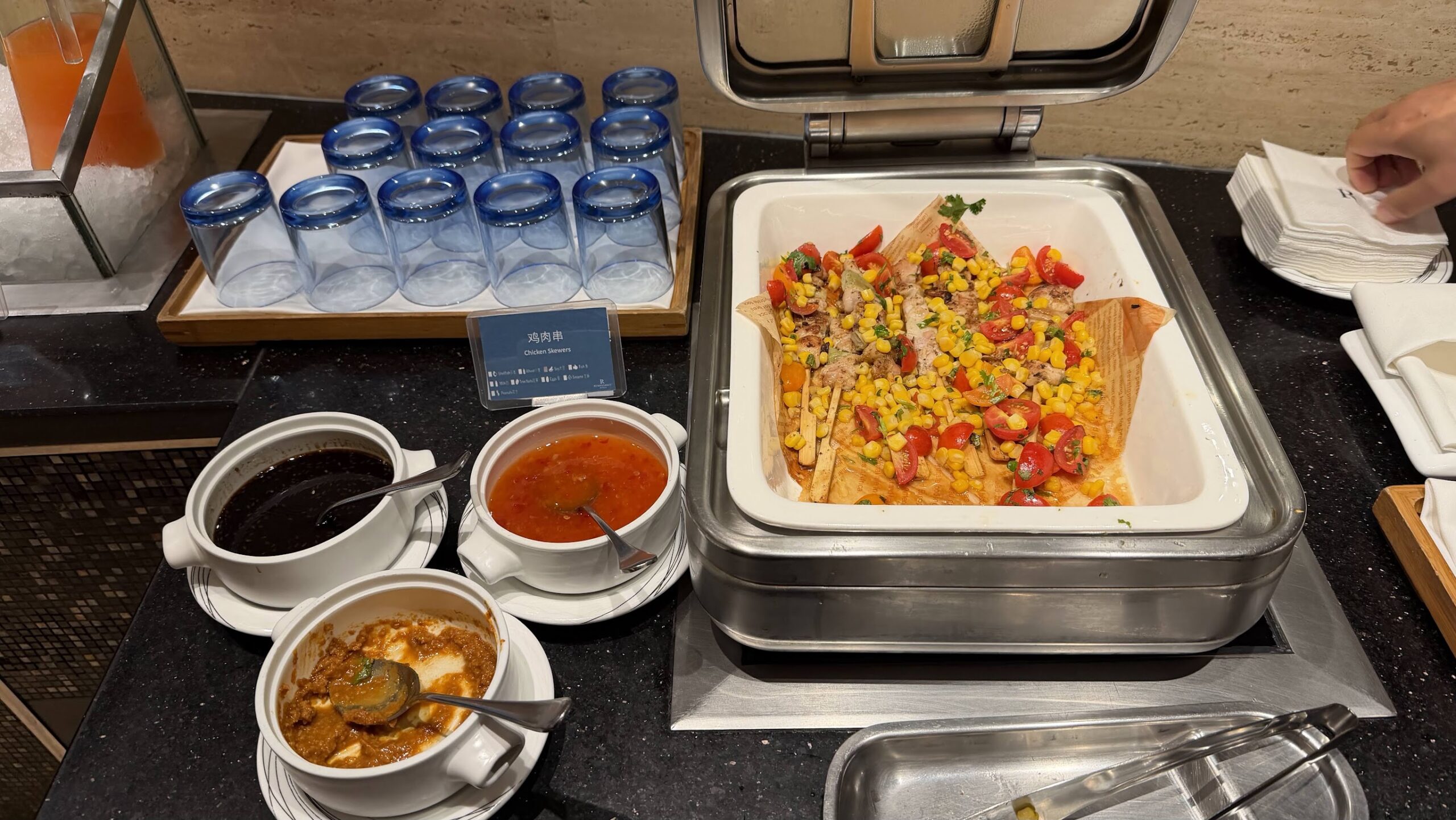
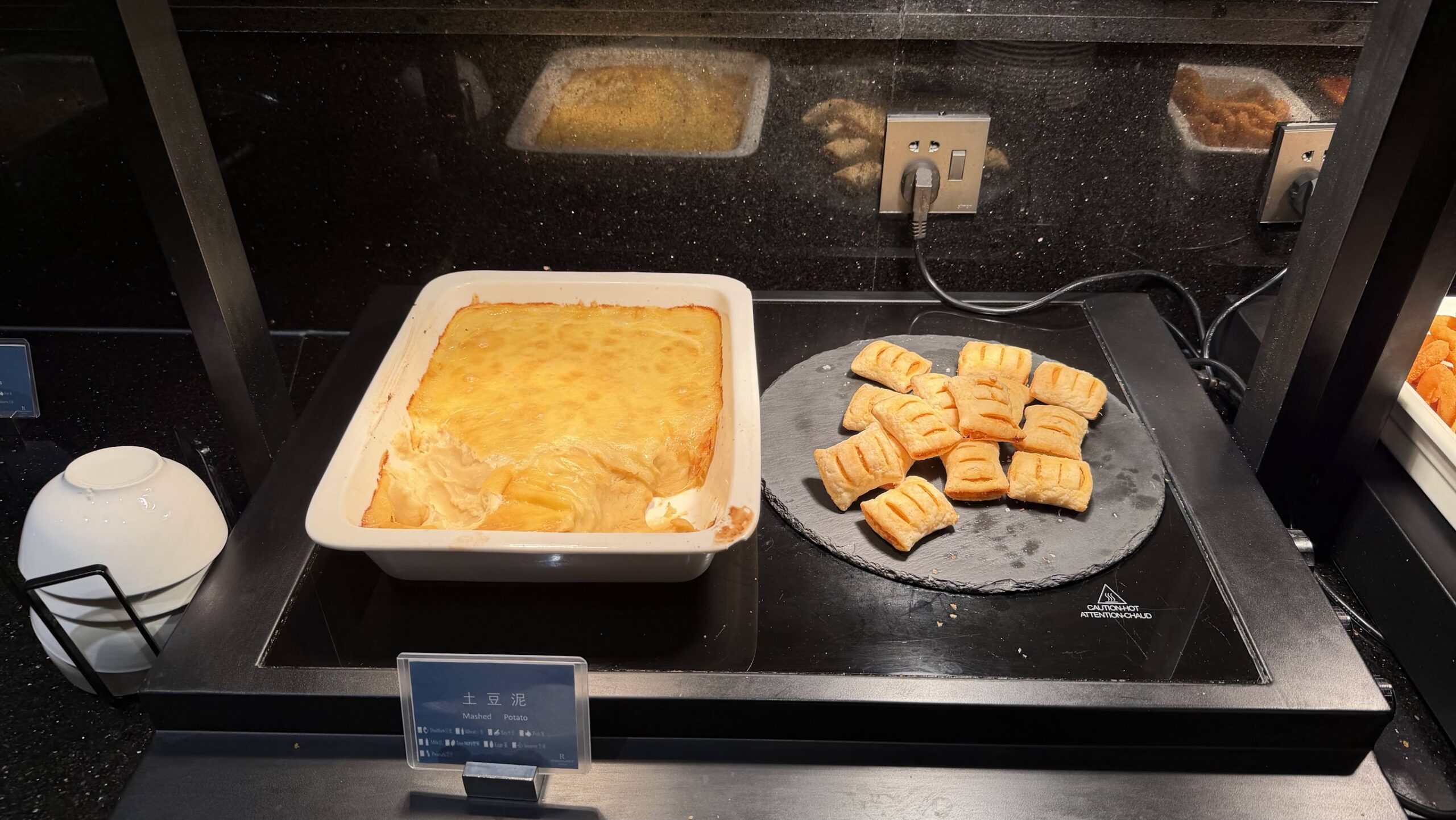
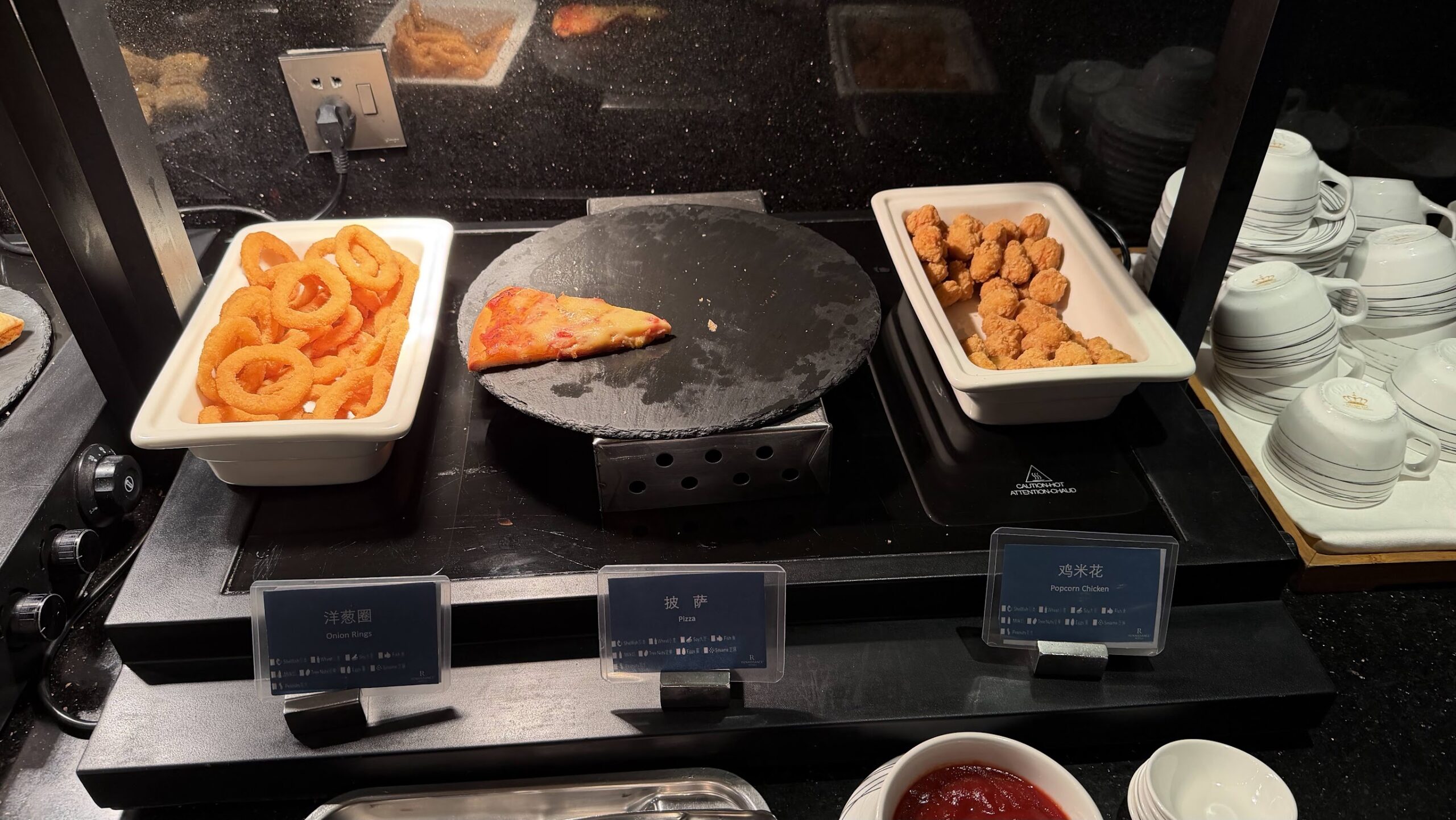
The finger food included pizza slices, popcorn chicken and more onion rings, while some of the pastries from afternoon tea appeared again.
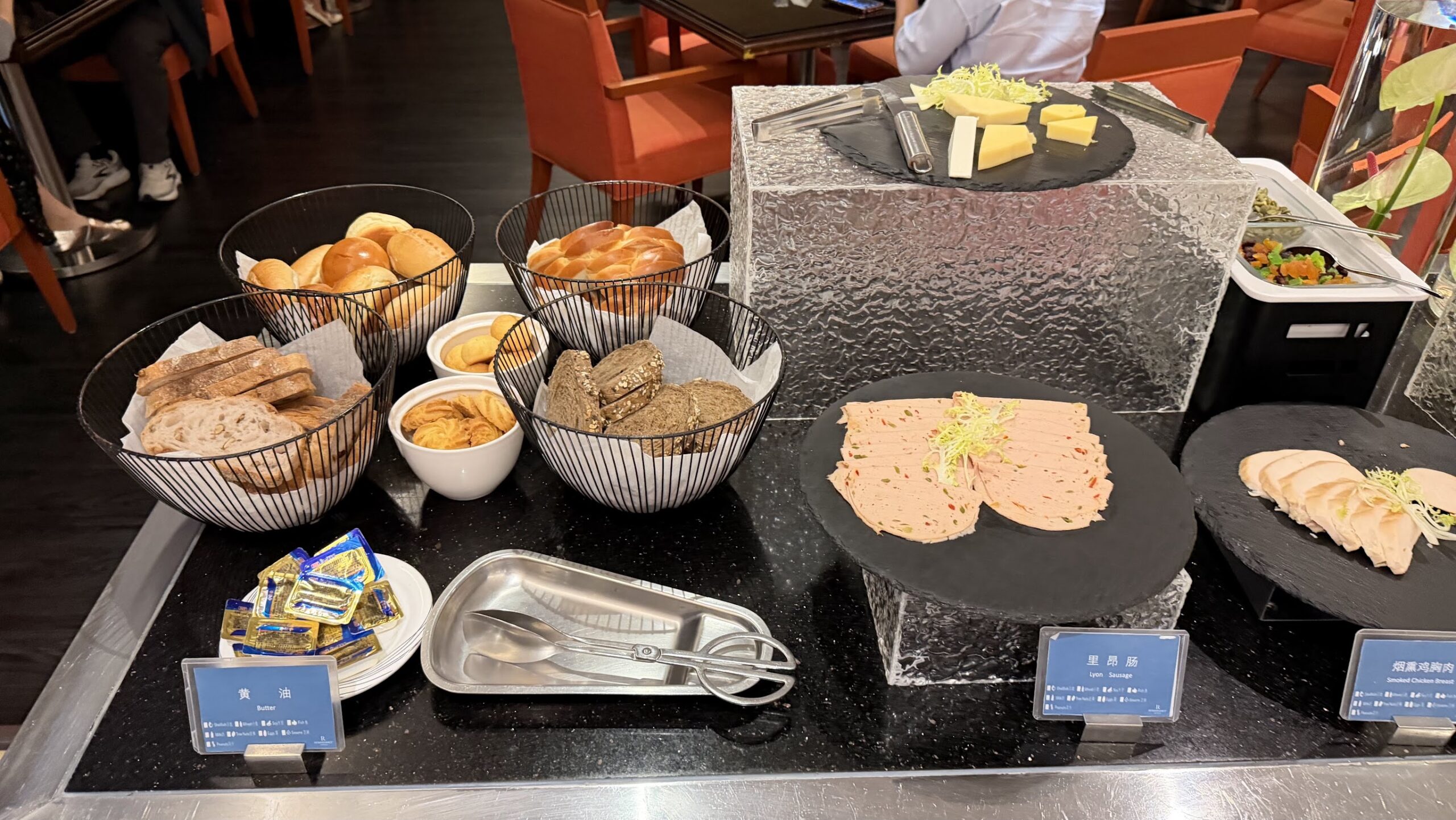
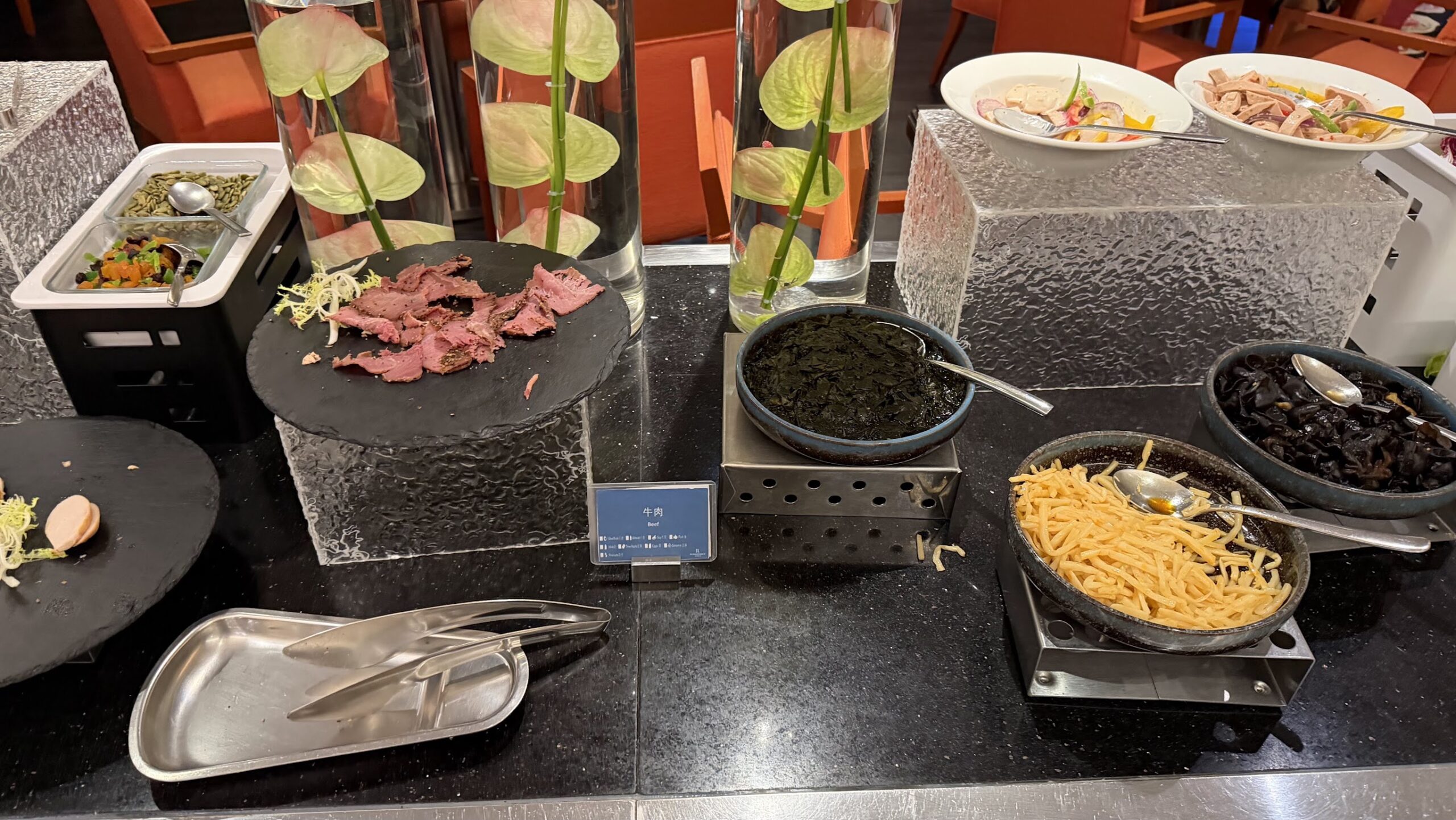
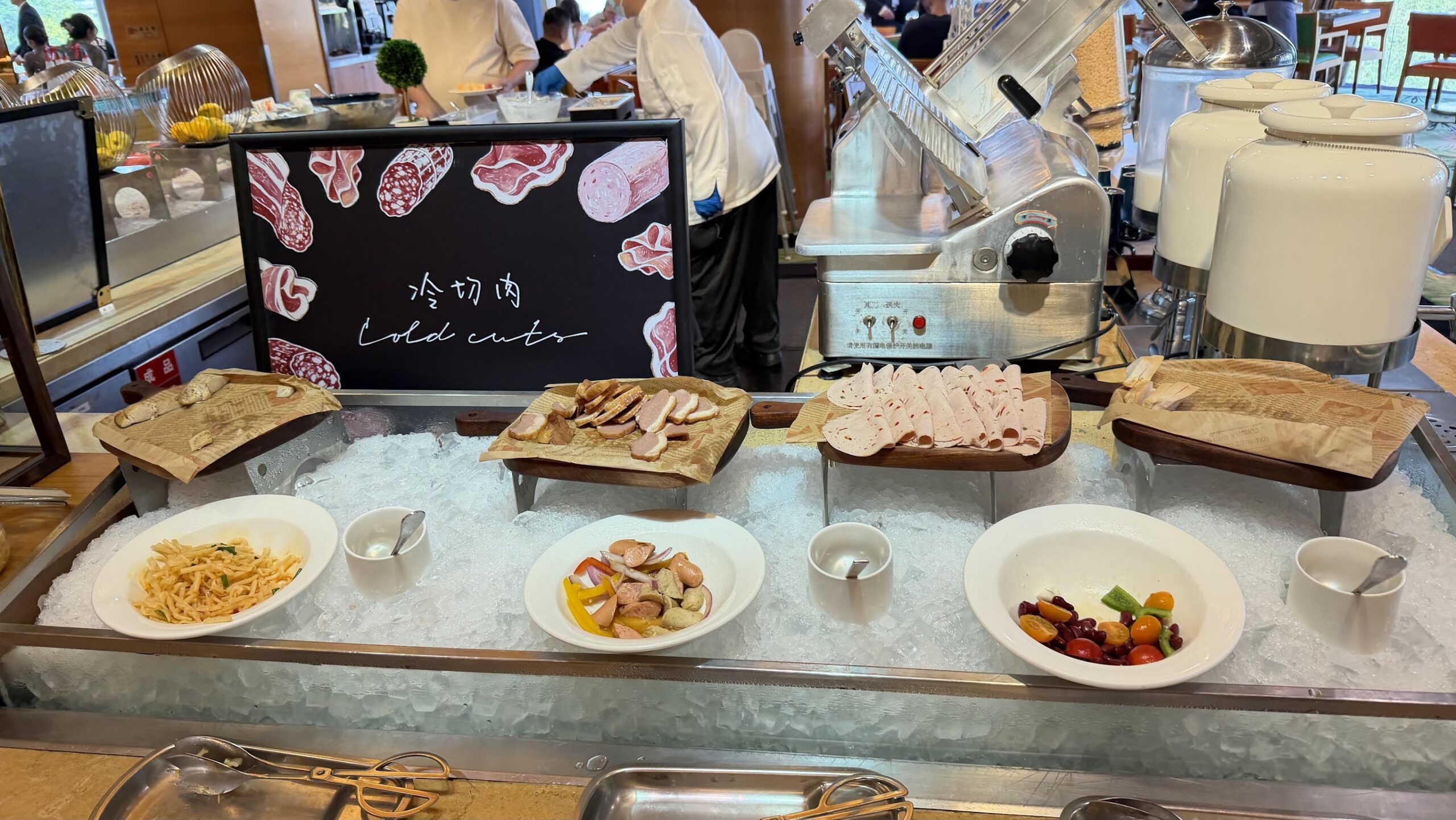
The cold selection had Lyon sausage, smoked chicken breast, sliced beef, mixed greens and lettuce, with sesame paste and Caesar dressing among the dressings. Bread and butter were available alongside them.
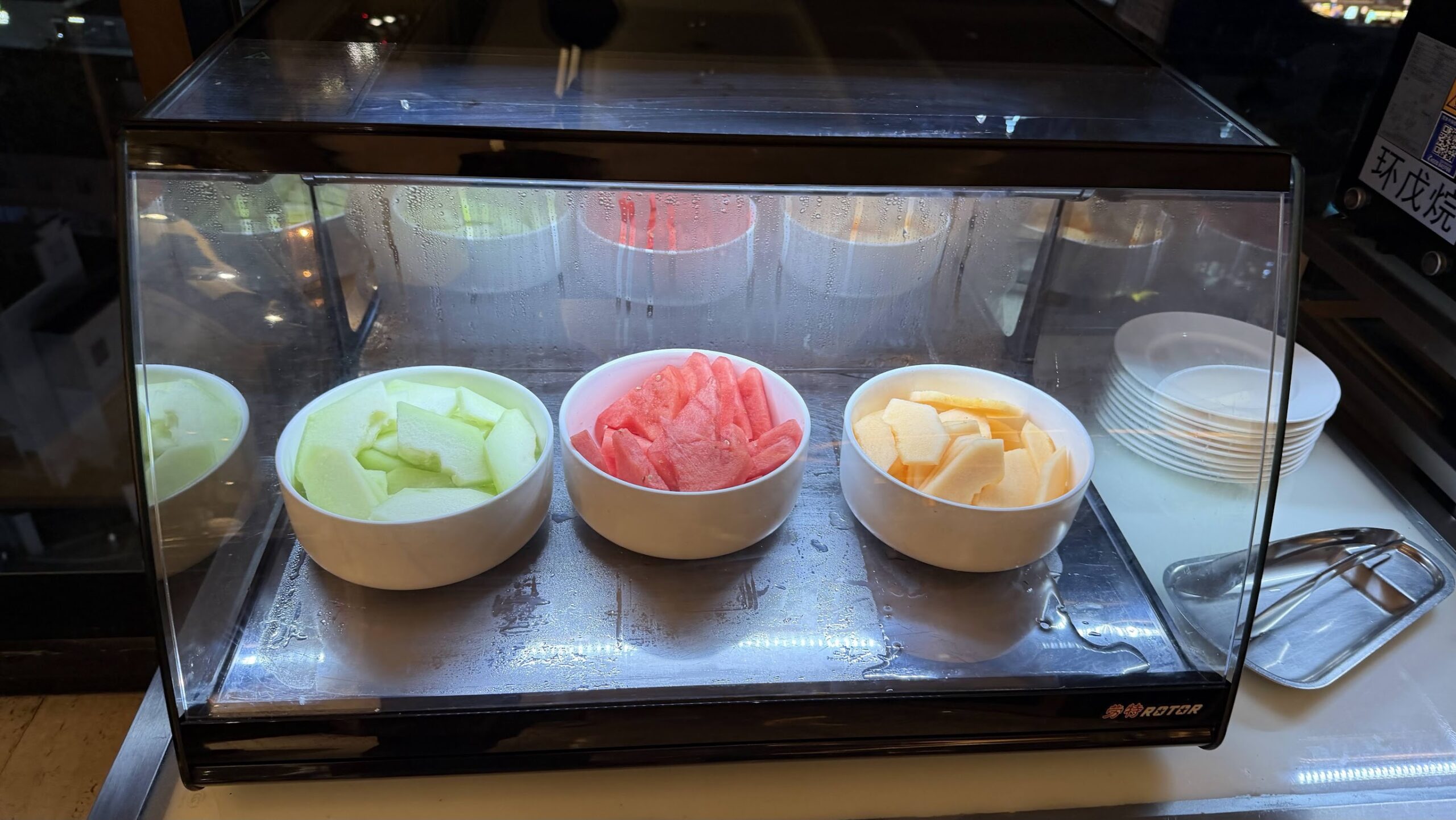
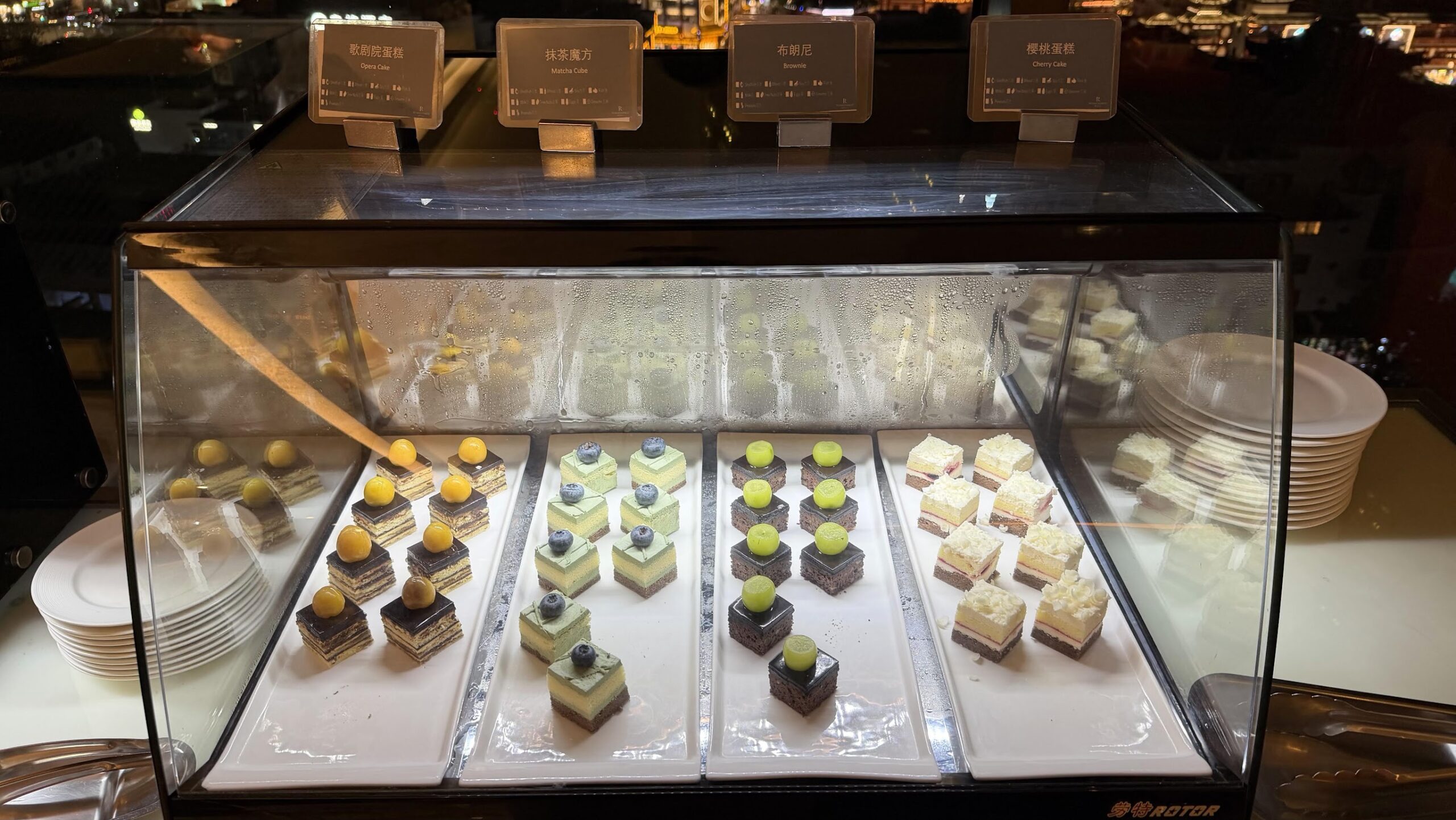
Dessert brought back the opera cake, joined by matcha cake, brownies, cherry cake and sliced fruit. There was obvious overlap with afternoon tea, but the soups, hot dishes and cold cuts made the evening service much more substantial. You could put together a light dinner here, even if I would still go outside for a proper Shanghai meal when Yu Garden is around the corner.
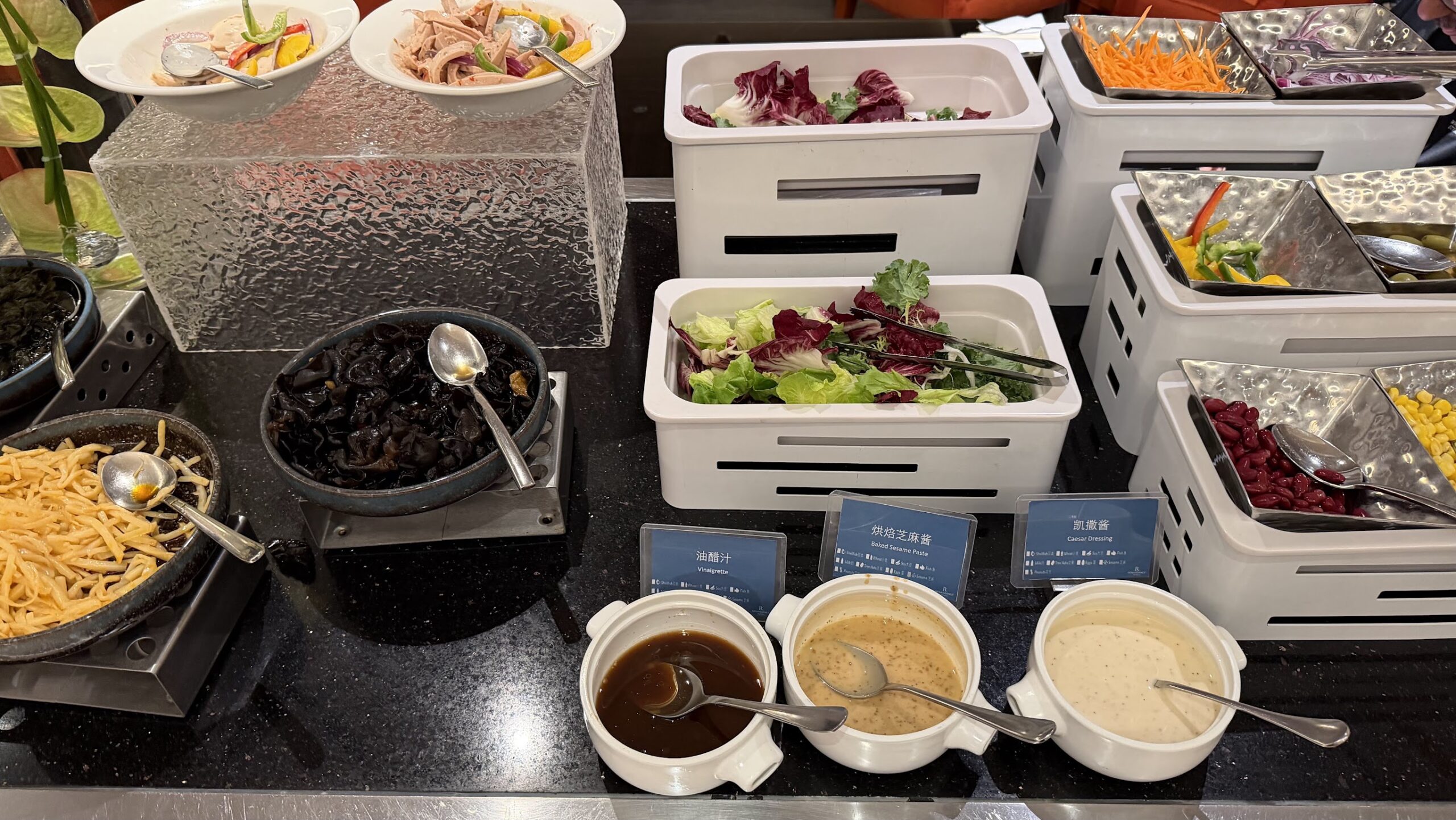
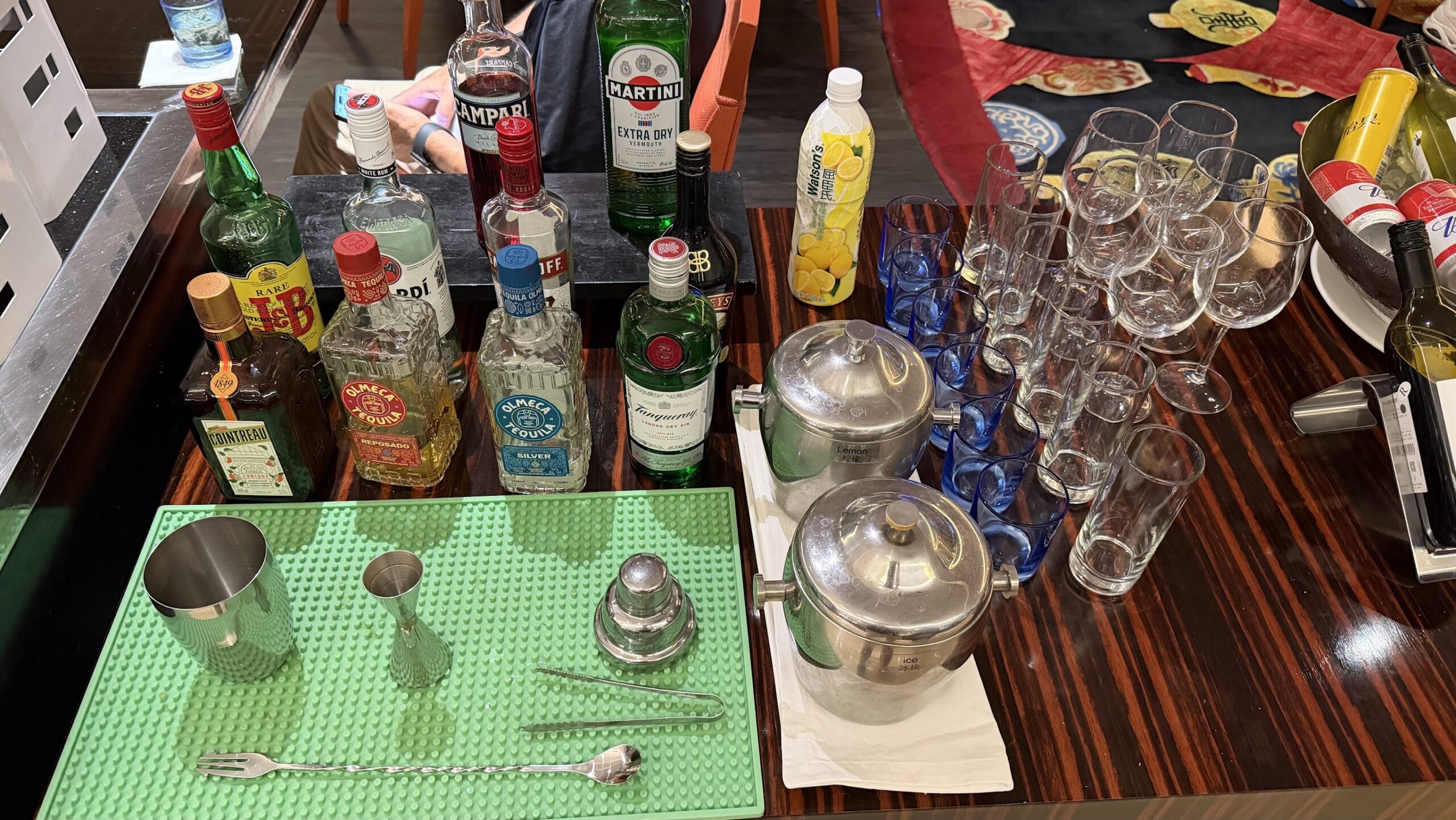
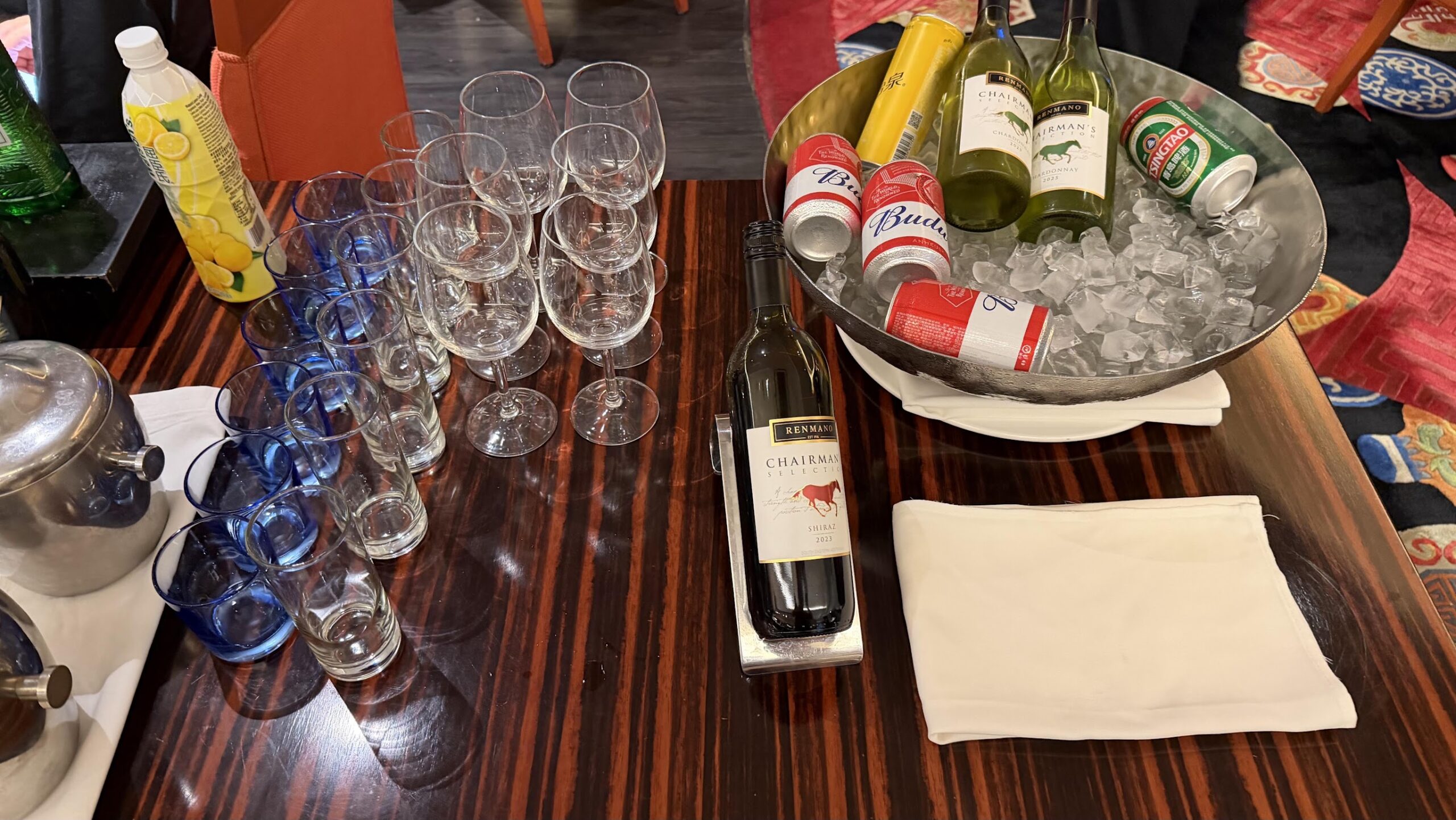
The alcohol selection included Cointreau, Olmeca tequila, Bacardí rum, Smirnoff vodka, Tanqueray gin, J&B whisky, Campari, Baileys and Martini Extra Dry vermouth. The wines were Renmano Chairman’s Selection Shiraz and Chardonnay, with Tsingtao and Budweiser beer on ice.
Facilities
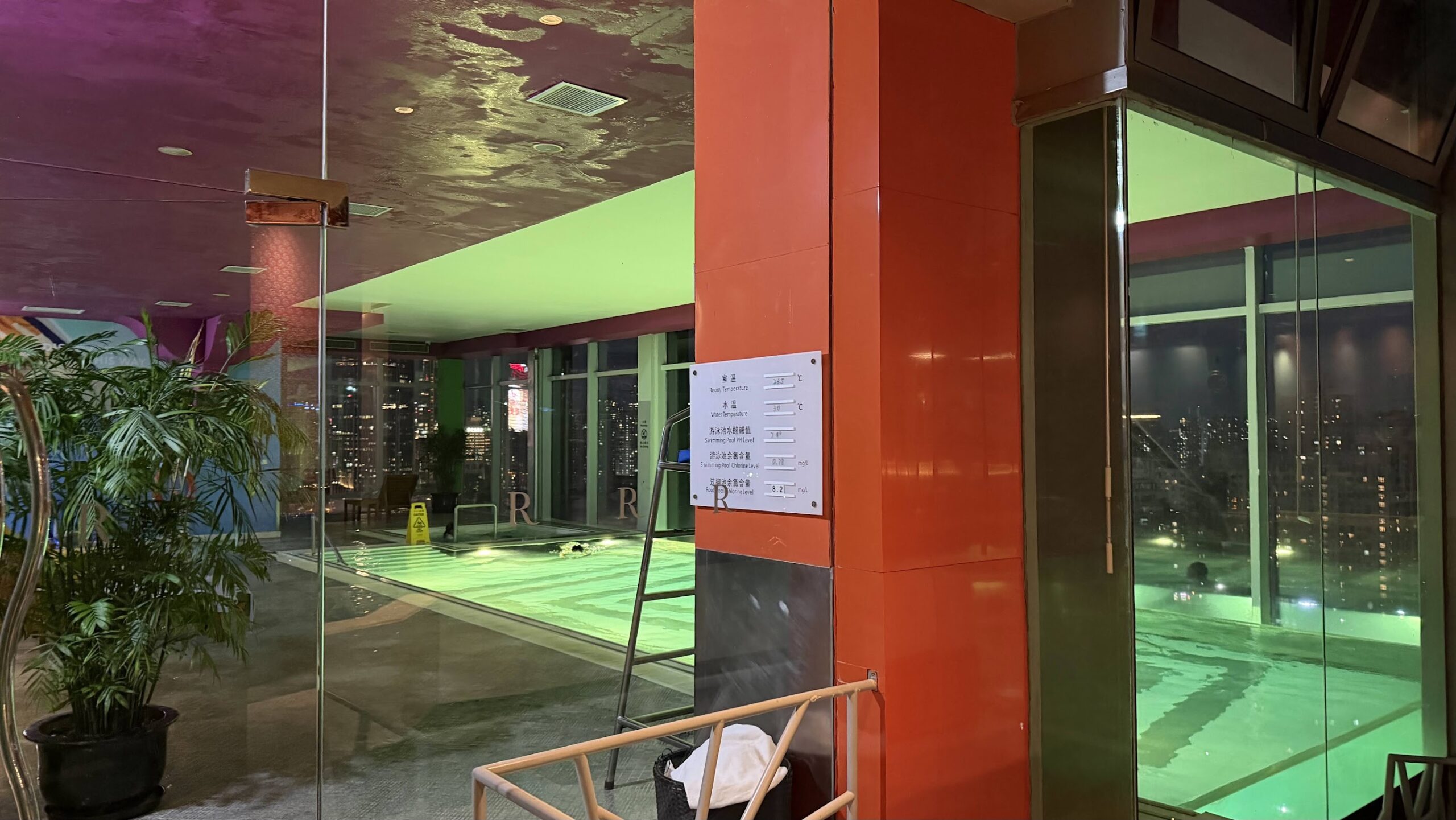
Swimming pool
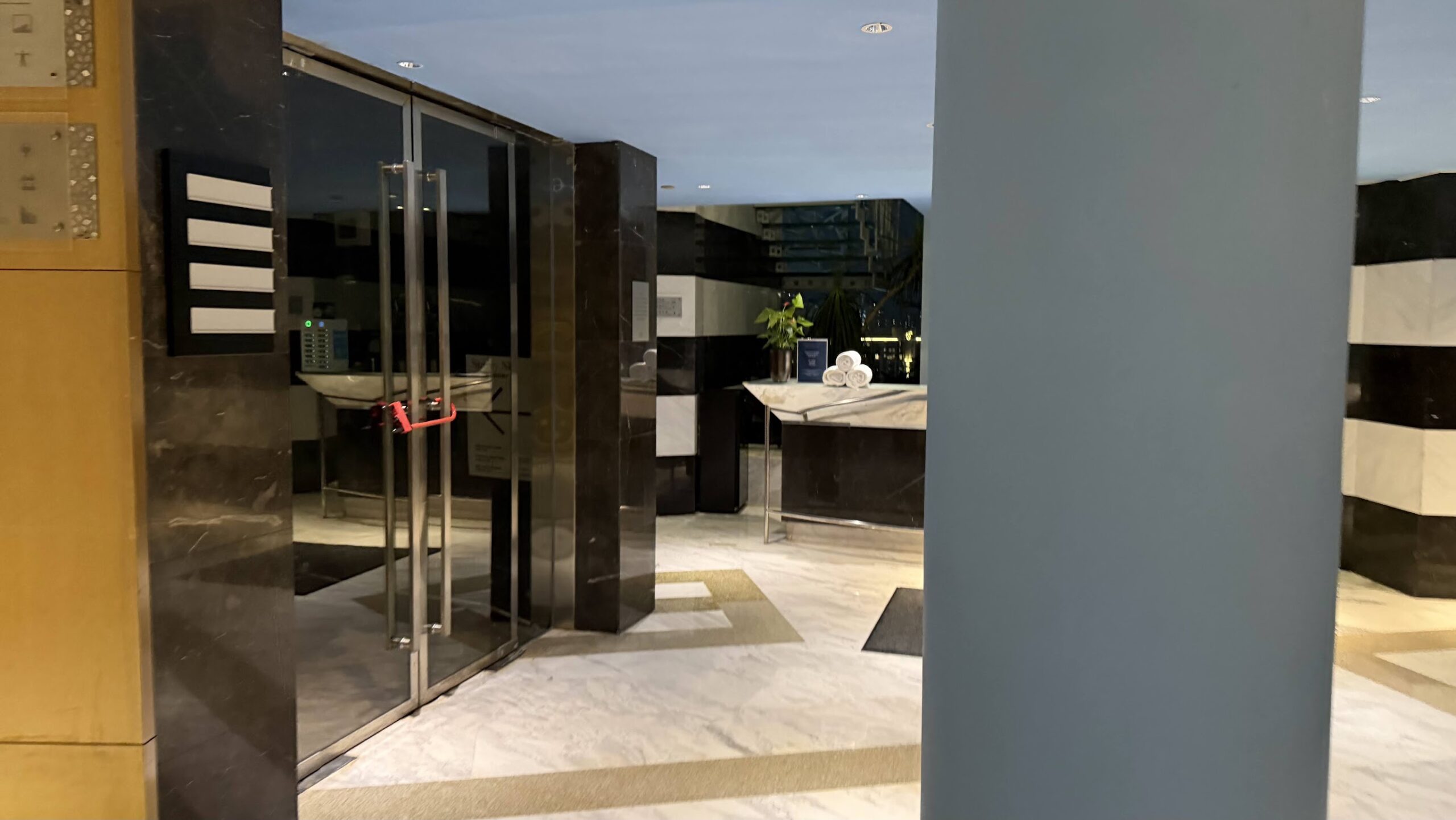
The indoor swimming pool has large windows overlooking the city, with the surrounding buildings lit up at night.
Gym
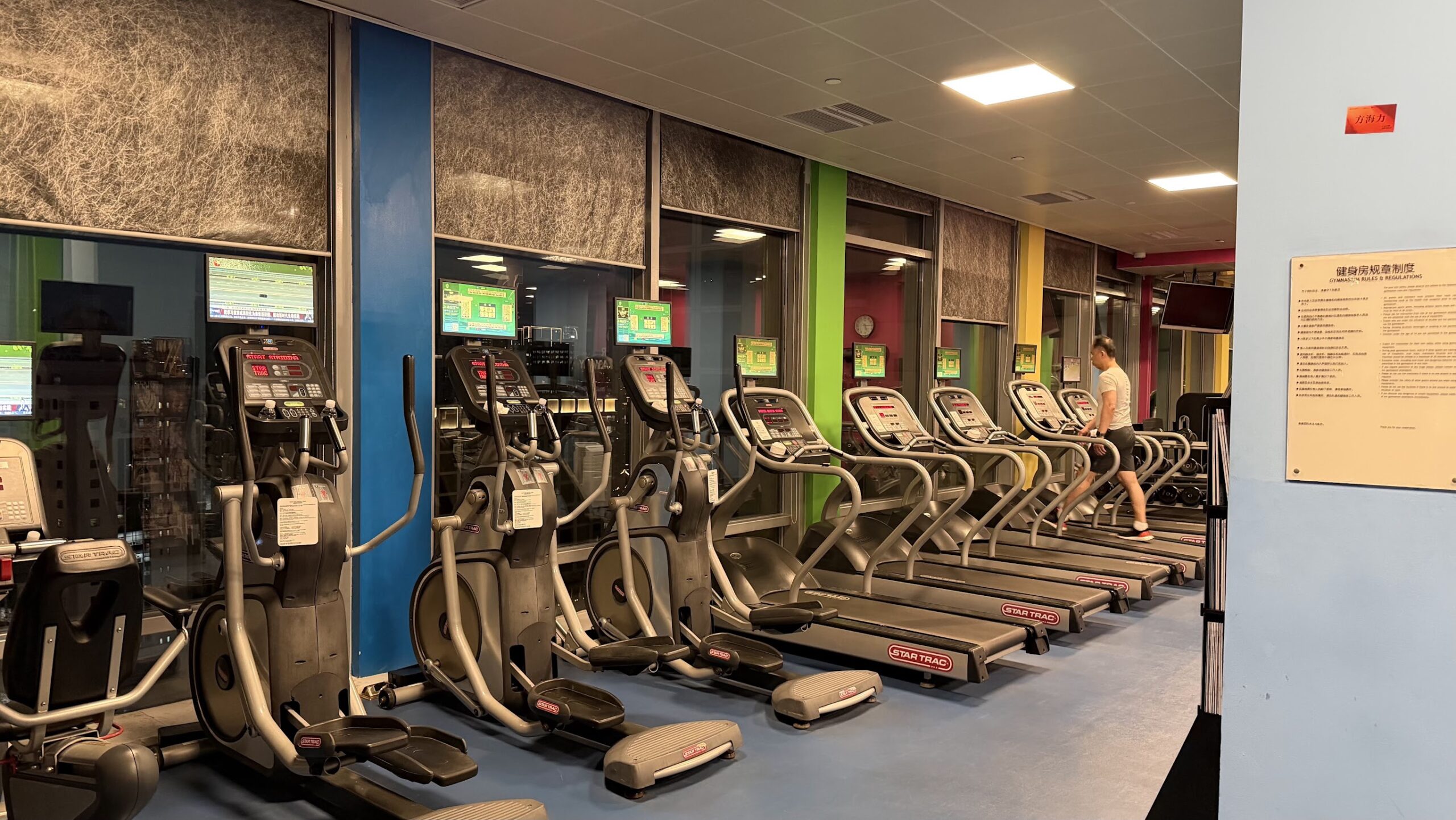
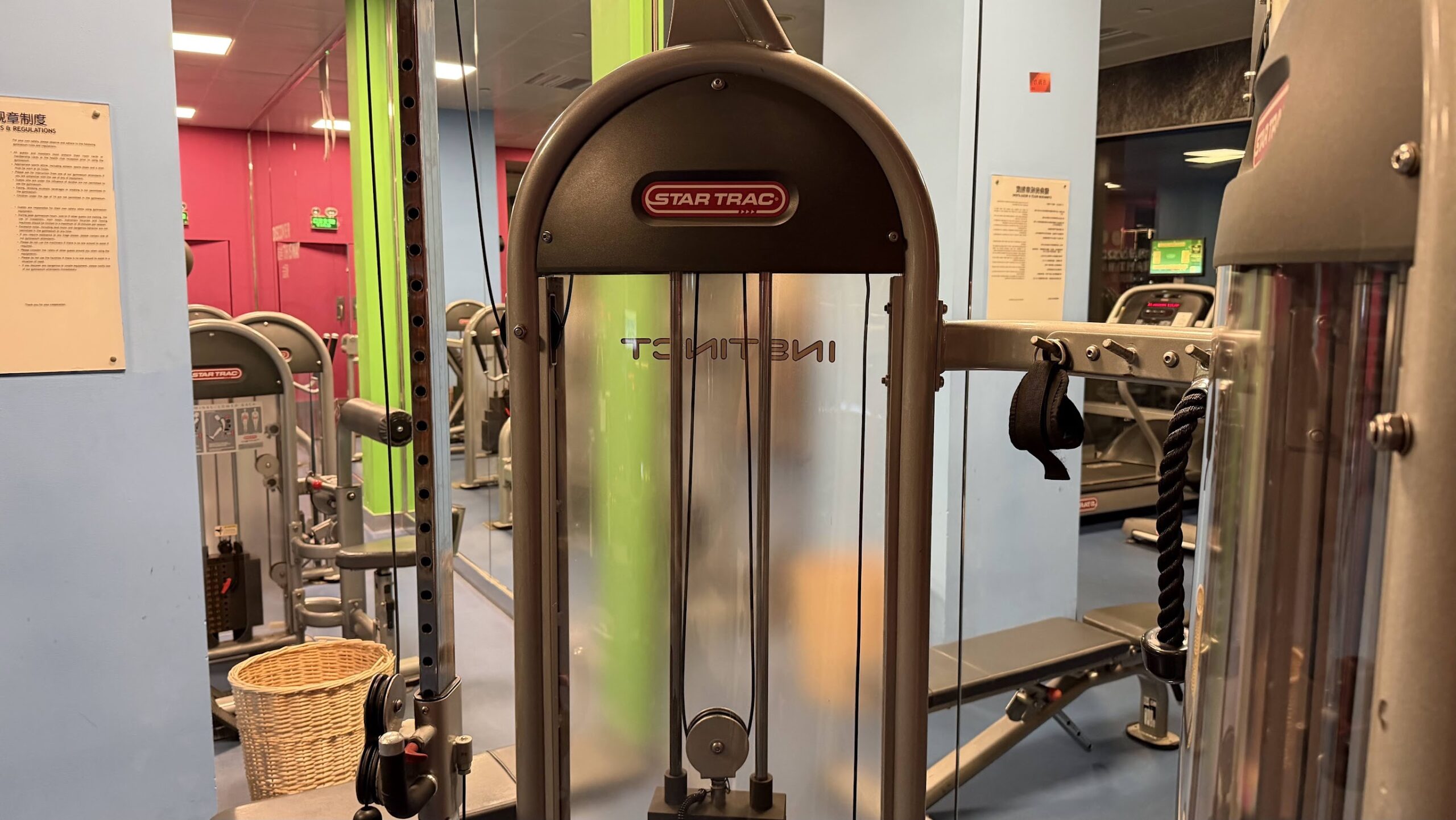
The gym has treadmills and cross-trainers beside the windows, along with cable and strength machines.
Breakfast
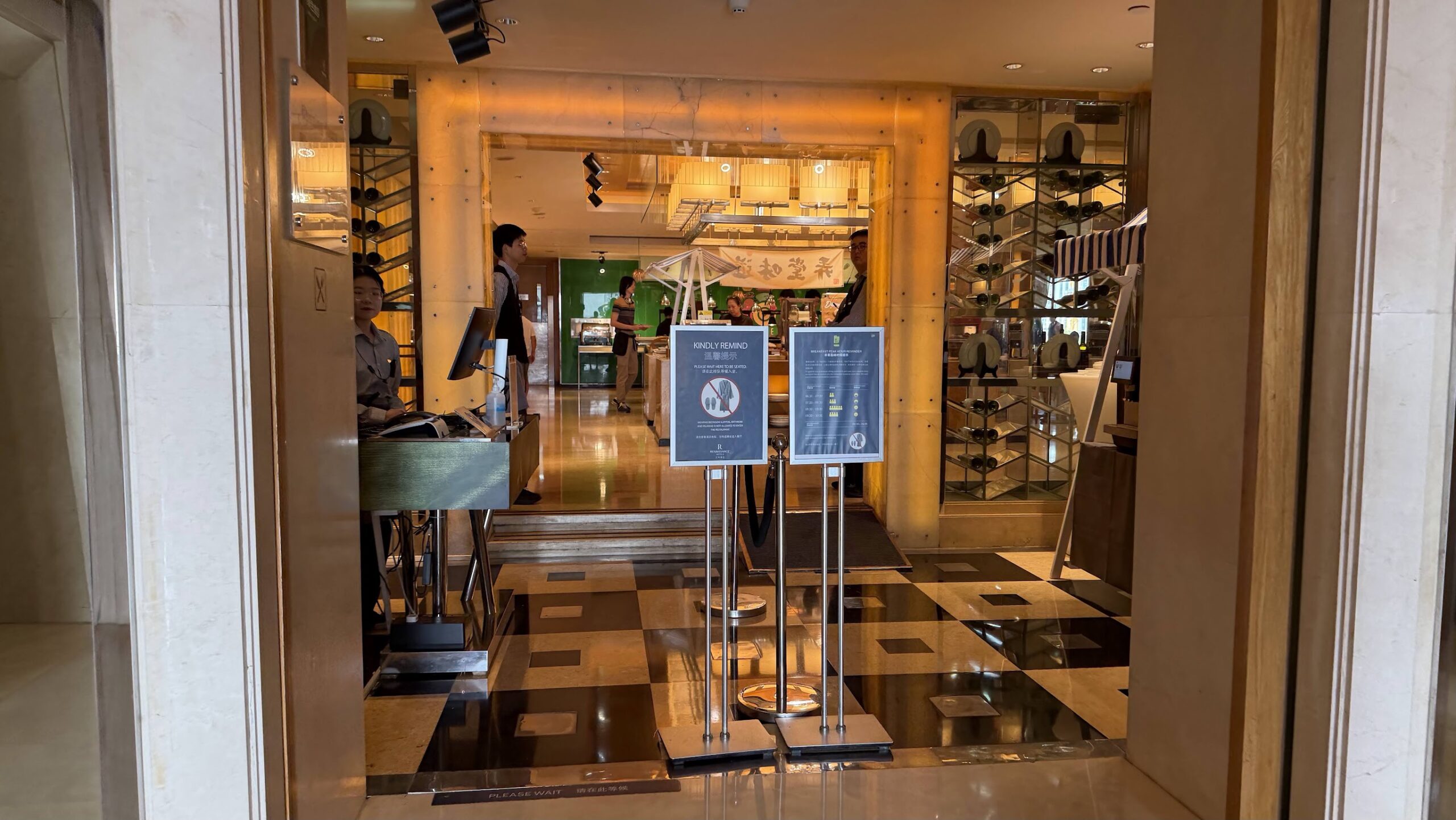
Although breakfast was available in the lounge, we went downstairs to Yu Garden Cafe, the hotel’s main restaurant, for the larger buffet. This was the stronger food service of the stay. The selection was broad, and the dishes changed enough on the second morning that it did not feel like we were walking past exactly the same buffet again.
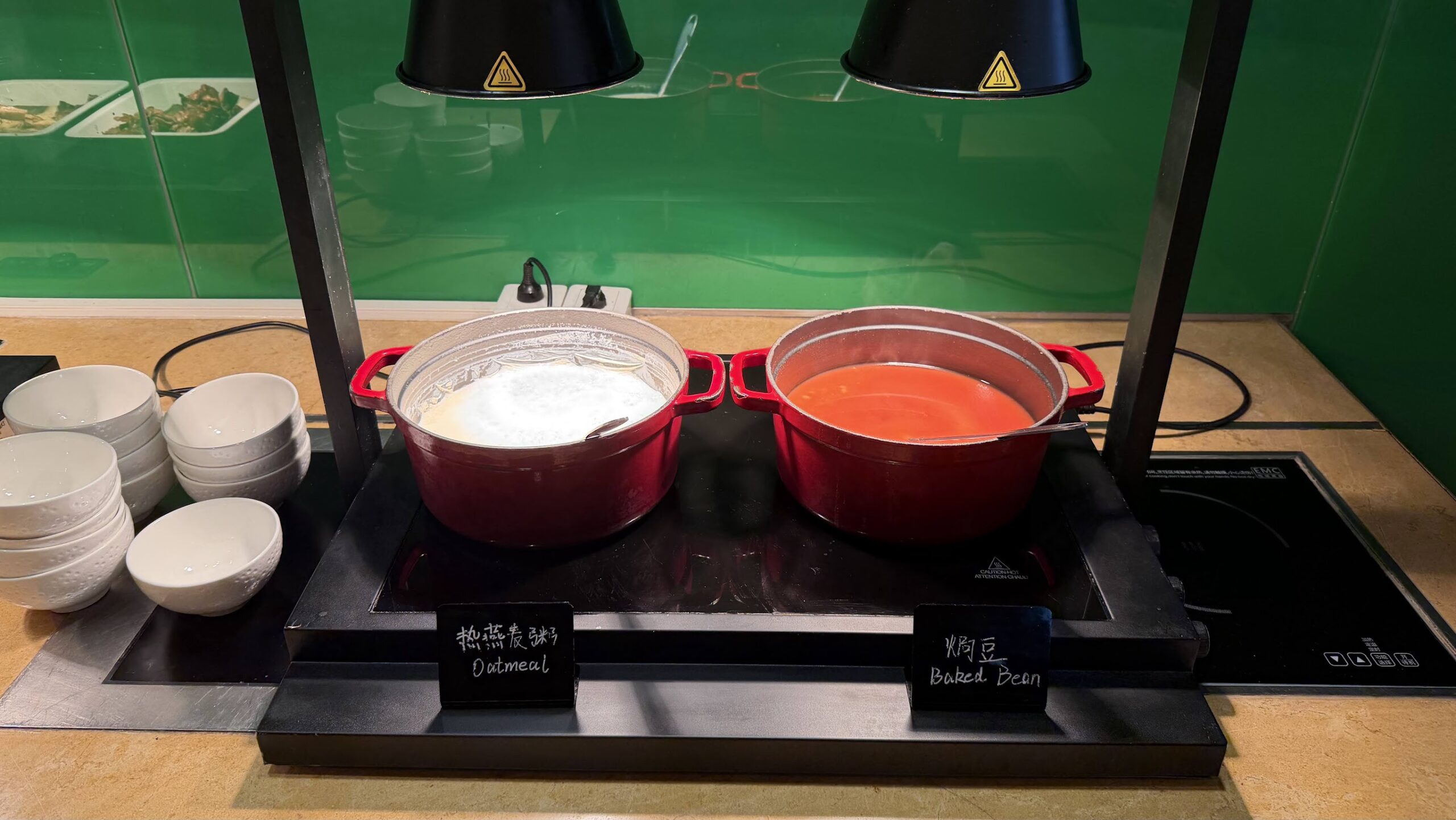
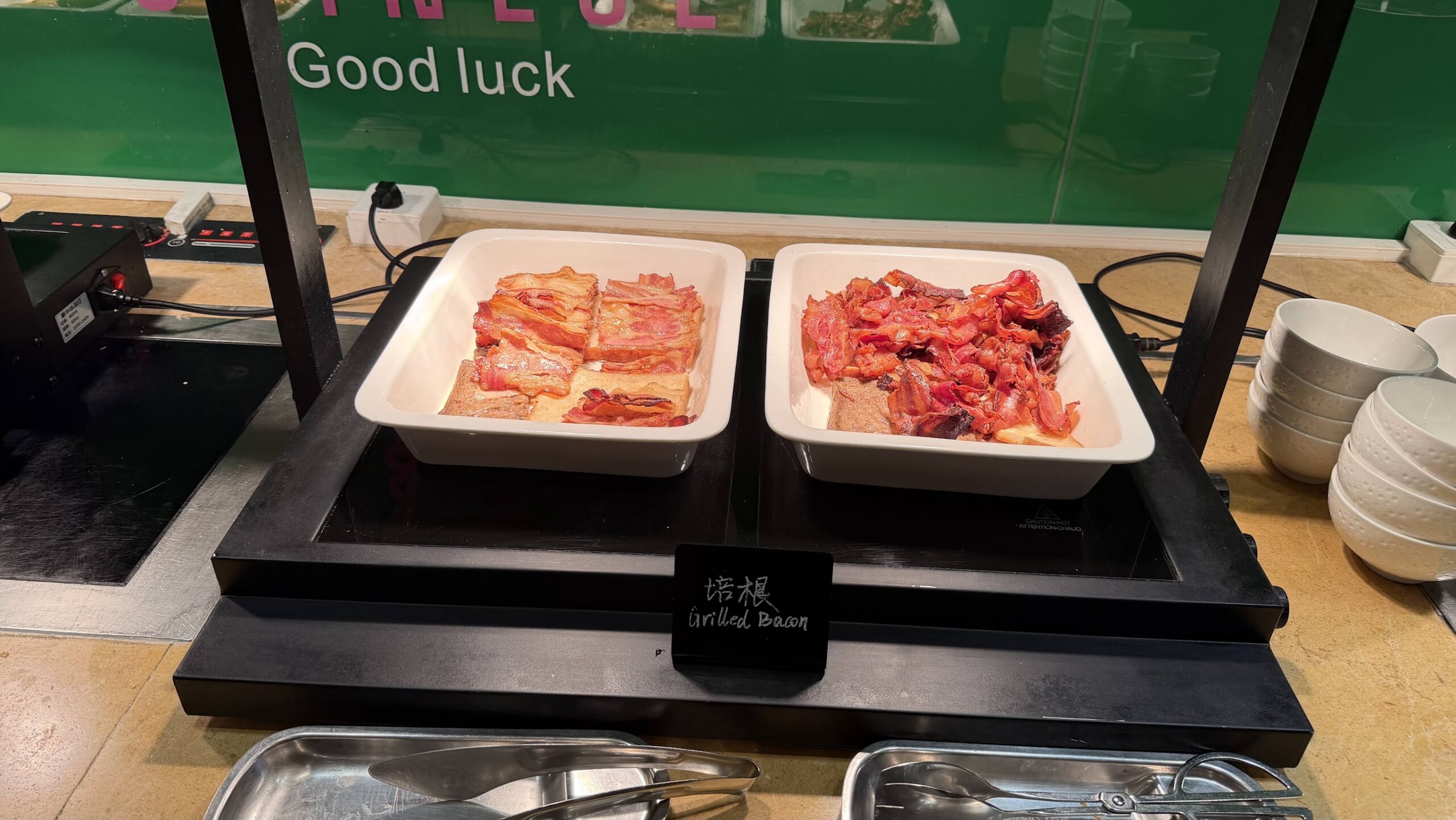
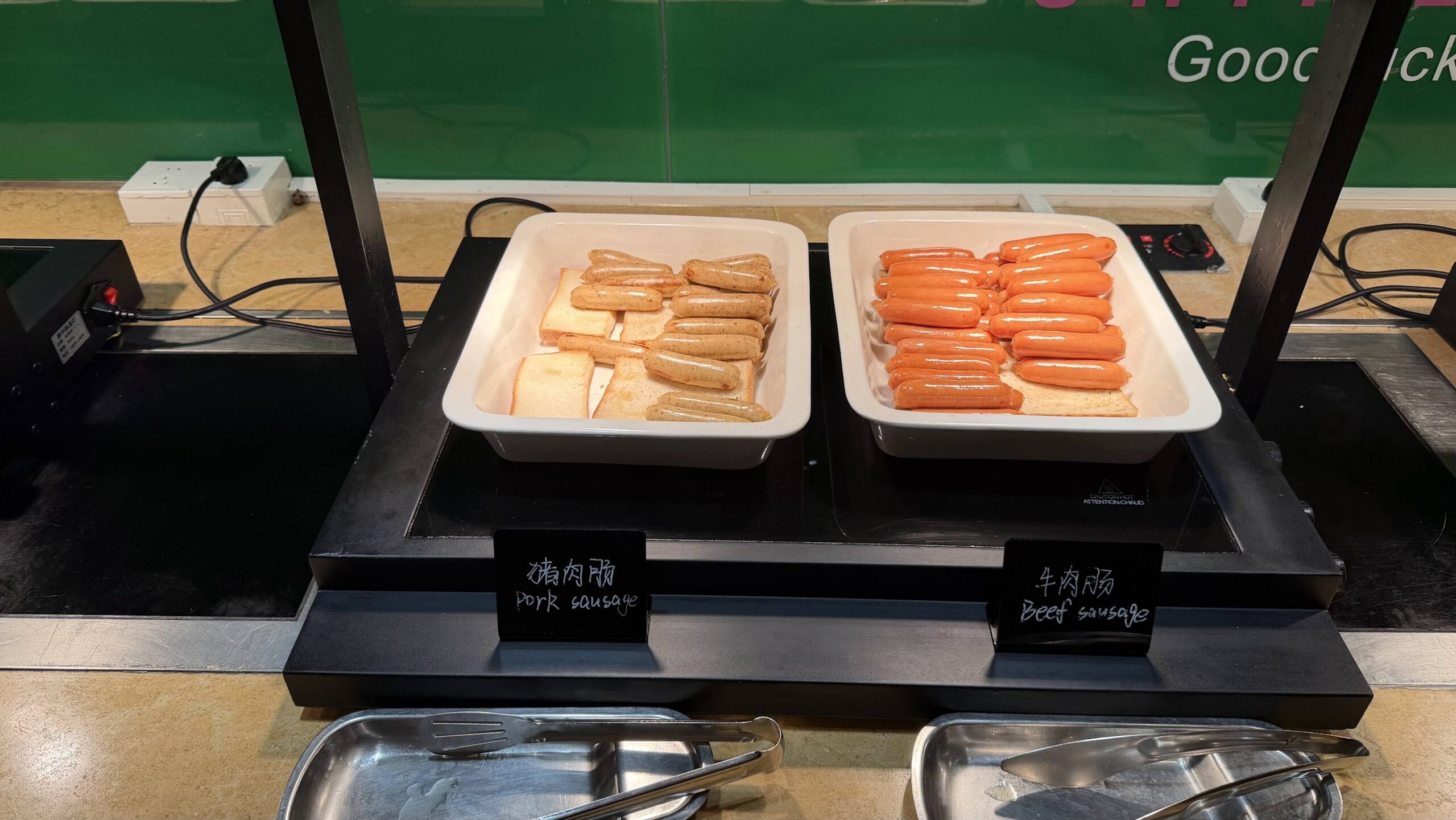
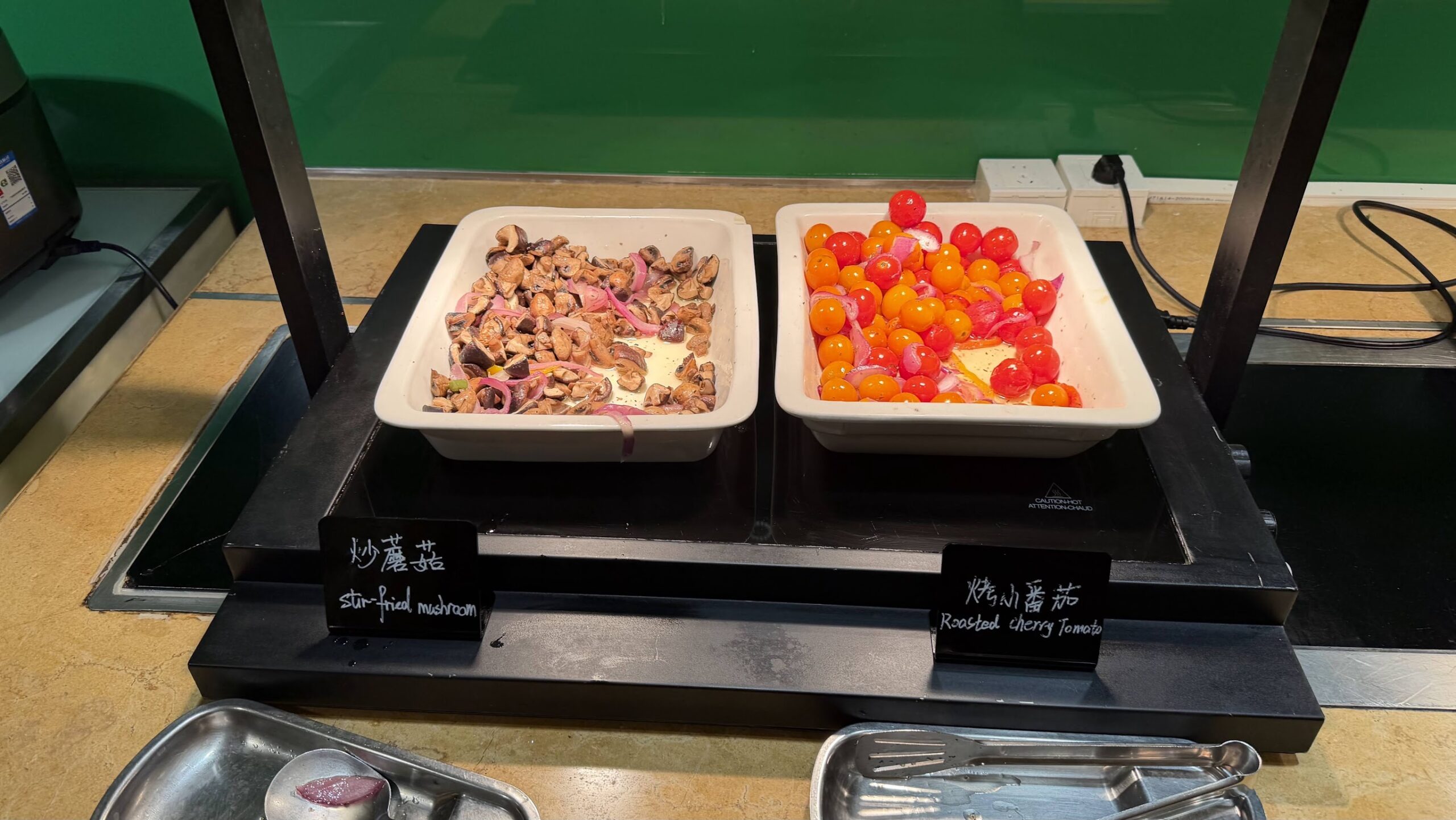
The Western hot section included oatmeal, baked beans, grilled bacon, pork sausages, beef sausages, stir-fried mushrooms and roasted cherry tomatoes.
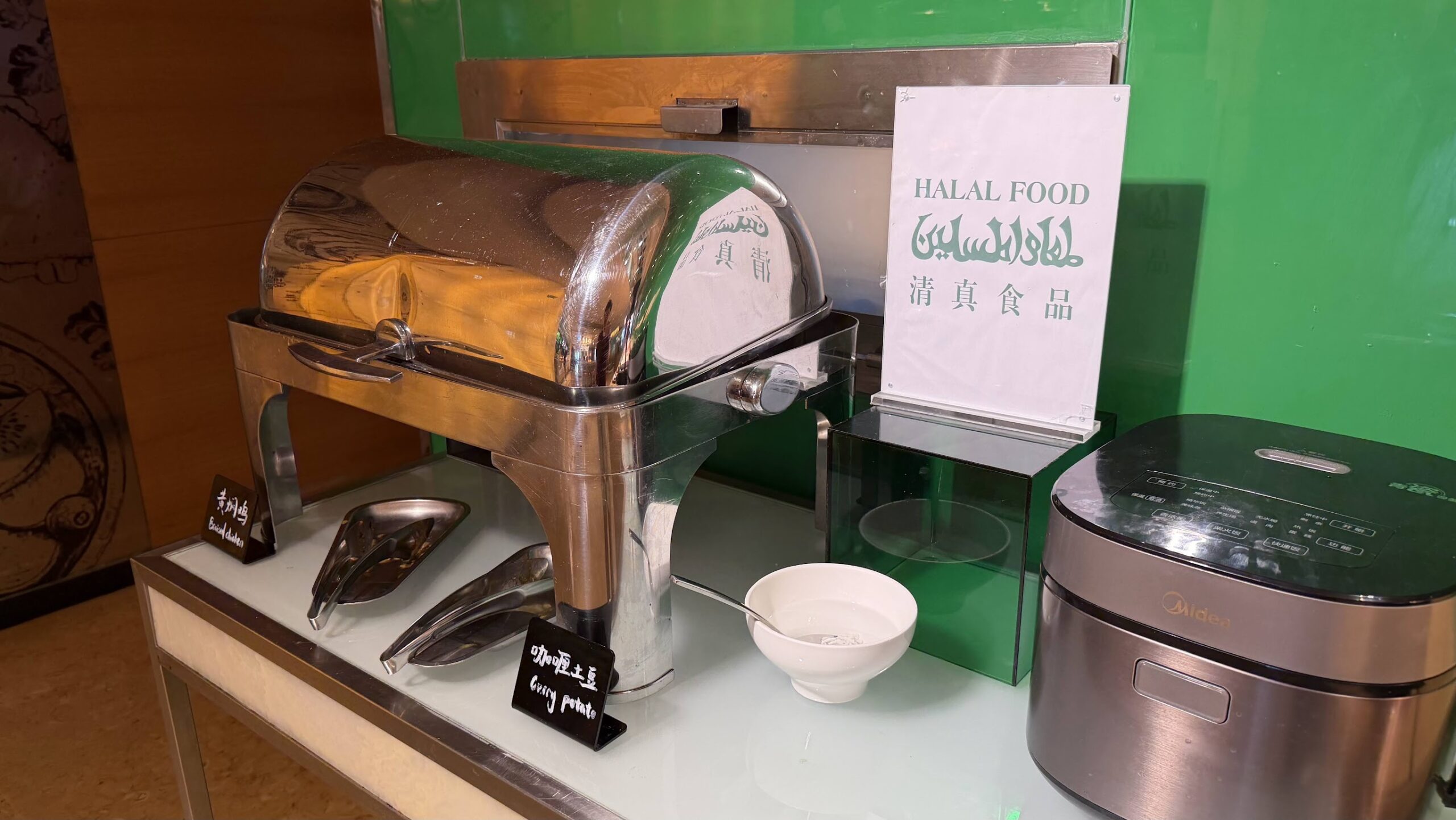
A separate counter labelled “Halal Food” held boiled chicken and curry potatoes.
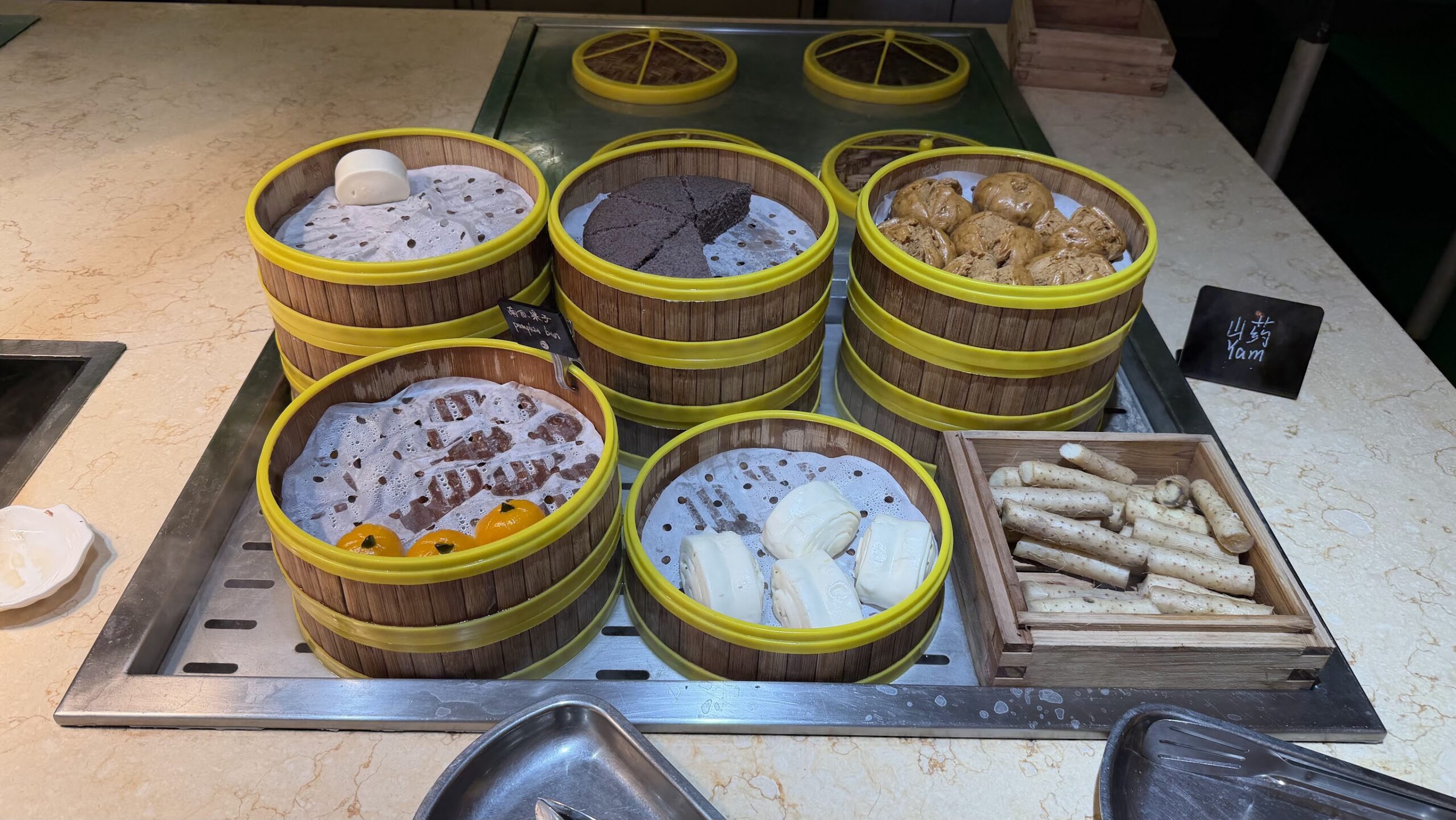
The steamed selection had pumpkin buns, brown sugar buns and yam.
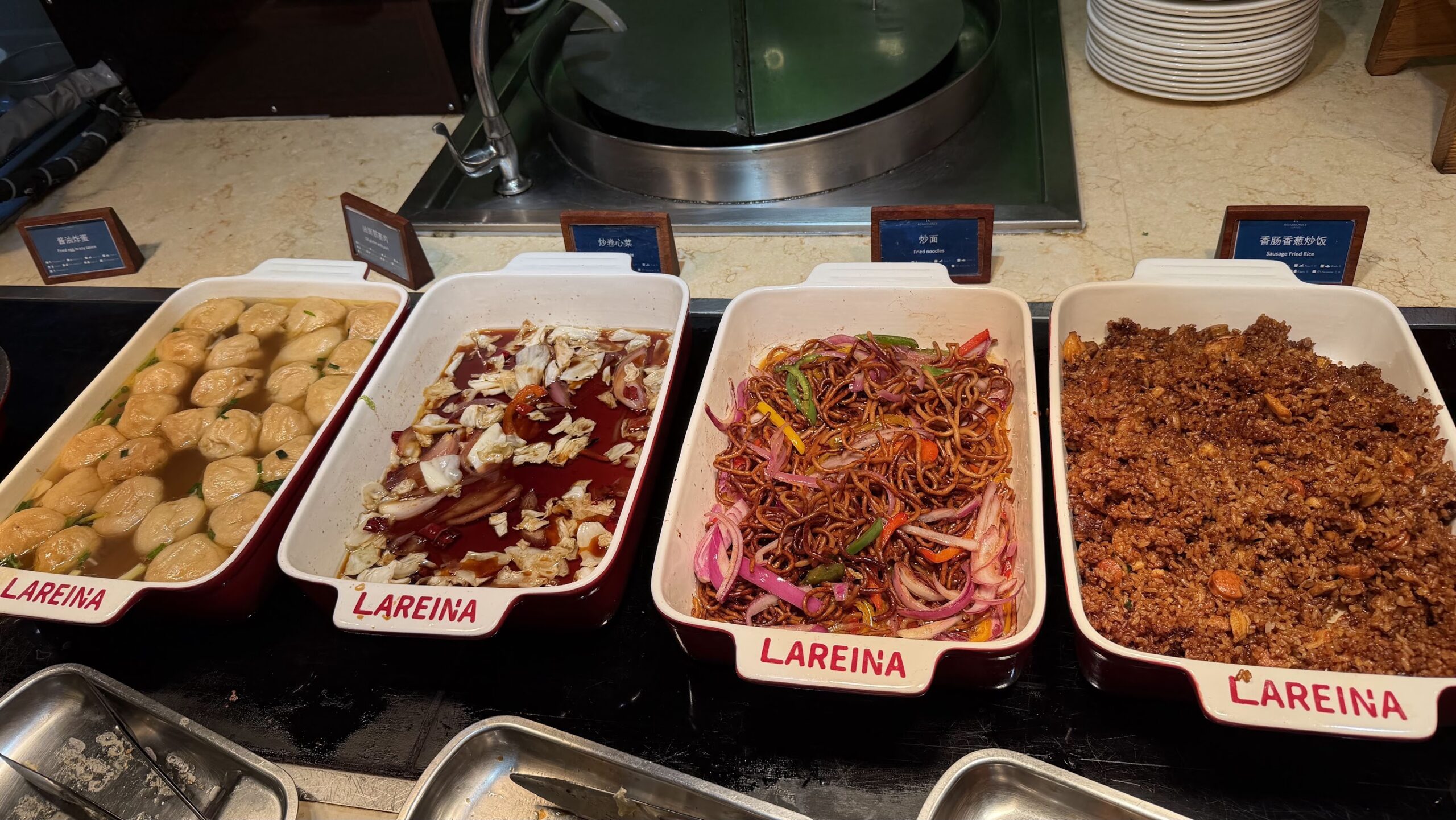
Elsewhere, there was sausage fried rice, fried noodles, stir-fried cabbage and meat-stuffed wheat gluten.
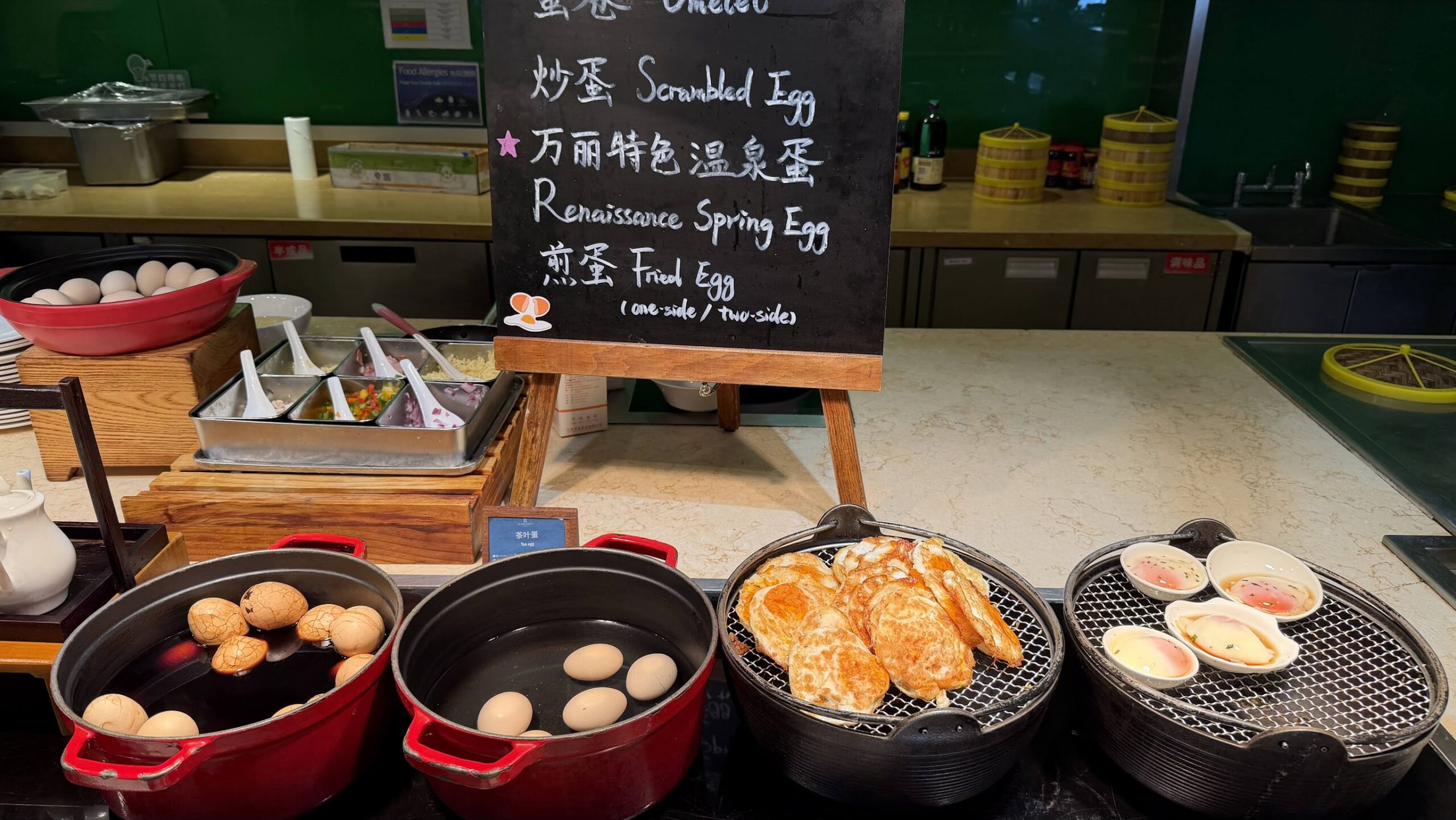
Eggs were prepared to order in several forms, including omelettes, scrambled eggs, an onsen egg, which the menu called a Renaissance Spring Egg, and fried eggs cooked on one side or both sides.
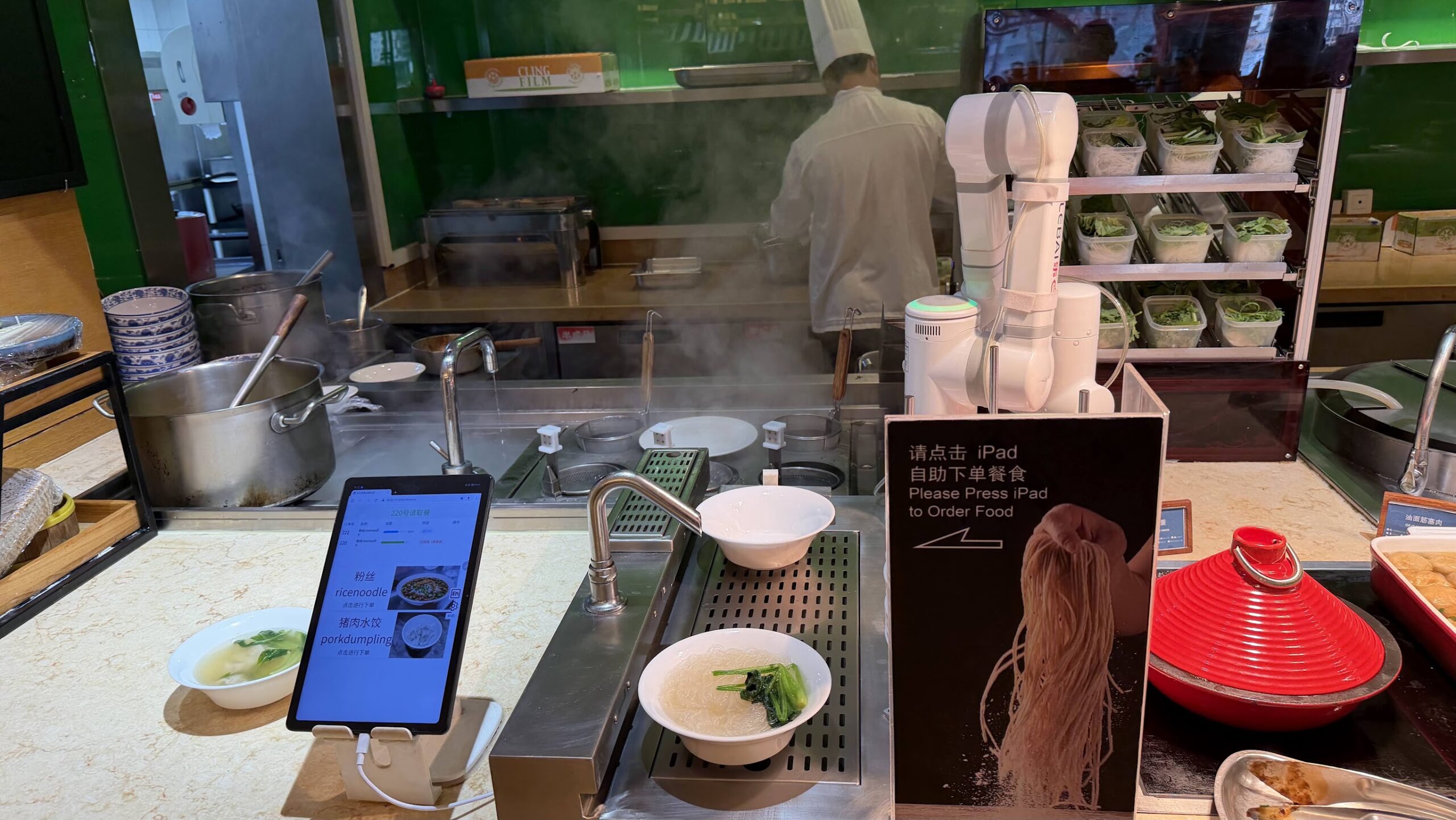
The buffet also had an automated station where a robotic arm prepared rice noodles and pork dumplings. I am not convinced breakfast needed a robot, but it was entertaining to watch and certainly more memorable than another row of chafing dishes.
On the cold side were cold cuts, charcuterie, salad and several dressings, including sesame dressing.
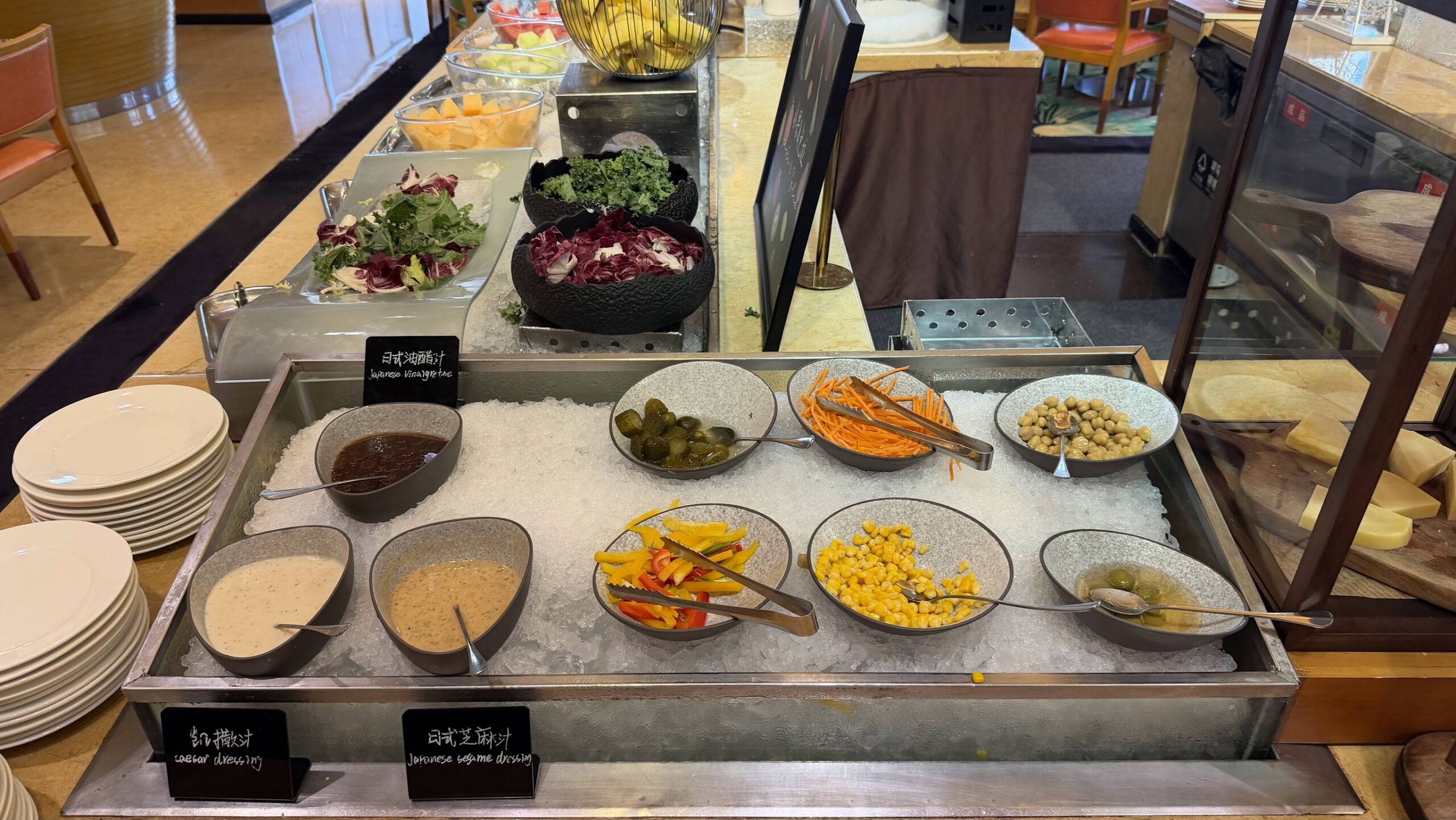
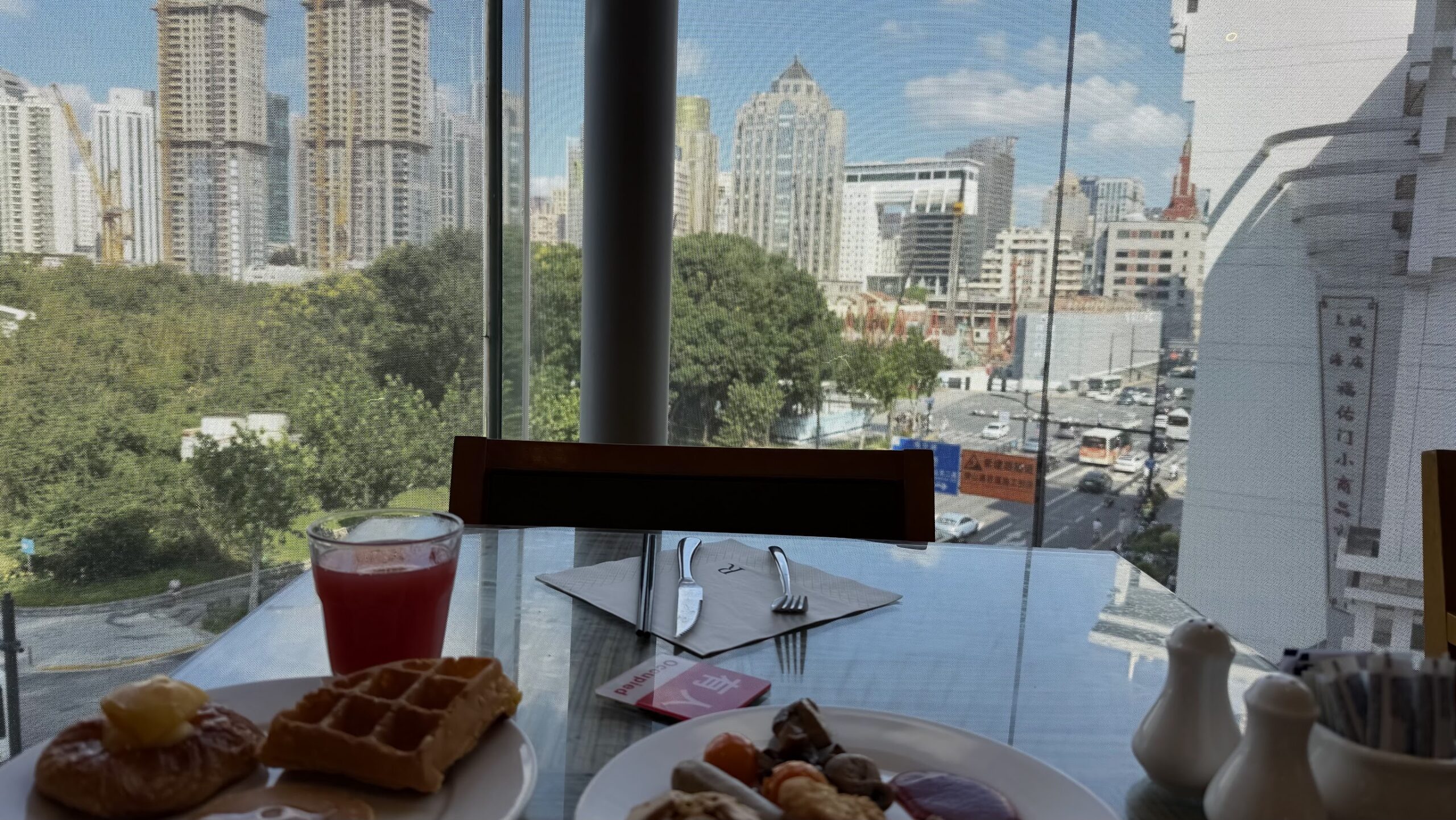
There were many other items around the buffet, but the main point is that the restaurant gave us a much wider breakfast than the lounge would have. The food was really good overall, and breakfast was one part of the hotel where the age of the interiors mattered very little.
Concluding thoughts
The Renaissance Shanghai Yu Garden Hotel makes the most sense when location comes first. You can step outside and walk straight into Yu Garden, City Gold Temple and the surrounding Old City, while the metro keeps the rest of Shanghai within easy reach. Few hotels put you this close to one of the city’s main sightseeing areas without requiring a taxi every time you leave.
Marriott Bonvoy Platinum Elite status also changed the value of our stay. The 48 sqm studio was much larger than a standard room, breakfast downstairs was strong, and the executive lounge gave us afternoon tea and evening food with excellent views. I would have preferred a proper suite, and the mixed-up welcome amenity should have been handled correctly the first time, but neither issue was serious enough to sour the stay.
The limitation is that this is an older hotel, and it looks like one. The room finishes have aged, the lounge becomes too crowded, and even the large studio has some odd decisions, led by that bathtub behind the work desk. None of those things made the hotel bad. They simply cap what I would pay for it.
At a reasonable rate, I would stay again for the location and Platinum benefits. At a high rate, I would look elsewhere and take a Didi to Yu Garden when I wanted xiaolongbao. The hotel is convenient, spacious in the right room category and generally not bad. It just is not special enough to justify overpaying.