
We’ve now chased the northern lights in Tromso, Iceland and the Lofoten Islands over two trips. With the northern lights season starting again, the question I get most often is whether you still need to book a tour if you’re already renting a car. After all, if you can drive yourself to a dark place, why pay for a minibus and a guide?
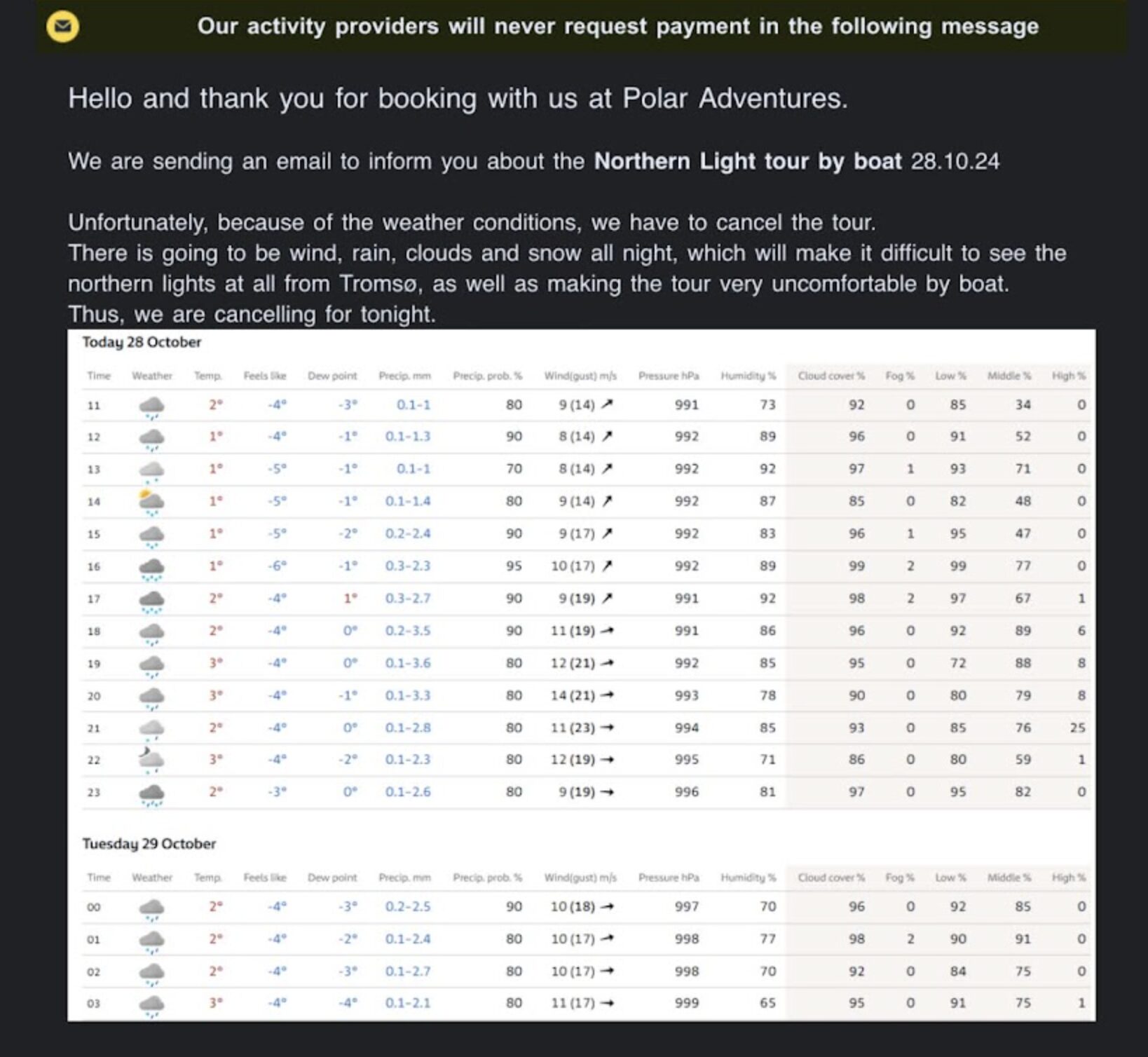
Our experience has gone both ways. In Tromso, we didn’t rent a car and booked a northern lights tour instead. It was a boat tour, while the minibus tours generally head inland and south towards Abisko and Kiruna, where the chances can be better than they are in Tromso itself. Our tour was cancelled because of the weather, and we only saw a very faint aurora by chance during a reindeer tour. In Iceland, we rented a car and never booked an aurora tour at all. We also saw the strongest display of the two trips there, from the backyard of our accommodation.
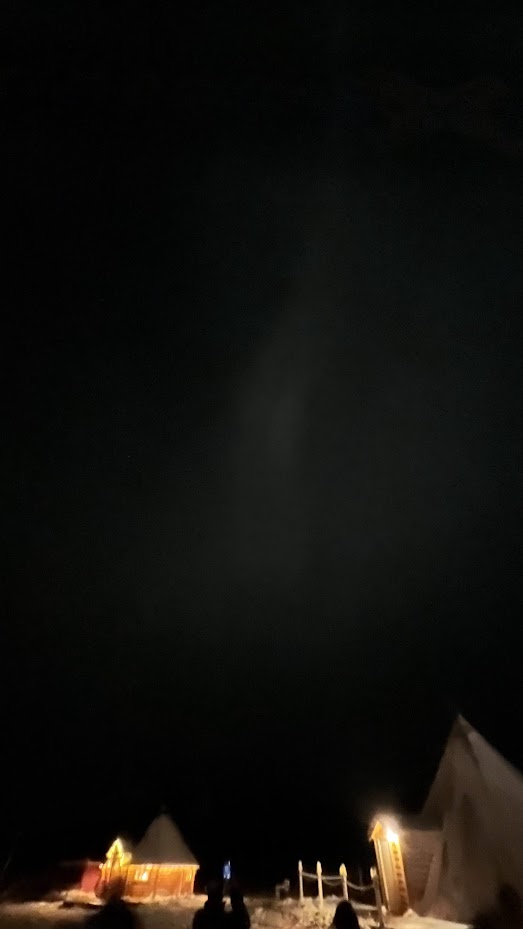
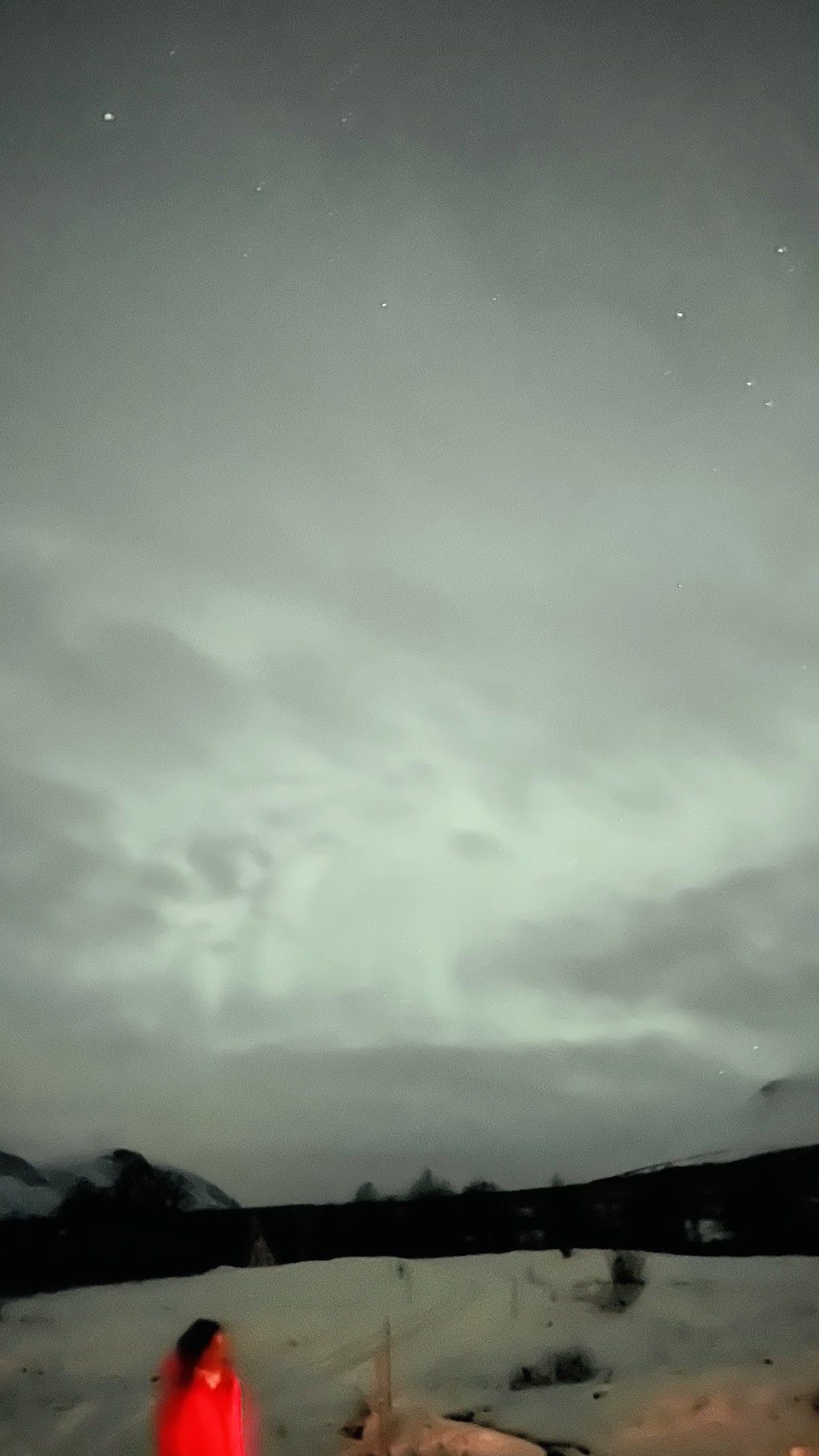
The only aurora we saw near Tromso was the faint one that appeared during the reindeer tour. It was a proper sighting, but it was not the sort of display that makes you forget how cold you are. We had not gone there expecting the reindeer tour to be our best chance, but that is how the evening worked out.
On our Iceland trip in 2024, the situation was the opposite. We had a rental car, didn’t book a single tour and weren’t even planning to hunt for the aurora there. Tromso was meant to be our main chance, while the car in Iceland was mainly for driving around the country.
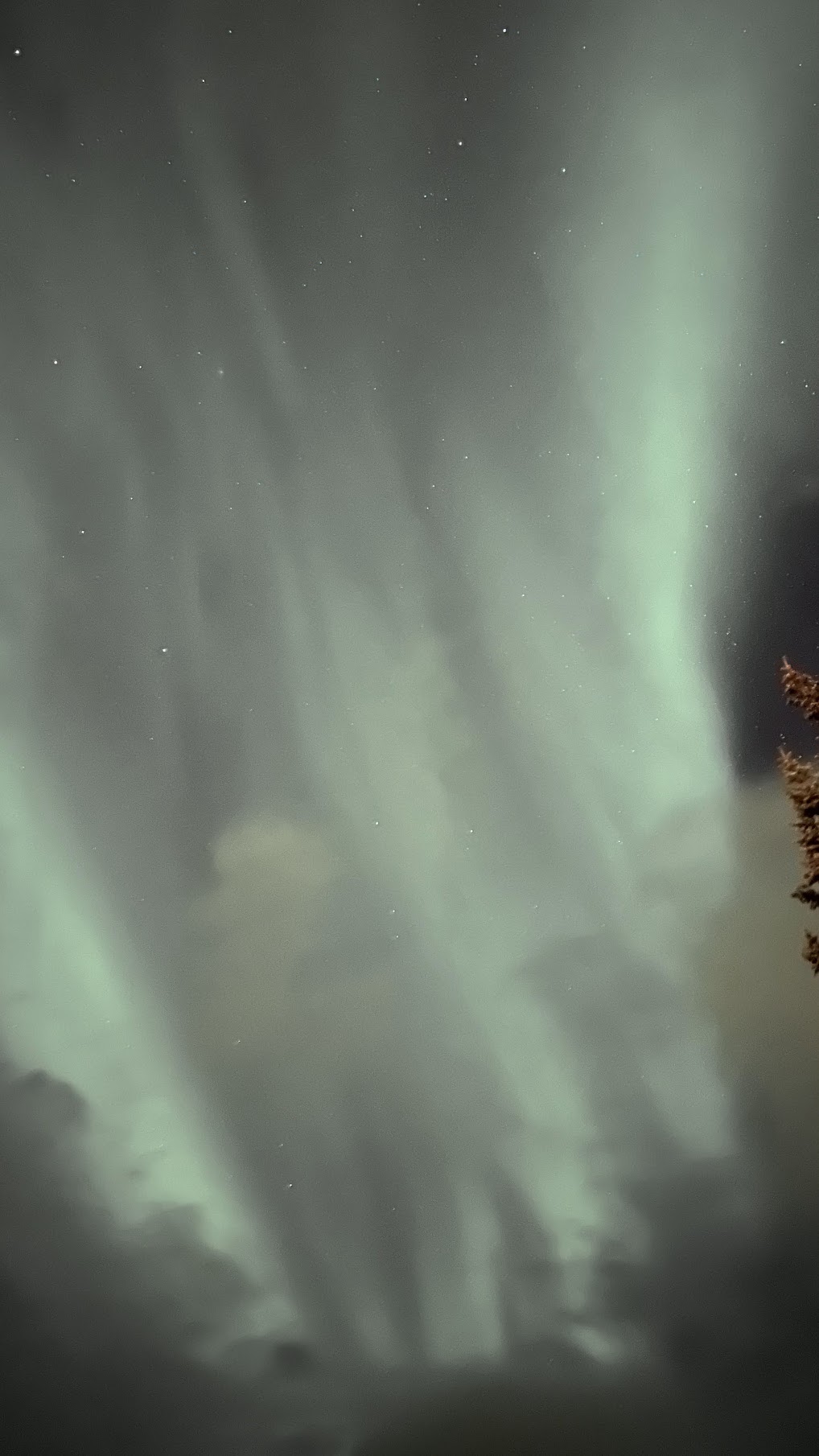
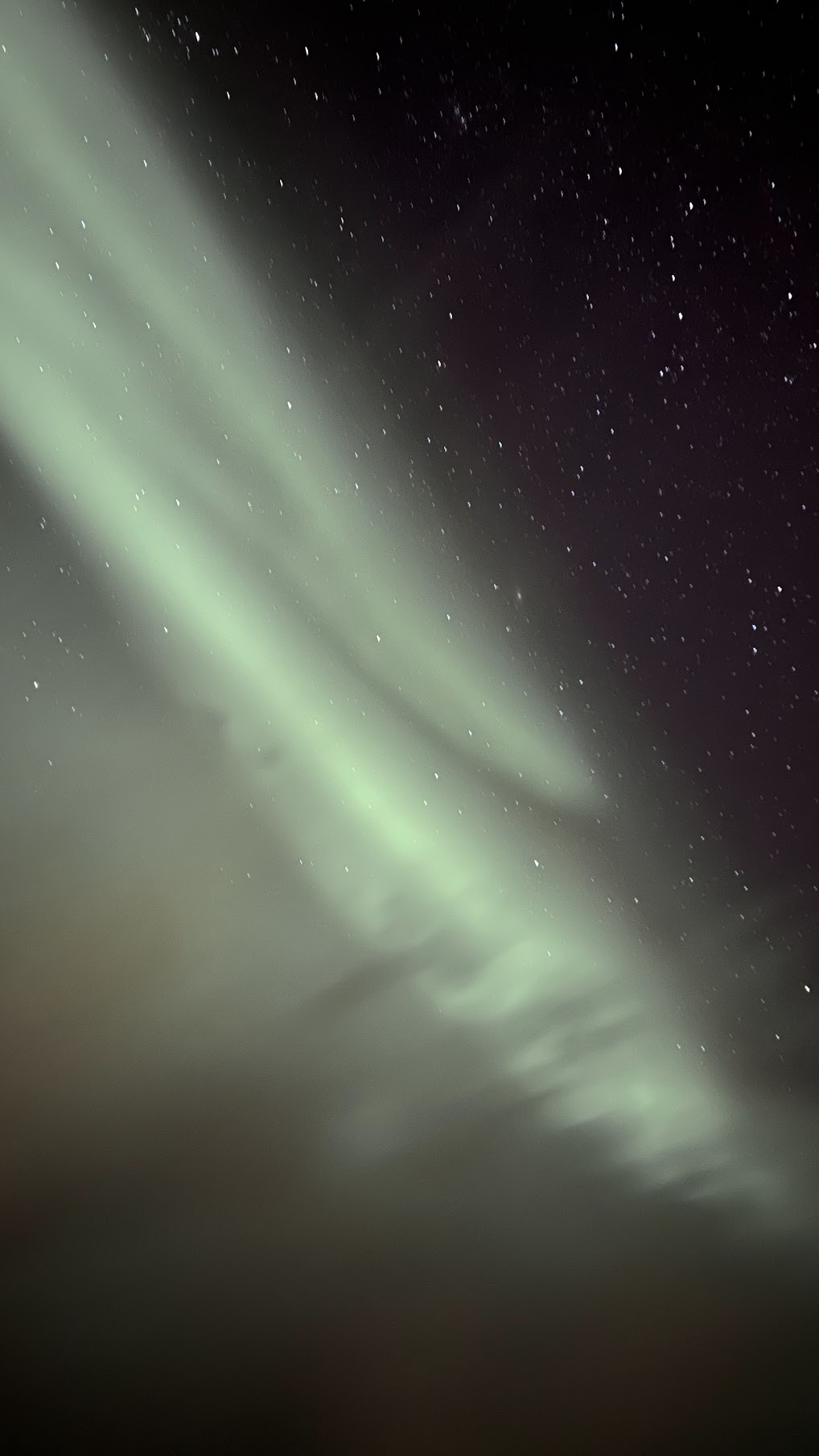
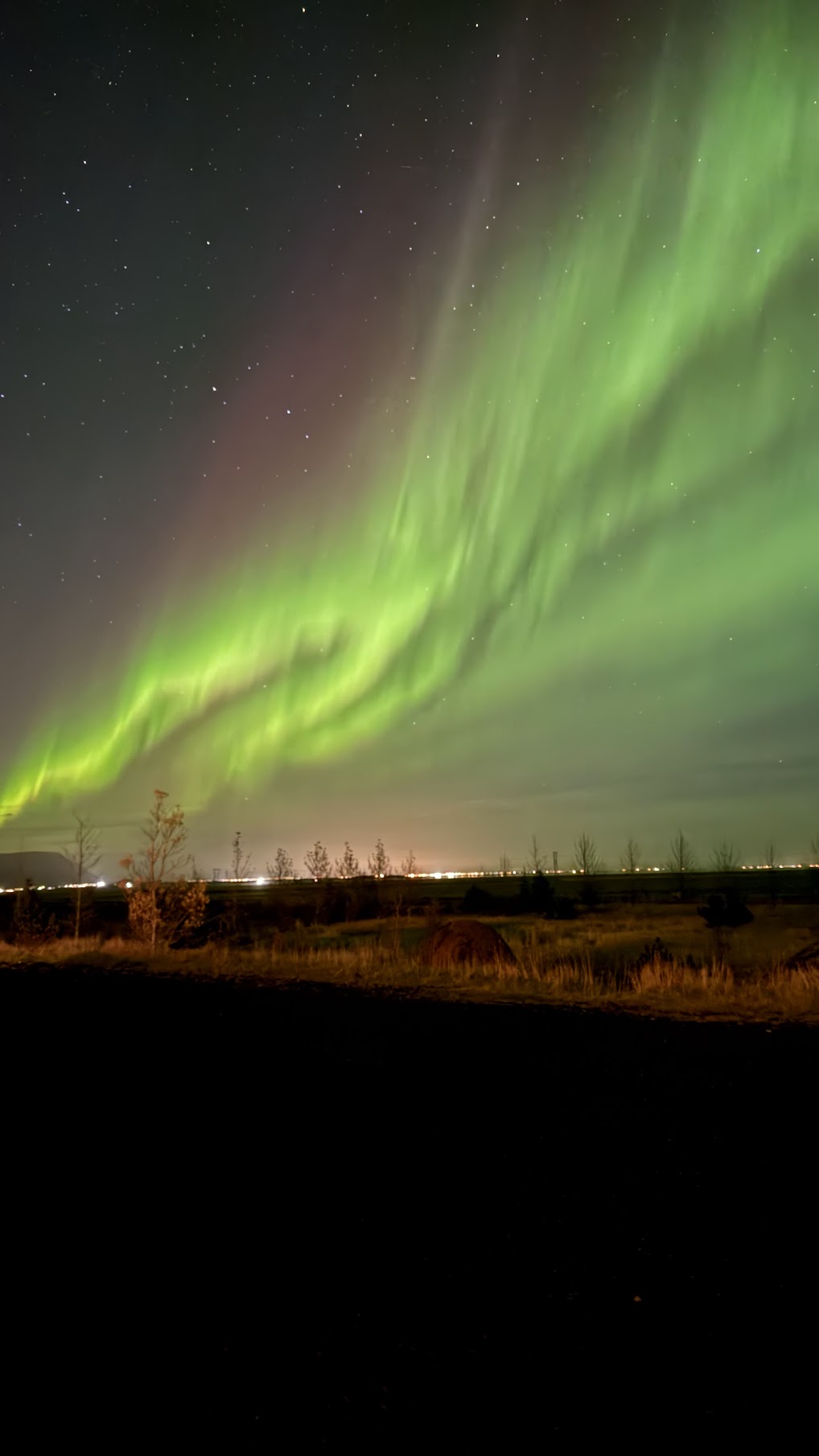
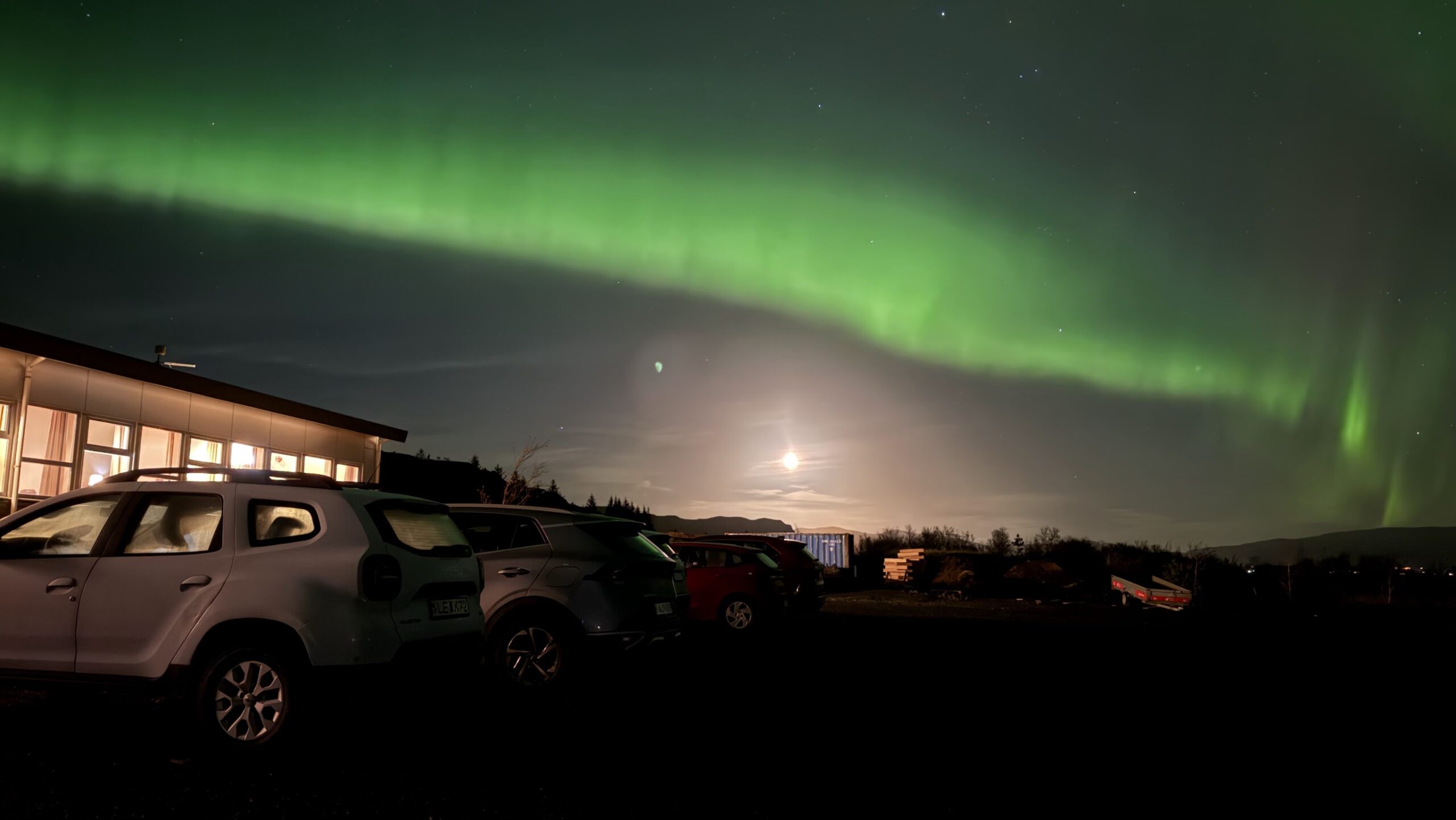
For most of the Iceland trip, the repeated advice that we might see the lights outside our Airbnb didn’t amount to much. On one of our last nights, a strong display finally appeared in the backyard of the place where we were staying.
That doesn’t make one option universally better. A tour can save you from making a difficult decision in the dark, while driving yourself gives you more freedom and can be cheaper if you’re already paying for a rental car. The right choice depends on how much planning you’re willing to do, how comfortable you are driving at night, and what the weather is doing during your trip.
If you want the short answer, I’d drive myself when I’ve got the time to study the cloud cover, find safe places to stop and make a realistic plan for the night. If I didn’t feel comfortable doing that, I’d book the tour. Having a rental car doesn’t automatically make the tour unnecessary.
This guide is about the decisions behind chasing the lights. For the full route and the places we visited, have a look at our trip reports for Iceland and the Lofoten Islands.
What you are really chasing for
It took us a while to learn that being far enough north is only part of the problem. Once you’re near or inside the Arctic Circle, the main challenge is finding a clear, dark patch of sky at the right time.
You need some auroral activity, of course, but the forecast isn’t the whole story. The lights form high above the clouds. The clouds don’t make the aurora disappear, but they sit between you and it, which has the same result from the ground. A strong forecast isn’t much help if you can’t see through the cloud.
Latitude still matters because it puts you in the right part of the world to see the aurora overhead. After that, moving further north isn’t a substitute for a clear sky. A stronger display can also be visible further south, while a completely overcast sky in Tromso will give you nothing to look at.
That’s more or less what happened to us. Tromso was the furthest north we went, but it was snowing throughout our three days there. Iceland was the place we’d treated as a backup, and it was where the weather finally gave us a proper chance.
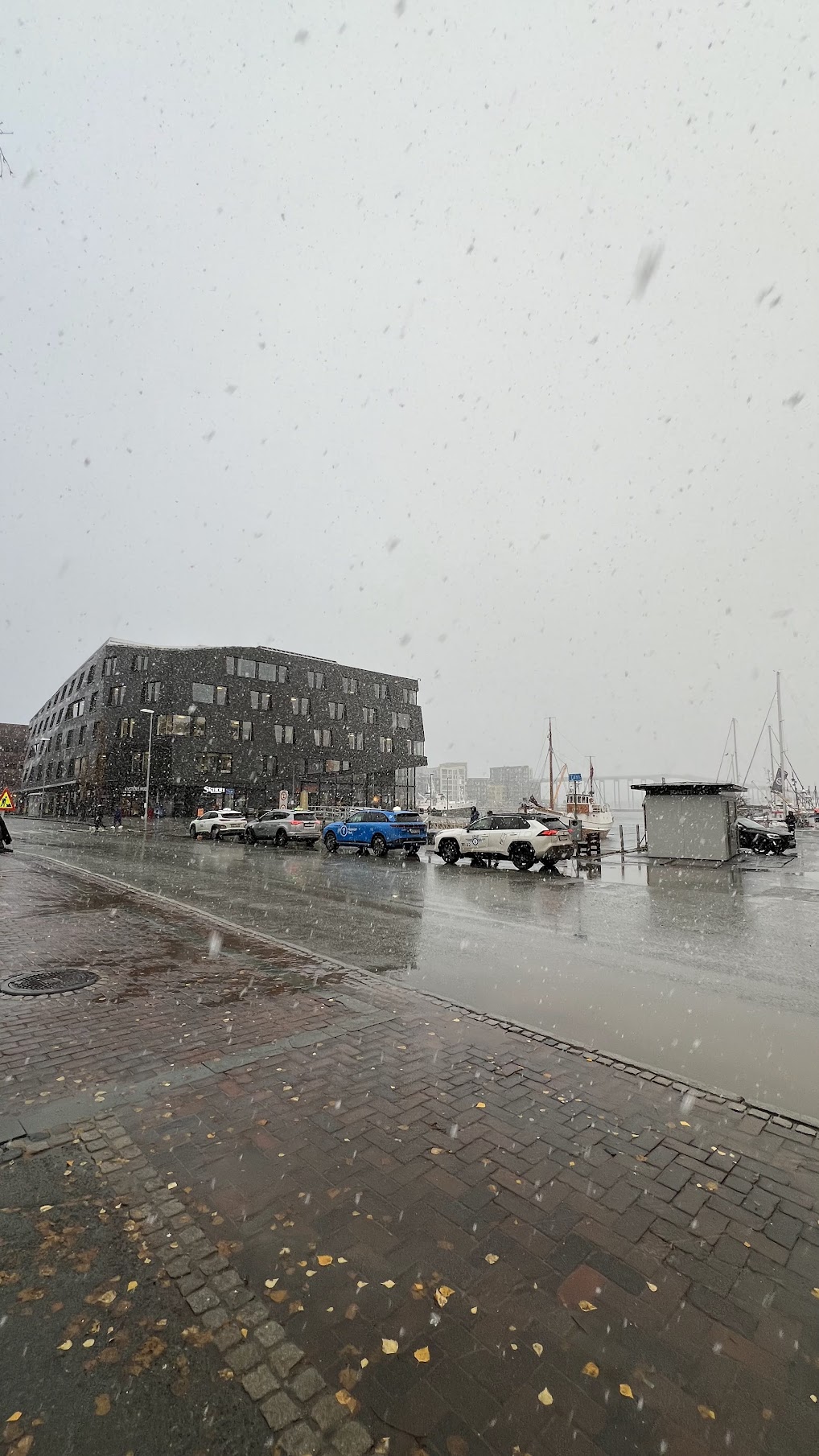
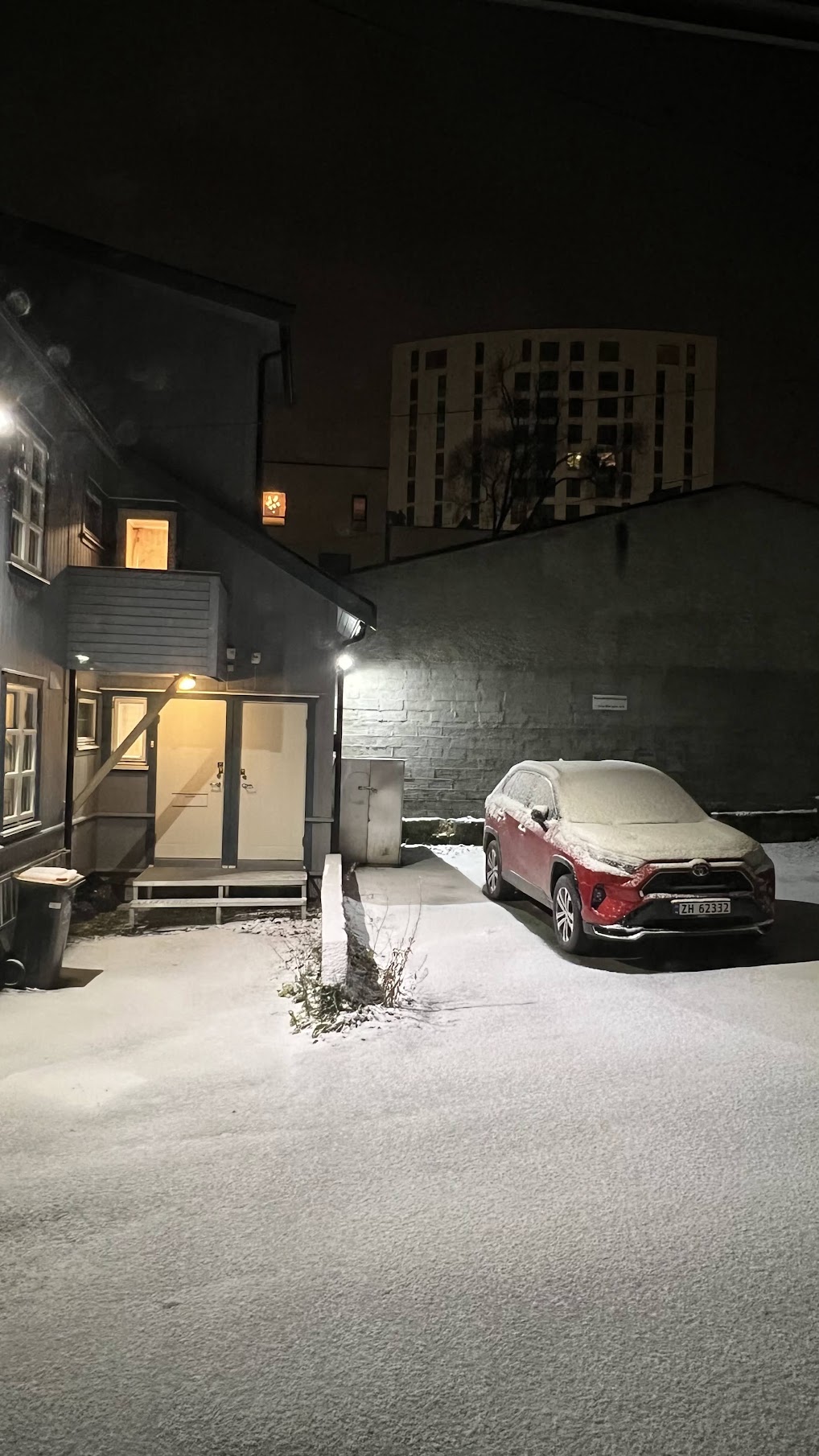
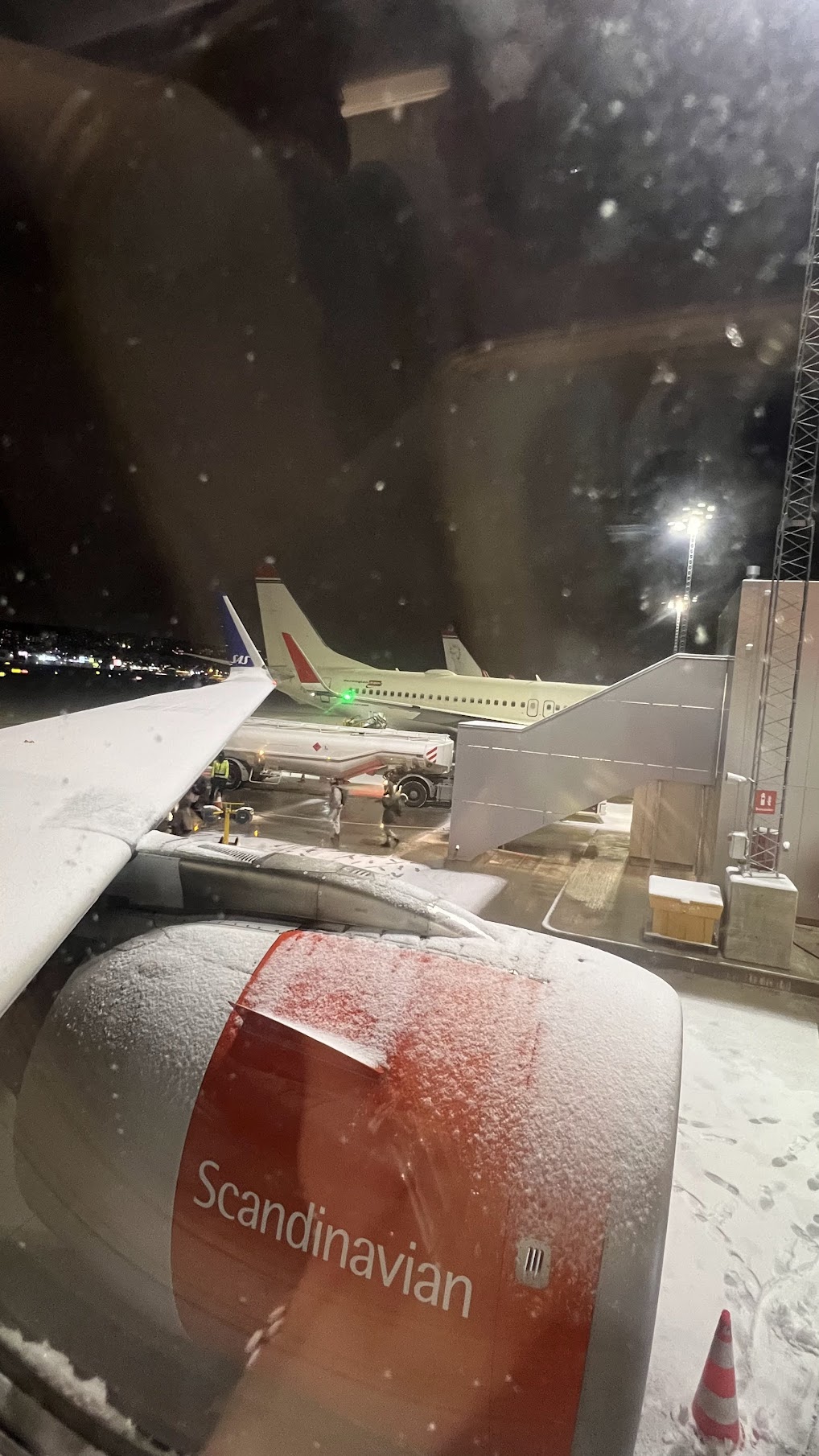
The snow continued until our last day in Tromso. It was heavy enough that the engine on our aircraft was icy and had to be defrosted before departure. There wasn’t much point in standing outside looking up when the sky was snowing all day.
The reason is simple once you think about it: the aurora forms high up in the atmosphere, far above the clouds, so a cloudy sky does not dim the lights, it sits between you and them like a roof and blocks the view entirely. A clear gap in the cloud is your window, and your whole night is about finding one. Contrary to popular belief, going even further north does not help with this, as a strong display could also mean that it’s more visible southwards.
Darkness matters too, but being away from a town isn’t quite the same as finding somewhere useful to stop. What I look for is a quiet roadside pull-off or parking area where we can get off the road safely, turn off the lights and stand outside without traffic passing right beside us.
Many of these places don’t appear clearly on Google Maps. I usually combine the satellite view with Street View, then try to work out in daylight whether there’s actually room to park and whether the entrance will be easy to find after dark. I’d rather do that while it’s still light than arrive somewhere unfamiliar at midnight and discover that the “pull-off” is just a narrow shoulder.
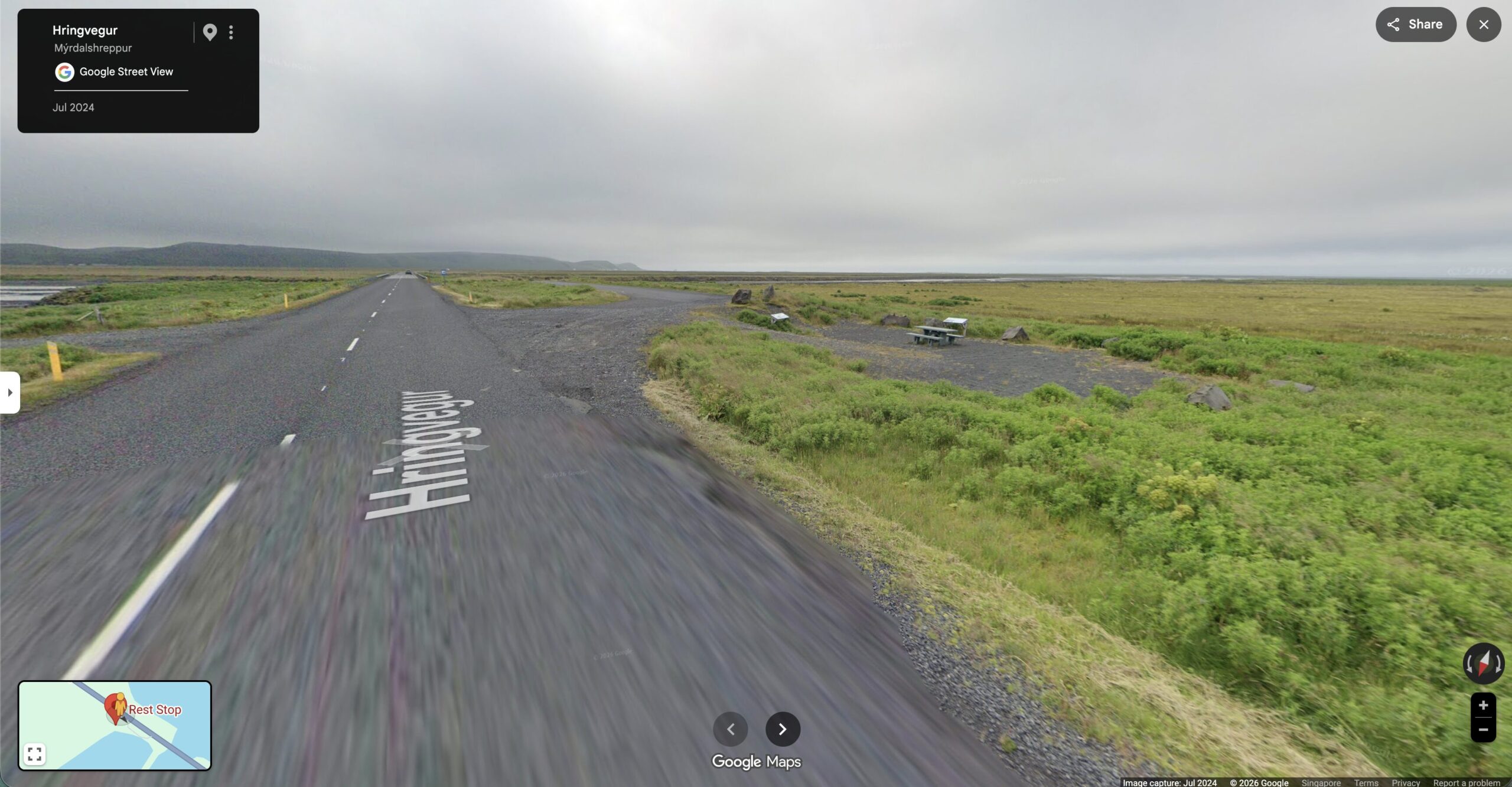
The famous viewing points are often less useful than they look. Everyone knows about them, so everyone drives there when the forecast improves. We went to the Grotta Lighthouse near Reykjavik twice over two trips, and both visits were busy. People were moving around with phone torches, cars were coming and going, and headlights kept cutting across the parking area.
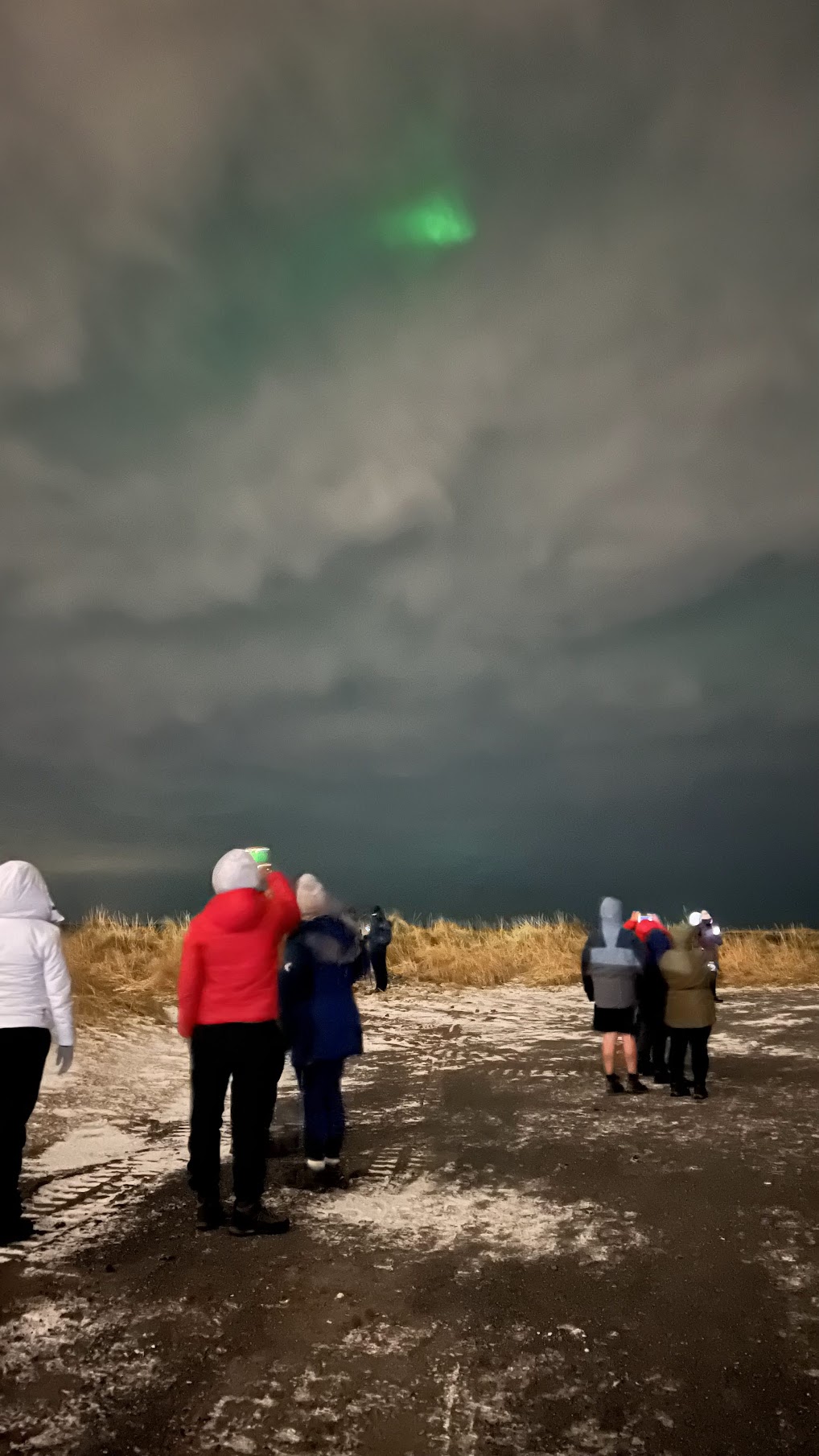
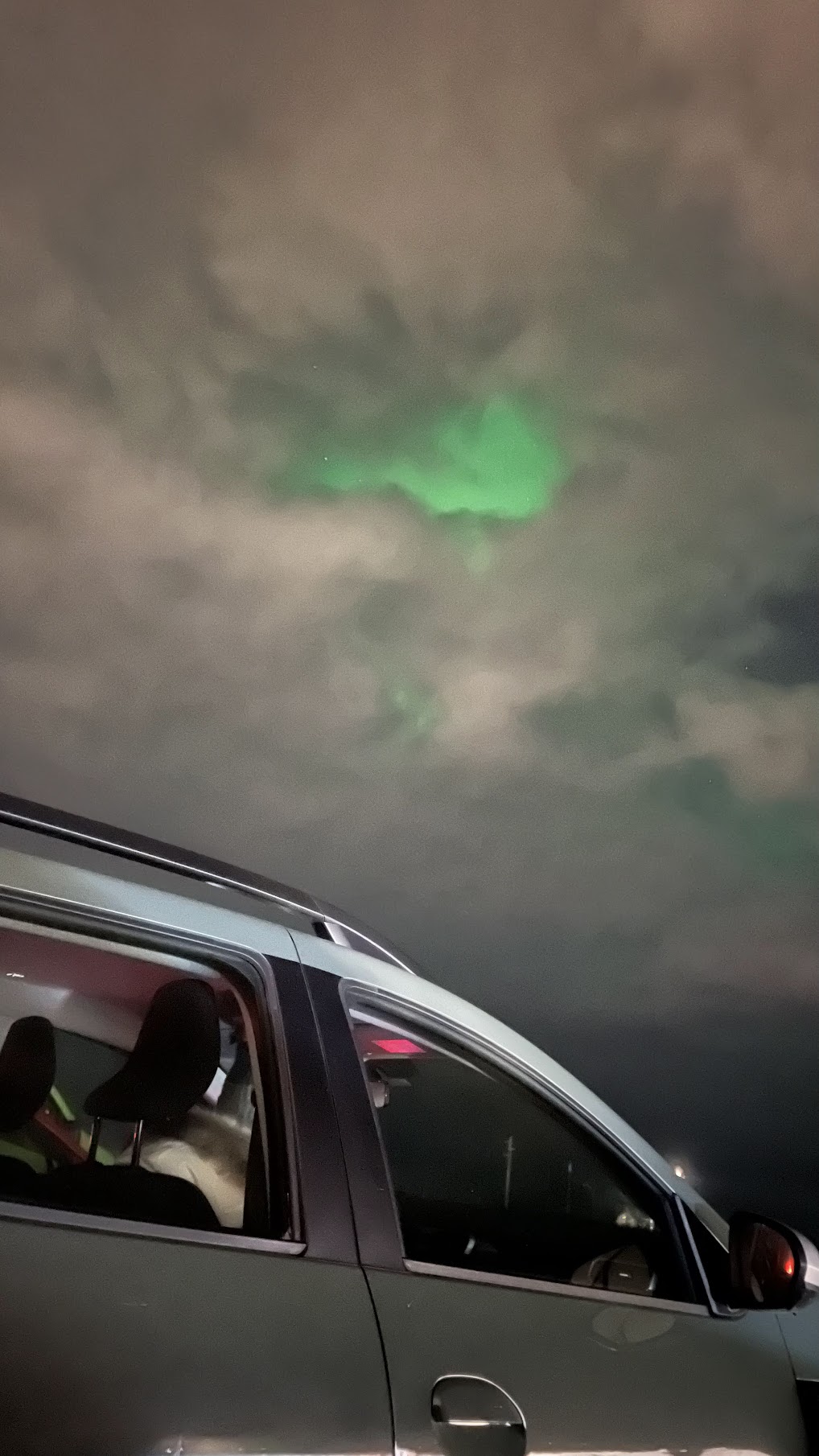
It only takes one set of headlights to ruin your night vision, especially if you’re trying to take a long-exposure photograph. The lighthouse is easy to reach and does give you a chance of seeing the lights, but I wouldn’t make it my first choice. A less famous pull-off on a side road is usually a better place to wait.
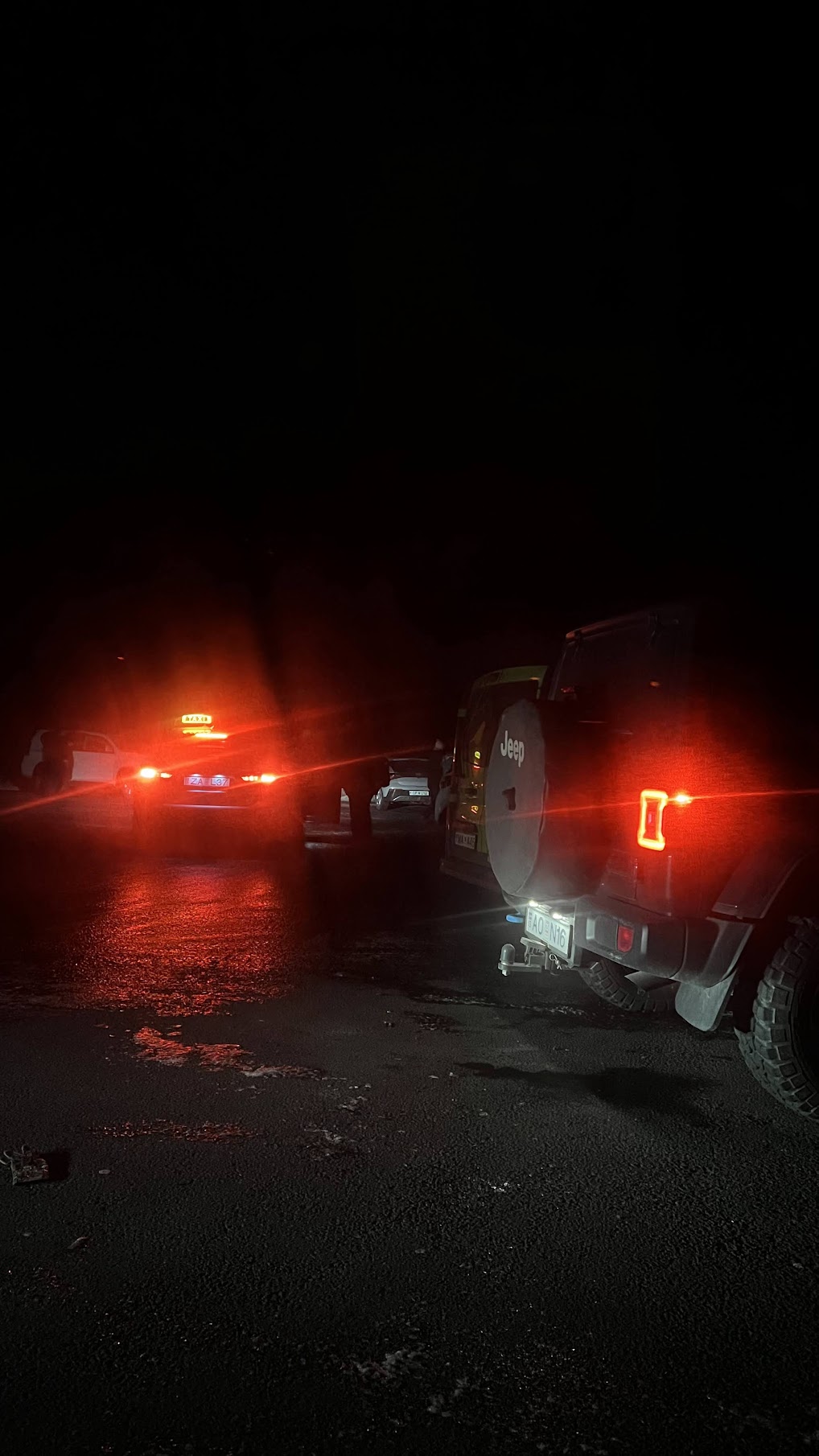
I would honestly skip the headline locations for aurora viewing and find your own dark pull-off down a side road instead. It is worth scouting a few of these in daylight, so you already know where you are going and that it is safe to park when it is pitch black and you are tired.
The real reason to book a tour
I used to think the main benefit of a tour was having somebody point out the aurora when it appeared. That’s part of it, but it isn’t where most of the value lies. The guide knows where to drive when the weather changes.
The cloud cover over your town might be thick while the sky is clear an hour away. A guide who’s been out every night of the season will have a better idea of which roads are worth trying, which direction the cloud is moving and how far it is sensible to go. You’re paying for that local knowledge as much as the transport.
When we saw the strongest display of our Iceland trip, we’d already done a lot of that work ourselves. We’d marked safe places along the Ring Road, checked the cloud cover in different areas and worked out where we could go if the sky over our accommodation stayed cloudy. We were prepared to get in the car and drive, but the lights appeared in the backyard instead.
That planning made the night feel manageable. We weren’t simply waiting for the aurora to appear and hoping for the best. We knew where we could go, how long the drive would take and which parts of the route needed more care after dark.
If that sounds like a chore, or if you’d be nervous driving on a dark and icy road while trying to stay ahead of the cloud, I’d book the tour. A rental car doesn’t remove those problems. If you enjoy looking at maps, checking forecasts and making a plan that might need to change twice before midnight, doing it yourself can be a lot of fun.
The tools and groups that actually helped
Most of the useful information is free, but it comes from several places rather than one perfect app.
The most useful source was often other people already outside. There are several Facebook groups where locals and travellers post when the lights appear, along with where they are standing and whether the aurora is visible to the eye. For Iceland, we used “Northern Lights Iceland” and “Aurora Hunters Iceland”. A message from somebody who’s actually sitting in a car under a clear sky is more useful than a forecast that was issued hours earlier.
We used two apps as well. The Glendale App, which is a web app at aurora-alerts.uk, was the better one for live shouts and alerts. It also helped to see whether the aurora was overhead, low in the northern sky, visible to the eye or mainly showing up on a camera.
The Aurora app was the one we preferred for its camera view. It gave us a useful sense of how the sky looked from different places before we decided whether a drive was worth it. Between the Facebook groups and the two apps, we could usually work out whether it was worth putting on another layer and getting into the car.
The Space Weather Prediction Center from NOAA has its own forecast, including current conditions and forecasts for the next two nights. In Iceland, the Icelandic Met Office is the page I would bookmark. It puts aurora activity and cloud cover for the country on the same map, which is the combination we needed most often.
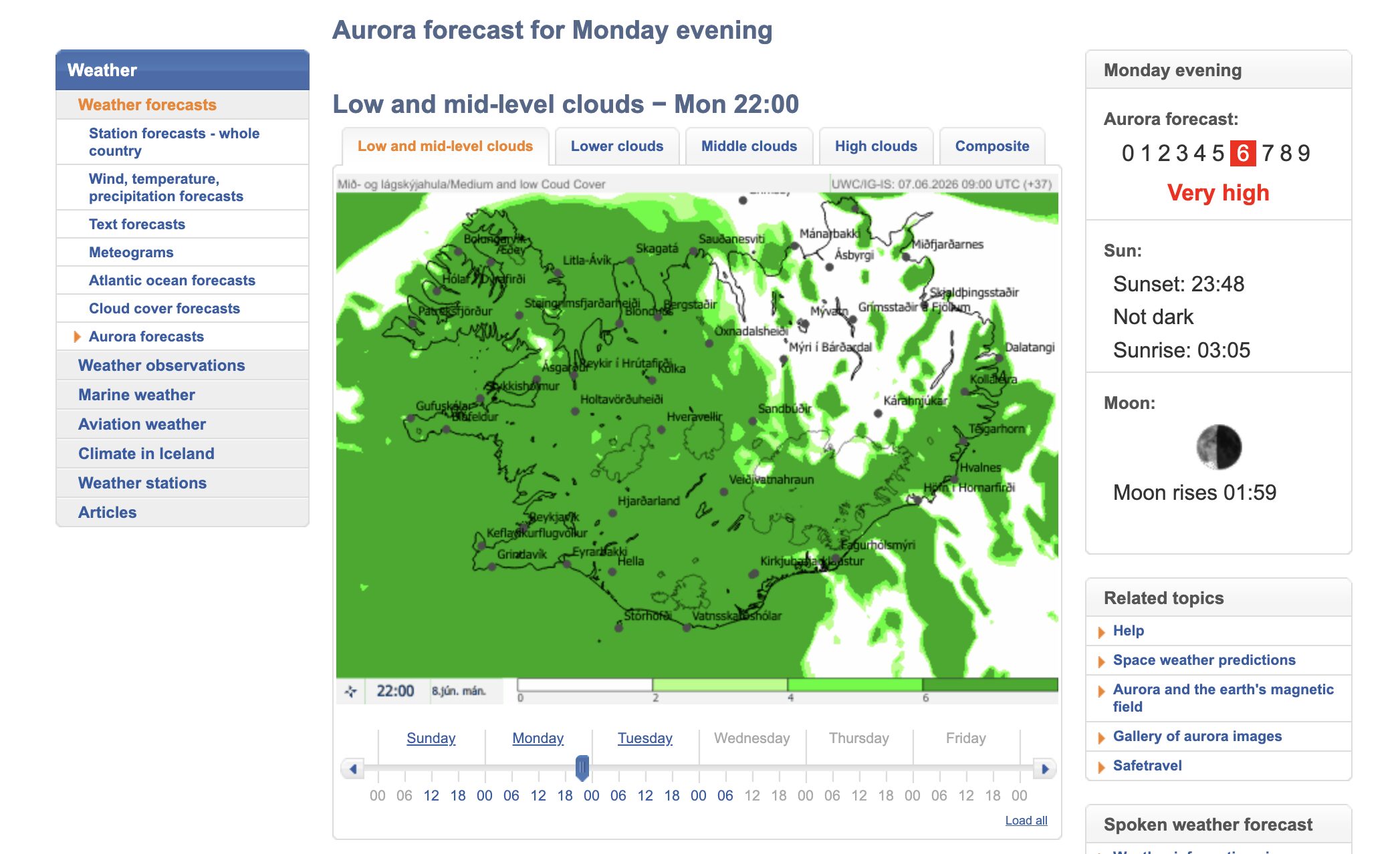
The cloud forecast can still be wrong in either direction. We had nights when the map looked cloudy and the sky opened up for a while, and we had nights when conditions seemed more promising than they turned out to be. I’d use the forecast to decide where to start, not as a guarantee that the night is lost.
Windy was useful for checking cloud cover in both Iceland and Norway. It is another source rather than a replacement for the local forecast, but it helped when we were comparing different parts of a country before setting off.
The Kp number is another thing that is easy to overthink. It runs from 0 to 9, but you do not need an impressive number this far north. A Kp of 1 or 2 was enough for us to see something on a clear night. The strongest display we saw was later recorded as a G2 geomagnetic storm, with a Kp of 6. The camera picked up some pink in the sky, although what we saw with our eyes was mostly a stronger green than usual.
When to go and where to stay
Both of our trips were in October, and I’d be happy to choose that month again. It was dark by around 5pm to 6pm, so there was a long window for looking for the lights without needing to stay awake until 2am every night. The days were still long enough to drive around and see the country, which becomes much harder in deep winter.
October isn’t risk-free. We narrowly missed a large snowstorm near the end of October 2024, and road conditions can change quickly. The upside was that flights, accommodation and car rentals were generally more reasonable before peak winter demand arrived. We also travelled while solar activity was high, around the solar maximum, which gave us more chances of seeing stronger displays.
Our accommodation choices were driven by the night sky more than the room itself. We wanted to be able to walk outside quickly, with as little light pollution as possible and a reasonably open view. Some of our best sightings were from modest hostels and homestays. Being able to step outside, look up and decide what to do next mattered more to us than having a particularly good bathroom.
In Iceland, we spread the nights across the south coast, the Golden Circle and the Snaefellsnes Peninsula. That gave us different areas to try when one part of the country was covered by cloud. It also meant that we were not driving the entire length of the country at night just to chase one patch of clear sky.
Renting and driving it yourself
In Iceland, we rented through Zero Car using a promo code that made the price reasonable for the season. The all-inclusive pricing was the main reason we chose it. There was no excess to worry about and no separate gravel or ash insurance to add, which removed one more thing to think about when the wind was strong or the road surface changed.
The trade-off is that Zero Car uses older, high-mileage cars from Blue Car, so you shouldn’t expect anything new or particularly clever. We were fine with that. For this trip, I cared more about knowing what the rental would cost and not having to second-guess every bit of gravel than I did about driving the newest car.
In Lofoten, we rented from Enterprise and received a Toyota Corolla Cross 4×4. It handled the icy roads well, although the rental ended up costing more than we first expected. A 2.9% credit card surcharge appeared on the receipt after the rental had ended, and three nights came to nearly US$380. Norway is expensive, and the rental car is one of the places where that becomes obvious quickly.
We kept most driving days to around four or five hours. That left enough time to stop when the light was good, wait out bad weather or get to the accommodation before dark. Trying to combine a full sightseeing day with a long night drive is a good way to make the aurora feel like another obligation.
The wind in Iceland deserves respect even when the road looks fine. In Lofoten, the roads become narrow enough that you sometimes have to pull aside for oncoming trucks, and animals do wander onto the road. We also sat for nearly half an hour at the Nappstraumen tunnel, which was under repair and sending cars through in timed convoys. There was no way around it.
None of that was frightening, but it’s the sort of driving I’d want to be comfortable with before deciding to chase the lights alone. You need to be able to concentrate on the road even when the forecast is changing and the sky is doing something interesting behind you.
Getting there, and keeping costs low
Northern Europe is expensive before you add flights between the smaller regional airports, so we planned around award availability and the overall cost rather than trying to create a perfect routing. The long-haul backbone was a pair of business class redemptions from Singapore to Hong Kong to Helsinki and back, which at least meant we could sleep through the longest sectors.
From Helsinki, we flew economy to Reykjavik via Copenhagen. It was a short enough journey that economy was fine, and there was no reason to spend more miles on that part of the trip. The flight reviews from the trip are linked in the Iceland trip report if you want the details.
On the ground, we checked Pelago and Klook before buying attraction tickets. For places such as the Secret Lagoon, they were cheaper than the official site every time we checked. It only takes a minute to compare, so I’d do that before paying the full price.
Food was another area where we kept the cost down. In Norway, we bought things from Rema 1000 and Extra instead of eating out for every meal. A sit-down meal can take a surprisingly large chunk out of the day’s budget, and Iceland is not much kinder. Grocery shopping also made the long drives easier because we did not need to plan every stop around a restaurant being open.
Should you book the tour?
The northern lights are never guaranteed. A guide or a rental car doesn’t change that. We had plenty of evenings when the sky stayed cloudy and nothing appeared. We also had several good nights, including the display in Iceland that came to us rather than the other way around.
For me, the strongest argument for driving yourself is the freedom to keep trying. You can stay near your accommodation if the sky clears there, move to another area when the cloud comes in, or give up and go to bed when the weather is clearly not going to cooperate. You don’t have to follow somebody else’s departure time, and you can combine the drive with the rest of your trip.
The strongest argument for the tour is that someone else has already done the road and weather research. If you’re unfamiliar with winter driving, don’t feel safe driving after dark or simply want to spend the night looking at the sky instead of a weather map, the cost is easier to justify.
We were lucky in Iceland, but luck wasn’t the only reason it worked. We’d checked the forecast, found places to stop and decided in advance how far we were willing to drive. If the planning sounds enjoyable, rent the car and do it yourself. If it sounds like work, book the tour and let somebody else make the decisions. The aurora doesn’t care which option you choose.
For the route and the places we stayed, read our trip reports for Iceland and the Lofoten Islands.


