Prologue
This was our second northern lights trip in two years. With solar activity at its peak, 2025 felt like the right time to still give it another go.
Our first attempt, in late 2024, had been a mix of near-misses and pleasant surprises. It kept the excitement alive, but we also learnt a few lessons about chasing the northern lights.
Lessons from our previous trip
In October 2024, we travelled through Iceland and Norway with a fairly simple assumption: the further north we went, the better our chances. That theory didn’t last very long.
Aurora chasing, as it turns out, is far less about latitude than it is about cloud cover. You do need to be near the Arctic Circle, but once you’re near or inside it, clear skies matter far more.
Tromso was the biggest disappointment. A northern lights tour we had booked was cancelled due to bad weather, and a severe snow warning was issued during our stay. We did hear from tourists that they saw the northern lights the night before we landed.
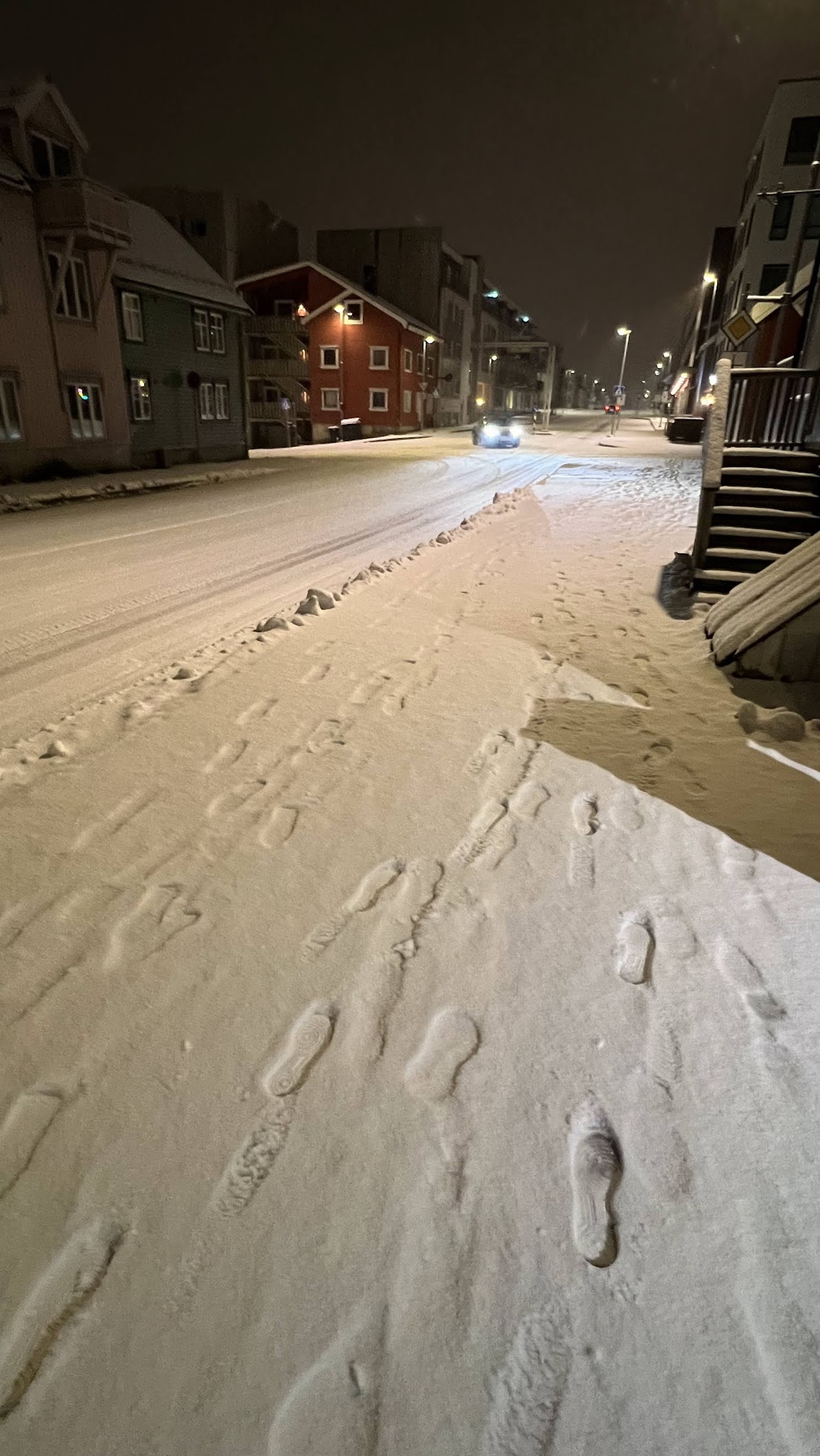
We did eventually see a very faint aurora, but only incidentally, during a reindeer tour one evening. It was technically a sighting, but not the kind you would be excited about. We even camped out near the Prestvannet, but it was just too cloudy on the days we were there.
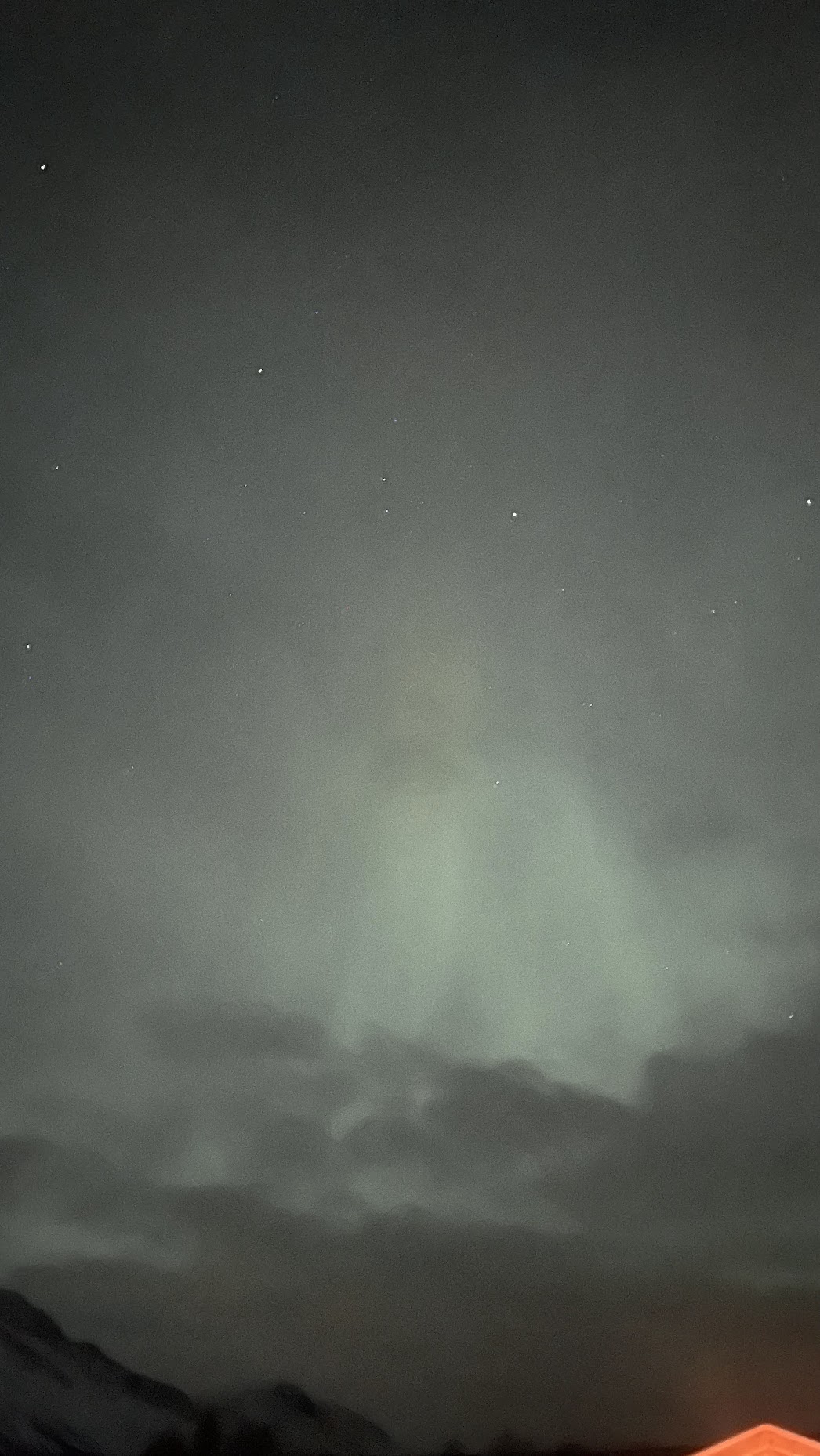
Iceland, unexpectedly, delivered. We hadn’t even planned to chase the lights there. We rented a car, though that was mainly for driving around Ring Road, and Tromso was supposed to be our main shot. Yet on our final nights, we were treated to a strong northern lights display right outside our homestay in Borgarnes. We’d already scoped out safe pull-offs along the Ring Road and were prepared to drive out if needed, but in the end, we didn’t have to move at all.
That trip reset our expectations. It also reshaped how we planned this trip.
Planning the trip
This time, we planned with flexibility front and centre. Being far north helps, but it doesn’t mean much if you’re stuck under a solid blanket of cloud. We wanted options.
We also knew we wanted to try again while solar activity was still high. With the solar maximum ongoing, it felt like a now-or-never window. Instead of anchoring ourselves to one location, we built an itinerary that allowed us to move if the weather refused to cooperate.
We settled on Iceland and the Lofoten Islands. It felt like the right balance of familiar and new. My partner hadn’t been back to Iceland in years and wanted to see more than just Reykjavik and the Golden Circle. The long stretches of the south coast, and quieter areas like the Snaefellsnes Peninsula. Lofoten, on the other hand, was completely new to both of us. We’d only seen it in photos: jagged peaks, fishing villages and scenic roads.
Accommodation choices were practical rather than aspirational. We prioritised places where we could step outside easily at night, with minimal light pollution and clear sightlines to the sky. The ability to check the aurora forecast, look at cloud cover, and decide whether to stay put or drive out mattered far more than how good the rooms were.
We chose October deliberately. It’s a shoulder season sweet spot: dark enough by around 5-6pm to give you a long window for aurora hunting, but still bright enough during the day to explore without rushing. It’s not quite winter either, which keeps driving conditions in Iceland mostly manageable. We narrowly missed a snowstorm that rolled in towards the end of October 2025. As a bonus, flights, accommodation, and car rentals are all more reasonably priced before peak winter demand kicks in.
We kept our daily driving hours to around four to five hours, avoiding overly aggressive schedules, and accepting that not every night needed to be an all-out chase.
In Iceland, we focused on the south coast as far as Jokulsarlon, then looped back via the Snaefellsnes Peninsula. The Westfjords were on the wishlist, but weather and time didn’t quite line up. We spent seven nights in total, which gave us multiple shots at (hopefully) clear skies across different regions.
For planning our road trip, we used Wanderlog. The free plan was more than enough. It’s helpful to know how long we’d have to drive each day.
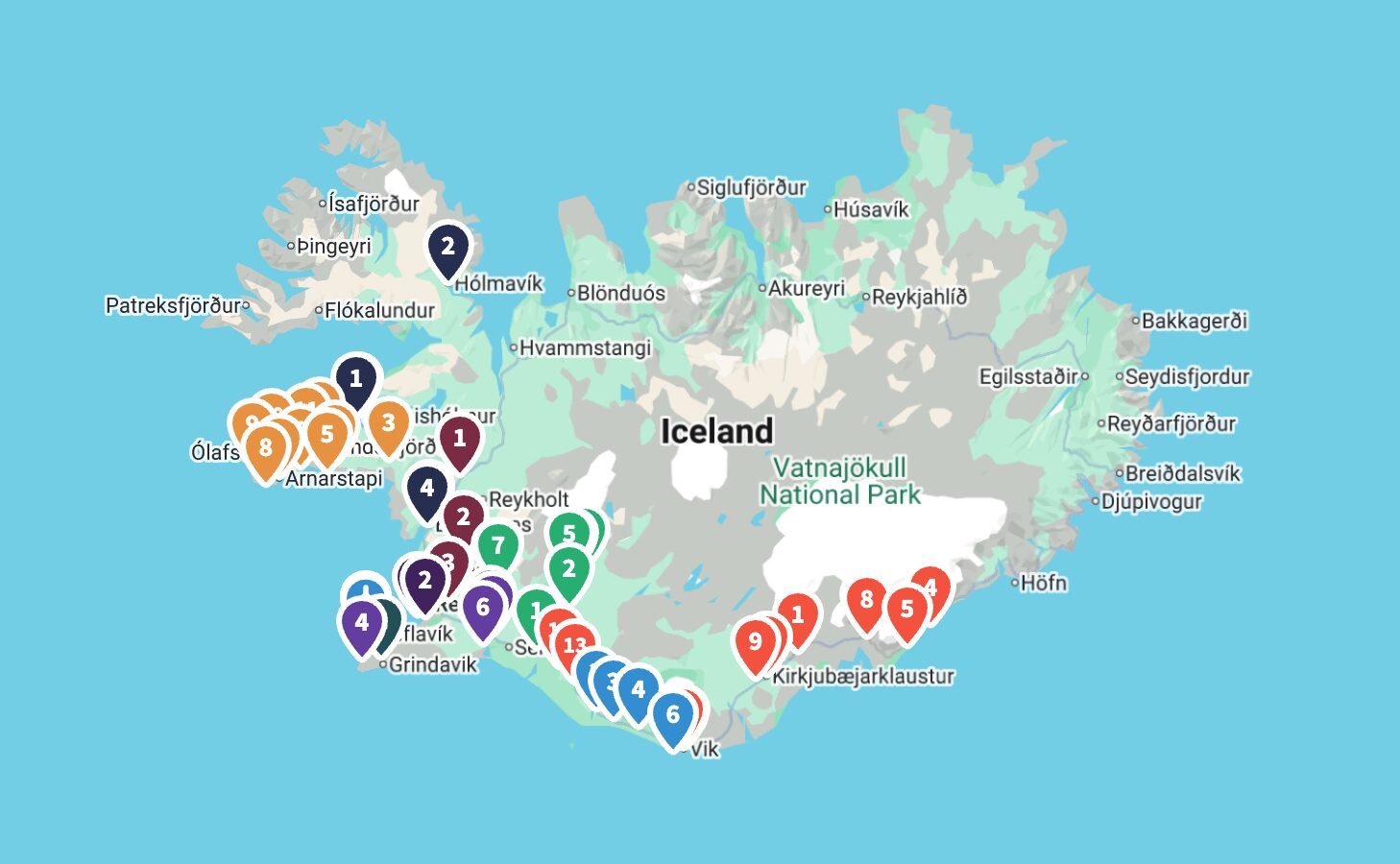
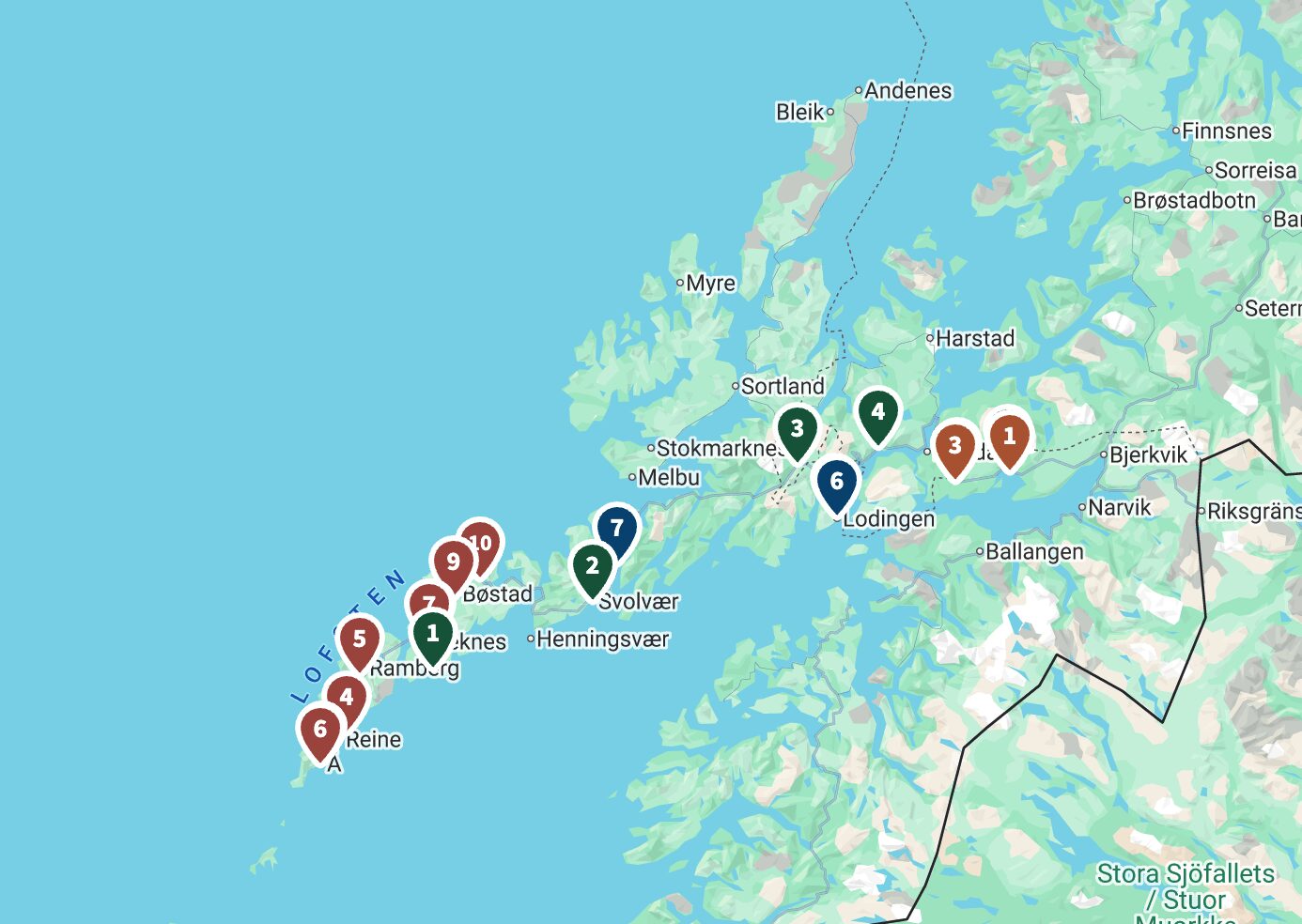
For the Lofoten Islands, we mainly wanted to visit the picturesque fishing villages.
Most importantly, we went in with more realistic expectations. Seeing the northern lights is never guaranteed. Instead of fixating on one perfect night, we focused on giving ourselves multiple decent chances across the trip.
Our flights
Flight planning was driven by award availability and budget. Northern Europe is expensive even before you add flights between remote airports, so we prioritised routes that were affordable and workable, rather than chasing theoretical “perfect” itineraries.
From Singapore to Helsinki
The backbone of this trip was our Pacific redemption tickets. We spent weeks checking availability before finally locking in SIN-HKG-HEL and HEL-HKG-SIN. These were business class redemptions, and with the amount of flying ahead, I don’t think we would have enjoyed this trip nearly as much if we had done it all in economy.
We also used the opportunity to review a couple of flights along the way:
Helsinki to Iceland
From Helsinki, we flew from Helsinki to Rekyjavik via Copenhagen with SAS in economy. We had a five-hour layover in HEL, which we spent at the Aspire Lounge.
It’s a long routing, no doubt, but manageable when the long-haul sectors are in business class. If you’re flying from Asia to the Nordics and then onwards to Iceland, being able to sleep properly for a large part of the journey makes a huge difference. Economy between Helsinki and Reykjavík was perfectly fine.
Iceland to the Lofoten Islands
Getting from Iceland to Lofoten took us through Oslo also in economy, with an overnight layover in Oslo. We stayed at the Radisson Hotel at Oslo Airport, which was convenient for an overnight layover.
We chose the Harstad/Narvik Airport in Evenes as our entry point to Lofoten. There are several airports you can use, including Bodo, Svolvaer and Leknes. Svolvaer and Leknes mainly take Wideroe turboprops, and baggage fees can add up quickly. Evenes, on the other hand, is served by SAS and Norwegian with larger aircraft, and with SkyTeam Elite Plus, we could skip checked baggage fees entirely.
Lofoten Islands to Helsinki
Leaving Lofoten meant a series of hops given the cheapest flights available on the dates we had to fly out: EVE-OSL-CPH-HEL in economy with a 6am departure. It is definitely tiring, but that is the reality of travelling around northern Scandinavia without paying through the nose.
Most of our SAS tickets were booked through OTAs. For some reason, certain OTAs could price multi-segment itineraries cheaper than SAS’s own website. Combined with elite status baggage benefits, it helped keep our costs pretty low, which mattered on a trip involving multiple flights and winter wear, which were very bulky.
Road trip: Picking up the car from Zero Car
We rented our car through Zero Car, using a promo code that made the price reasonable for the season. The all-inclusive pricing removed a lot of friction. There was no excess to worry about and no stress over gravel or sudden gusts of wind. That peace of mind mattered in Iceland, especially in October, when weather changes quickly and roads can look calm one moment and hostile the next.
One thing to note is that Zero Car tends to use older, high-mileage vehicles from Blue Car, so do not expect brand-new cars.
From the start, we treated driving as the main constraint shaping the trip. This was not a summer road trip where you simply keep going until sunset. Daylight was shrinking closer towards the end of October, conditions were variable, and we planned conservatively from the outset.
Road trip: Driving around Iceland in early winter
October sits in the middle ground. It is not quite winter, but it is no longer forgiving either. You can have clear roads in the morning, sleet by the afternoon, and fog in the evening. We even narrowly missed the huge snowstorm that came late in October 2025.
We kept most driving days to around four to five hours. It allowed us to stop when the light looked good, wait out patches of bad weather, or simply arrive before dark. But even then, on certain days, we arrived when the skies are already dark.
The wind deserves a special mention. Even when the roads themselves felt fine, strong gusts on exposed stretches demanded full attention. It is the kind where your car can shake, and can blow away car doors if you don’t hold them properly.
Road trip: Getting to the south coast
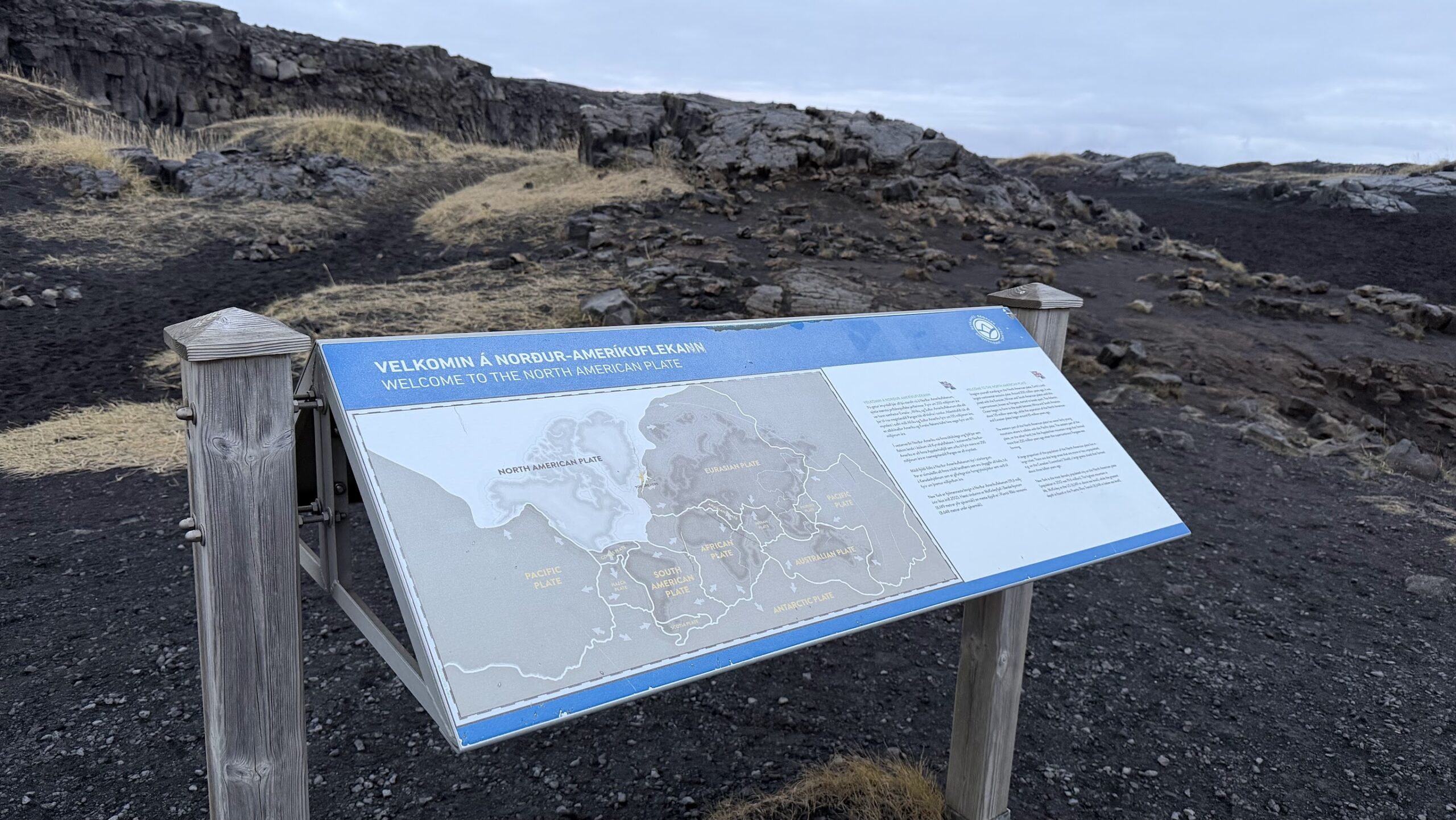
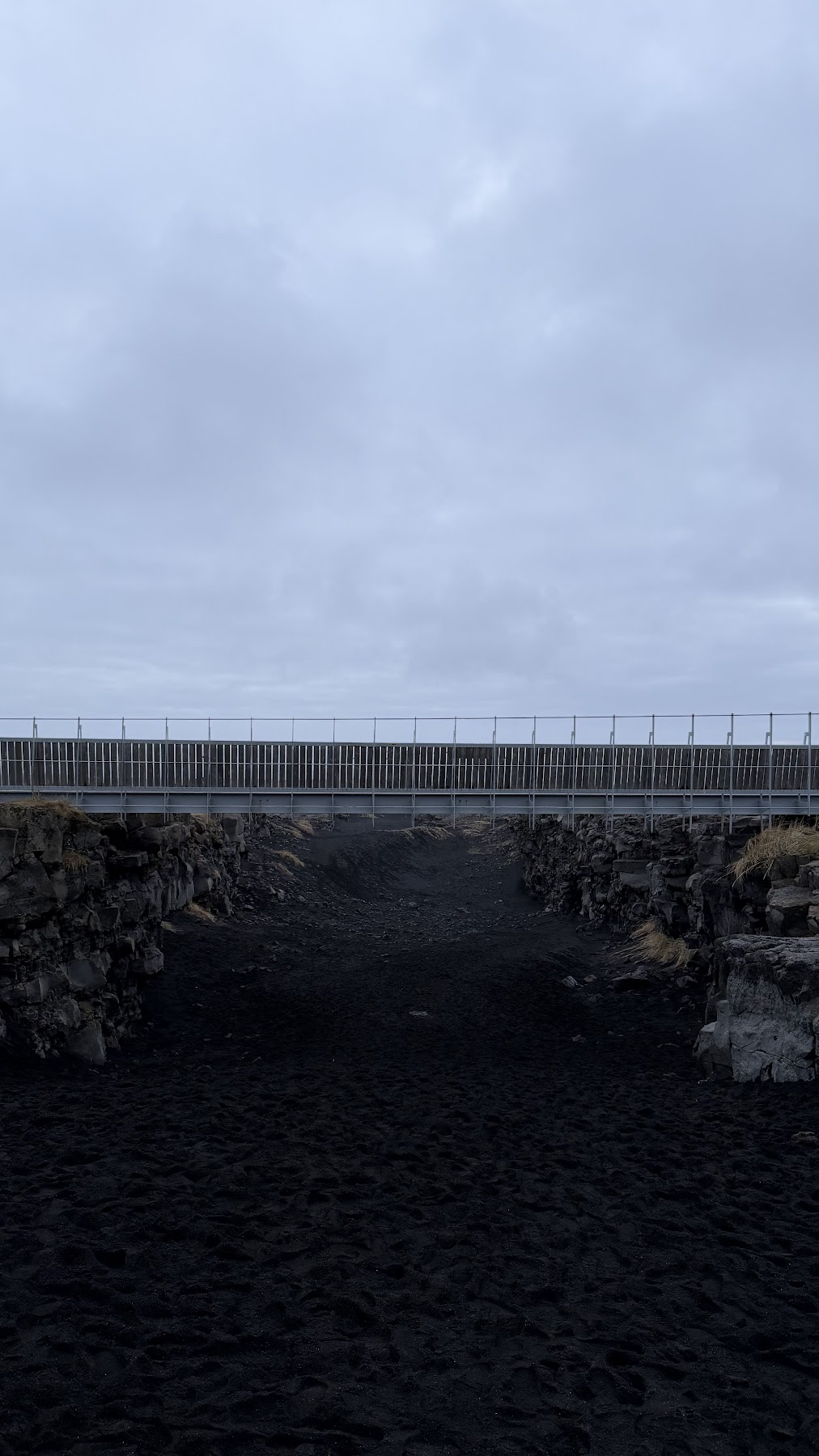
On our first day, we landed at around 4pm, which meant that the sun was setting pretty quickly. Our first stop was to visit the Bridge Between Continents, which was near the Keflavik airport.
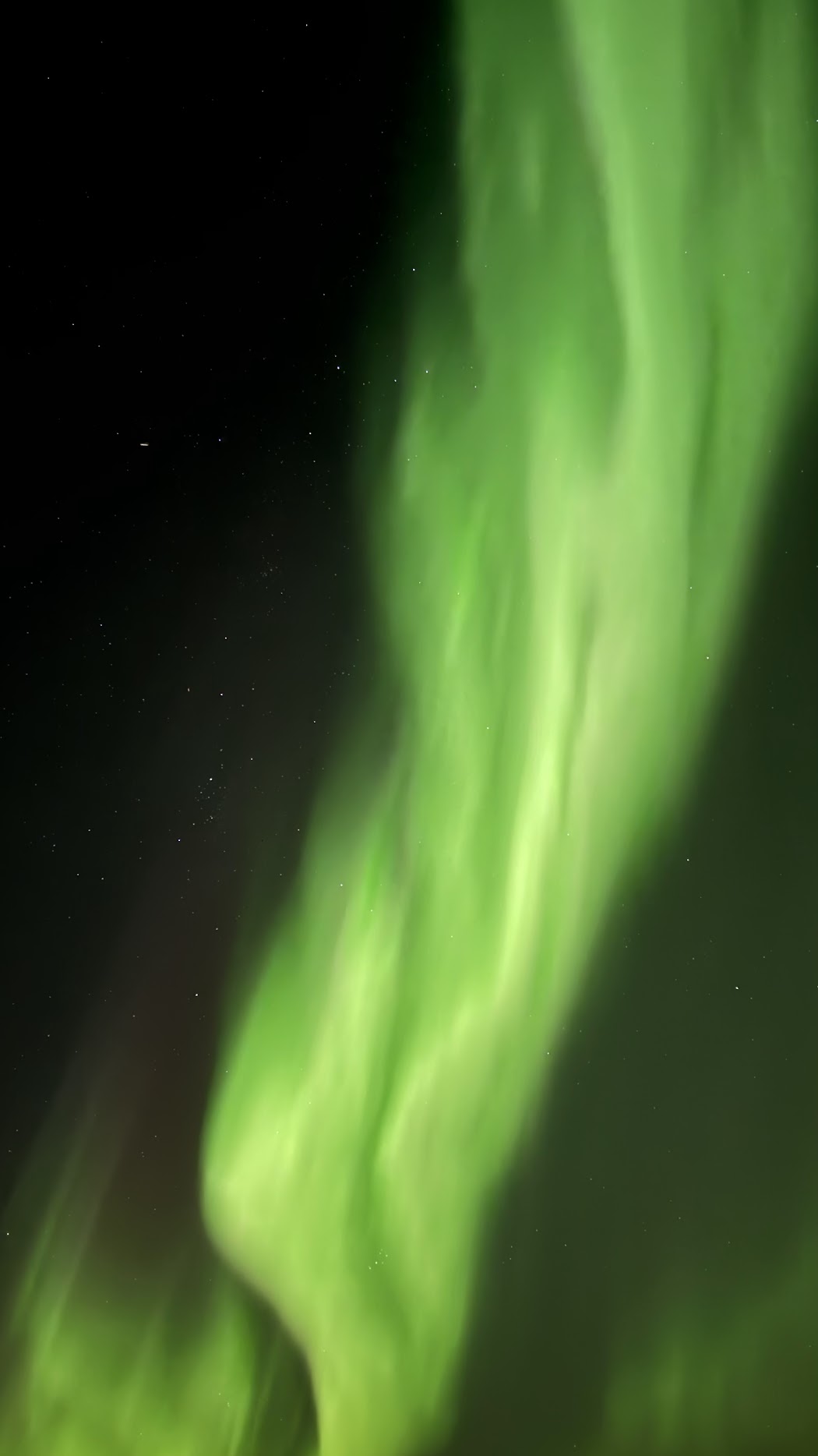
We then drove through Grindavik, which was affected in the more recent volcanic eruptions, and for a while more before getting to Hotel Kvika, where we were greeted by the northern lights on arrival!
Road trip: The Ring Road from the south coast to Jokulsarlon
The south coast formed the backbone of the trip. It has all the familiar highlights, waterfalls, glaciers and black sand beaches. Really beautiful sights!
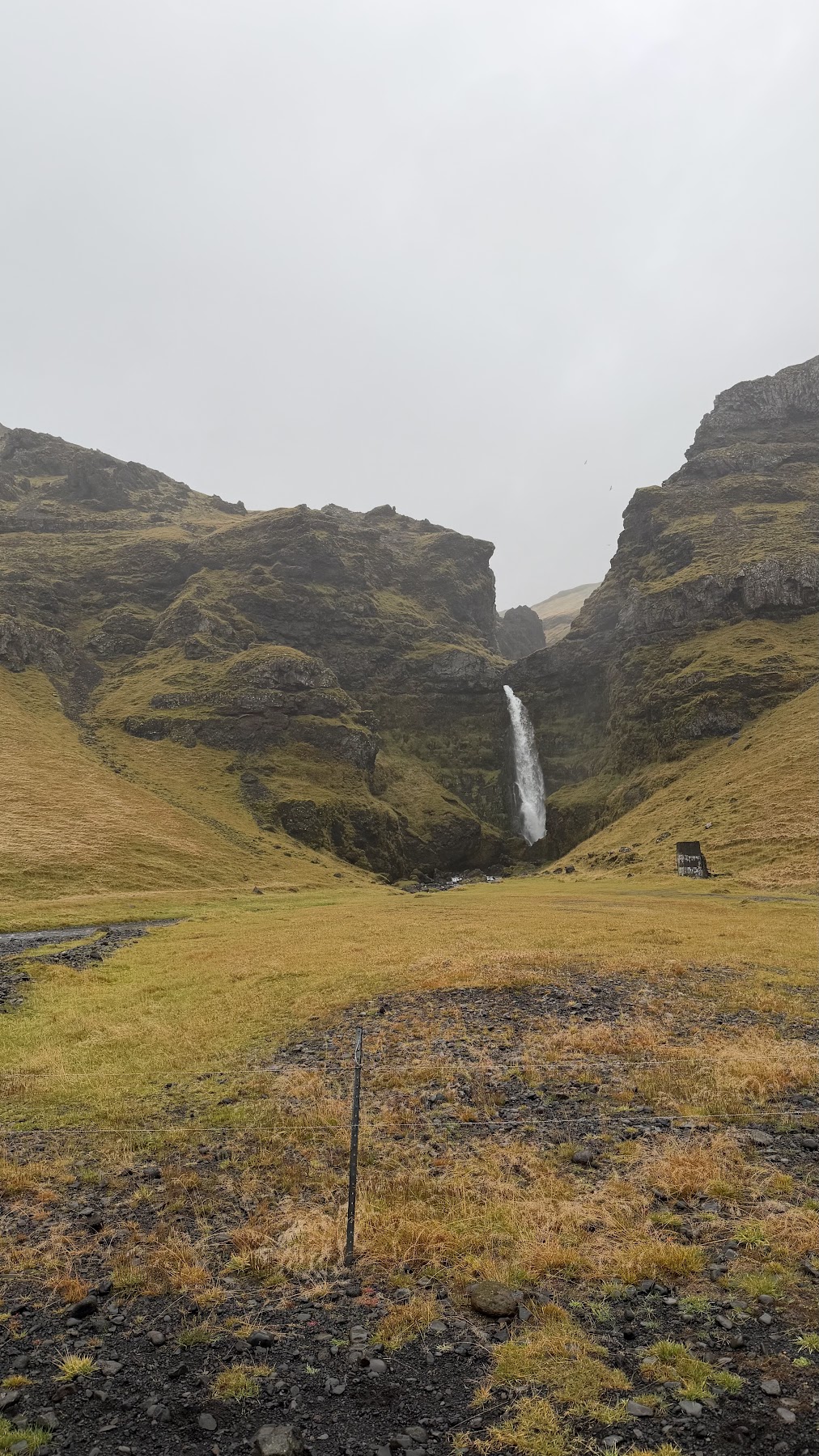
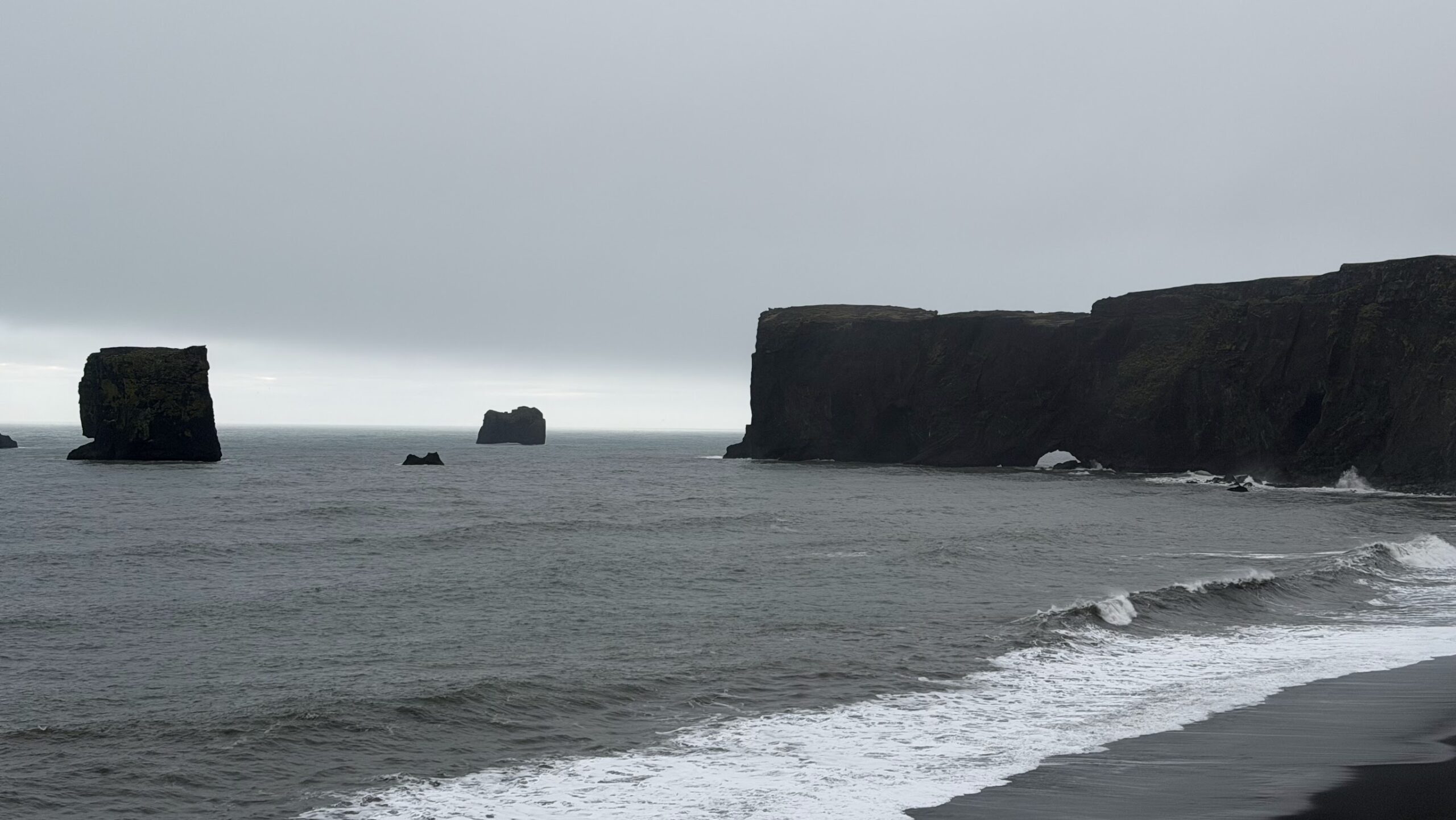
Driving east towards Jokulsarlon, the landscape kept shifting. Flat plains gave way to mountains with dramatic cliffs, and glaciers appeared almost casually in the distance. The late autumn sun transformed ordinary scenes into something far more dramatic, especially when clouds broke at just the right moment.
We planned about three days just to explore the south coast of Iceland, and we stopped at Hvoll Hostel along the Ring Road. Though we didn’t really get to catch the northern lights here due to the cloud cover, it was a beautiful place and a good midpoint between Vik and Jokulsarlon. Not to mention, the hostel was very affordable too given accommodations around here can be expensive.
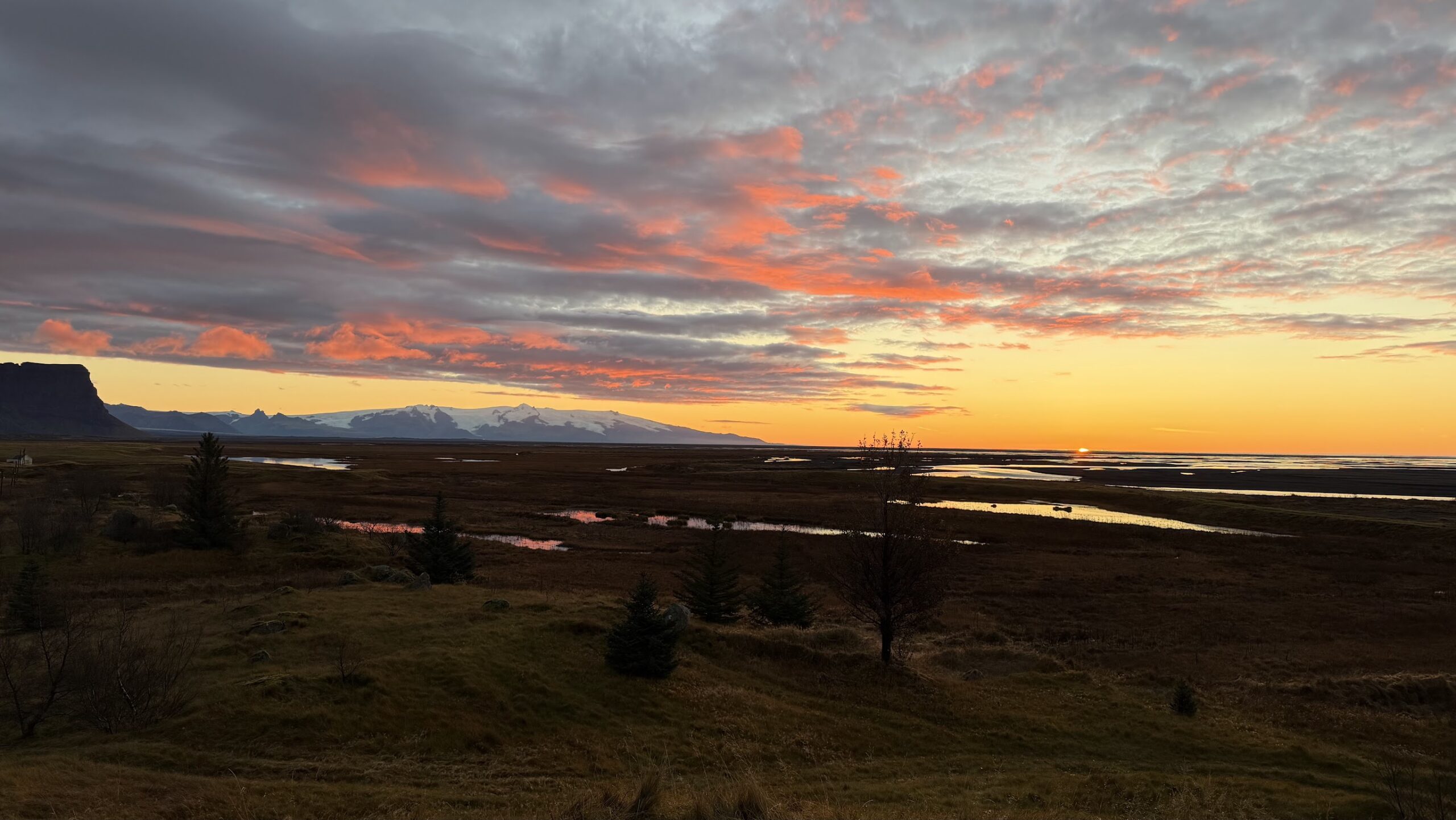
We made our way to Jokulsarlon to catch the glacier boat tour the next morning, and it took us over an hour to get there.
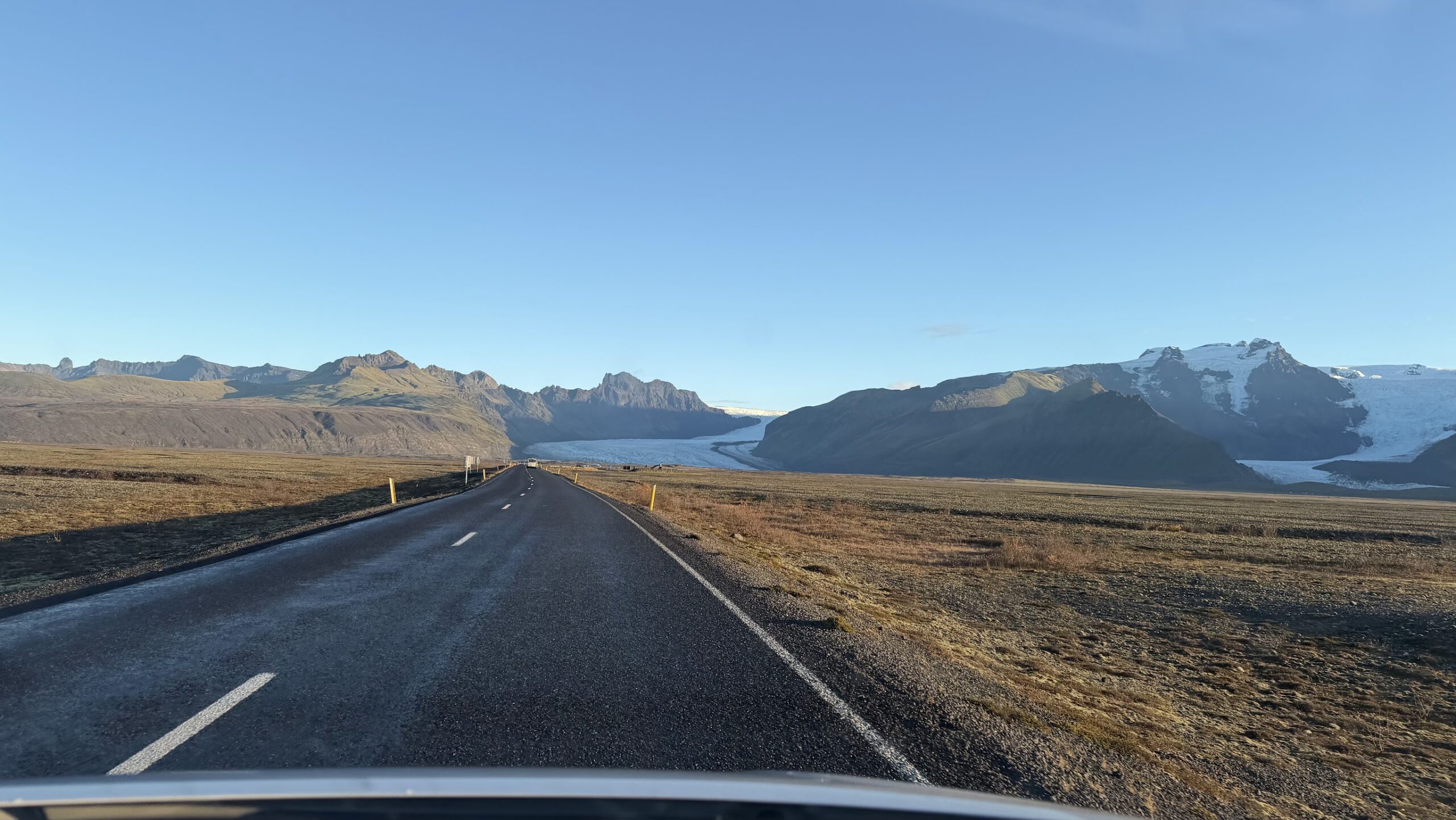
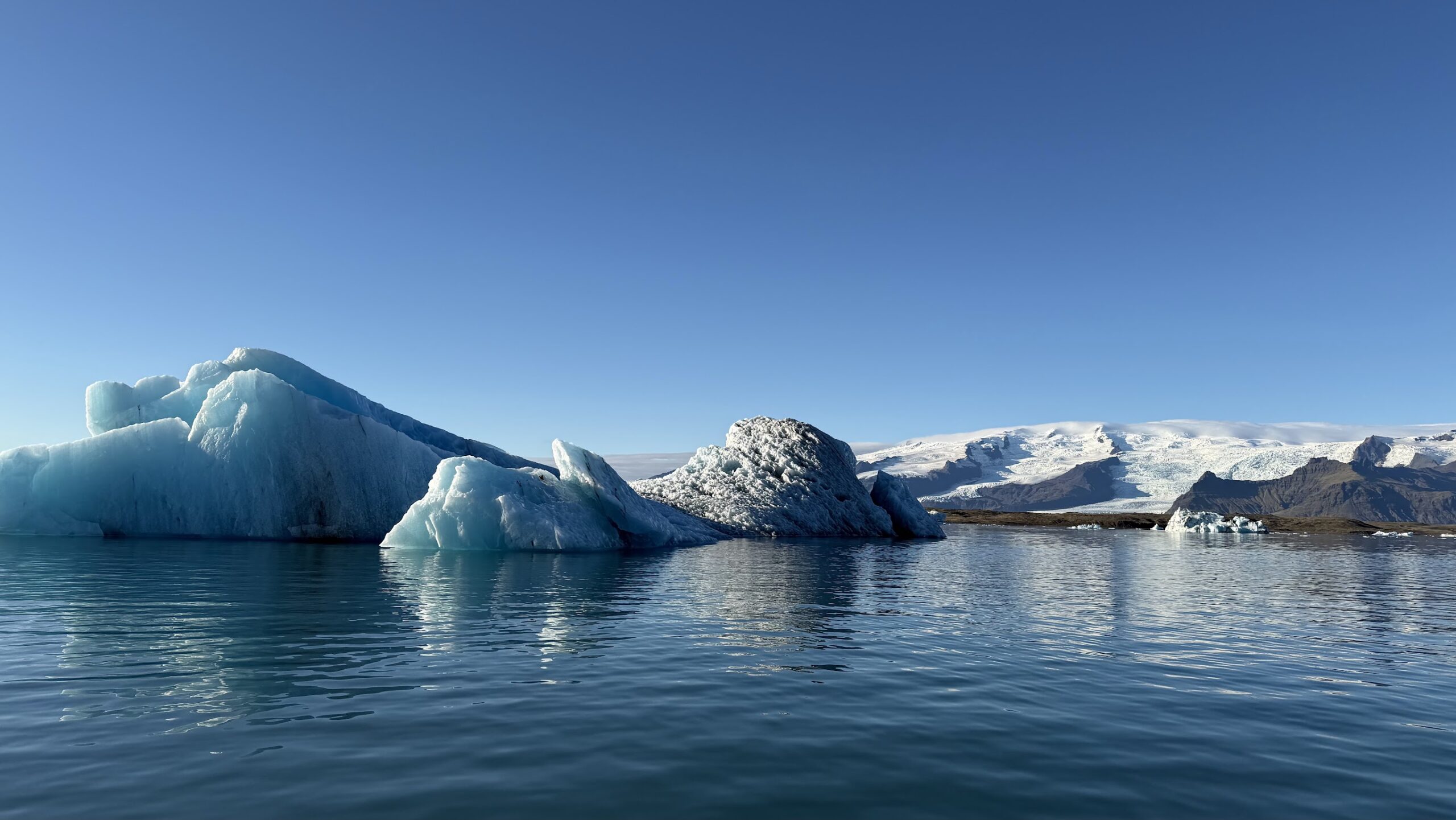
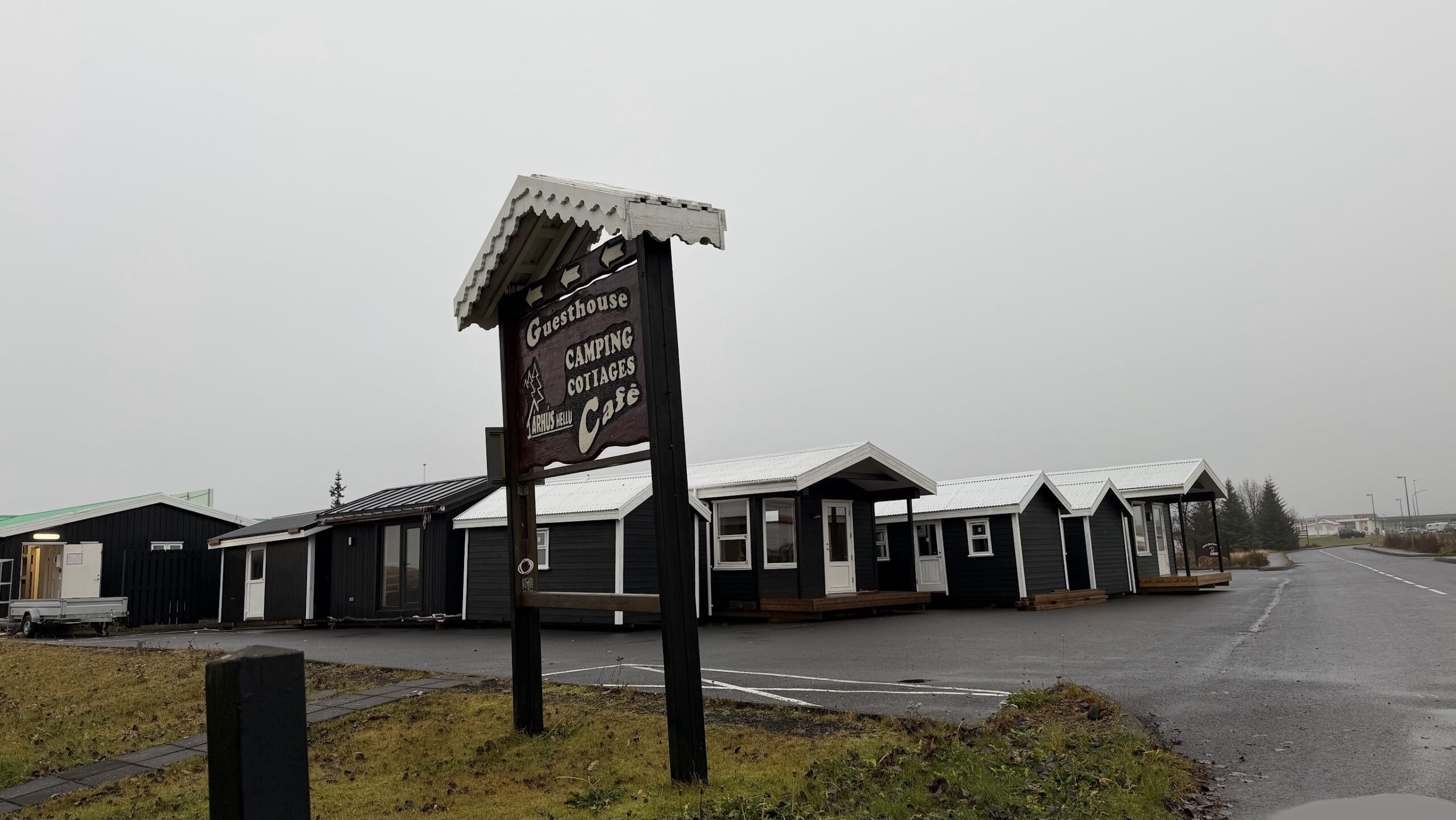
It was a good reminder of why we chose not to overpack our days, letting us enjoy the south coast while there is still daylight. The roads are long for sure, and three days probably is pretty short already. We ended up driving about ~3.5 hours back to Hella where we stayed at a cottage.
Road trip: The Golden Circle
We set aside a full day for the Golden Circle, which turned out to be just the right amount of time. The route itself is straightforward, and even in early October it was easy to get around, though sometimes it can get a little foggy along the Golden Circle.
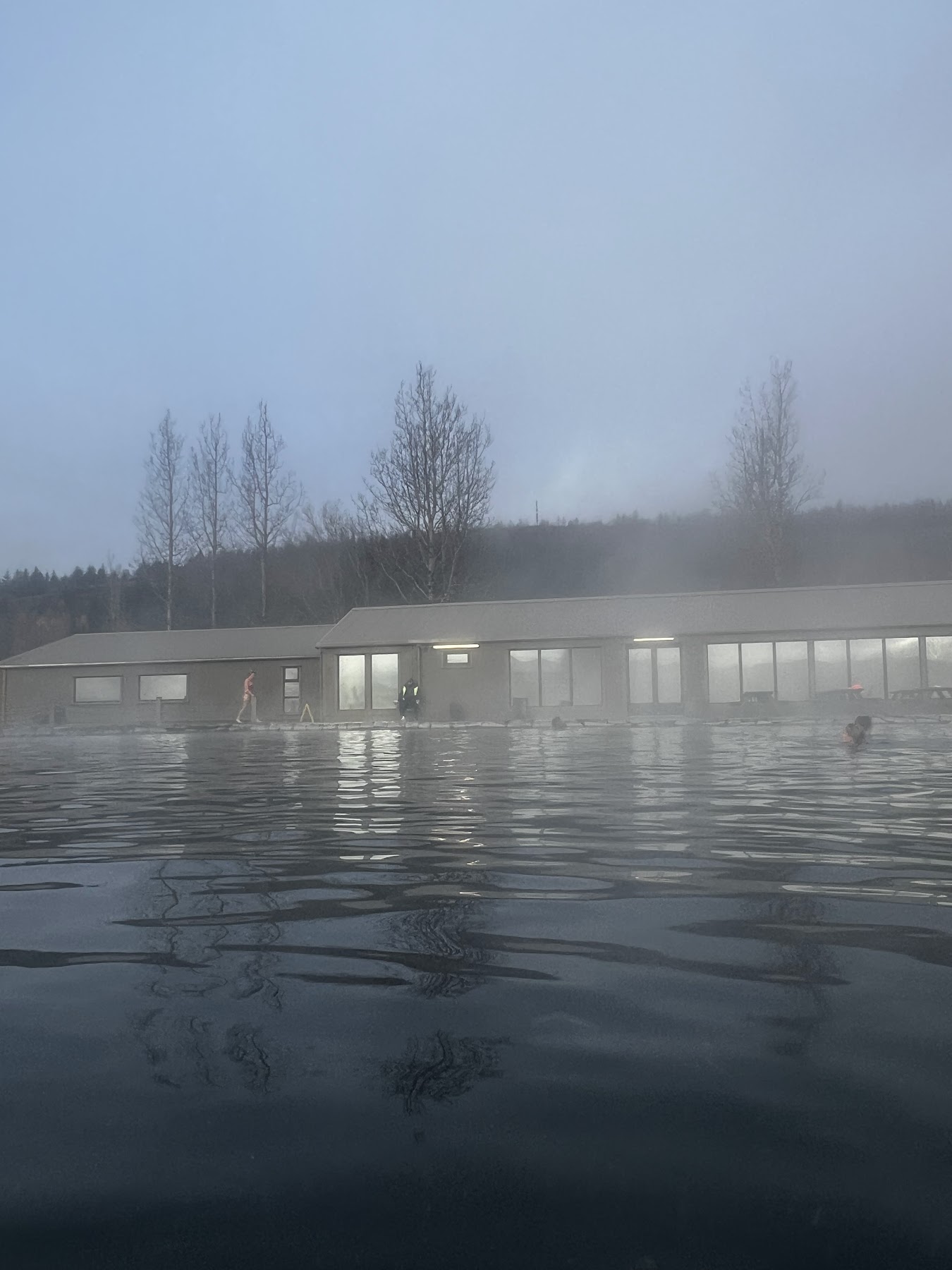
Starting at the Secret Lagoon helped ease us into it. It was quieter than we expected, especially earlier in the day, and felt like a good way to break up the driving before moving on to the more dramatic sights. We booked tickets to the Secret Lagoon via Pelago as there was a promotion. For our 2024 trip, we booked through Klook. Both times, they were cheaper than getting tickets from the official site.
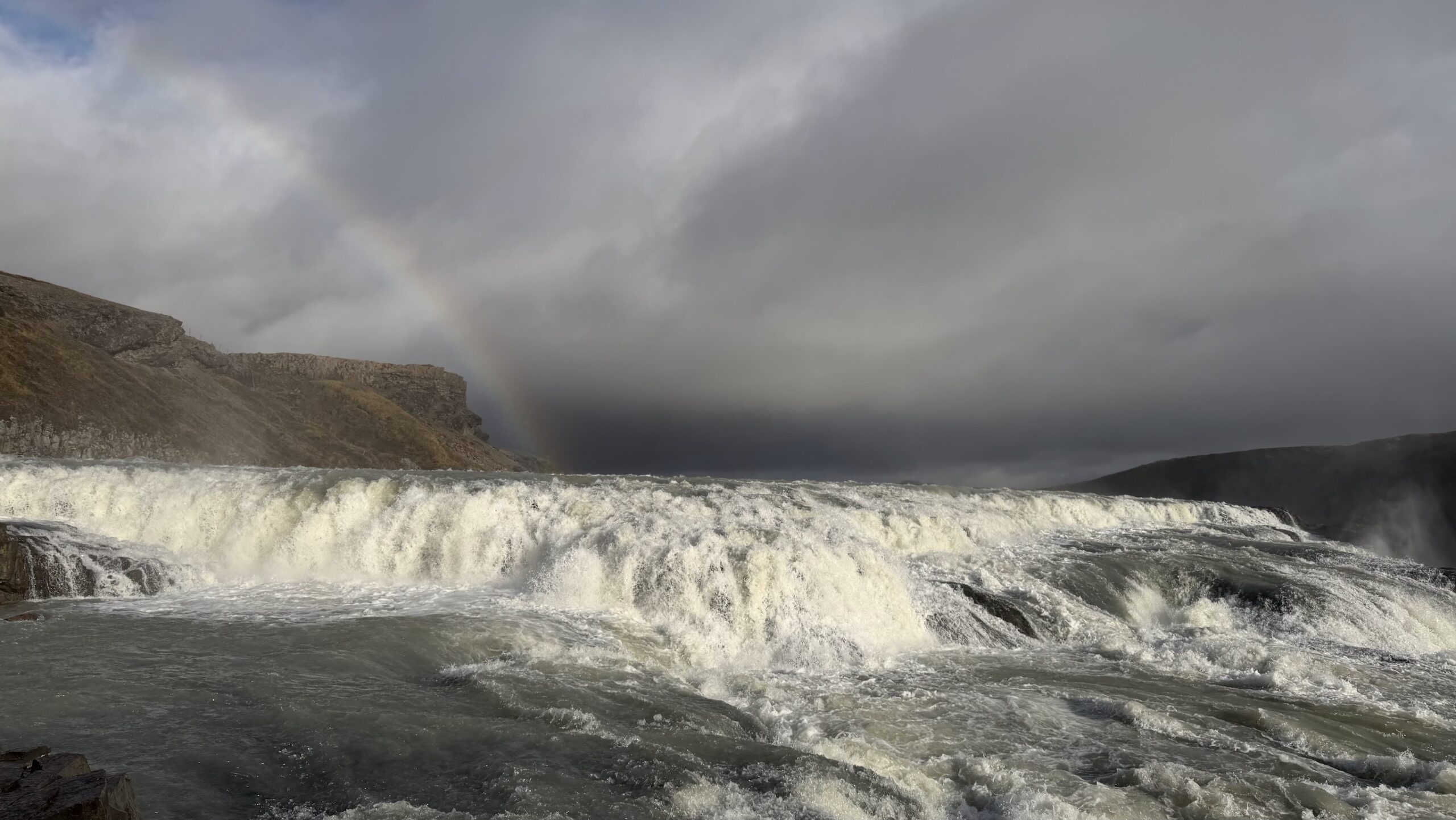
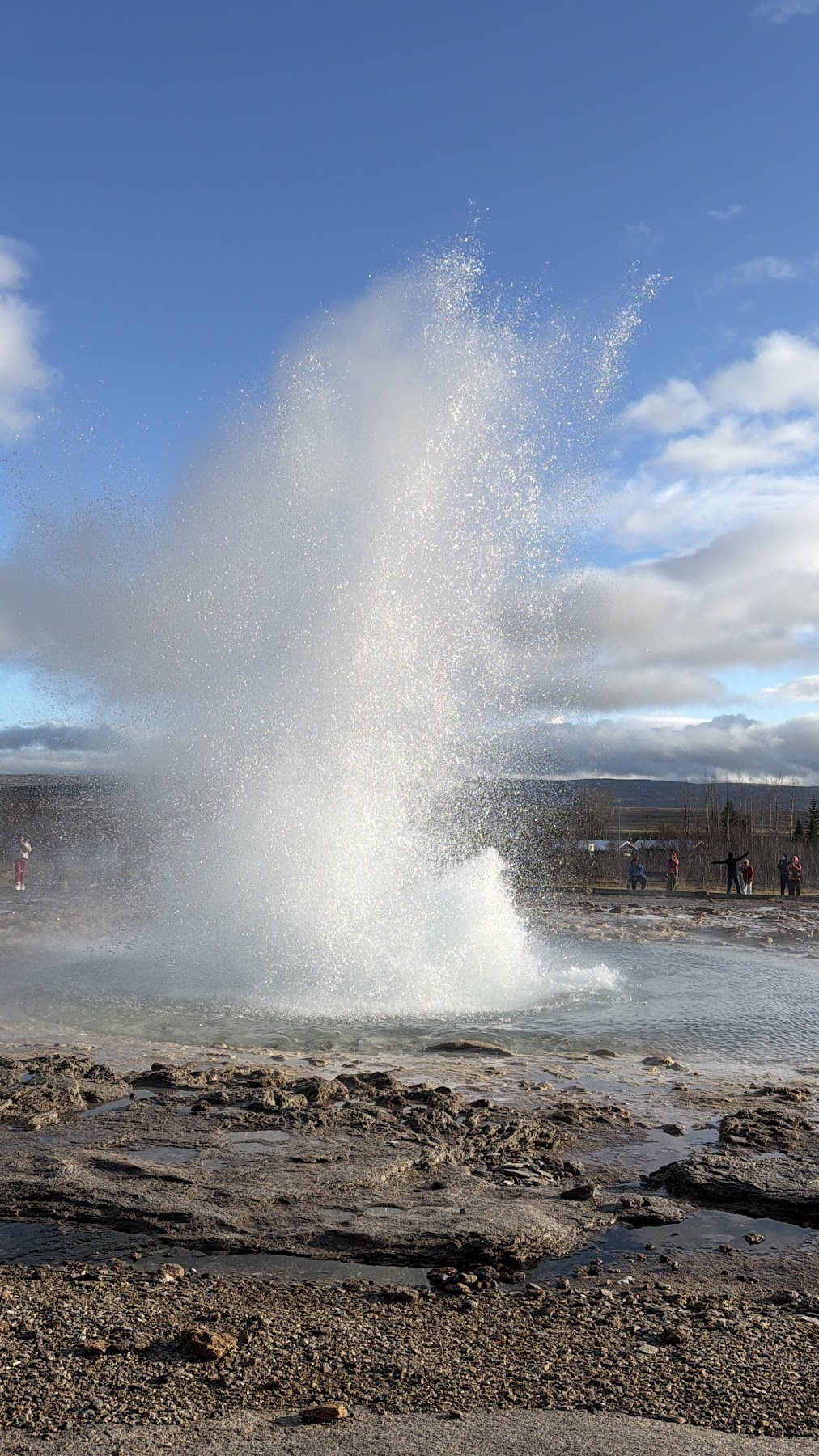
Gullfoss and Strokkur were busier, as expected, but timing made a big difference. By spacing things out and lingering when the light was good, we never felt like we were being pushed along by the crowds.
Thingvellir National Park was a fitting place to end the day. The landscape there feels more open and it was a nice contrast after the energy of the geysers and waterfalls.
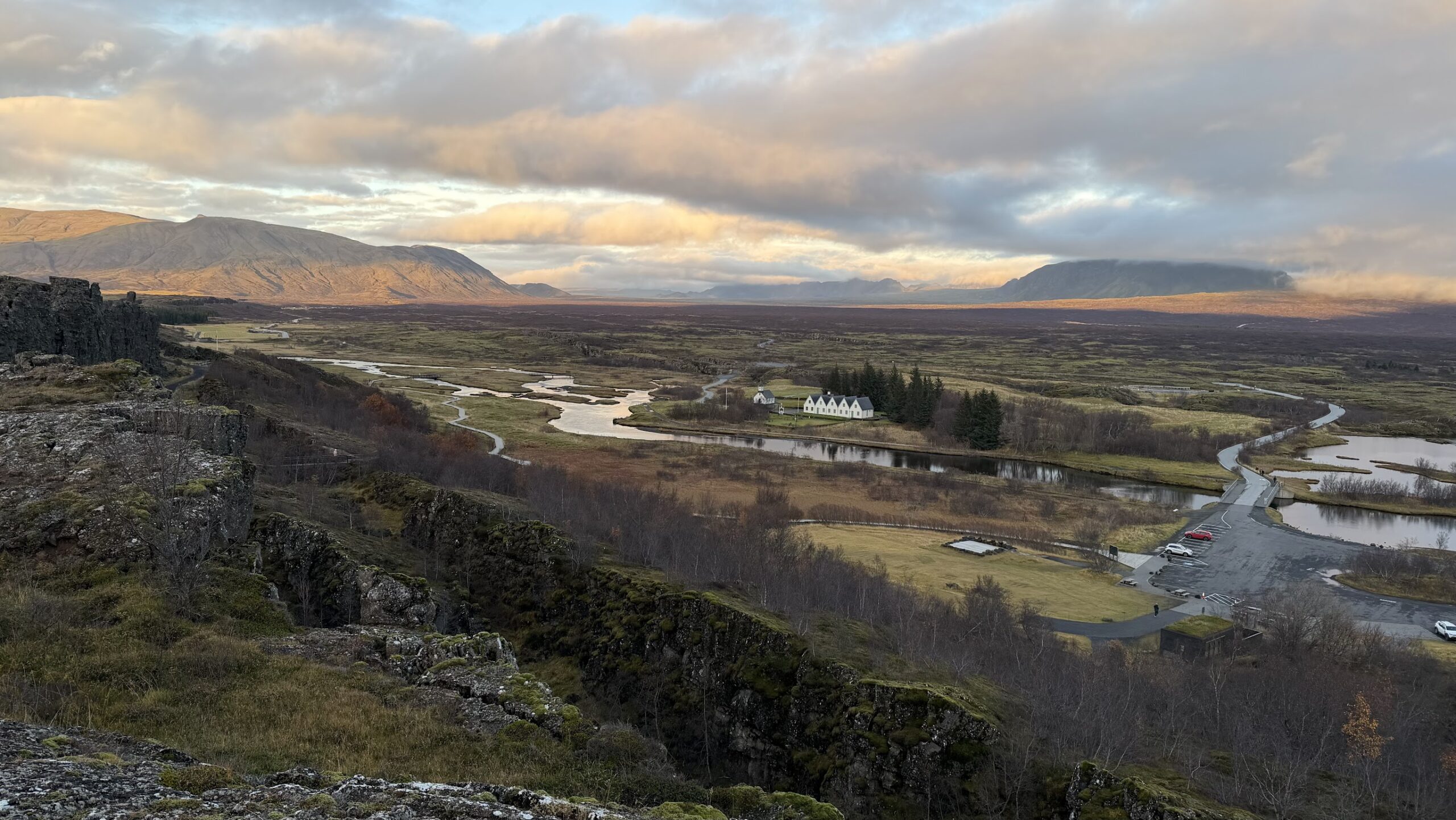
By the time we left, the daylight was already starting to fade, which is why it’s important not to overload each day with multiple places. We stayed near Mosfellsbaer.
Road trip: Snaefellsnes Peninsula
The Snaefellsnes Peninsula ended up being one of the most rewarding parts of the trip. It felt noticeably calmer and more atmospheric than the south coast, with fewer people and a slower pace, especially since we were going to stay overnight at Stykkisholmur rather than trying to rush through it in a single day.
We covered most of the peninsula as we made our way from Mosfellsbaer across to the west. The drive along the coastline itself was a highlight for sure.
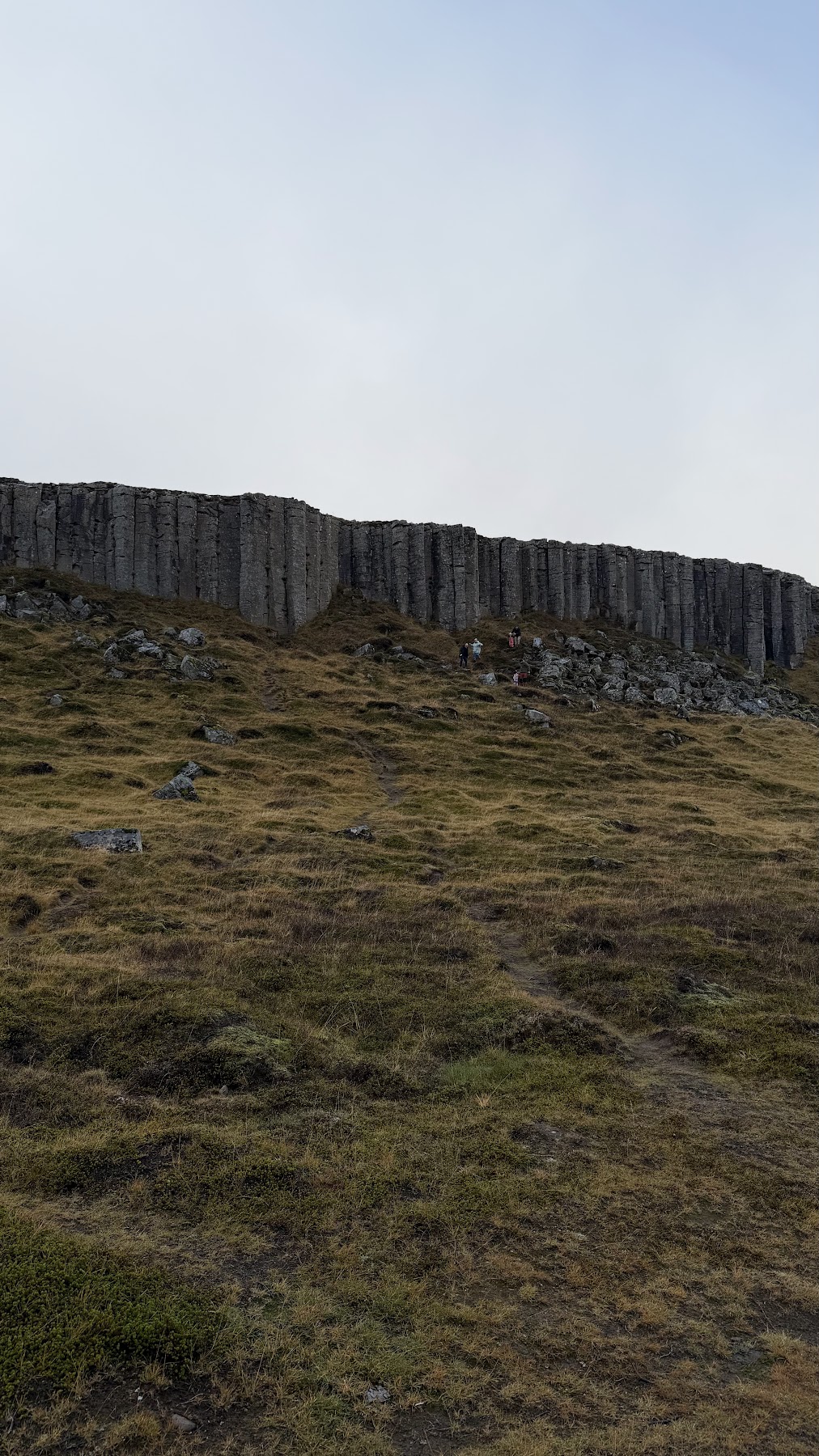
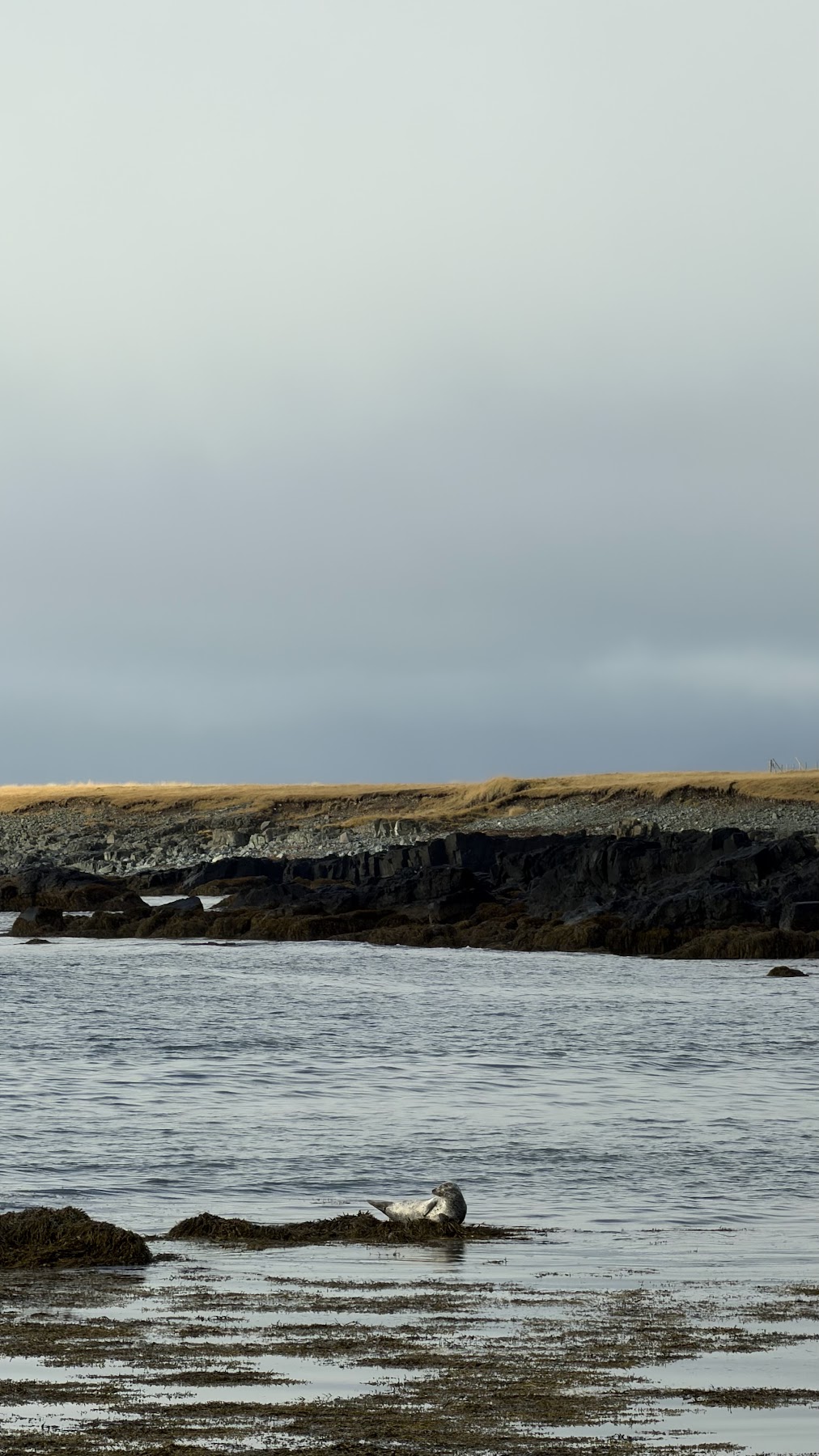
From the geometric columns of the Gerduberg cliffs to the seals swimming at Ytri Tunga, the scenery kept shifting in small but satisfying ways.
Further along, the black church at Budakirkja, the coastal paths around Arnarstapi, and the jagged formations at Londrangar all felt distinct, even though they sit relatively close together.
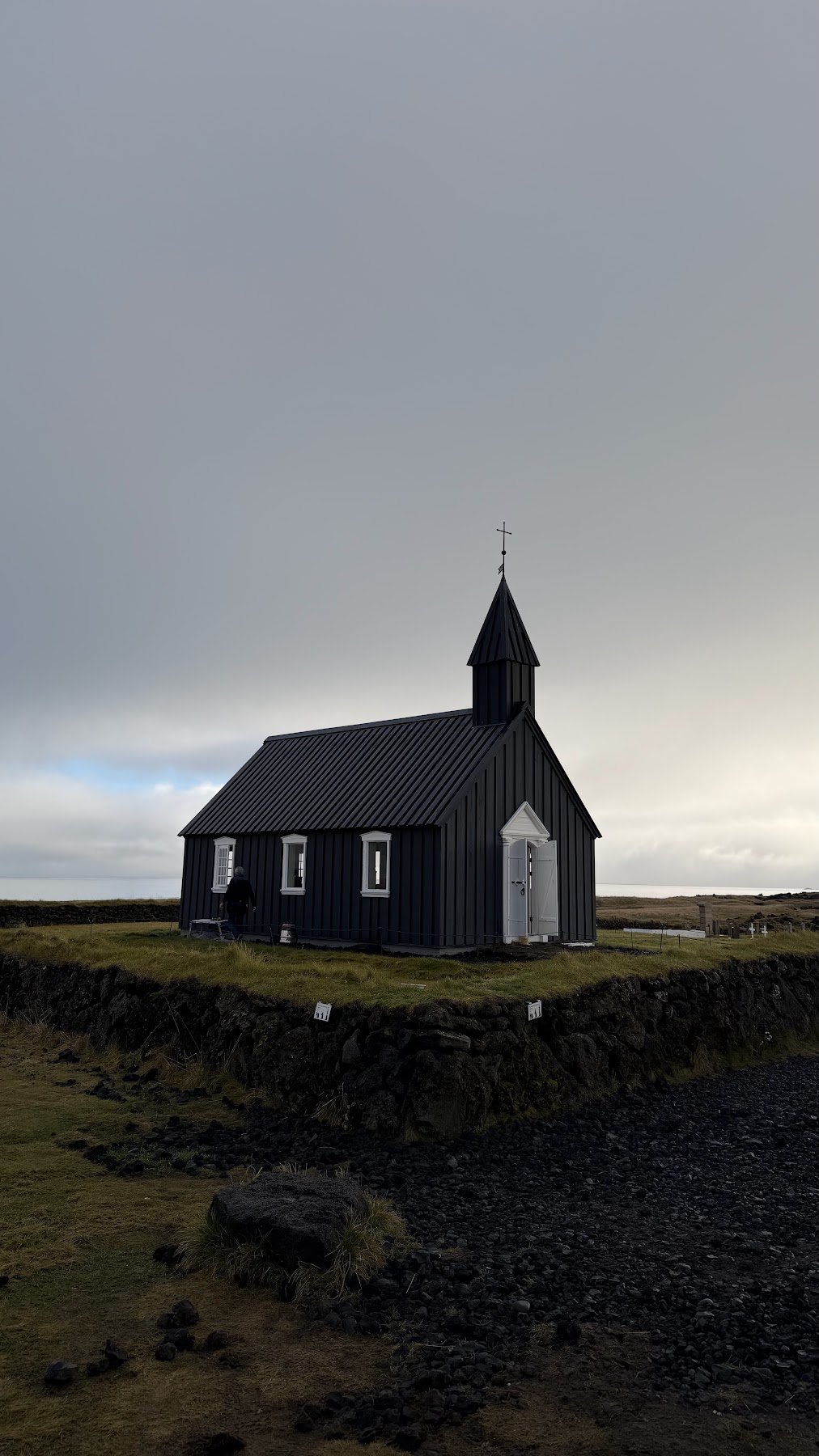
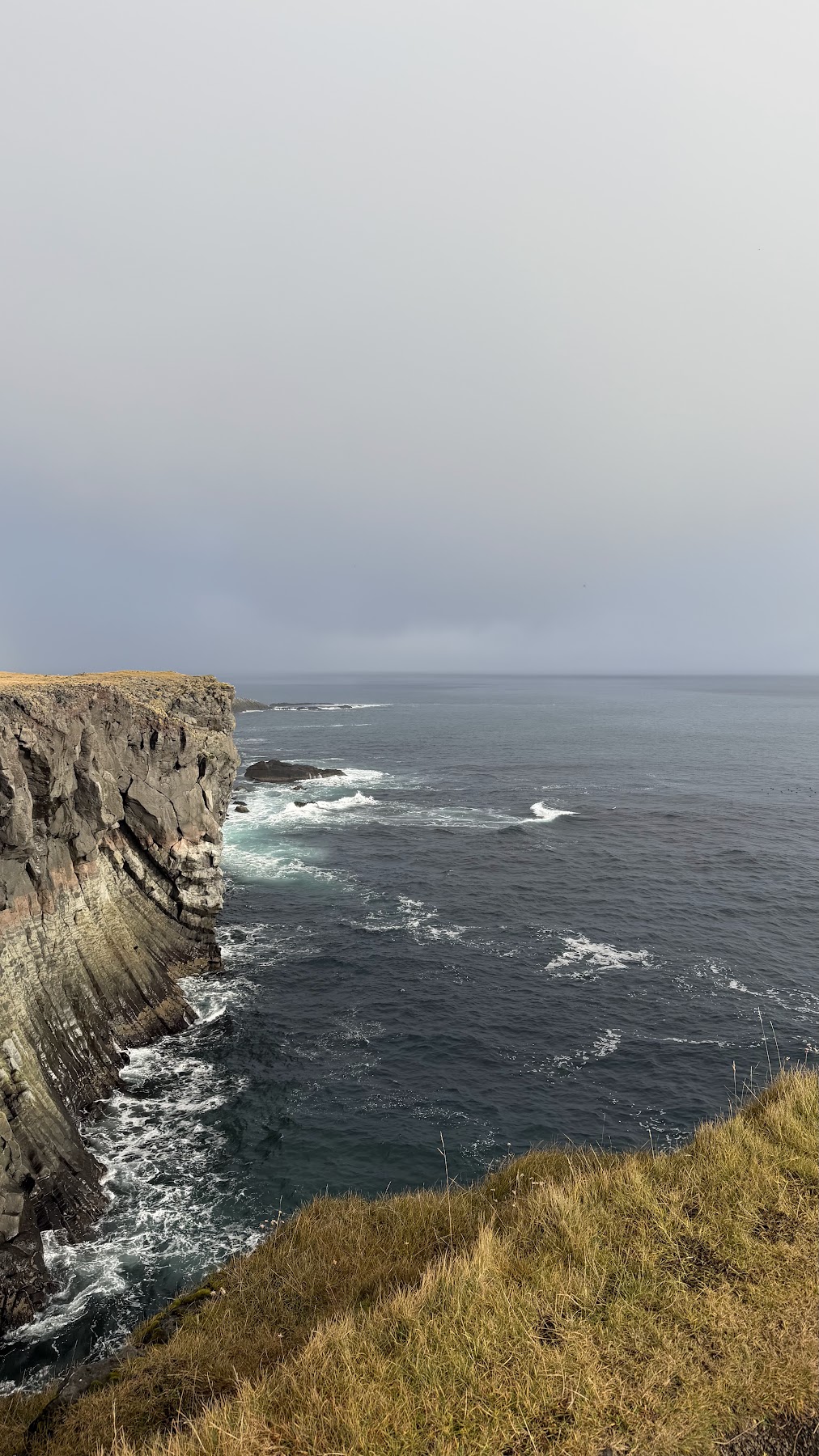
By the time we reached Saxholl crater and Kirkjufell, the light had softened and the crowds had thinned out.
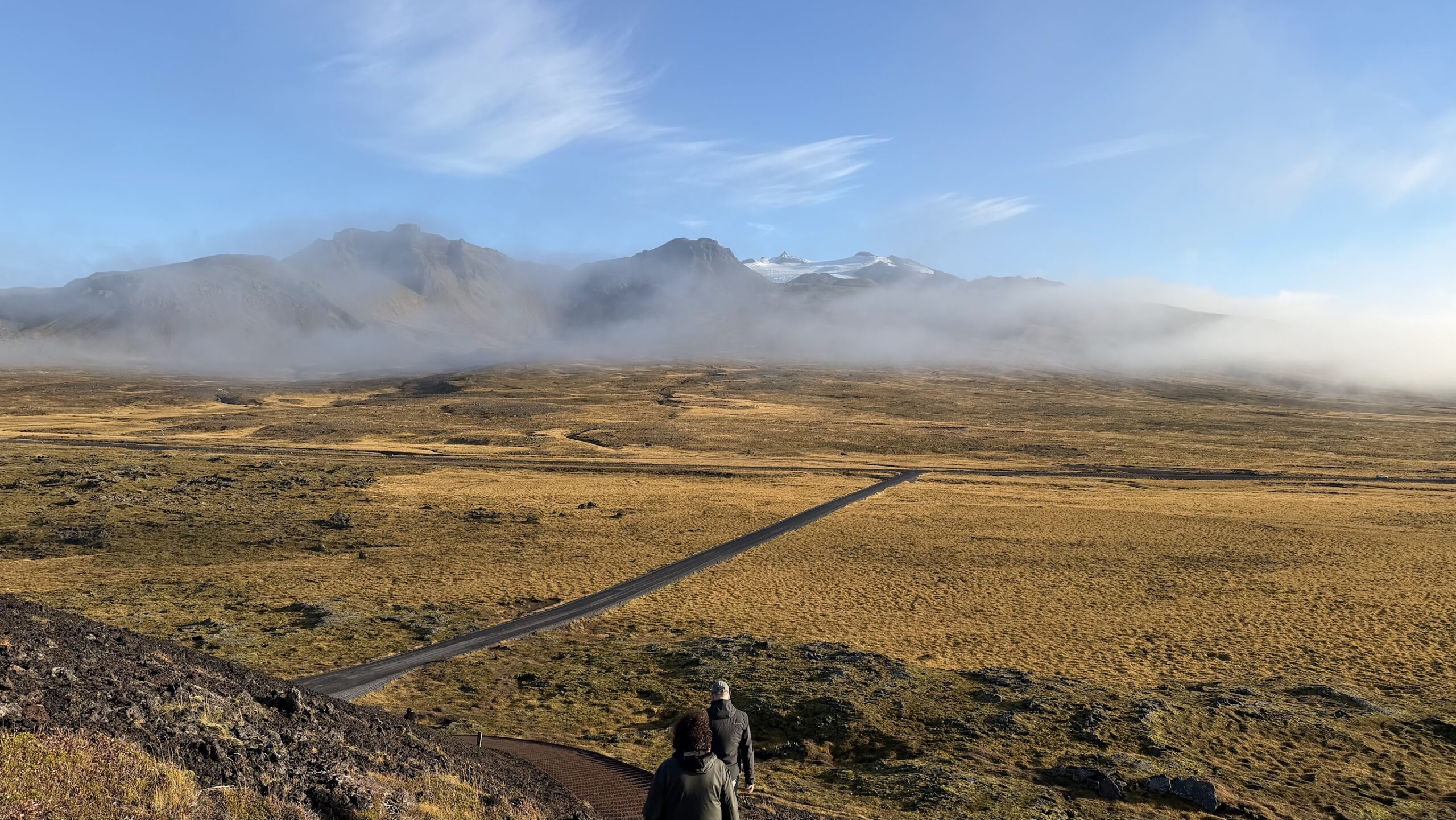
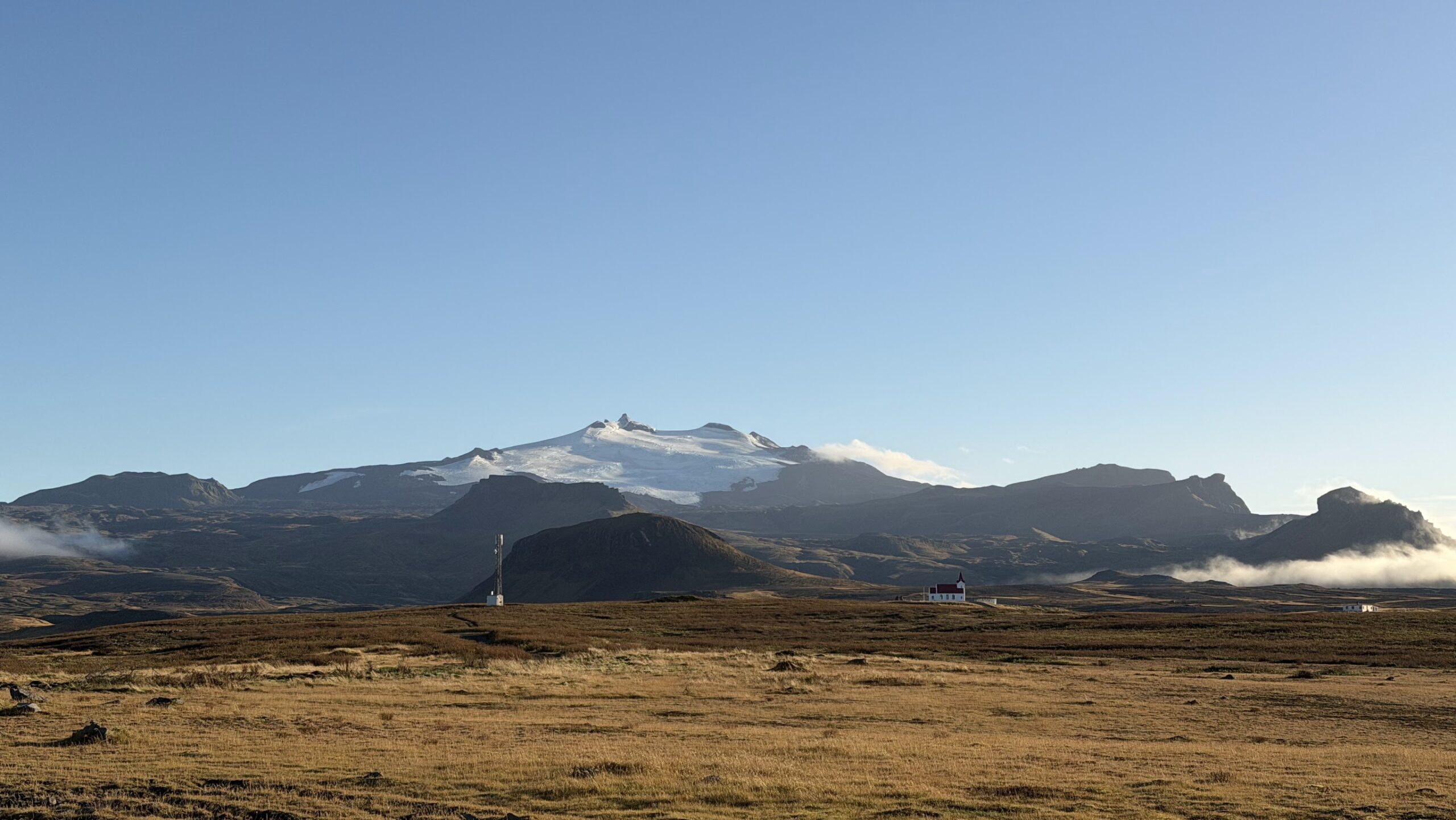
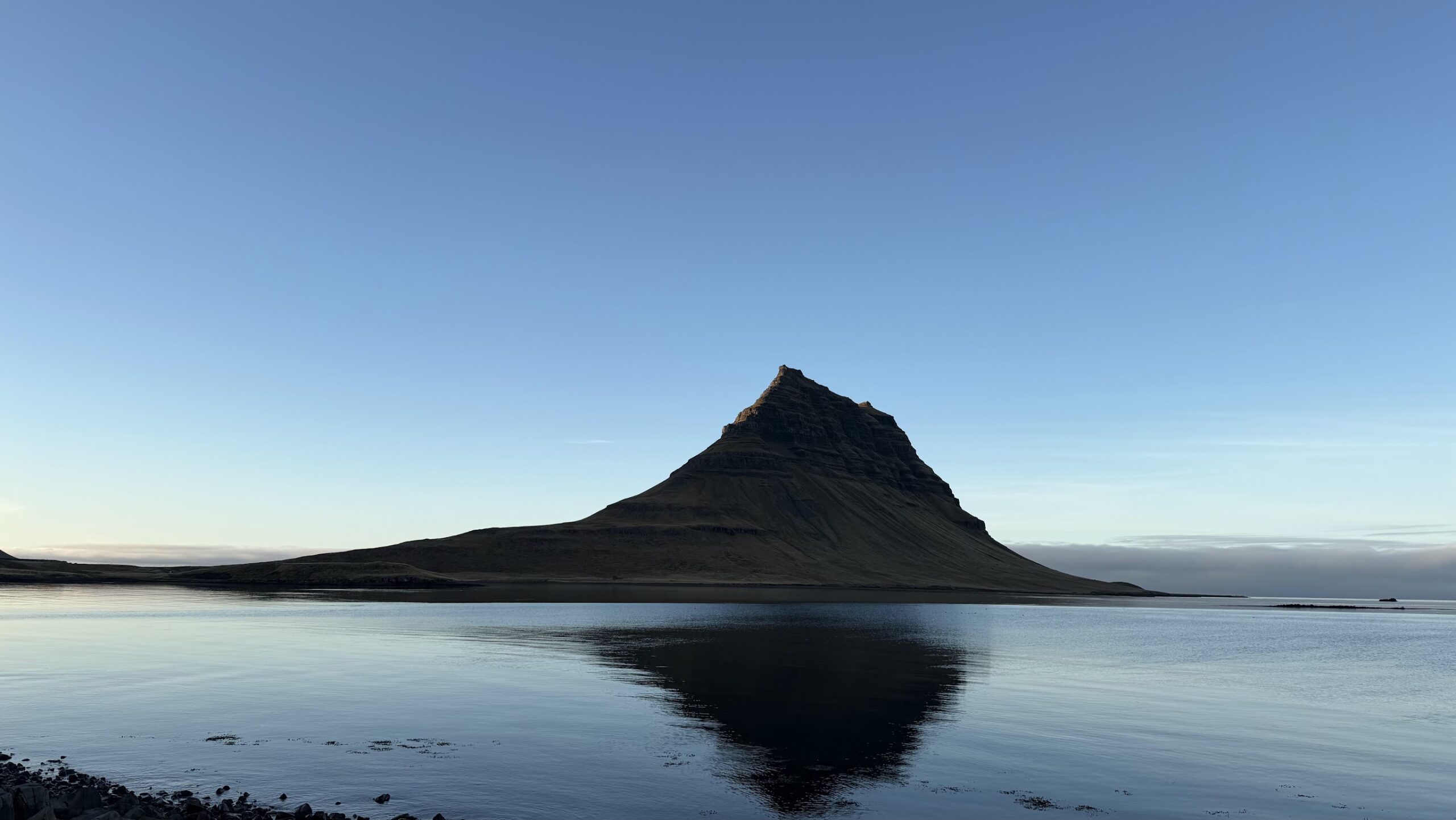
We ended the day in Stykkishólmur, which turned out to be a good place to slow down after a long drive around the peninsula.
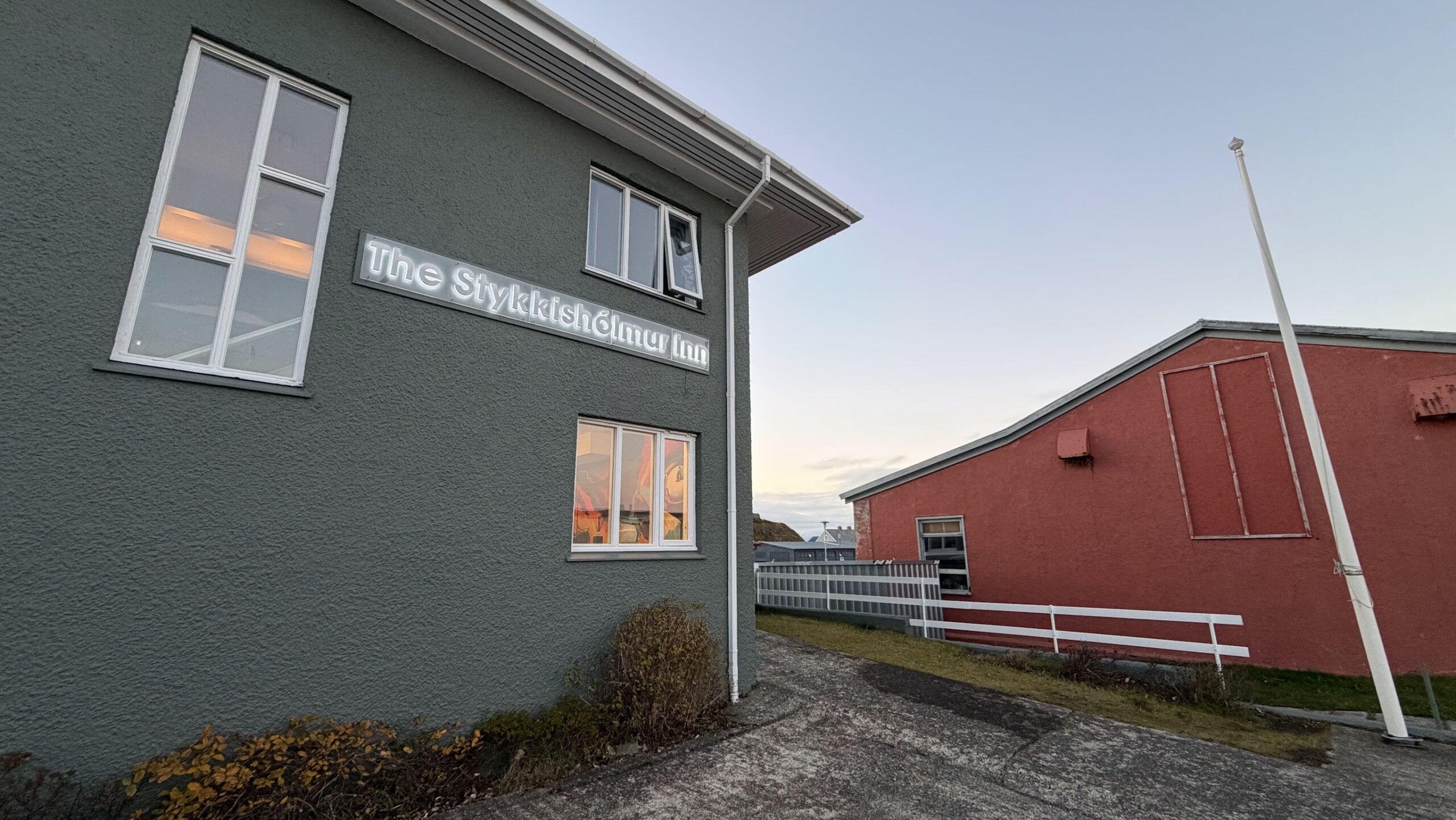
We stayed at Stykkisholmur Inn, a small and straightforward hotel that included breakfast with all room rates. It was good value for the area and worked well as a base for the night, especially since everything in town is within easy walking distance.
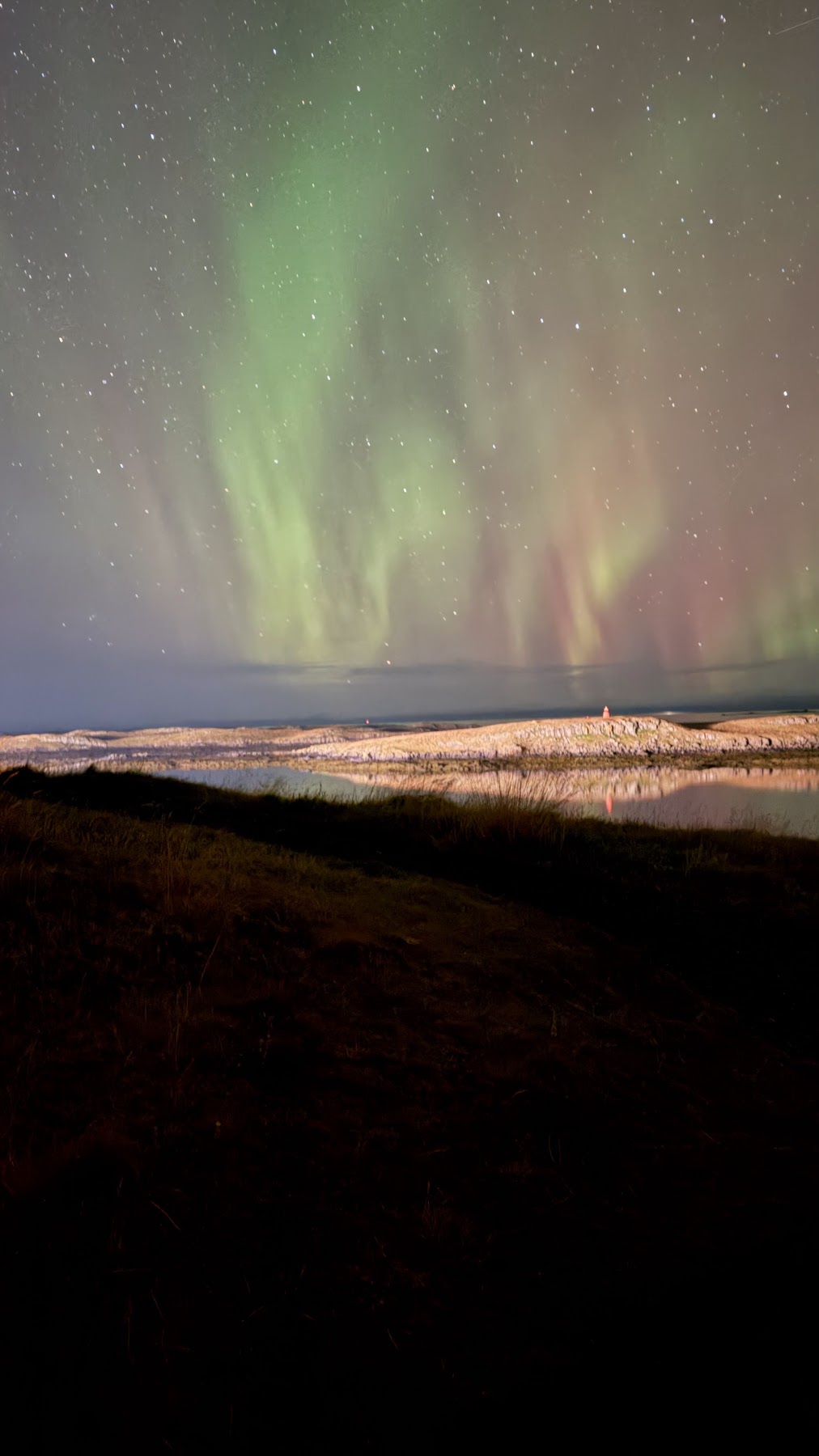
Later that evening, we noticed people gathering outside and pointing towards the sky. A faint auroral glow had started to appear. We drove over to the cliffs near Stykkisholmur harbour, where the views were more open and the lights easier to make out. It was not a particularly strong display, but it was steady and clearly visible.
Seeing the northern lights there, without having to drive far, for sure felt satisfying.
Road trip: Westfjords and back to Borgarnes
The next day, we drove from Stykkisholmur towards the entrance of the Westfjords. The weather had turned rainy and visibility was poor, so the drive felt slower.
We made it as far as Kroksfjardarnes before deciding to turn around. We stopped at a small needlework shop for some cakes, which was lovely. With the rain picking up and conditions looking unlikely to improve, going further did not feel worthwhile. We headed back towards Borgarnes instead, calling it early.
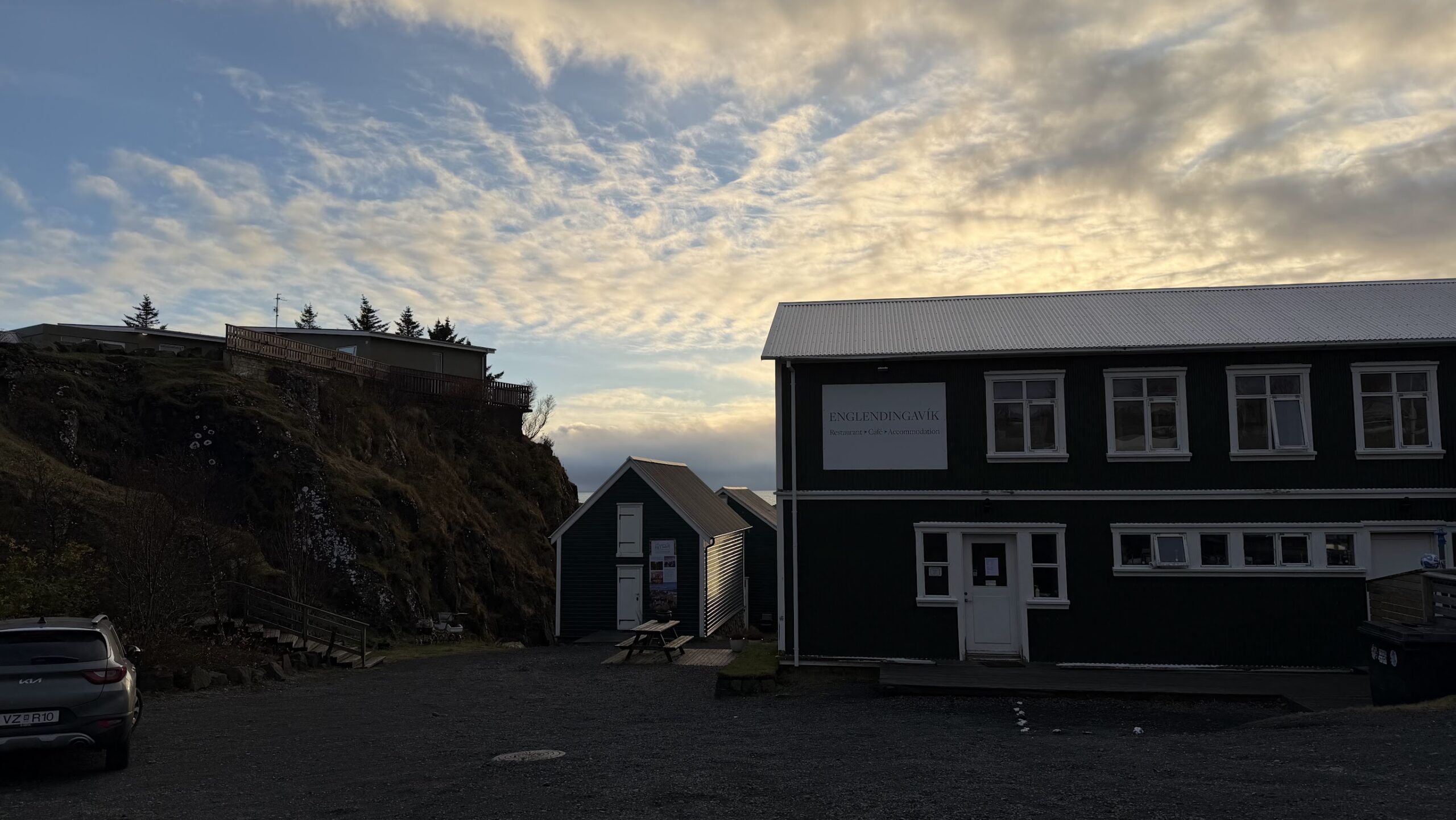
We made our way to Borgarnes, a small town north of Rekyjavik, and stayed at the Englendingavik homestay. This is also where we first saw the northern lights in 2024. It was very cloudy this trip, so we didn’t manage to see the northern lights from here.
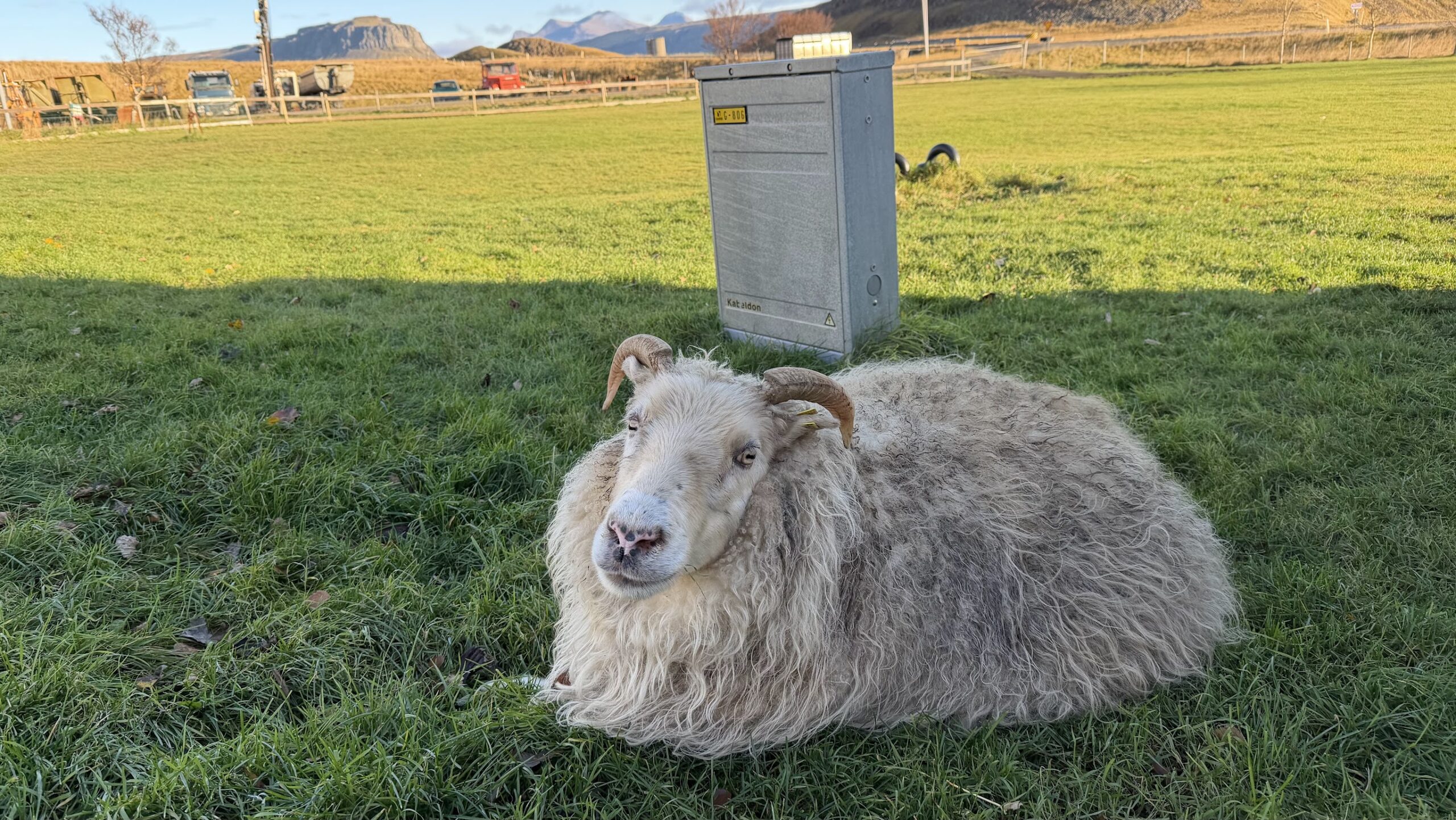
The next day, we decided to explore the area, and came across Bjarteyjarsandur, which was a camping ground. We didn’t stay here, though we managed to see some Icelandic sheep roaming around, which was pretty cute.
We then drove back to Mosfellsbaer, and by evening the fog had rolled in heavily. The aurora forecast looked promising, so we wanted to try our luck.
Our first stop was the Grotta Lighthouse, but it was not an ideal location. The fog was thick, the area was crowded, and parking was almost impossible. After a quick look, we gave up and returned back to Mosfellsbaer.
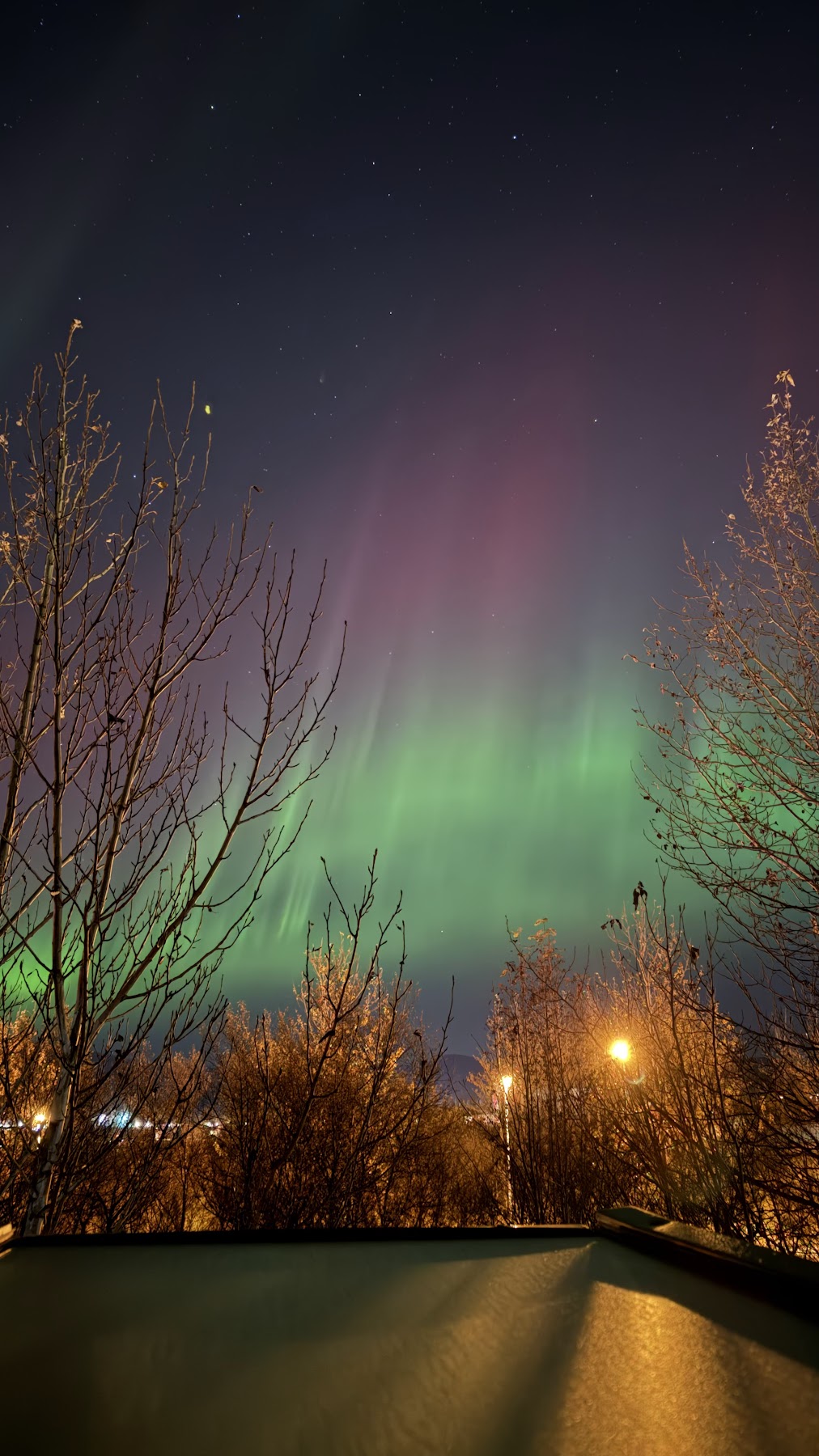
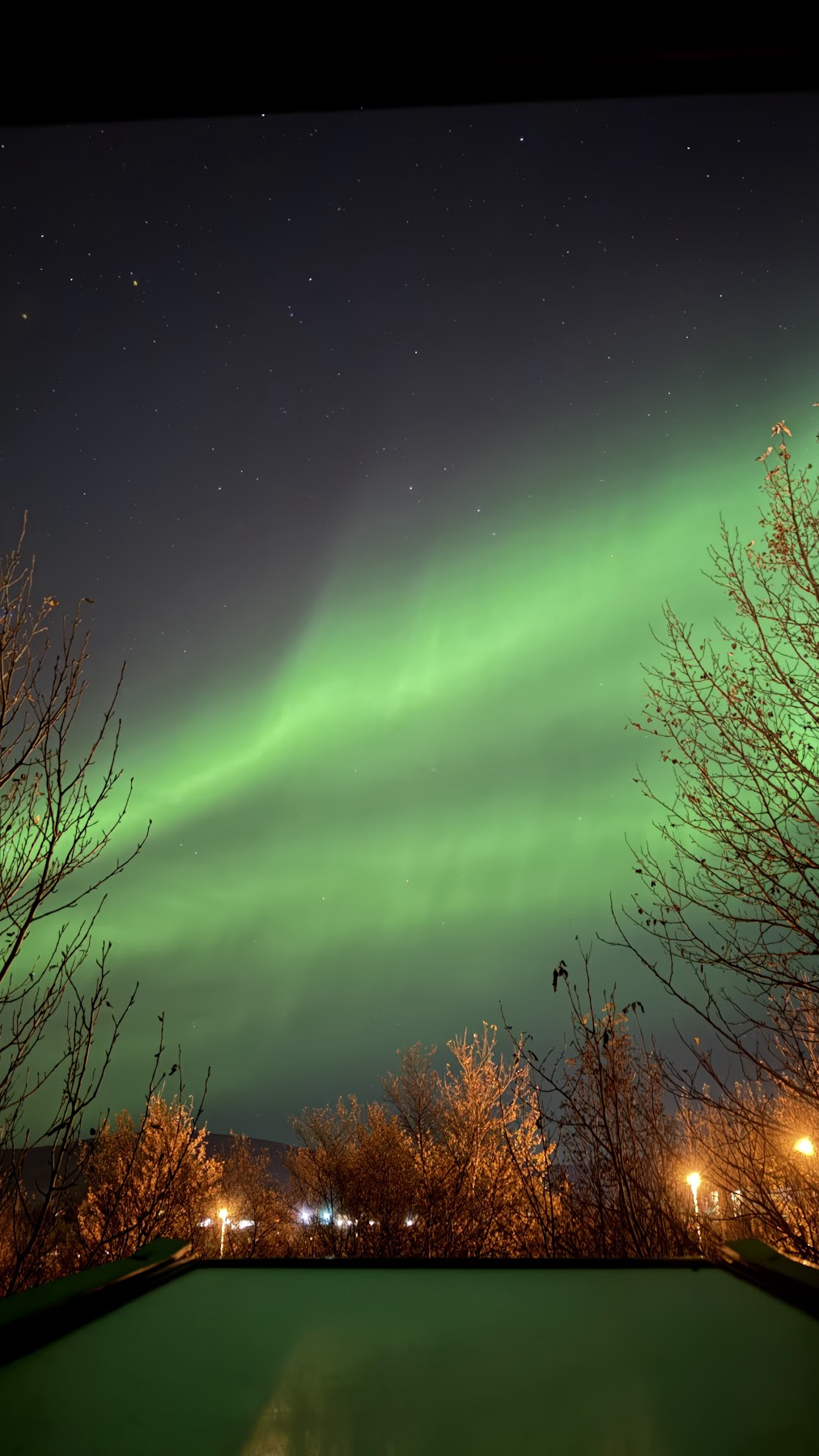
By some luck, the fog that shrouded Mosfellsbaer cleared as soon as we got back. From the hotel grounds, we could see the northern lights shimmering above. We decided to head back up to our room and watch from there. It felt completely magical. Later, we learned it was a G2 geomagnetic storm, which explained why we could capture the pinkish hues on our camera. Though in reality, we didn’t really see much of the pinkish hues, but it was more greenish than usual.
Road trip: Blue Lagoon and the final day
We saved the last day for the Blue Lagoon, figuring it would be a relaxing end to a busy week. On our way there, we did see the impact of the volcanic eruption back in November 2024, given that this is an active volcanic area.
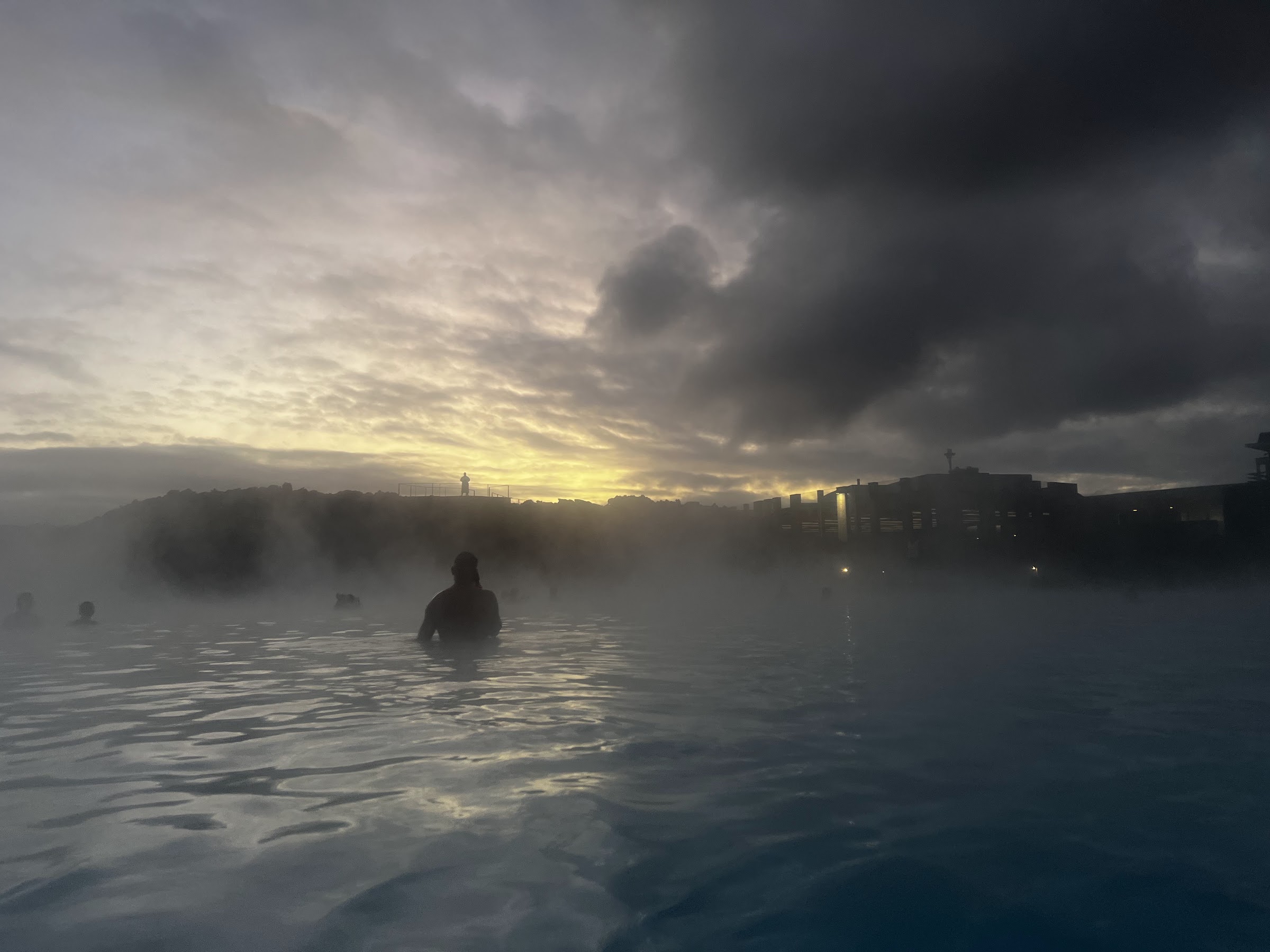
We chose a later timing since the ticket prices were dynamic, and it was cheaper after 5pm. Even in the evening, the lagoon was busy, but it still had its charm. The warm, milky-blue water felt incredible after a week of chilly drives and long days outdoors.
The skies stayed cloudy throughout our time at the Blue Lagoon, and we couldn’t catch a glimpse of the northern lights here, but that’s fine since we already caught them on three days.
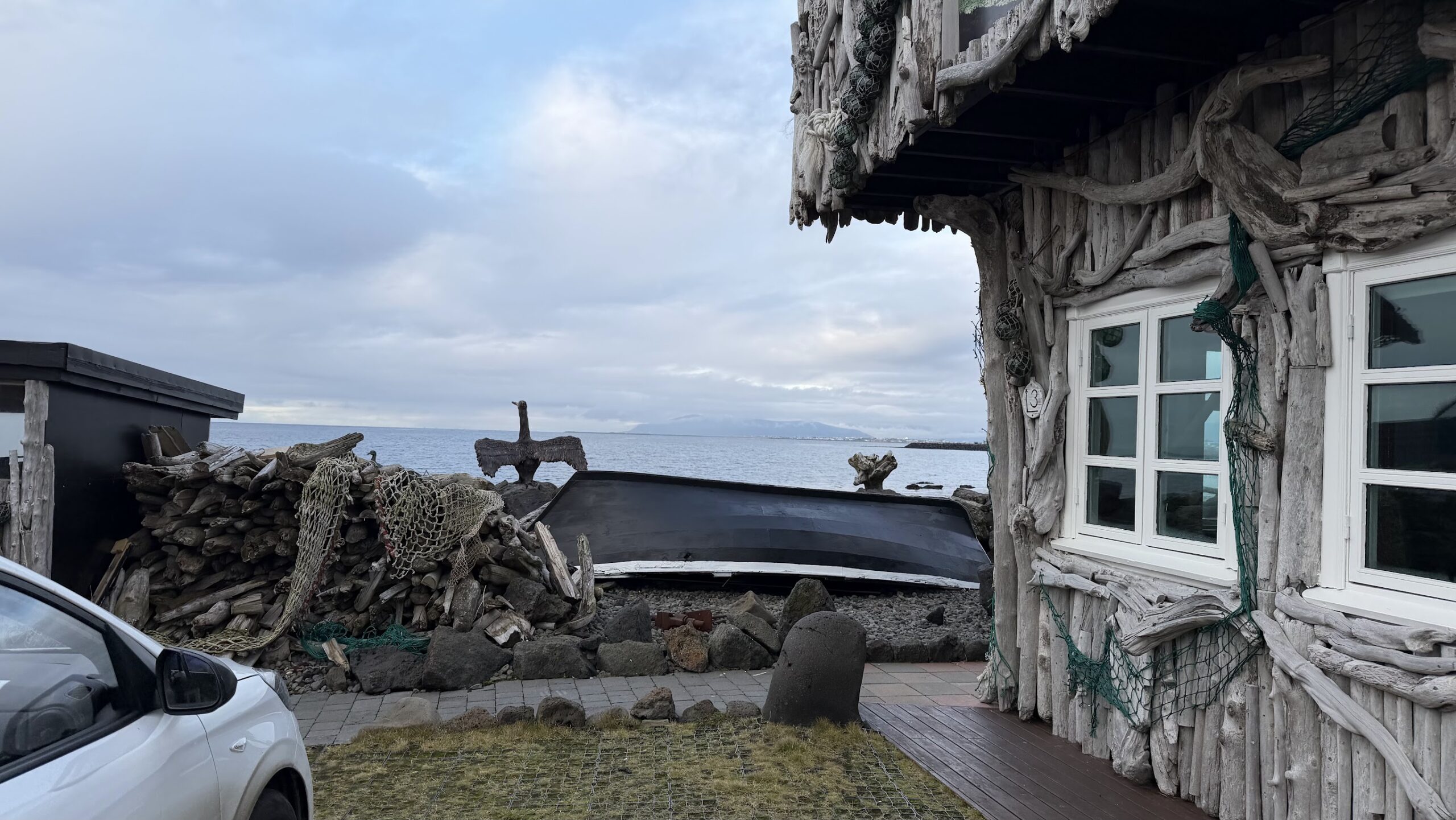
That evening we stayed at Hild Fishermen Village, a reconstructed fishing village accommodation. It was charming and quiet, but the skies were completely cloudy, so no northern lights this time as well. We loved the place however, pretty affordable and on the quieter end of Alftanes.
Onwards to the Lofoten Islands
On the last day in Iceland, we packed up and made our way to Keflavik for the flight north. Iceland had delivered exactly what we came for: a mix of long drives, changing landscapes, and a few solid northern lights sightings.
That wrapped up Part 1 of the trip. We had covered the south coast, the Golden Circle, and the Snaefellsnes Peninsula, moving at a pace that let us actually enjoy the scenery rather than rush through it.
Next stop was the Lofoten Islands. A new country to explore, with sharp peaks, small fishing villages, and more chances to see the northern lights.