This is a continuation of the Chasing the Northern Lights trip.
Arriving in Lofoten
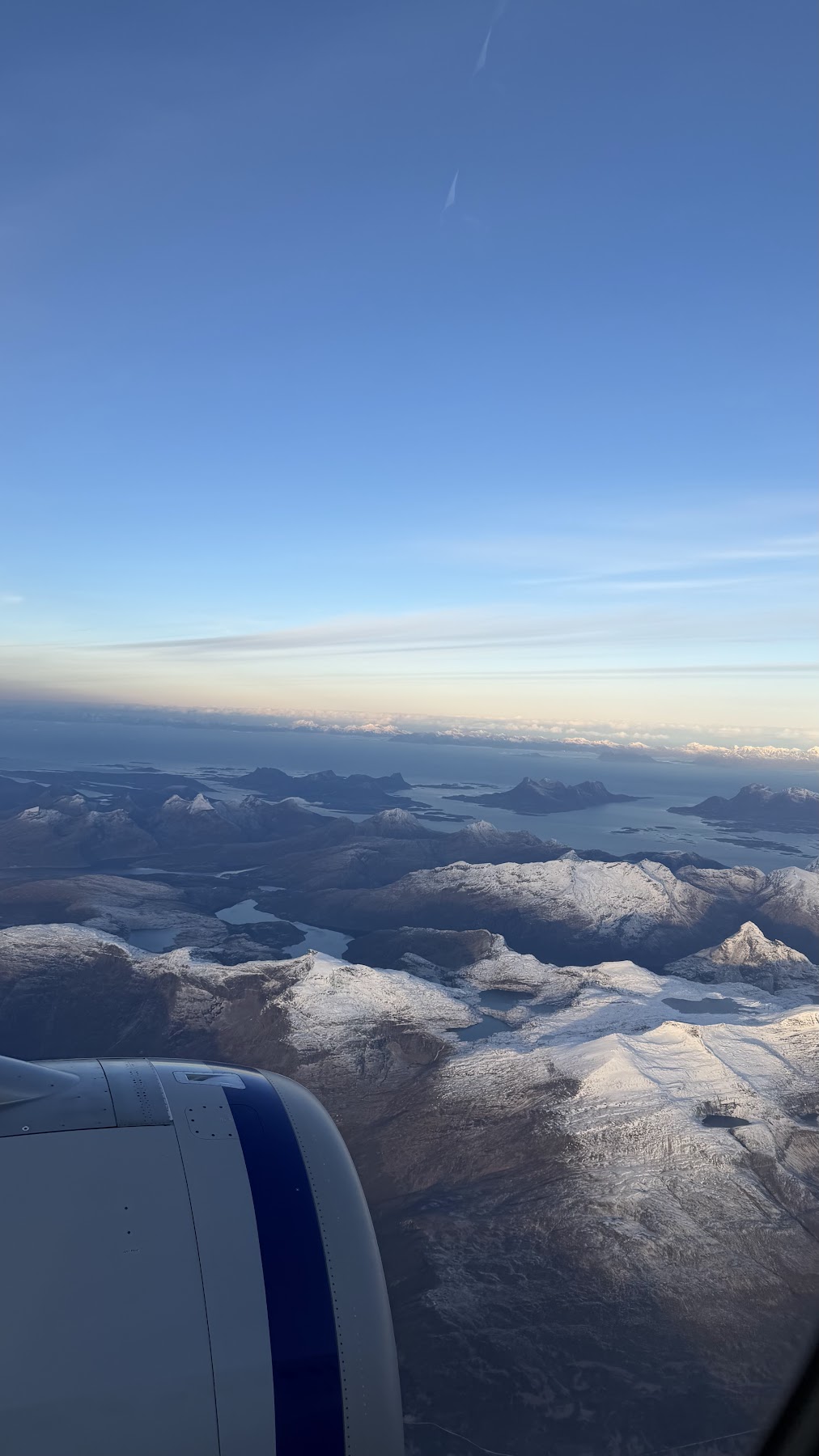
Even before landing, Lofoten made a strong first impression. As we began our descent into Harstad Narvik Airport, snow capped peaks rose straight out of the water, with narrow fjords cutting through the landscape. It was an incredible sight, and one that immediately felt very different from Iceland.
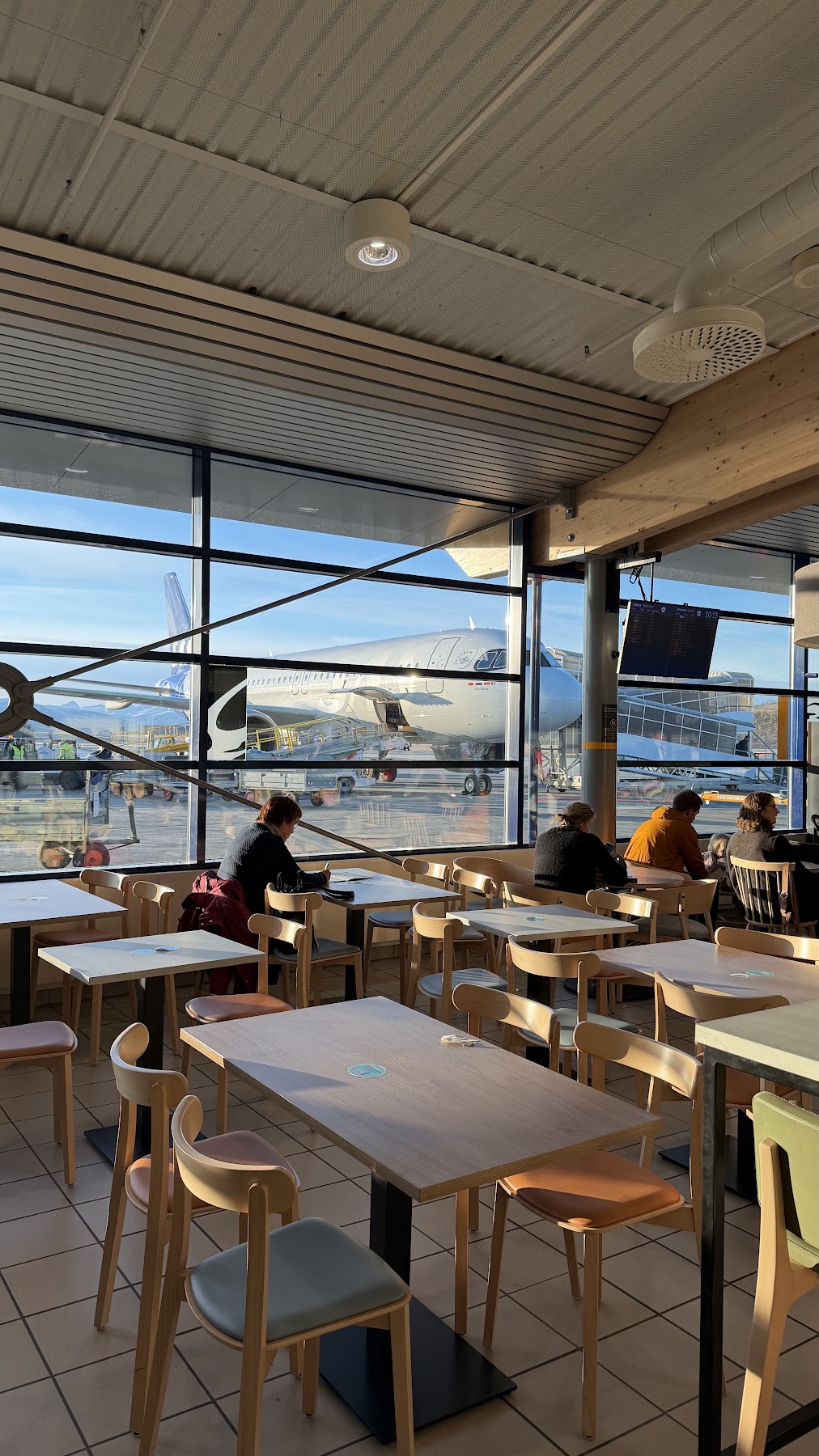
We landed at Harstad Narvik Airport in Evenes at around 10am. The airport is small and quiet, and everything moves at an unhurried pace. After collecting our checked bags, we waited for about 10 minutes before the Enterprise staff arrived to check everyone in.
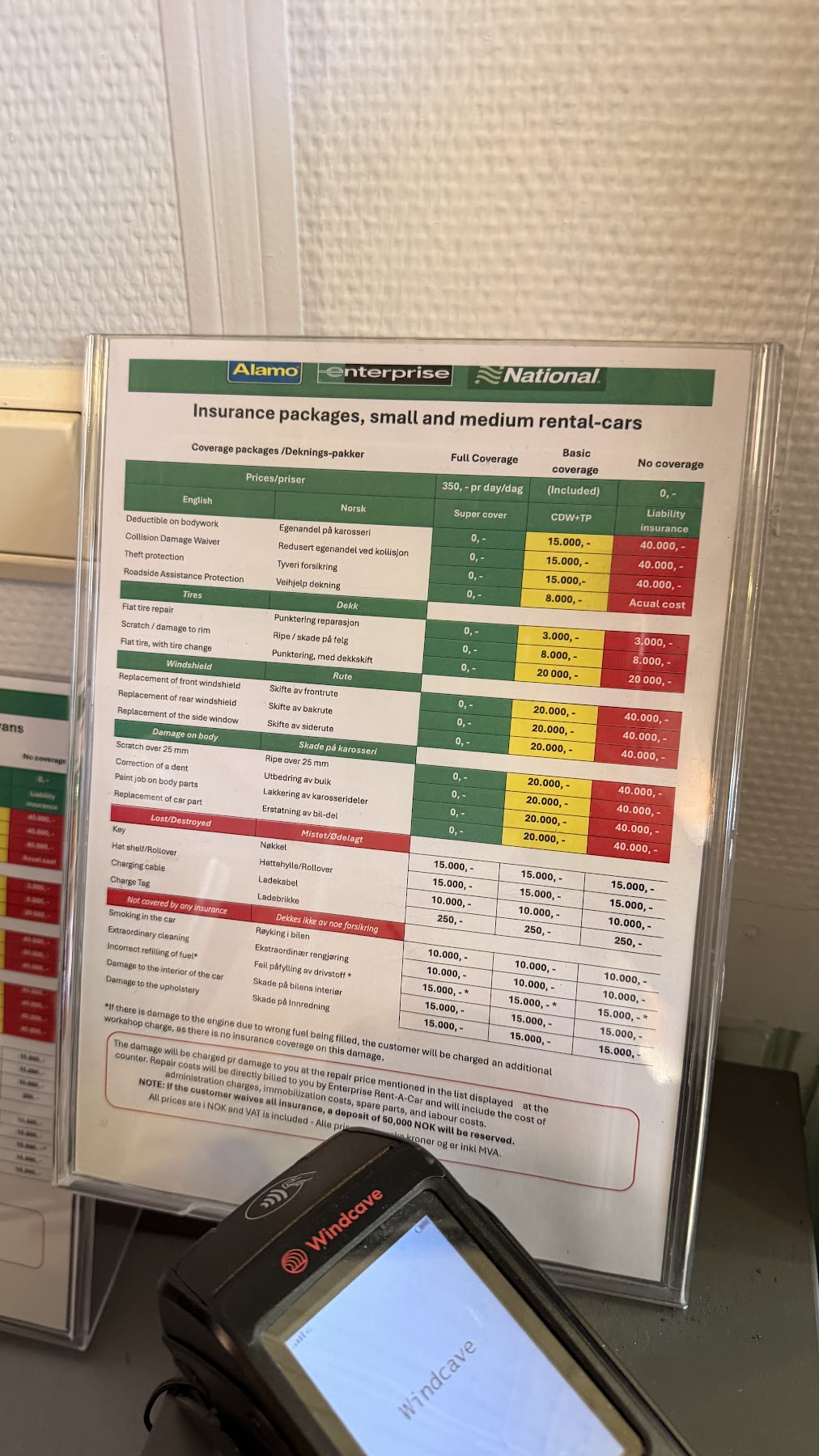
We rented our car from Enterprise for our road trip, and were given a Toyota Corolla Cross 4×4. The car felt solid and well-suited for the icy roads in Lofoten. One thing worth noting is that we were charged a 2.9% fee for using a credit card, which only appeared on the receipt after the booking ended. For three nights, the rental came close to US$380. Norway is not cheap, and this was our first reminder of that.
Road trip: To the start of the Scenic Route Lofoten
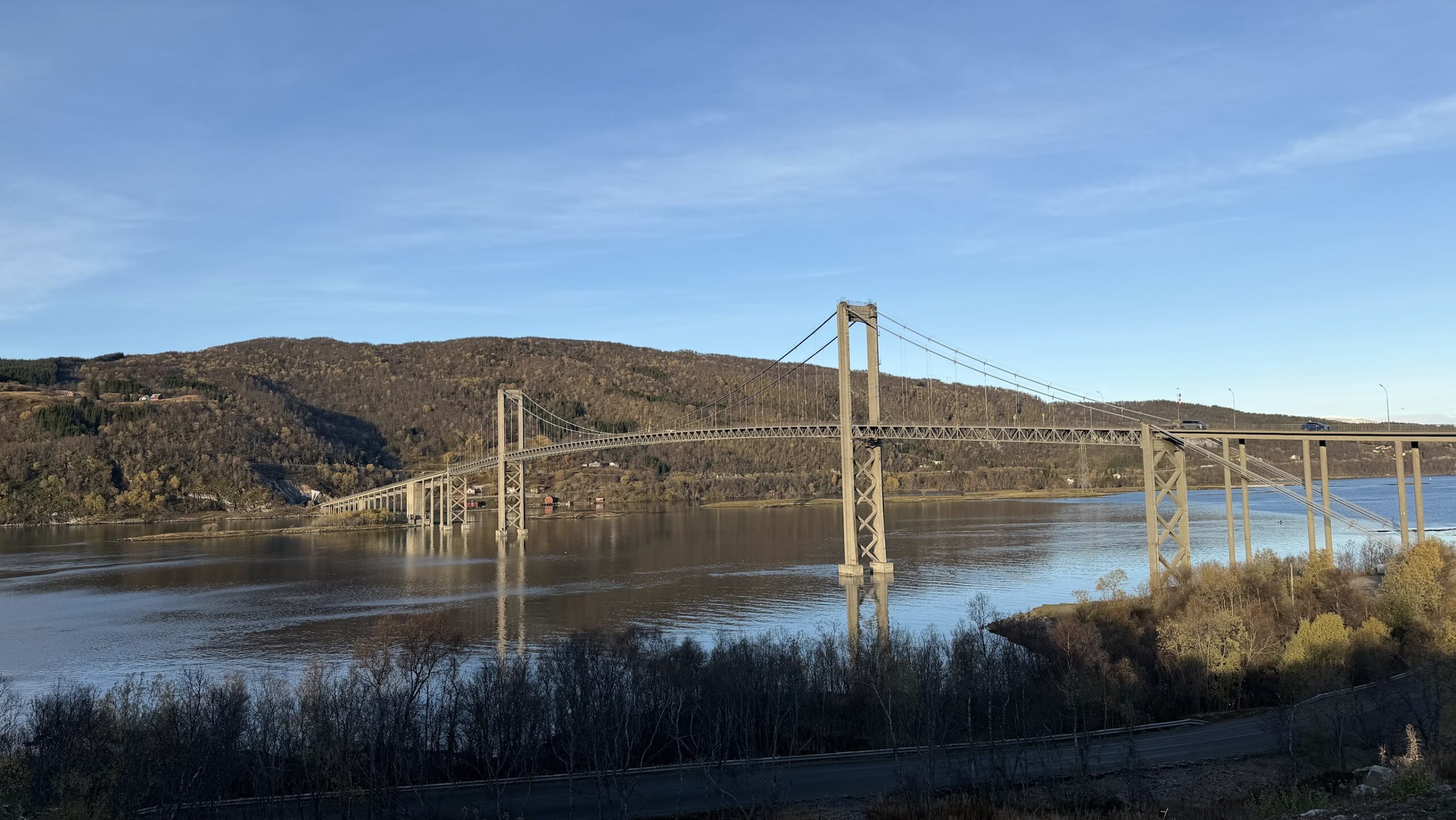
After leaving the airport, we drove south towards Tjeldsundbrua. The bridge marks a scenic transition point, though we’re not quite near Lofoten proper.
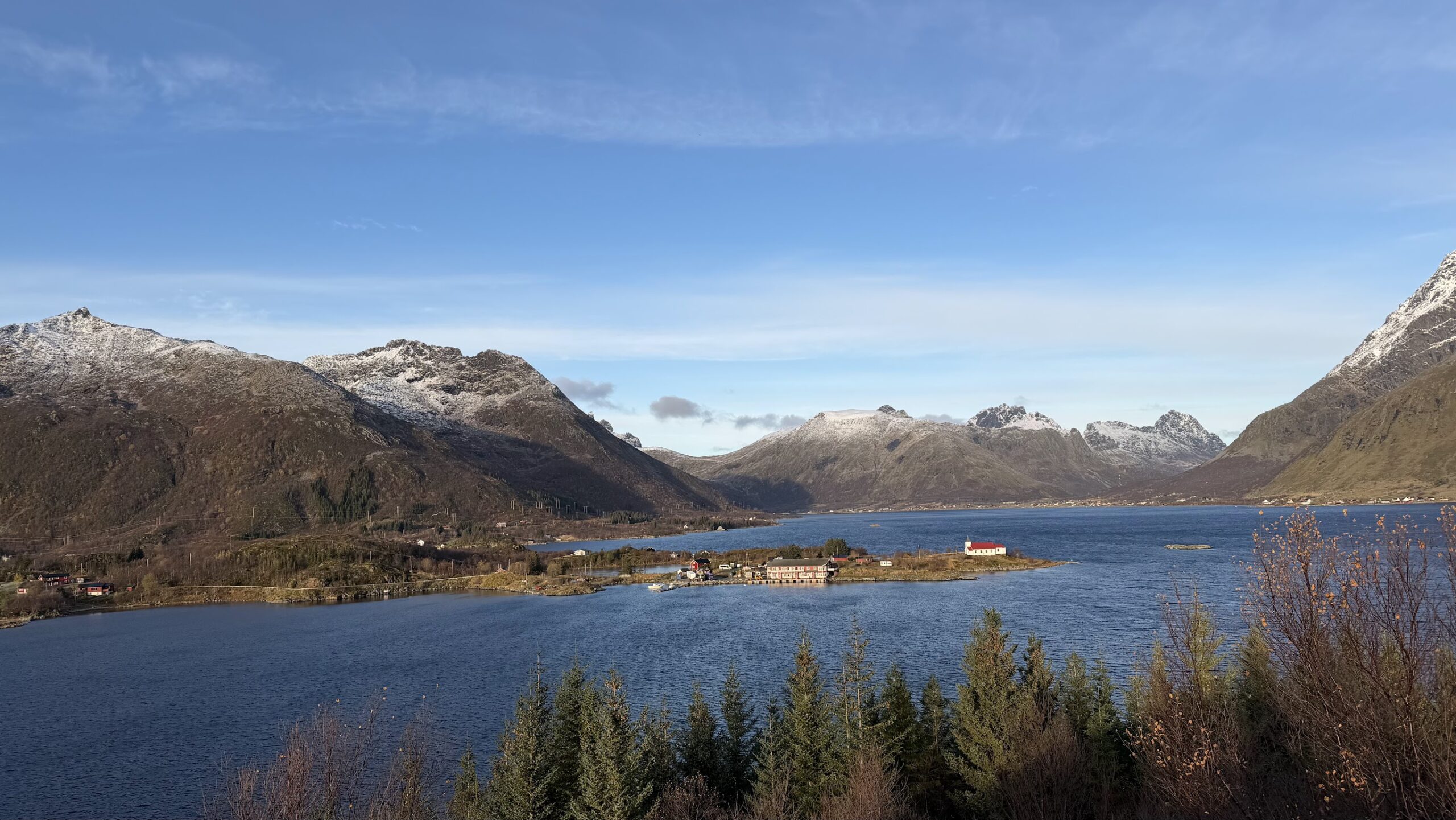
From there, it took about two hours of driving before we reached Raftsundet, which marks the start of the Lofoten Scenic Route. We made a brief stop in Lodingen to pick up some supplies at a Rema 1000 before continuing.
The change in scenery was gradual rather than immediate. The views became more striking as we drove further, with more frequent openings along the road that hinted at what was ahead.
Once we entered Raftsundet, the drive itself became the focus. We slowed down naturally, stopping at designated pull-offs whenever it felt safe to do so. Even short stretches of road felt memorable, and it quickly became clear that moving around Lofoten would be as much a part of the experience as the places we planned to visit.
From Raftsundet, we continued on towards Austnesfjorden. This stretch felt like a preview of what the Lofoten Islands would offer over the next few days, just amazing!
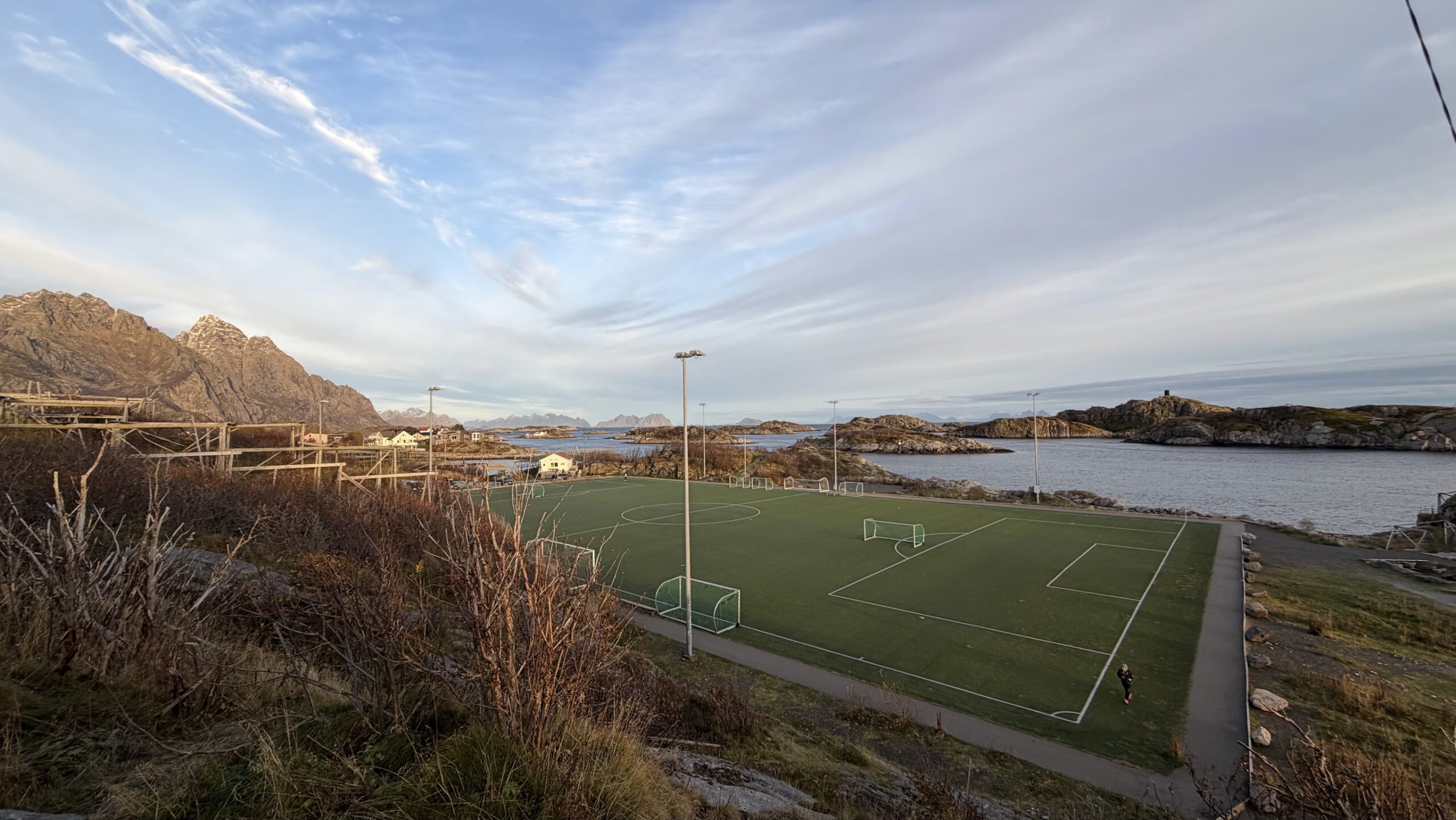
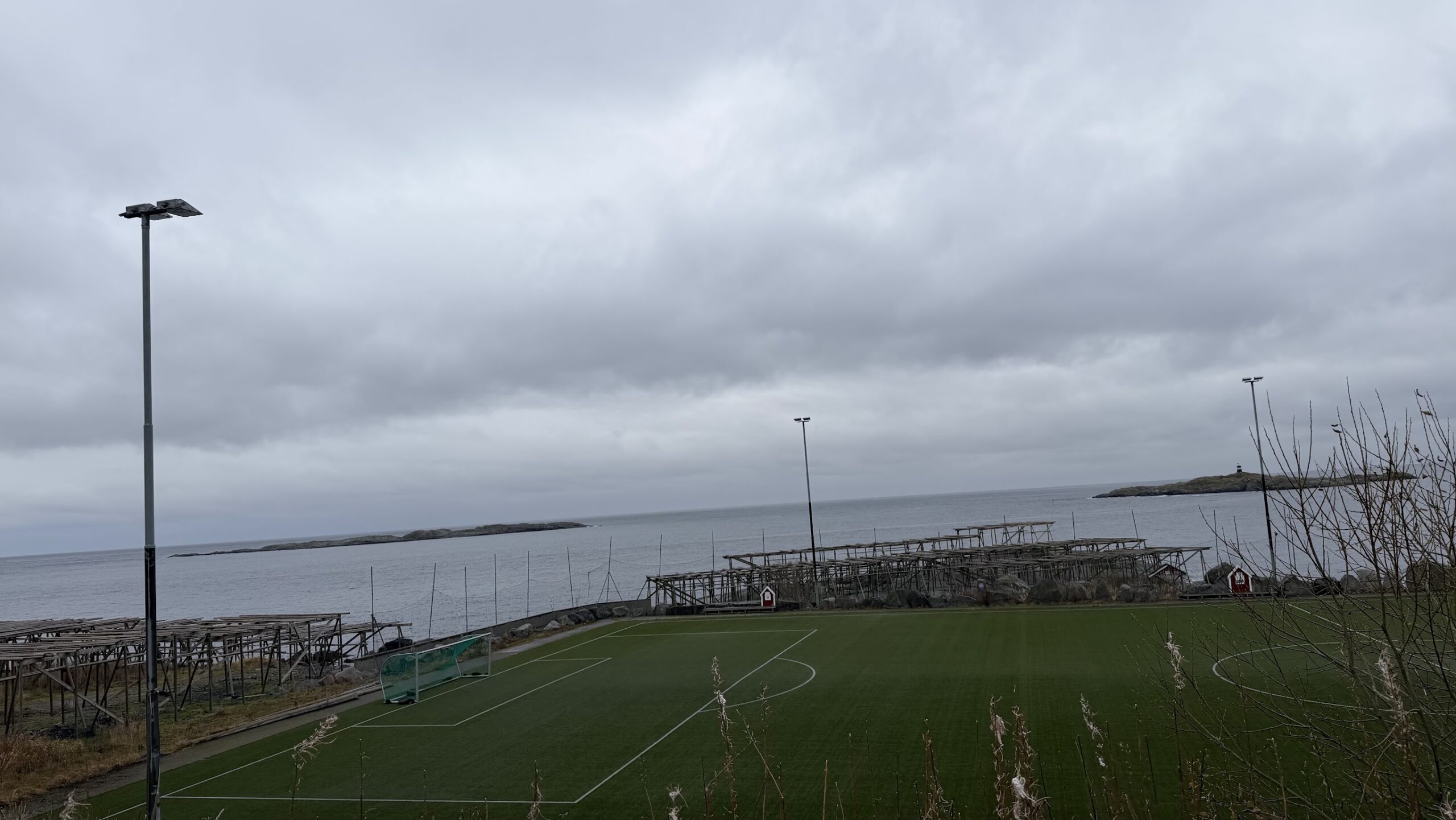
We then made our way to Henningsvaer. The road to Henningsvaer was very windy and narrow, and we had to be very careful. We wanted to see the famous football field, though without a drone, it is hard to capture the view properly. It was still fun to see it in person though!
After that, we continued along the E10 and stopped briefly at the Untitled sculpture by Dan Graham. No photos of the sculpture itself, as the views across the fjord were far more compelling, with the water and surrounding landscape bathed in the golden hour sunlight.
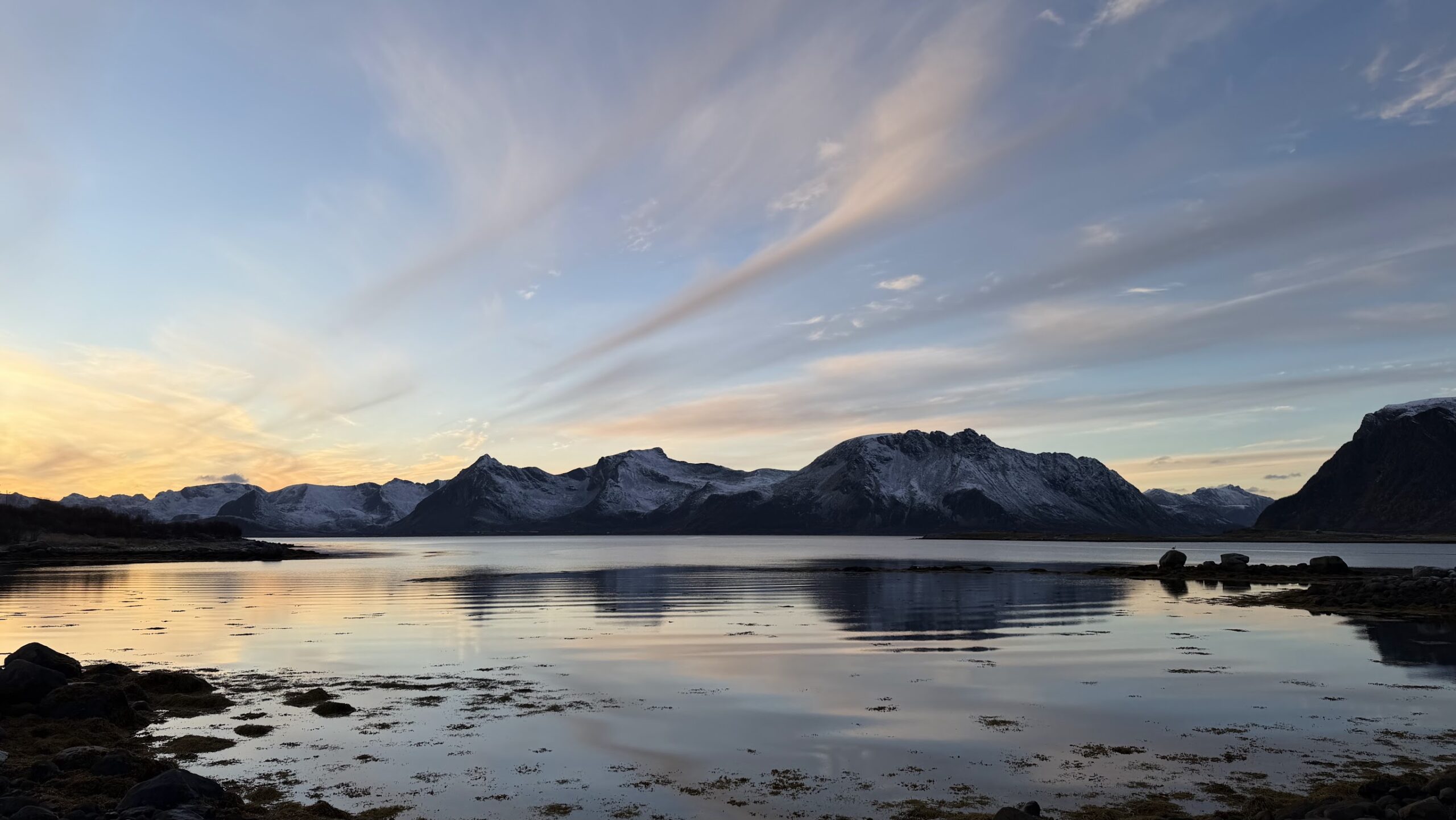
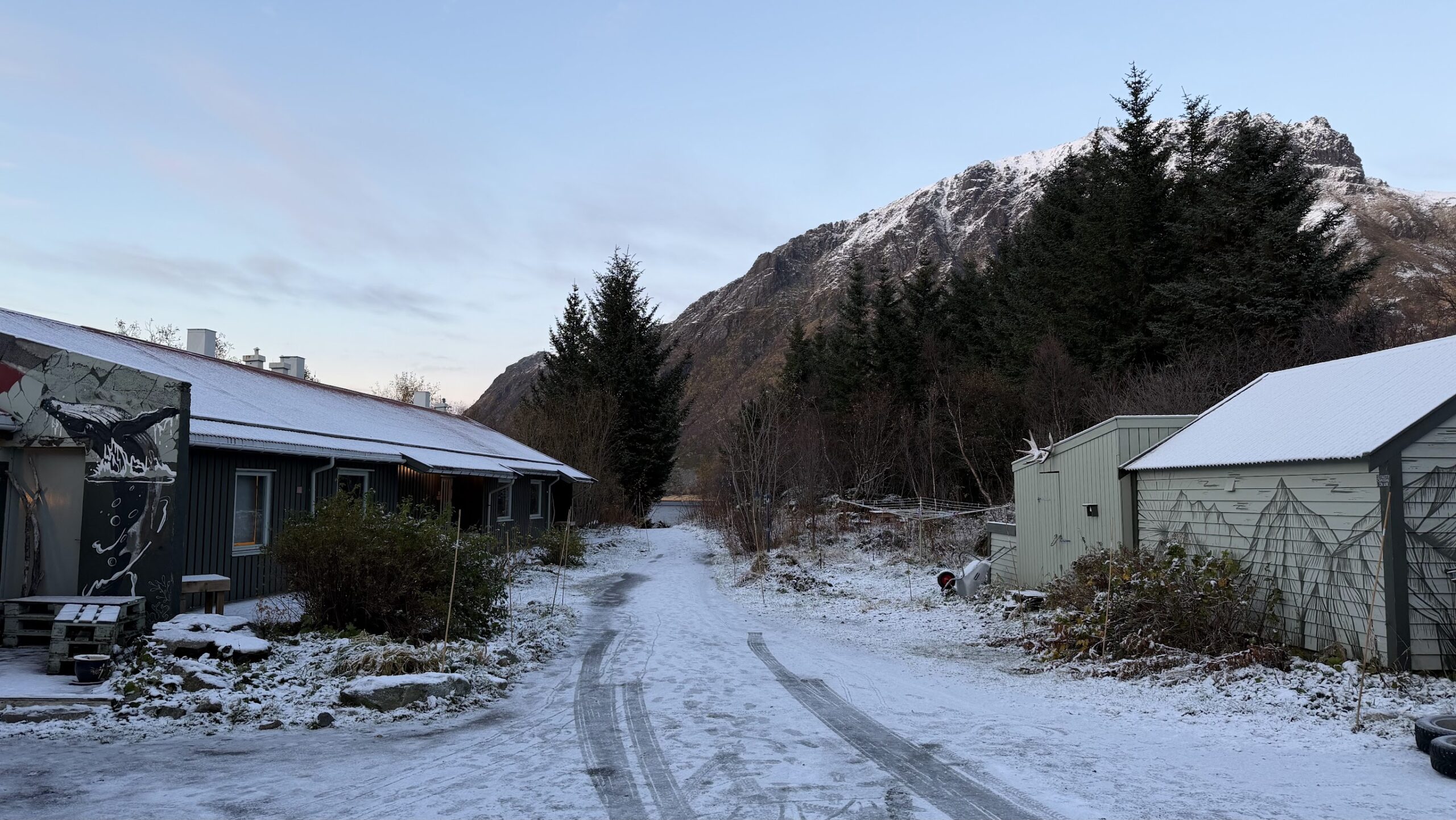
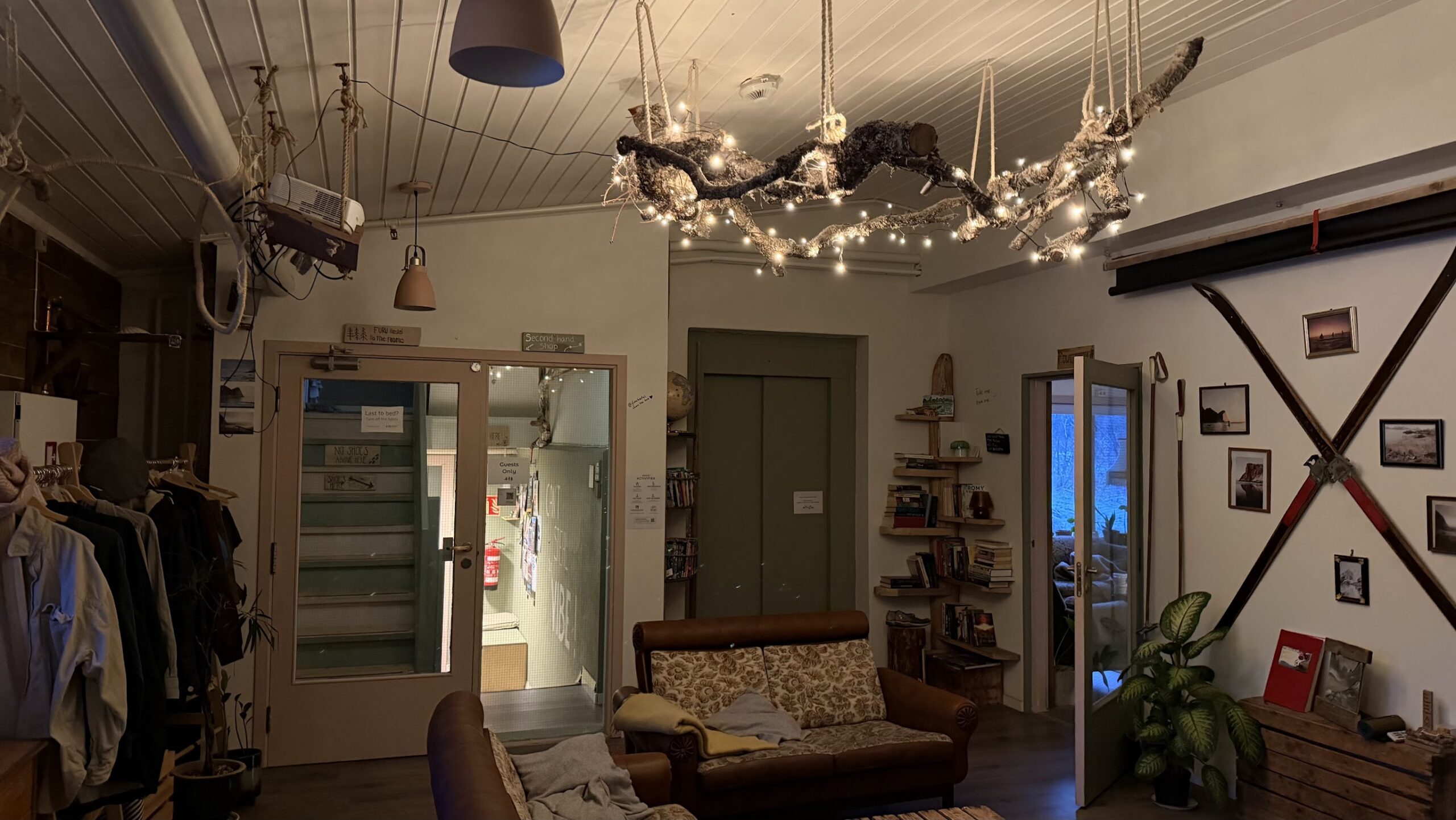
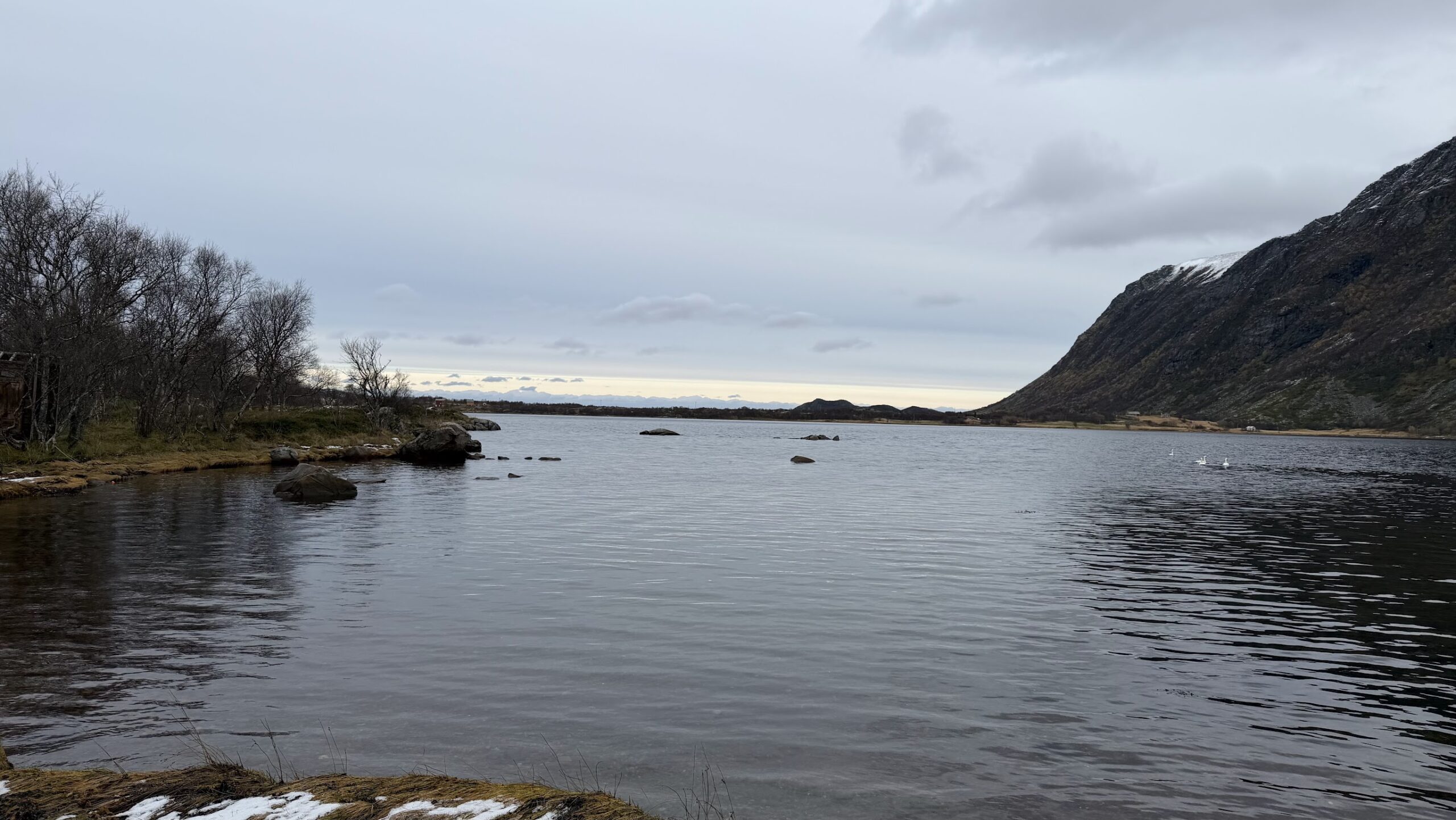
We then made our way to our accommodation for the night. Our first night was spent at FURU Hostel in Vestvagoy. It was affordable, comfortable, and well-located, which was exactly what we needed. The area was quiet, and the hostel even had direct access to a nearby lake, which added to the calm feel of the place.
The roads around the hostel were still lightly covered in snow, as the area had seen snowfall the day before. Conditions can change quickly here, even in mid-October.
That night, we looked up from our room and saw the northern lights right from our room. It was our first night in Lofoten, and already the aurora was visible, even though it was slightly cloudy.
There was no driving involved and no chasing forecasts. It felt like an incredible start to this part of the trip.
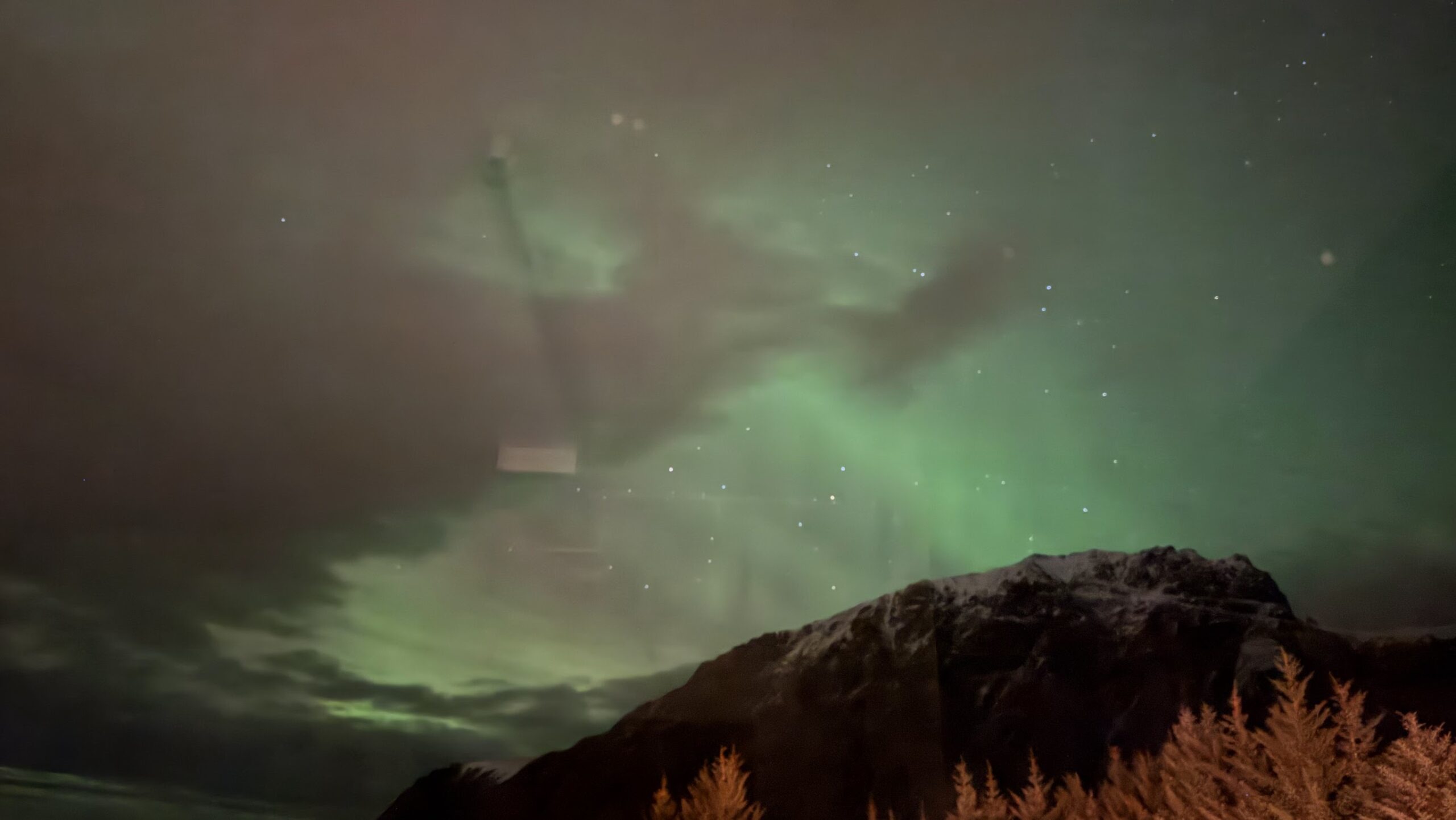
The Northern Lights right from our room at FURU Hostel
Road trip: Driving towards Å
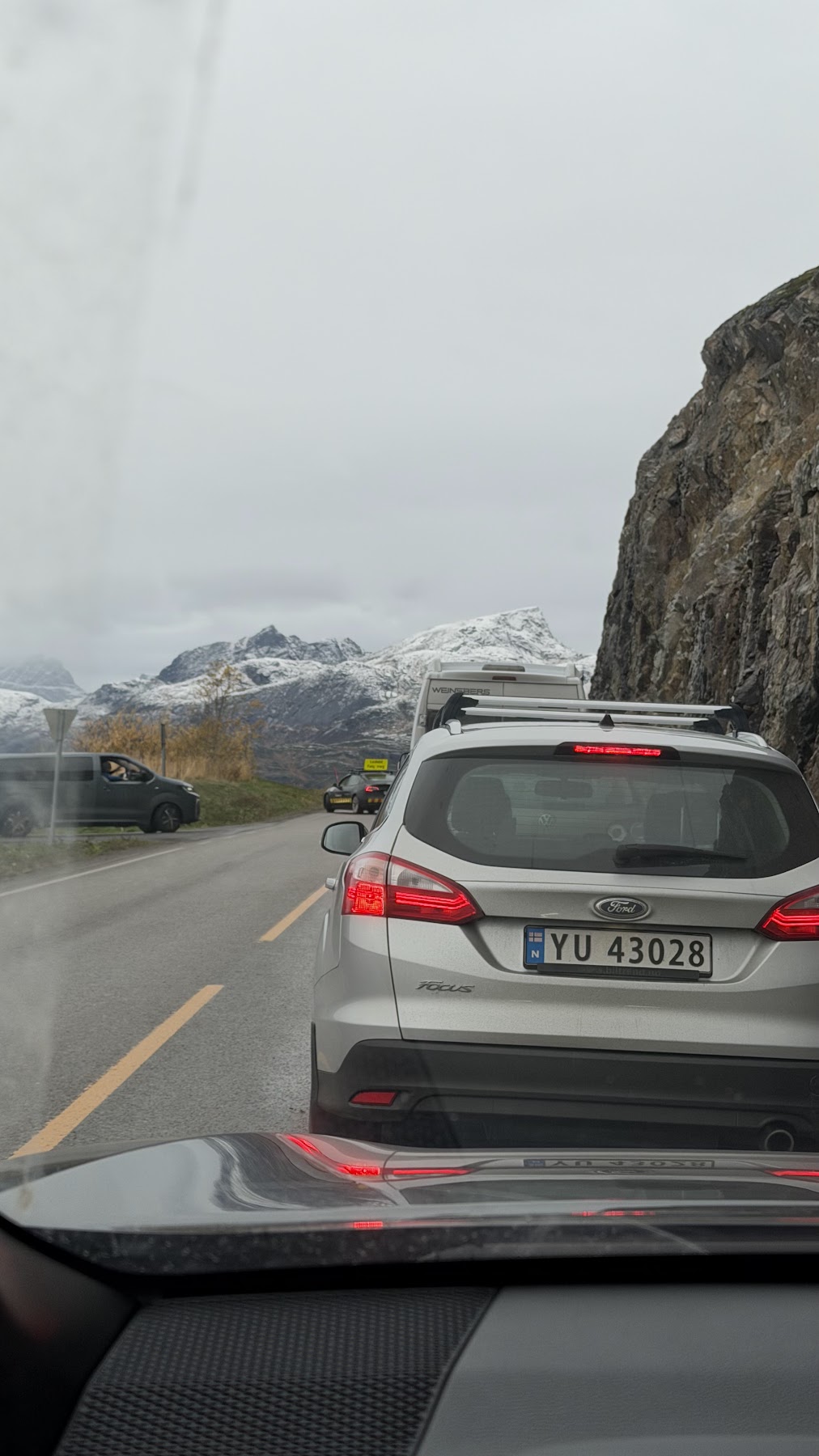
The next day, we set off early and began driving south towards Å. Along the way, we passed through the Nappstraum Tunnel, which was under repair. Traffic was stopped and released in convoys at specific timings, and we ended up waiting for nearly 30 minutes.
It was an unexpected delay as we weren’t aware, and we later found out that the tunnel is very old and requires maintenance. It is also the only way to southern part of Lofoten, so you cannot avoid this delay.
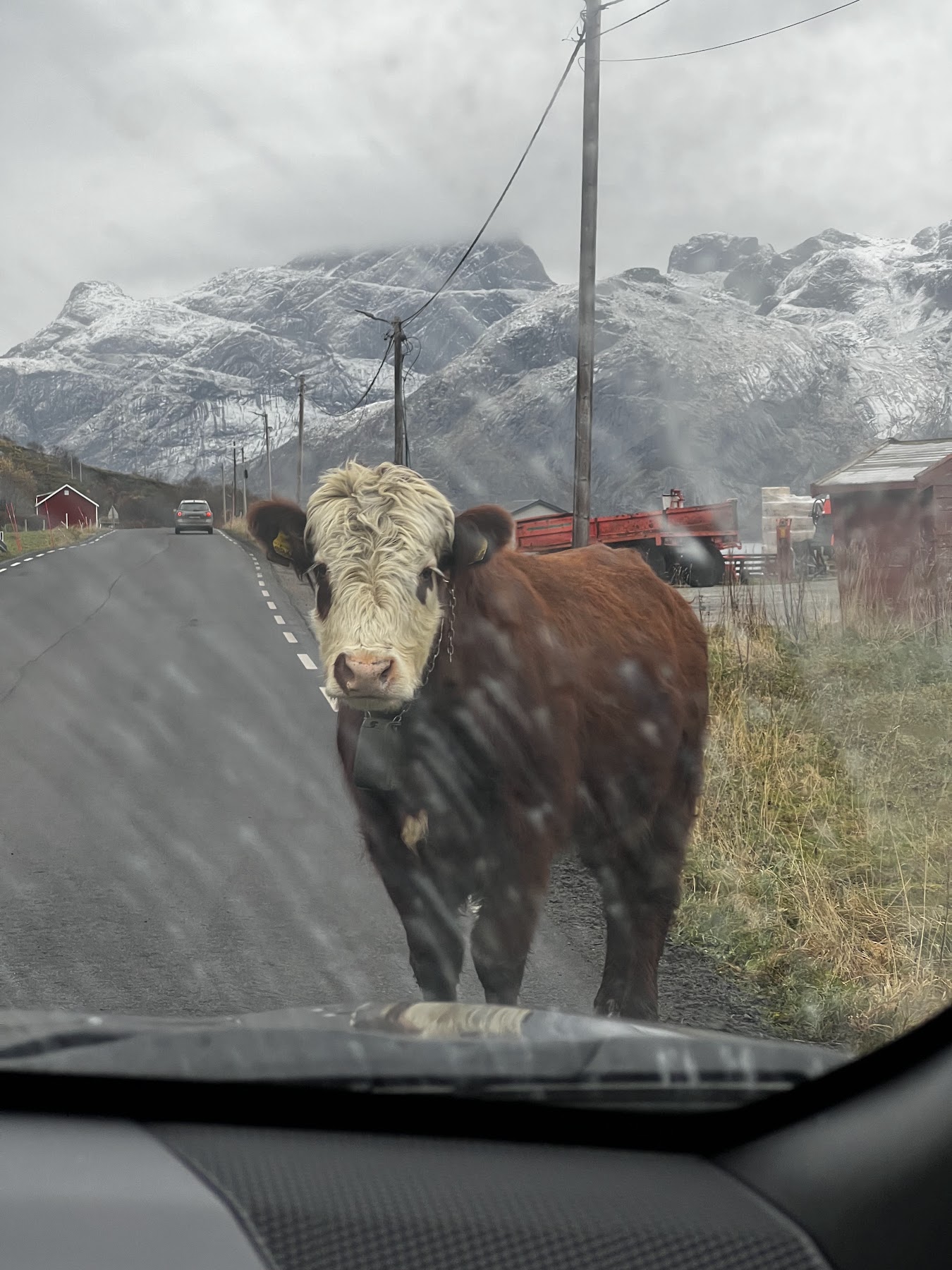
Once we crossed the tunnel and reached Napp, we were greeted by a cow bouncing across the road towards us. It was surprisingly agile and very cute, but also a good reminder to stay alert. Animals wandering onto the road are very much a real thing in this part of Norway.
Road trip: Å and the classic Lofoten fishing villages
As we continued, the roads became even narrower, and in most parts of the road closer to the Lofoten fishing villages, you might need to pull aside to let oncoming trucks pass.
We finally reached the village of Å, the last town at the southern end of Lofoten as we decided to start from there instead. For lunch, we stopped at Sild & Salmon and had a sandwich with gravad salmon and dill. It was simple, well done, and genuinely worth the stop.
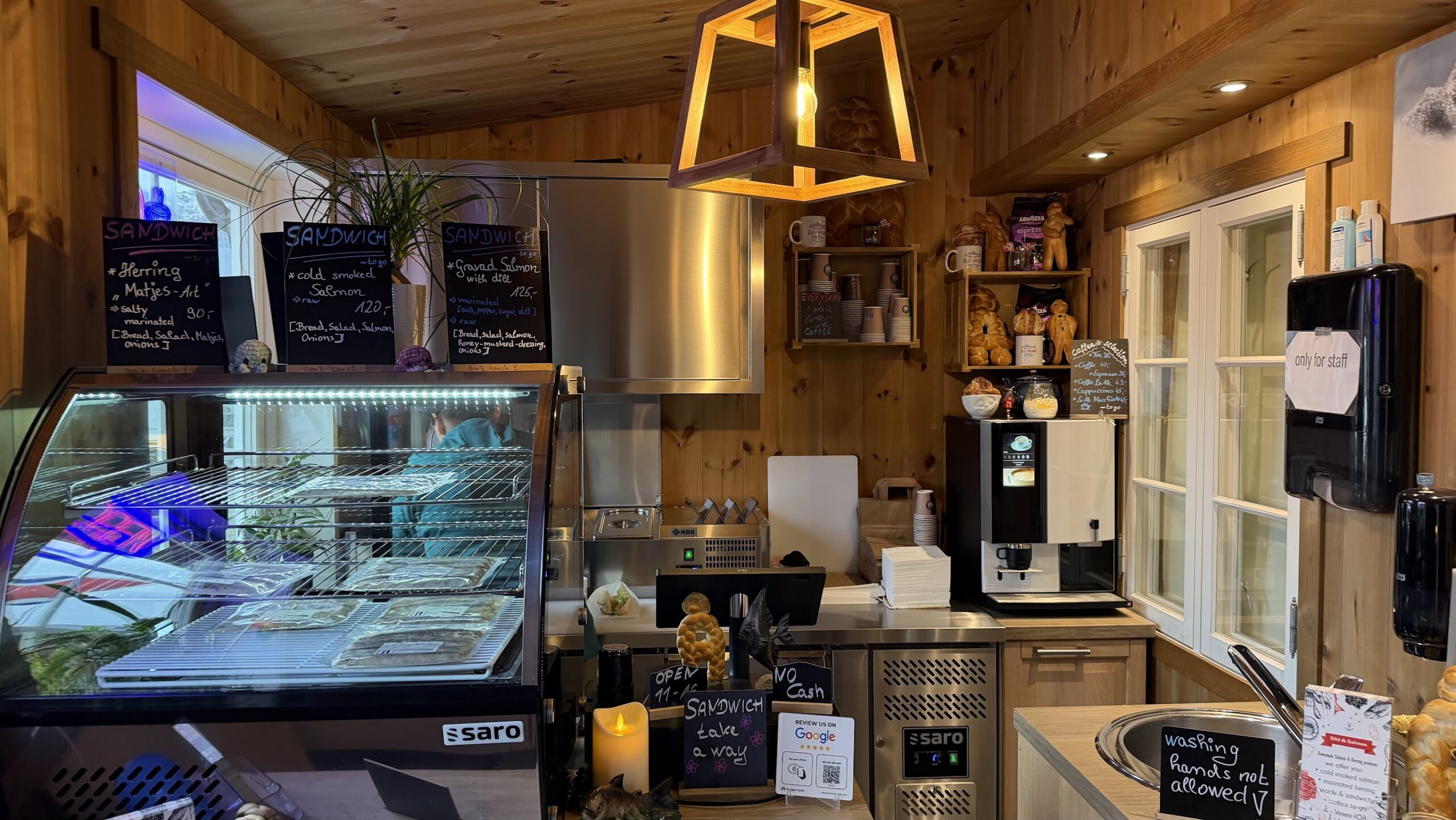
Parking is very limited in this area. We asked if we could park for a while beside Sild & Salmon and the staff was kind enough to let us do so. We went to explore the area, and could take very nice shots of Å from the quay.
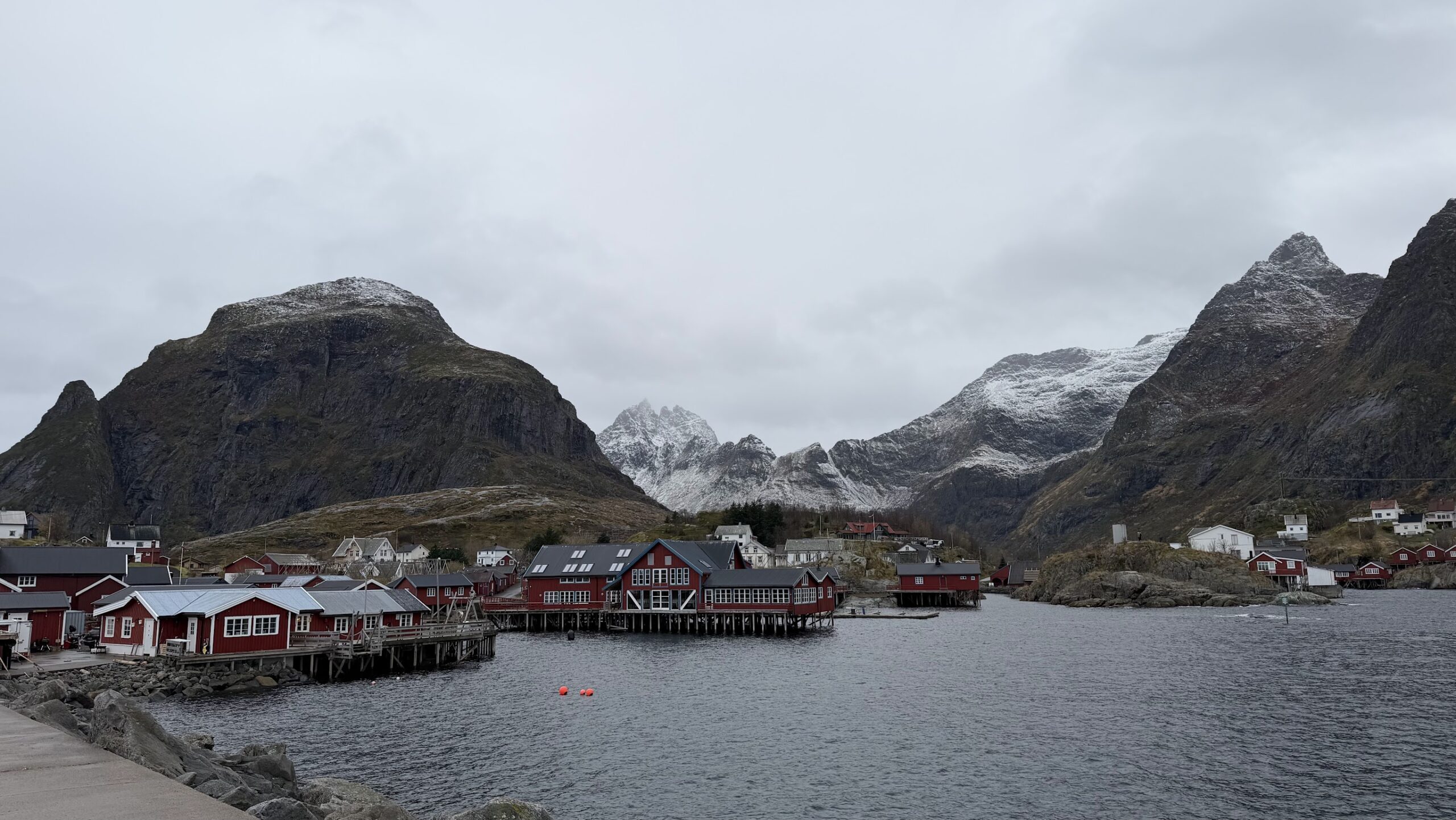
After lunch, we drove to the main parking lot and walked up to the viewpoint. The views were stunning, though clouds were starting to roll in by then. Even so, the scenery was dramatic enough to make the trek worthwhile.
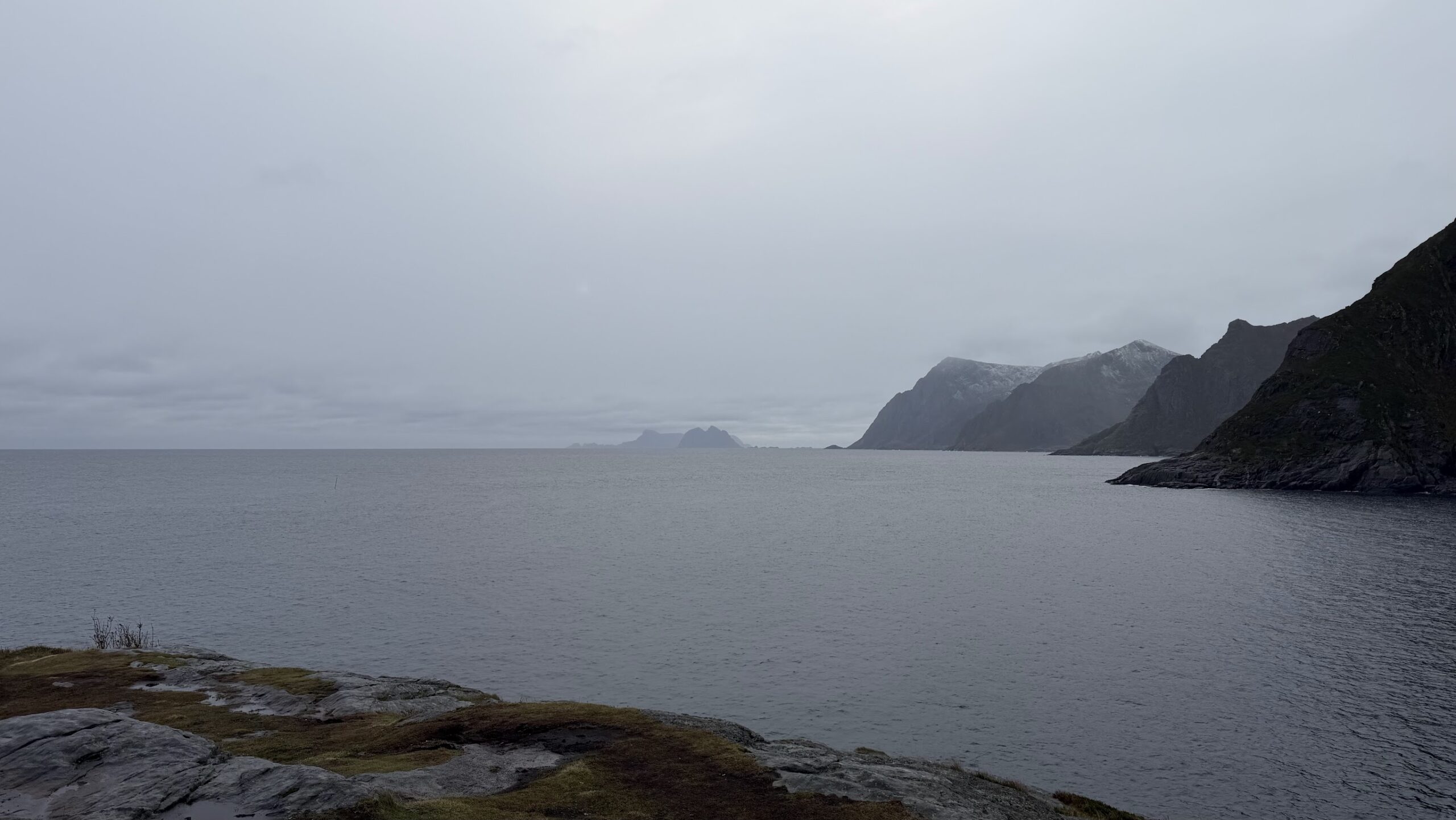
Road trip: Reine
From the viewpoint, we made our way back down and started driving north again. Since Å is the final village at the western end of Lofoten, everything from this point onwards was technically familiar ground, but the changing light and weather made the return feel different.
We stopped briefly at Reine, where steep peaks rise directly behind the village. It is one of the most photographed spots in Lofoten, and even with clouds rolling in, it still felt dramatic.
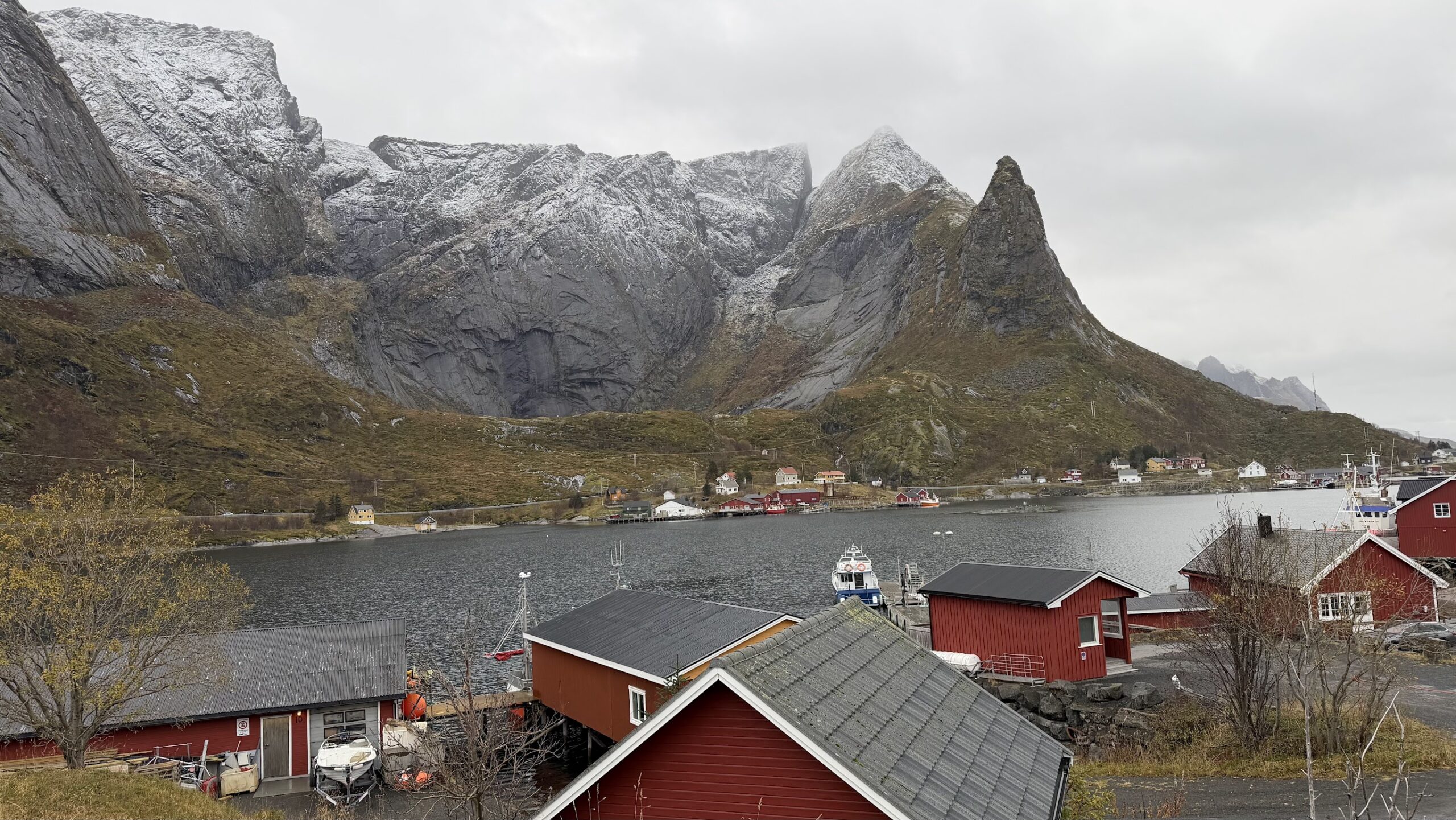
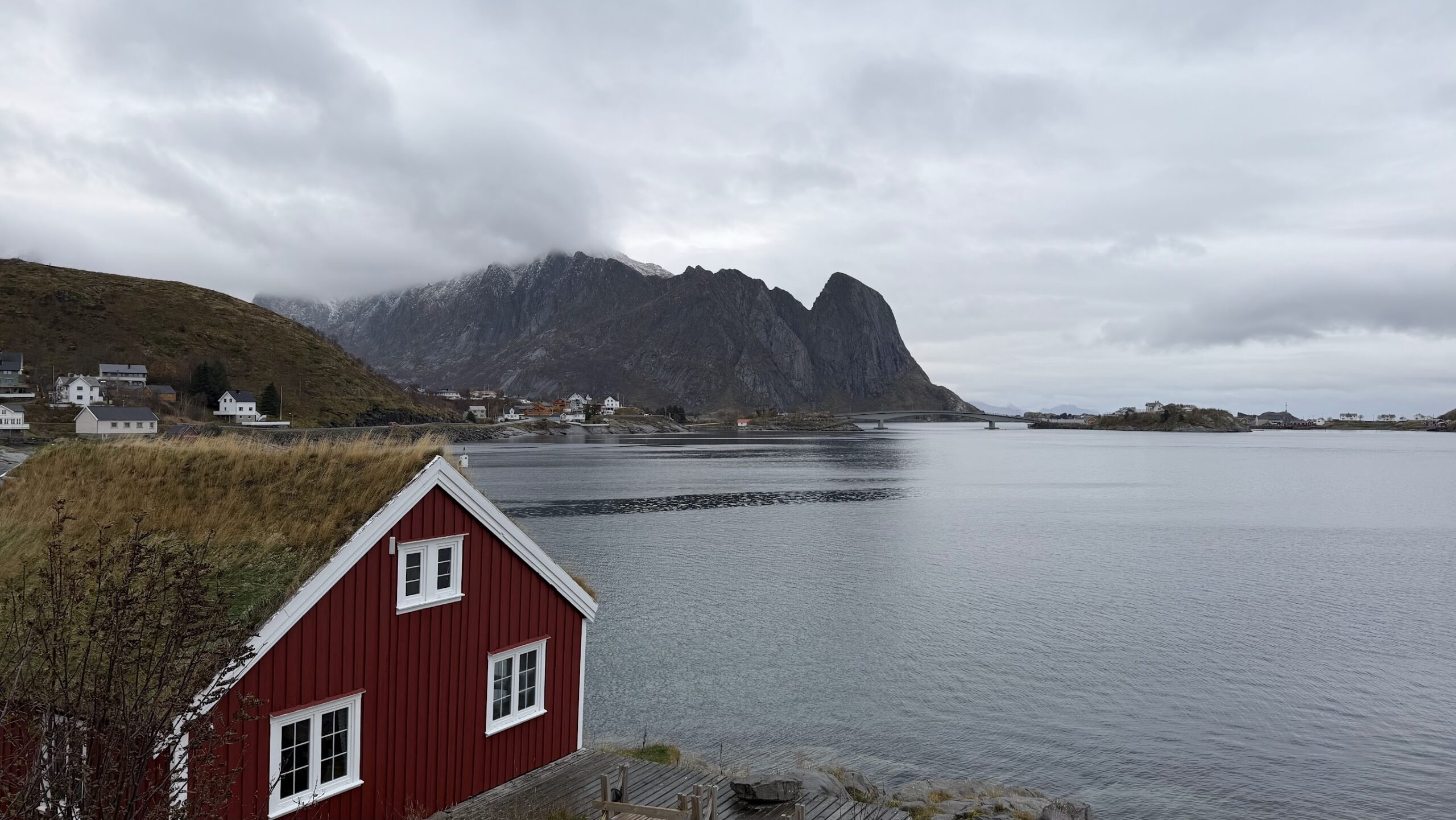
Nearby, we also passed another small football field, one of several scattered across the islands, each set against an unusually scenic backdrop. Would be nice to play football here!
Road trip: Sakrisoy and Hamnoy
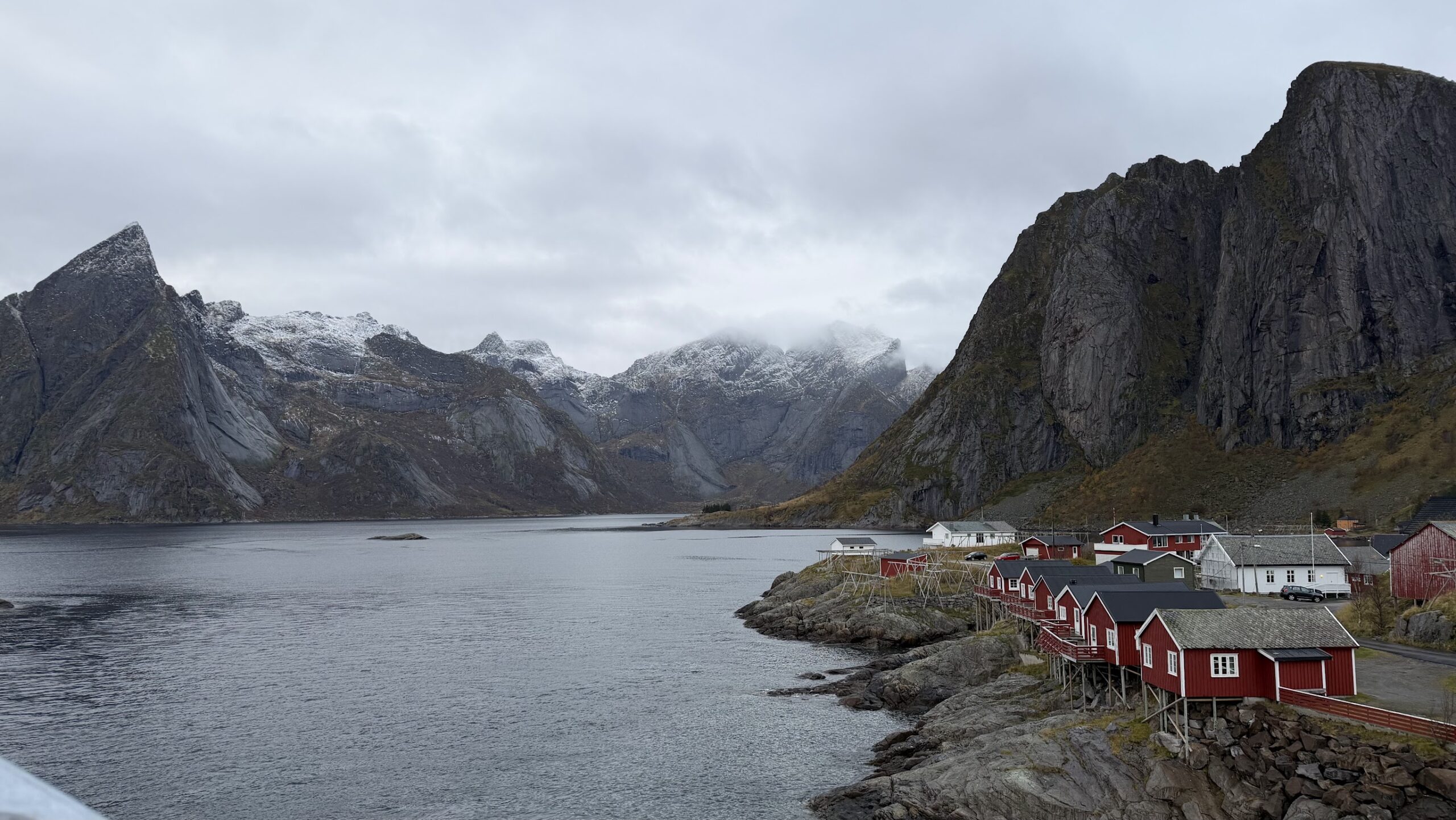
Continuing north, we passed through Sakrisoy and Hamnoy. These villages sit close together and are often photographed from the bridges along the E10. Hamnoy, in particular, is one of those places that looks almost unreal in photos, with red fishing cabins lined up against jagged mountains.
It was busier here, given the number of tourists on the bridge, even in October, and we only stayed briefly before moving on.
Road trip: Flakstadbrua and the drive back
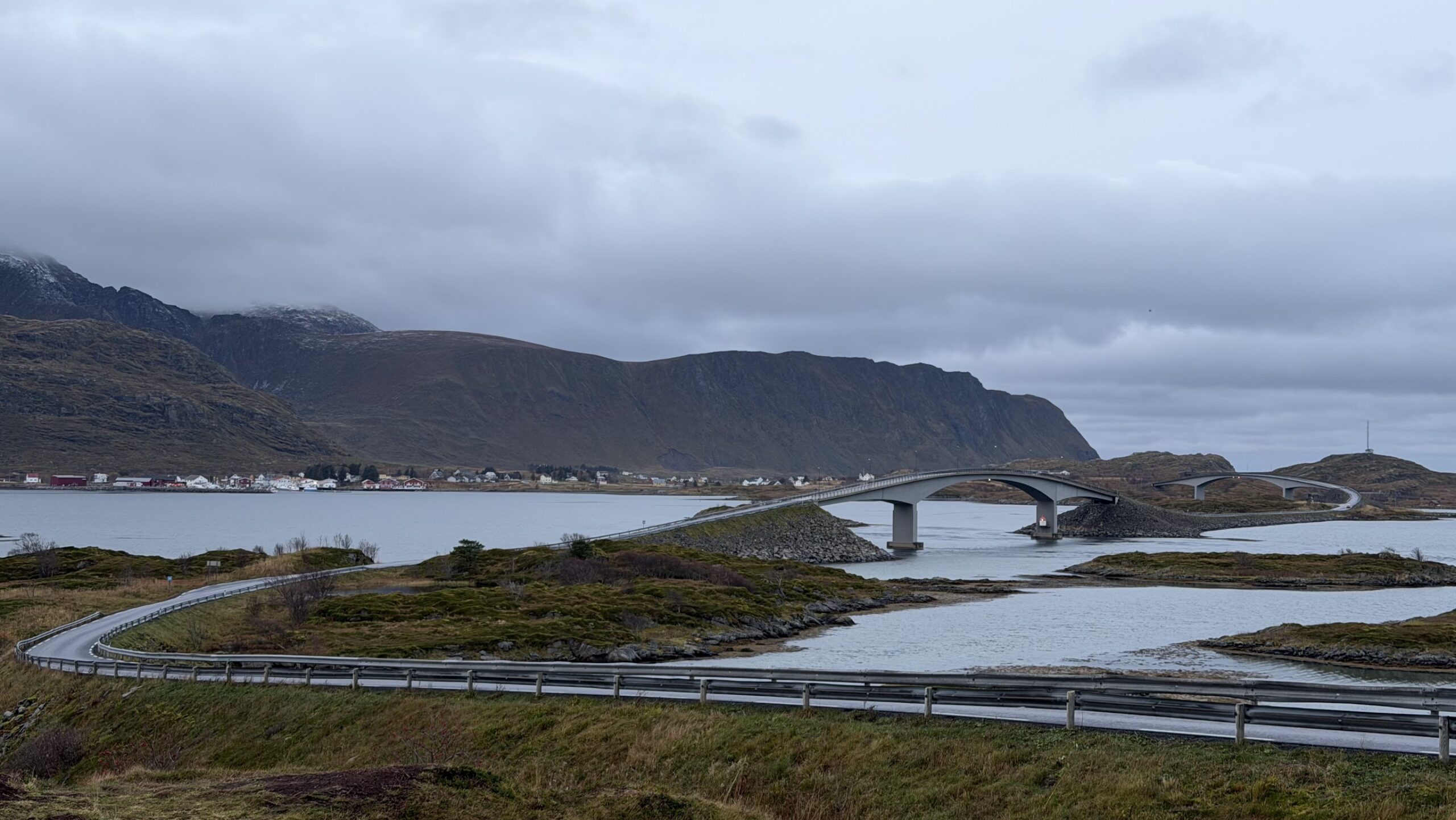
Crossing back over the E10, we stopped near Flakstadbrua to photograph the cantilever bridges stretching across the water. By this point, the weather had turned more overcast and the light was flatter, but the scenery still felt distinctly Lofoten.
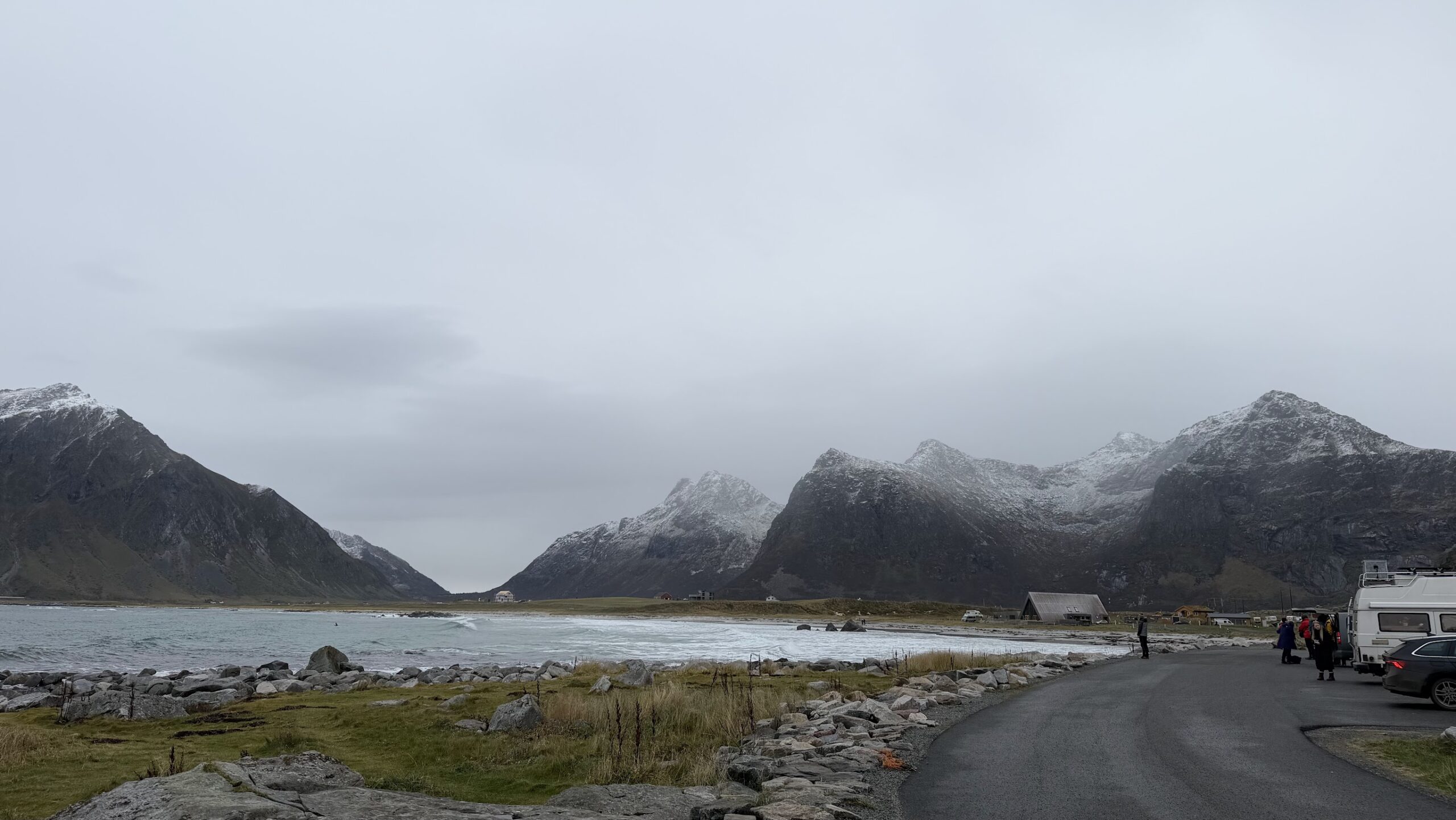
A short drive later, we made another stop at Rambergstranda Beach. The wide stretch of white sand and open coastline felt very different from the fishing villages we had seen earlier in the day. Even under grey skies, it was striking, and we lingered briefly before continuing on.
We then drove to Extra Leknes to do some grocery shopping, since eating out in Norway is generally expensive.
A little further along, we stopped briefly at a viewpoint overlooking Torvdalsvatnet. From here, the lake stretched out below, framed by low hills and open (yet cloudy) skies.
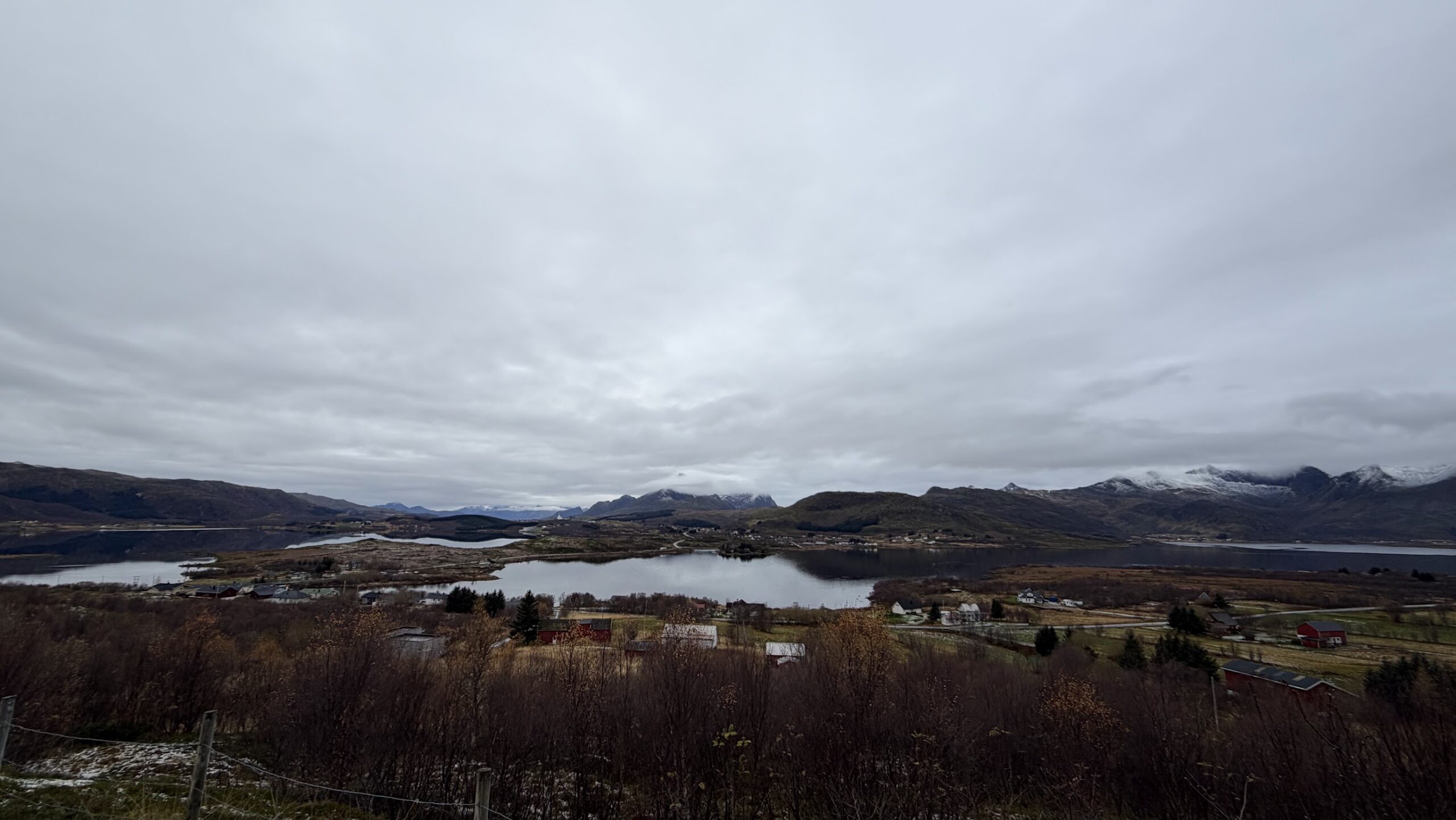
We then returned to FURU Hostel for the night. The skies stayed mostly cloudy, and we did not see the northern lights. It did not feel like a letdown however, as we had already been lucky the night before.
Road trip: Lofoten Seafood Center
For our last full day in Lofoten, we did not plan anything ambitious. After a couple of long driving days, it felt right to keep things light and see where the day took us.
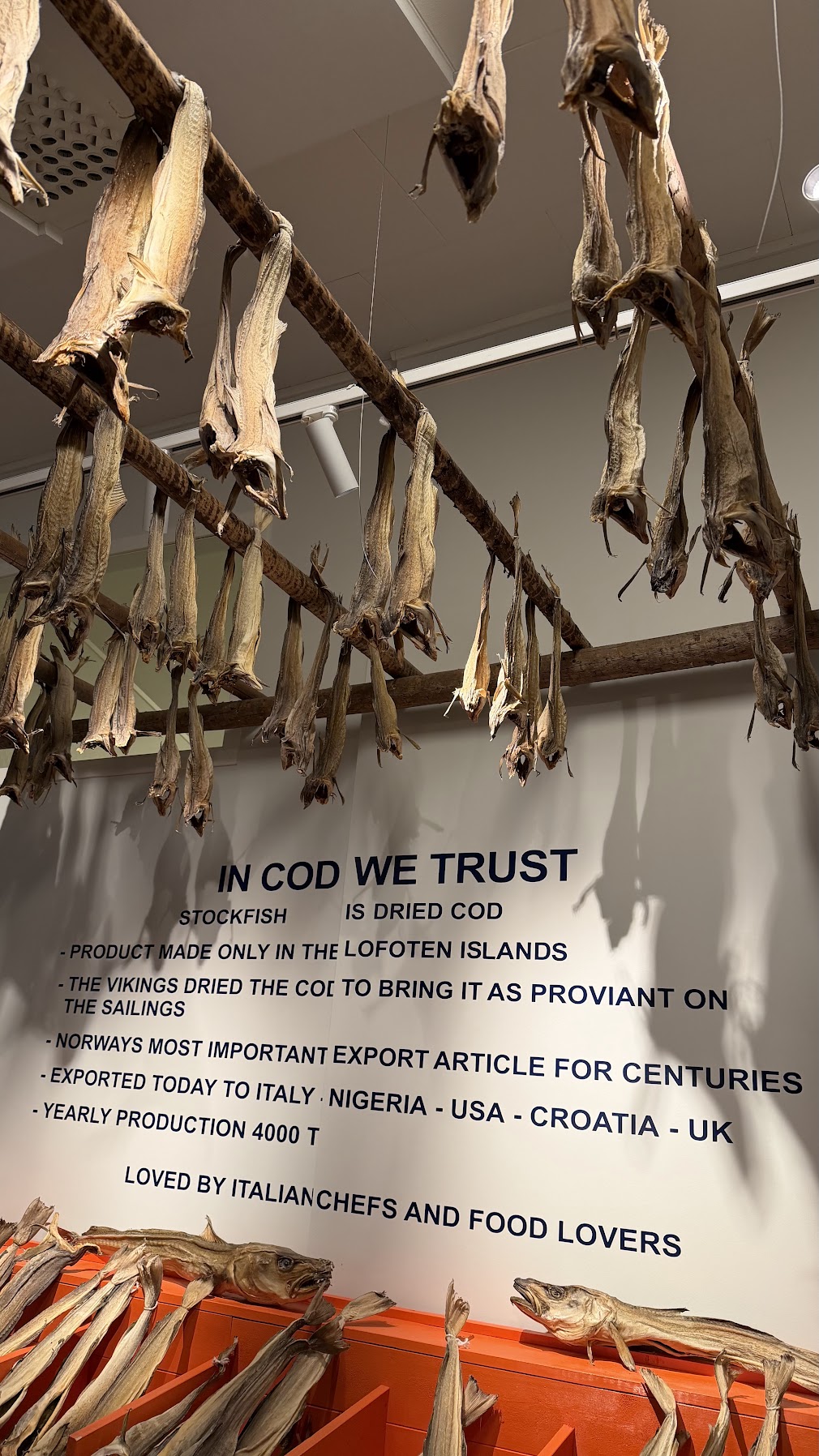
We made an impromptu stop at the Lofoten Seafood Center. Part of it functions as a small museum, with exhibits explaining cod and salmon fishing, drying techniques, and how fishing has shaped life in Lofoten for generations. There is also a restaurant on site. It was a good reminder that long before tourism, fishing was the backbone of the islands, and still very much is today.
Spending some time there added useful context to the places we had been driving through. The fishing villages, drying racks, and harbours made more sense once you understood how central the industry is to the region.
Road trip: Back to Harstad/Narvik
Later that day, we began the drive south towards Bogen, where we planned to stay for the night. The drive took about four hours and was straightforward, though noticeably quieter as we moved away from the more visited parts of Lofoten.
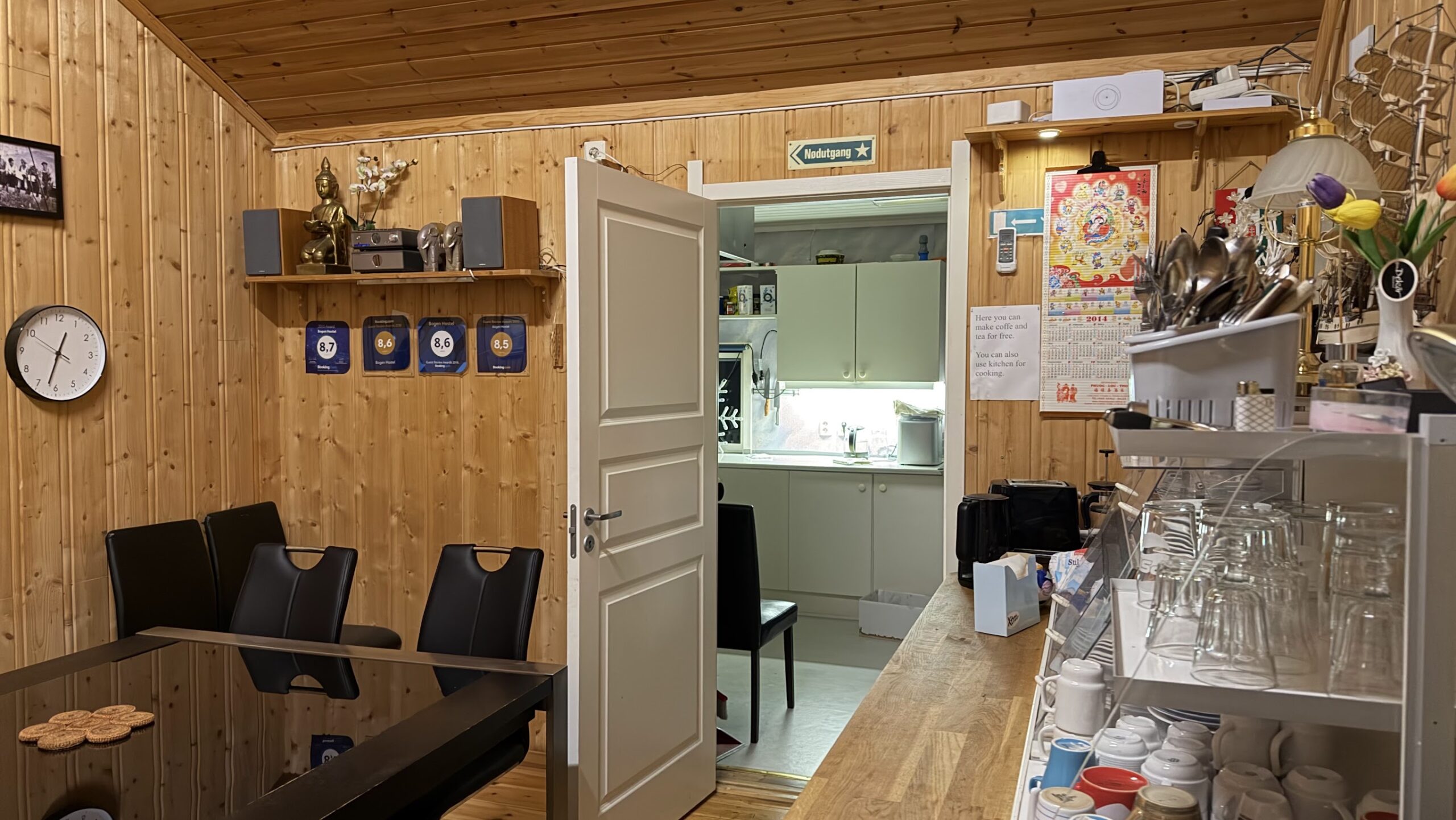
We chose to stay in Bogen instead of near the airport to catch our 6am flight the following day. Accommodation close to Evenes, including the Aiden by Best Western, was significantly more expensive. Bogen was only about an 18-minute drive from the airport and felt like a reasonable compromise.
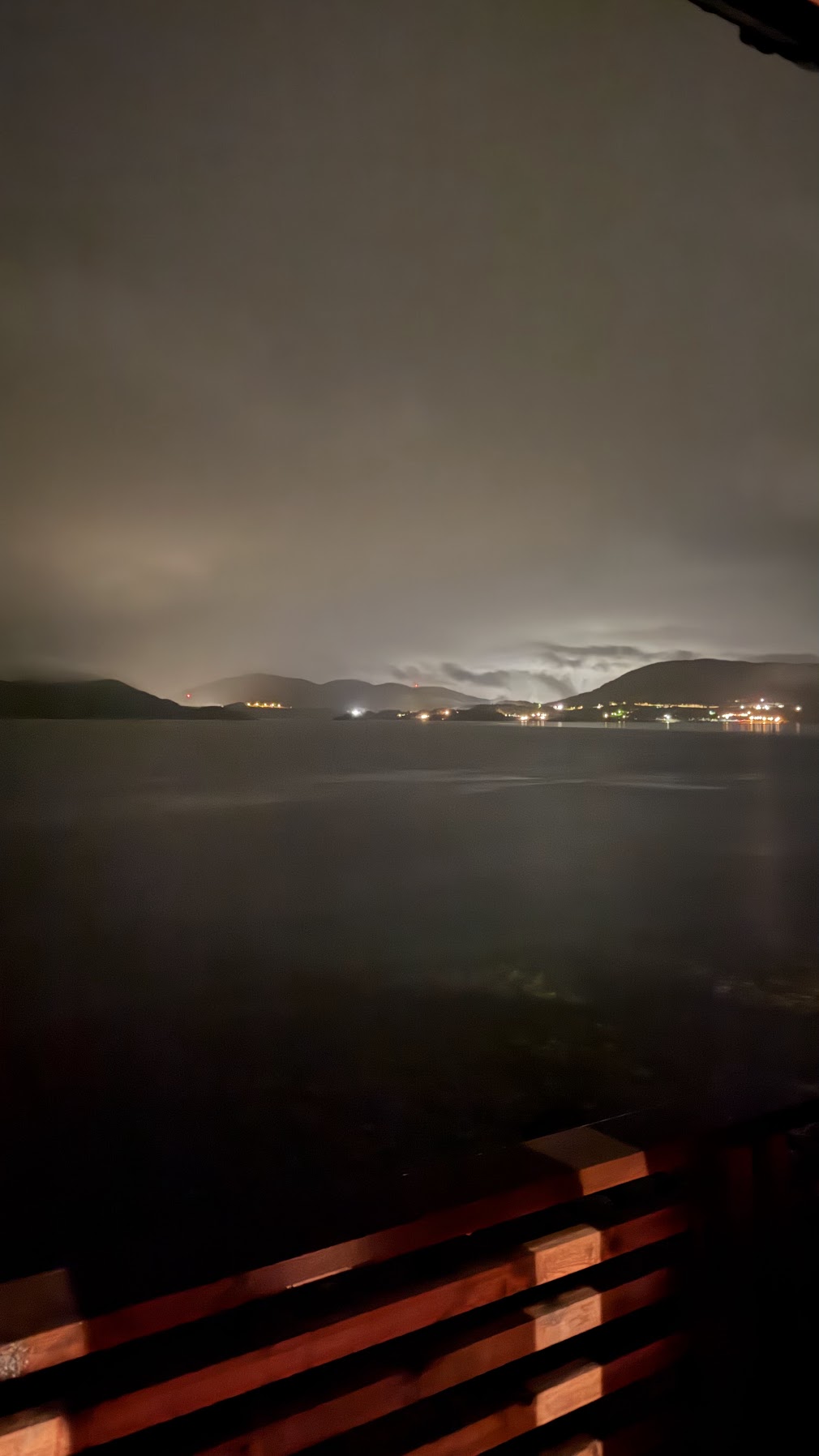
The skies stayed cloudy that evening, and we did not see the northern lights again. At that point, it did not really matter. We had already been lucky earlier in the trip, and this last night felt more like a wind-down than another chase.
Our thoughts on the Lofoten Islands
Lofoten was compact, dramatic, and very different from Iceland. Distances were shorter, but the scenery felt more intense, with mountains, sea, and villages packed closely together. Driving required more attention, with narrow roads, tunnels, animals wandering onto the road, and weather that could change quickly.
Seeing the northern lights on our first night, right from our accommodation, set the tone for our time there. Everything after that felt like a bonus. We were glad we did not rush the itinerary and instead allowed room for unplanned stops and quieter moments.
The next morning, we drove to Harstad/Narvik Airport and flew onward to Helsinki. That marked the end of our northern lights journey, and the close of a trip that balanced patience, flexibility, and a fair bit of luck.